The sacral chakra, Svadhisthana, is the centre tradition links with creativity, pleasure, sensuality and emotional movement. When life is flowing well through this centre, in traditional language, there is colour in the week: projects you look forward to, food you actually taste, music that moves you, and feelings that rise and pass like weather. When practitioners describe this chakra as blocked or out of balance, they are usually describing the loss of that colour — a stretch of life that has become flat, rigid or all duty and no delight.
This article gathers the signs most commonly described in chakra tradition, explains the difference between underactive and overactive patterns, and shares the stones and small practices people traditionally use to invite flow back. It is a reflective framework, not a medical assessment: ongoing low mood, pain or relationship difficulties deserve proper support from qualified professionals.
Signs Tradition Associates with a Sluggish Sacral Chakra
The headline sign is a creative block that will not shift. The writer who cannot start, the musician who has not touched an instrument in months, the cook who makes the same three meals on rotation — tradition reads this stuckness as sacral energy moving slowly. Closely related is the loss of pleasure in things that used to work: hobbies feel like chores, social time feels draining rather than restoring, and treats get postponed indefinitely.
Emotional numbness is another classic description. Practitioners talk about watching their own life from a distance, finding it hard to name what they feel, or swinging between flatness and sudden tears. In traditional terms, the water element of this chakra has stopped flowing — feelings are dammed rather than moving. Guilt around rest and enjoyment belongs here too: the belief that every hour must be productive is, in this framework, a sacral pattern worth noticing.
On the physical-association side, tradition links this centre with the lower abdomen, hips and lower back, so stiffness through the hips and a habit of bracing the belly are often mentioned. These are traditional associations only, not explanations for symptoms. For the framework itself, the Wikipedia chakra overview gives helpful historical background.
Compare this pattern with its neighbours to locate yourself more accurately. Pure steadiness problems — insecurity, disorganisation, background unease — point lower, to the root; see signs your root chakra feels blocked. Confidence and decision problems point higher, to the solar plexus, covered in our solar plexus blocked signs guide.
The Overactive Pattern: When Flow Becomes Flood
Imbalance runs both ways. An overactive sacral centre, in traditional description, looks like chasing stimulation: overindulging in food, shopping, scrolling or social drama, starting ten creative projects and finishing none, or feeling emotionally flooded and reactive over small things. The water metaphor still applies — instead of a still pond, the image is a river over its banks.
Many people recognise a seesaw between the two states: weeks of grey flatness punctuated by weekends of excess, then guilt, then flatness again. Tradition treats the seesaw itself as the signal, and the remedy is not more control but rhythm — regular, modest pleasures built into ordinary days so the system does not swing between drought and flood.
This is also where honest self-knowledge matters. Some patterns that get labelled “blocked chakras” are simply grief, exhaustion or an overloaded season of life. Our guide to the Cầu nối giữa luân xa xương cùng và luân xa tim discusses how this centre interacts with the heart when processing loss, and our pieces on Đá cho luân xa tim để xoa dịu nỗi đau approach the same season from the heart’s side. Crystals can accompany difficult periods as comfort objects and rituals, but they are companions, not substitutes for support.
Stones Traditionally Used to Encourage Flow
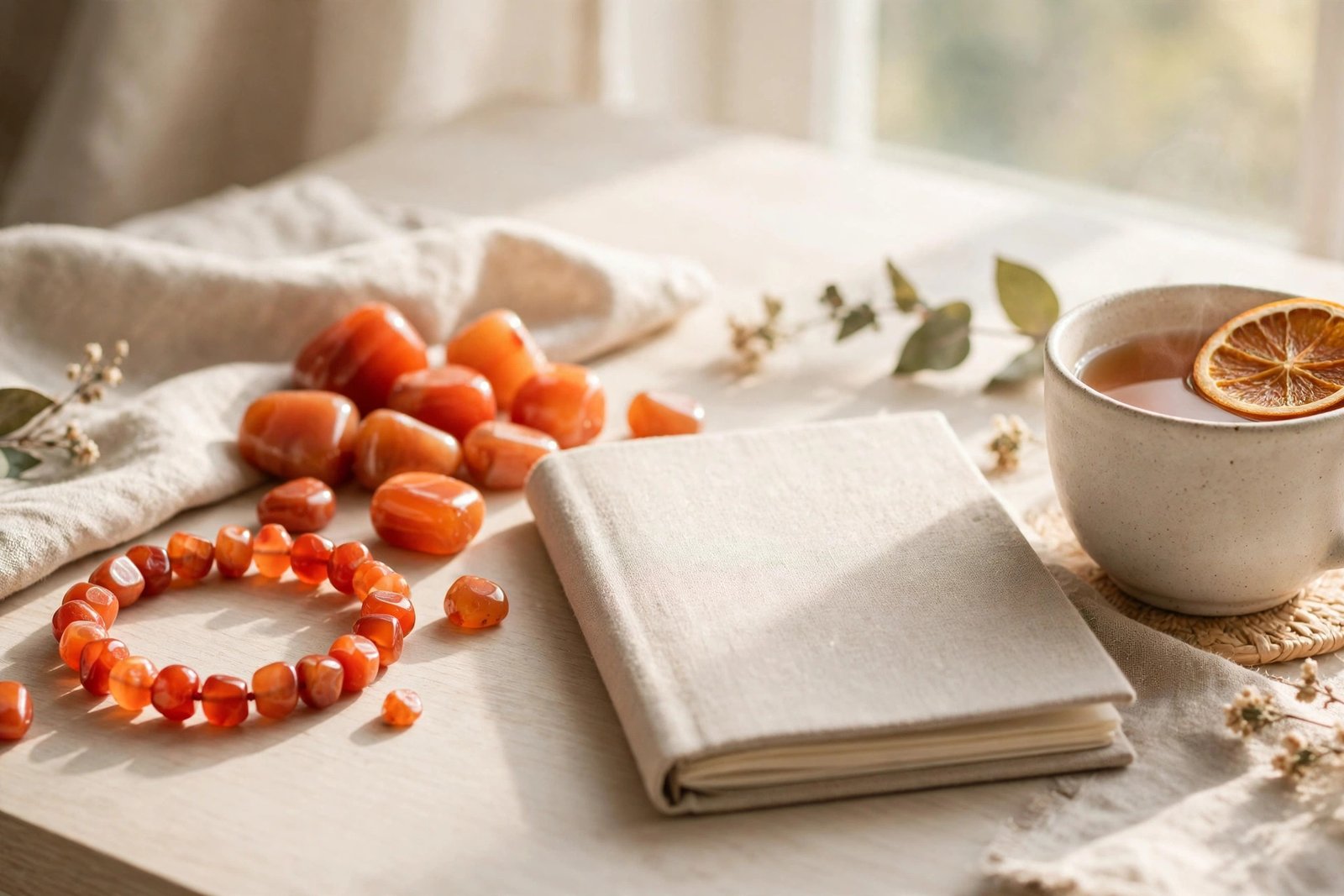
Carnelian leads every list. Traditionally associated with motivation and the courage to begin, this orange chalcedony — documented on Mindat — is the stone practitioners reach for when starting feels impossible. An AVENSU carnelian bracelet worn during work hours is the most common recommendation we give readers in a creative rut.
Sunstone is traditionally chosen when the flatness includes hiding: not sharing work, not applying, not speaking up. It is believed to support visibility and a warmer relationship with attention. Orange calcite suits the gentlest re-starts, paired with low-pressure play rather than ambitious projects. Peach moonstone is the pick when the emotional side dominates — when feelings feel stuck rather than ideas.
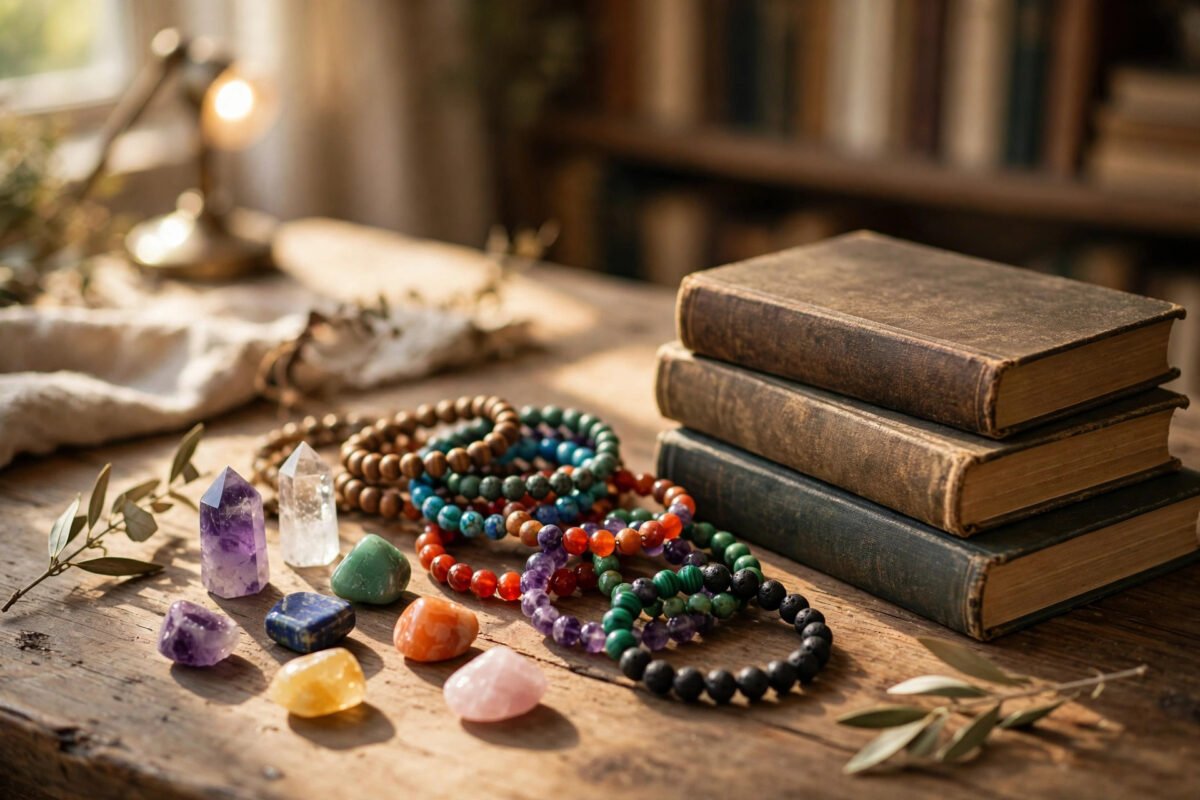
You do not need a collection. One stone, worn consistently and paired with one small practice, is the traditional prescription. Our sacral chakra crystals guide compares all the main options, and the Cửa hàng AVENSU stocks them in bracelet form for daily wear. If your pattern includes a shaky base as well, read our Hướng dẫn về các loại tinh thể cho luân xa gốc and consider stacking one grounding stone with your sacral piece.
Small Practices That Traditionally Support This Centre
Because this chakra governs pleasure, the practices are deliberately enjoyable. Schedule one small, unproductive pleasure a day — a pastry eaten slowly, a song played loud, ten pages of a novel — and protect it like an appointment. Practitioners say the sacral centre responds to permission more than to effort.
Move the hips. Gentle stretching, swimming, flowing yoga and dancing are all traditional sacral practices, because the centre sits in the pelvis. Our guide to chakra crystals for yoga shows how to include stones safely in a home practice. Water in any form carries symbolism here: baths, wild swims, even watering plants slowly and attentively.
Try the seated practice in our sacral chakra meditation guide twice a week, holding carnelian and visualising warm orange light. An AVENSU sunstone bracelet by the bathroom mirror — put on with the intention “enjoy one thing today” — is the kind of tiny ritual that survives busy lives. Refresh your stones regularly too: a rinse for hardy carnelian, or the sound method in our cleansing crystals with sound guide for softer pieces.
Các câu hỏi thường gặp
What is the most common sign of an unbalanced sacral chakra?
Practitioners most often describe a loss of creative flow and pleasure: hobbies feel flat, projects stall at the starting line, and the week becomes all obligation. Emotional numbness and guilt about resting are closely related signs in traditional descriptions.
Can the sacral chakra be overactive as well as blocked?
Yes. Tradition describes an overactive pattern of chasing stimulation, emotional flooding and starting many things without finishing them. Many people swing between flat and flooded states, and rhythm — small daily pleasures — is the traditional remedy.
Which crystal is traditionally used first for sacral balance?
Carnelian is the standard first choice, traditionally associated with motivation and creative courage. Sunstone is recommended when shyness about sharing work is part of the pattern, and orange calcite for the gentlest re-entry into play.
How long should I work on the sacral chakra before expecting change?
Guides usually suggest three to four weeks of a small daily practice — wearing your stone, one protected pleasure a day, and two short meditations a week. Tradition values rhythm and repetition over intensity.







 English
 Vietnamese