Sunlight is the most powerful charging method in crystal tradition, and also the easiest one to get wrong. A short morning sun bath is believed to energise hard, sun-safe stones, but the same light can fade amethyst, rose quartz, and fluorite, heat-crack delicate pieces, and dry out elastic cord. The difference between a good charge and quiet damage is simply knowing which stones belong in the sun and for how long.
This guide gives you a clear sun-safe list, a fade-risk list, the right time of day, and gentler alternatives for colour-sensitive bracelets. With those rules, sunlight becomes a safe tool instead of a gamble.
Crystals That Are Generally Sun-Safe
Hard, colour-stable stones handle brief sunlight best. Clear quartz, smoky quartz, black obsidian, hematite, tiger’s eye, carnelian, and red jasper are commonly placed in morning sun by collectors. These stones owe their colour to stable mineral structures rather than light-sensitive trace elements, so short exposure does not noticeably change them. Mineral references such as Mindat can help you check a stone’s composition and hardness.
Even sun-safe stones have limits. Keep sessions to 30 minutes to two hours, use morning light rather than midday heat, and bring pieces in before the surface feels hot to the touch. An AVENSU obsidian bracelet is a good sunlight candidate: obsidian is traditionally associated with protection and grounding, and the stone itself tolerates brief sun well. See the Vòng tay bảo vệ bằng đá obsidian for a typical everyday example.
Contrast that with the fuller comparison in our guide to charging crystals: sunlight vs moonlight, which weighs speed against gentleness for each major stone family.
Crystals That Fade or Suffer in Sunlight
Keep colour-sensitive stones out of direct sun. Amethyst, rose quartz, fluorite, aquamarine, citrine, kunzite, celestite, opal, and turquoise can fade with repeated exposure. Amethyst and rose quartz are the most common bracelet stones on this list, which is why so many owners are surprised by a paler bracelet after a summer on a sunny windowsill. Our amethyst guide notes light sensitivity as part of routine amethyst care.
Heat adds a second risk. Dark stones absorb warmth quickly, and rapid temperature change can stress included or fractured material. Elastic cord is the third risk: ultraviolet light makes elastic brittle over time, shortening the life of any strung bracelet. A faded stone cannot be restored, and a snapped cord drops beads everywhere, so for mixed or pastel bracelets, choose moonlight charging or a selenite plate instead.
If a bracelet mixes a sun-safe stone with a fading one, treat the whole bracelet by its most sensitive stone. That single rule prevents most sunlight mistakes.
How to Charge Crystals in Sunlight, Step by Step
First, cleanse the bracelet. Charging is traditionally done after cleansing, so wash away dust with a dry cloth or use smoke or sound. Our guide to cleansing crystals with sound gives a water-free option that suits every stone.
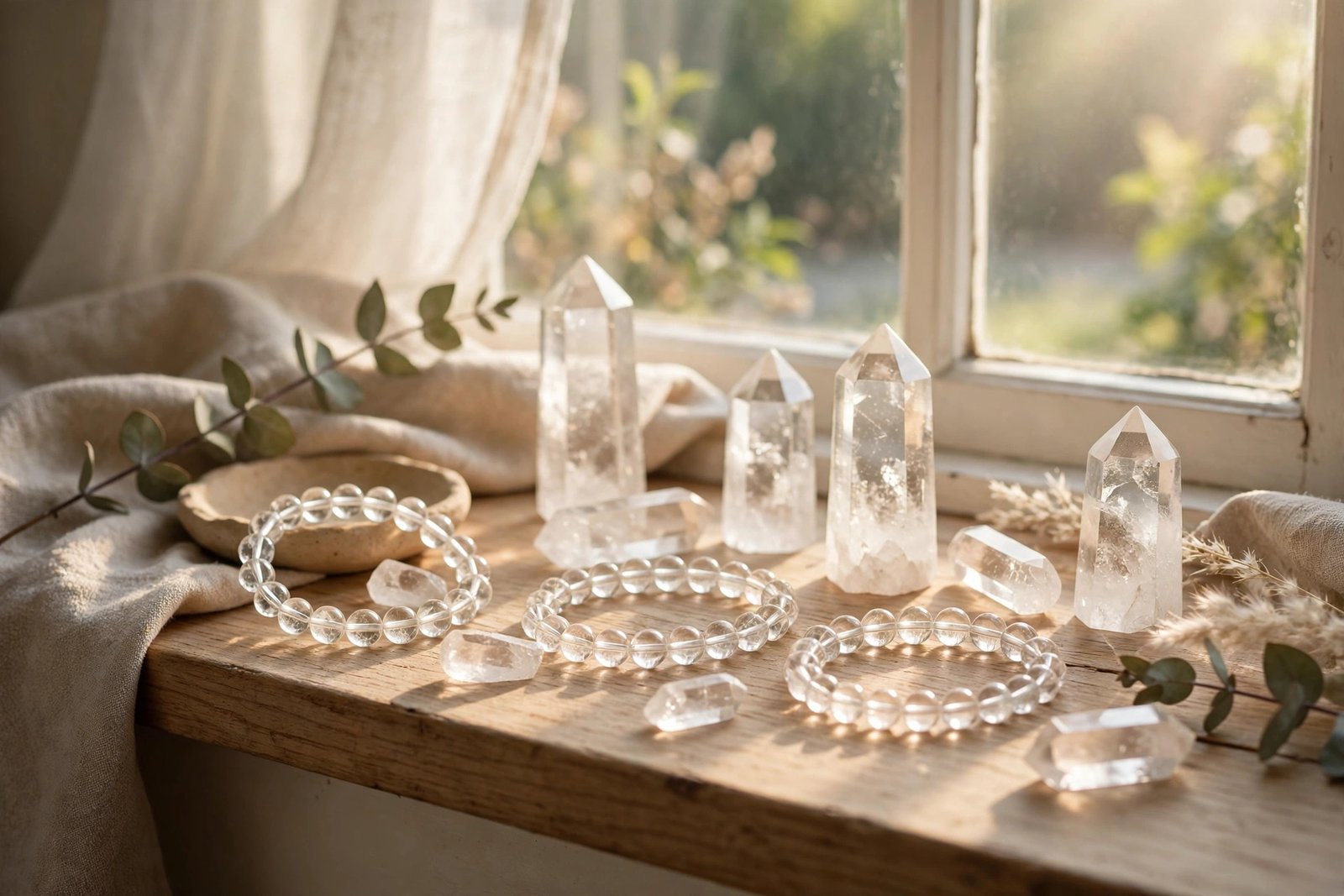
Second, choose the time. Early morning, within a couple of hours of sunrise, gives warm, angled light without midday intensity. Place bracelets on a clean cloth on a windowsill, balcony, or garden table, in a single layer with space between pieces.
Third, set a timer for 30 to 60 minutes for your first sessions. Check the stones halfway: if they feel hot, move them to bright shade to finish. Finally, let bracelets cool to room temperature before wearing or boxing them, and store them out of permanent sun. Daily display on a sunny sill is slow, continuous exposure, not a controlled charge. For storage rules, see how to store crystal bracelets.
Gentler Alternatives for Colour-Sensitive Bracelets
Moonlight is the classic alternative. It suits every stone, works overnight without monitoring, and is traditionally associated with calm, reflective energy. A bracelet left on a windowsill from dusk to dawn gets a full charge with zero fade risk. An AVENSU moonstone bracelet, traditionally associated with intuition and new beginnings, is almost always charged this way. Explore the moonstone bracelet and other moon-friendly pieces in the Cửa hàng AVENSU.
A selenite plate is the indoor alternative. It needs no weather, no window, and no timing, and it doubles as storage. Brief indirect light is a third option: a bright room away from direct rays refreshes a bracelet more slowly, but safely, for owners with no outdoor access.
Cái GIA guide to gemstone care also notes light and heat sensitivity for several popular gems, which supports the cautious approach in this guide: when in doubt, choose the gentler method. A slower charge that preserves colour always beats a fast one that fades it.
Các câu hỏi thường gặp
How long can I leave crystals in the sun?
Thirty minutes to two hours in morning light is enough for sun-safe stones. Set a timer, because it is easy to forget a windowsill tray. Colour-sensitive stones should not be left in direct sun at all; charge them by moonlight instead.
Will one sunny afternoon ruin rose quartz or amethyst?
One short exposure rarely causes visible change, but fading is cumulative and irreversible. Repeated afternoons add up over a season. Keep pastel bracelets out of direct sun as a habit, not just on very hot days.
Can I charge crystals through a window?
Yes. Ordinary window glass blocks some ultraviolet but lets through plenty of light for a traditional charge, and it reduces heat and dust. A bright windowsill is actually the most controlled place for a morning session.
Is sunlight or moonlight better for charging?
Neither is universally better. Sunlight is traditionally seen as stronger and faster for hard, stable stones, while moonlight is gentler and safe for everything. Match the method to the most sensitive stone in the bracelet.








 English
 Vietnamese