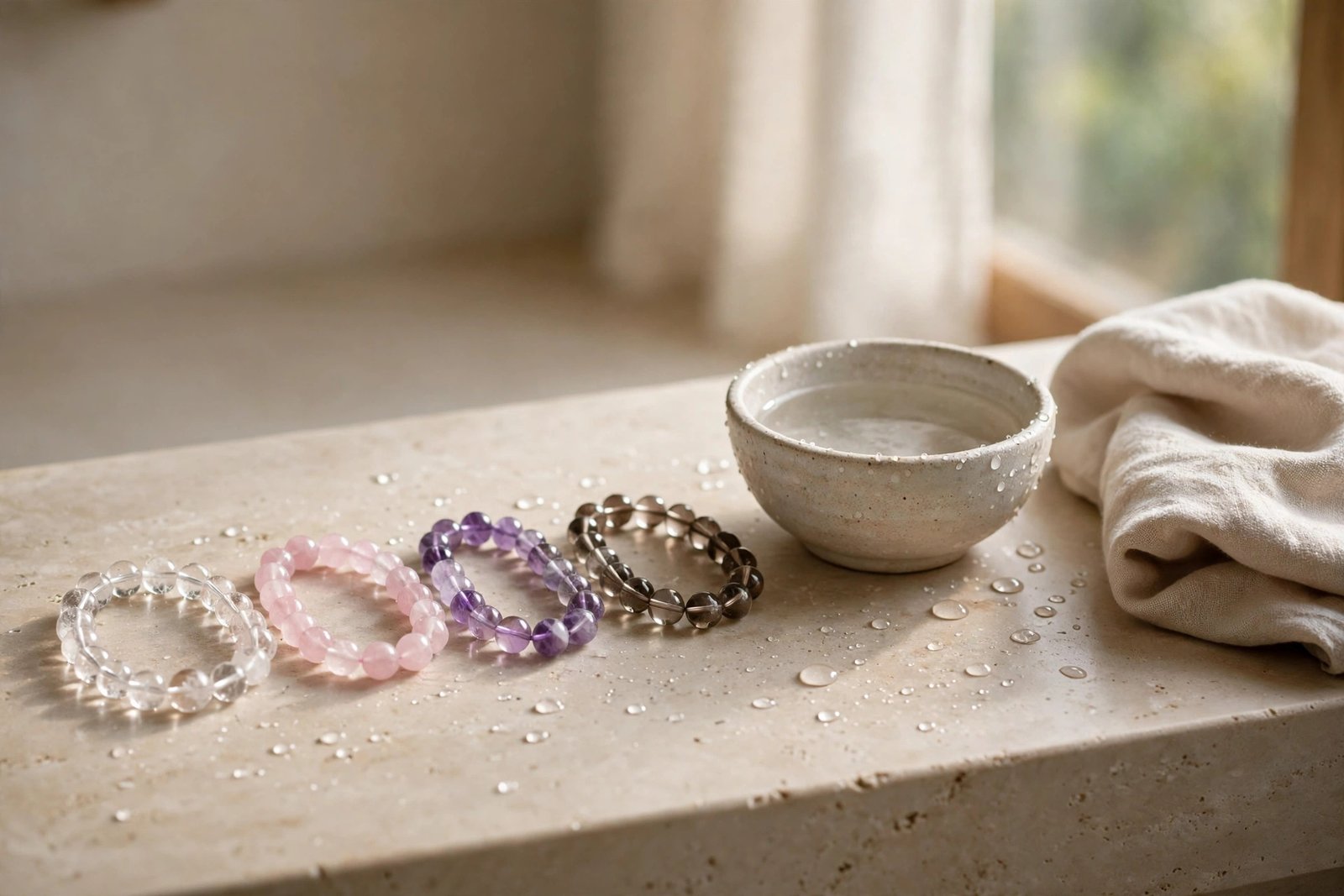
A quick handwash is one thing; a swim, a shower, and a soak in a hot bath are quite another. Water affects crystal bracelets in two ways at once: what it does to the stone, and what it does to the elastic, thread, and metal parts holding the bracelet together.
The short answer is that hard quartz-family stones tolerate brief water contact well, while soft, porous, or metallic stones can dull, rust, crack, or dissolve at the edges. This stone-by-stone guide will help you decide when to take your AVENSU bracelet off — and what to do if it gets soaked by accident.
Why Water Is Risky Even for “Safe” Stones
Elastic cord is usually the weakest link. Repeated soaking stretches elastic, makes it brittle once it dries, and shortens its life dramatically, as explained in our elastic crystal bracelet care guide. Metal spacers and charms can tarnish or rust, and thread wraps can hold moisture against the stone.
Temperature matters too. Very hot water followed by cold air can stress stones with internal fractures, and chlorinated pool water or salt water leaves deposits that dull polish. Our companion guide to crystals in pool and sea covers swimming in detail, and the water-safe crystals list gives a quick-reference chart.
As a default habit: remove any crystal bracelet before showering, swimming, washing dishes, or applying lotions, then put it back on dry skin.
Stones That Tolerate Brief Water Contact
Quartz-family stones at Mohs hardness 7 are the most forgiving. Clear quartz, amethyst, citrine, smoky quartz, and rose quartz can handle handwashing splashes and a brief rinse in clean, lukewarm water. An AVENSU vòng tay thạch anh trong suốt will not be harmed by the occasional splash, though its elastic still prefers to stay dry.
Other relatively water-tolerant stones include black obsidian (a natural glass, hardness about 5.5 — fine with water but prone to chipping), tiger’s eye, agate, jasper, and aventurine. Our green aventurine bracelet is a good example of a quartz-family stone that shrugs off everyday splashes.
“Tolerates water” still means minutes, not hours. Rinse, pat dry with a soft cloth, and let the bracelet air-dry fully before storing it.
Stones You Should Keep Dry
Selenite and satin spar are the clearest no-water stones: they are soft gypsum, can dissolve slowly, and turn rough and cloudy when repeatedly wet. Malachite is sensitive to water and acids and can lose its polish; lapis lazuli is porous and often dyed, so soaking can lift colour and dull the surface.
Turquoise is porous and frequently stabilised, fluorite is soft and cleaves easily, and hematite and pyrite contain iron that can rust and stain both stone and skin. Opal deserves special care: it contains water within its structure and can craze if it dries too fast after heat or soaking — background on opal’s composition is available from Geology.com.
When in doubt about a stone’s hardness or porosity, check its mineral data on Mindat.org or keep it dry by default. Our beaded bracelet materials guide summarises the care needs of common bracelet materials.
What to Do After a Bracelet Gets Wet
Do not panic over a single soaking. Remove the bracelet, pat every bead dry with a lint-free cloth, and lay it flat on a dry towel for several hours so moisture escapes from the drill holes and cord. Avoid hairdryers and radiators; rapid heat is harder on stones and elastic than the water was.
Once dry, inspect the cord for new gaps between beads — an early sign the elastic has stretched — and check metal parts for discolouration. If your bracelet was in salt water or a chlorinated pool, rinse it briefly in clean lukewarm water first if the stones allow it, then dry as above. Our guide to bracelet care after perspiration covers the same dry-and-inspect routine for sweat exposure.
If a water-sensitive stone has turned cloudy after soaking, gentle drying and time sometimes improve it; our article on how to clean cloudy crystals explains what can and cannot be reversed.
Building a Low-Effort Water Habit
Keep a small dish by the sink and the shower for your bracelet — a visible landing spot makes removal automatic. Travellers can use the packing routine in our guide to traveling with crystals. Browse water-tolerant everyday options in the Cửa hàng AVENSU if your routine involves frequent handwashing and you want a hard quartz piece for daily wear, like an AVENSU obsidian bracelet for the gym bag rotation — still removed before the shower, but forgiving of splashes.
Các câu hỏi thường gặp
Can I shower with a crystal bracelet on?
It is not recommended. Soap, shampoo, and hot water degrade elastic and metal parts and can dull porous stones, even if quartz beads themselves survive. Taking the bracelet off takes seconds and adds months to its life.
What about rain or washing my hands?
Brief splashes on quartz-family stones are fine. Shake off excess water, pat dry when you can, and avoid letting the cord stay damp for hours in a sleeve or pocket.
Is salt water worse than pool water?
Both are hard on bracelets: salt leaves abrasive crystals in drill holes and corrodes metal, while chlorine attacks elastic and can fade some stones. Rinse with clean water afterwards if the stones tolerate it, then dry thoroughly.
Which popular bracelet stone is most water-sensitive?
Selenite (satin spar) is the most commonly sold and most water-sensitive; it should never be soaked or cleansed in water. Malachite, turquoise, and lapis are close behind and are best kept dry too.








 English
 Vietnamese