Rose quartz deserves its fame. It is beautiful, affordable and traditionally associated with gentle, unconditional love. But the heart chakra — Anahata, the centre in the middle of the chest linked in tradition with compassion, connection and emotional balance — has a whole family of stones, and many people find that a green stone, or a pink stone with more depth and pattern, suits their life stage better than the classic pale pink.
This deep dive introduces nine green and pink heart chakra crystals beyond rose quartz: what each looks like, what tradition associates with it, and who tends to choose it. Whether you are working through grief, learning to receive as well as give, or simply want a heart stone that matches a green wardrobe, there is an option here with your name on it.
Why the Heart Chakra Has Two Colours
Most chakras have one traditional colour; the heart has two. Green is the primary colour of Anahata in most systems — the colour of growth, renewal and the living world — while pink is a modern association that developed alongside rose quartz’s popularity. The classical background is summarised on Wikipedia’s Anahata page.
Practitioners often read the two colours as two directions of the same centre. Green stones are traditionally linked with healing, balance and opening to life again after a closed period. Pink stones are linked with tenderness: self-compassion, romance and softening self-criticism. Many collections hold one of each. Our heart chakra stones guide maps the whole family, and our Hướng dẫn về ý nghĩa của thạch anh hồng remains the place to start for the classic stone itself — the Vòng tay tình yêu bằng thạch anh hồng included.
The Green Stones: Aventurine, Jade, Malachite, Moss Agate and Emerald
1. Green aventurine is the friendliest green stone: a sparkly quartz, traditionally associated with luck, optimism and emotional lightness. It is the heart stone people choose when they want to feel open without feeling exposed. Read its full profile in our Hướng dẫn về ý nghĩa của đá aventurine xanh, and note its mineral profile on Mindat.
2. Jade — nephrite or jadeite — carries centuries of cultural weight, especially in East Asian tradition, where it symbolises harmony, protection and a calm heart. It is traditionally chosen for long-term steadiness in relationships and for its cool, soothing touch on the skin.
3. Malachite is the bold one: vivid banded green, traditionally associated with transformation and honest emotional work. Practitioners reach for it during periods of change rather than calm. It is softer and copper-based, so it needs dry care and gentle handling — a stone for a pendant or occasional wear more than for a gym bracelet.
4. Moss agate looks like a garden in stone, with green inclusions drifting through translucent chalcedony. Tradition links it with patience, renewal and connection to nature, making it a favourite of gardeners and anyone recovering their energy slowly after burnout.
5. Emerald, the green beryl described by the GIA, is the precious option: traditionally associated with truthful love, loyalty and clear-hearted communication. In crystal jewellery it usually appears as small beads or accents, lending depth to a mixed heart-chakra piece.
The Pink Stones: Rhodonite, Rhodochrome, Kunzite and Pink Opal
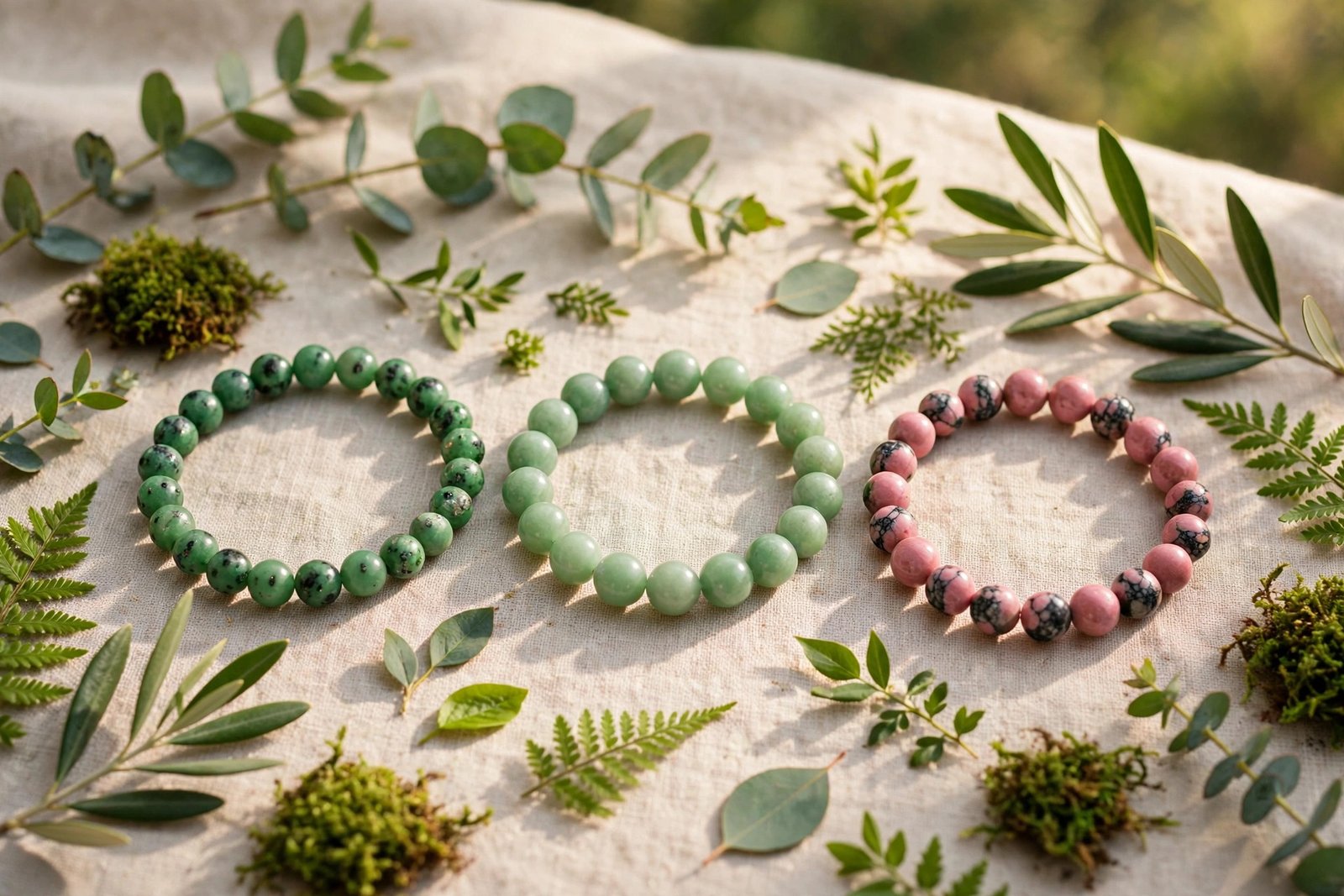
6. Rhodonite is the connoisseur’s pink: rose-pink veined with black manganese, traditionally associated with compassion in action — forgiveness, reconciliation and helping without resentment. Readers working through family difficulty choose it more than any other stone on this list. An AVENSU rhodonite bracelet is a quietly distinctive piece that starts conversations.
7. Rhodochrosite deepens the pink further, with banded raspberry tones. Tradition associates it with joy returning after sorrow and with reconnecting to playfulness, so it often appears in our guide to Đá cho luân xa tim để xoa dịu nỗi đau as a later-stage companion, once the first rawness has passed.
8. Kunzite is the delicate, lilac-pink stone traditionally linked with gentle emotional expression and calm in relationships. It is photosensitive — prolonged strong sunlight can fade it — so it rewards careful storage and evening wear, and it looks luminous in low light.
9. Pink opal offers the softest matte pink, traditionally associated with soothing self-talk and releasing old emotional patterns. With no play-of-colour, it reads as calm and modern in a bracelet, and it pairs beautifully with green stones for a balanced heart stack.
Green and pink together are the classic heart combination. Stacking an AVENSU green aventurine bracelet with rose quartz or rhodonite covers both directions of this centre — growth and tenderness — in one look. Our heart chakra meditation guide shows how to use two stones in one practice, and the full range is in the Cửa hàng AVENSU.
How to Choose and Care for Your Heart Stone
Choose by life theme first, colour second. Rebuilding after a hard season points to moss agate or aventurine. Relationship repair points to rhodonite or jade. Wanting more lightness and luck points to green aventurine. Wanting tenderness toward yourself points to pink opal or kunzite. Then handle the stones if you can: heart stones are traditionally chosen by feel as much as by lists, and the one that feels cool and pleasant against the inner wrist is usually the one you will wear.
Mixed stacks benefit from our how to wear a 7 chakra bracelet guidance on colour order and bead sizes. For the bridge between this centre and the sacral below it — a popular pairing for creative, loving work — see our Cầu nối giữa luân xa xương cùng và luân xa tim hướng dẫn.
Care varies across this family more than most. Malachite, kunzite and pink opal prefer dry, gentle handling and should skip water soaks; jade, aventurine, moss agate and rhodonite are sturdier. The sound method in our cleansing crystals with sound guide is safe for every stone here and is the refresh we recommend as the default for heart pieces.
Các câu hỏi thường gặp
What is the best heart chakra crystal besides rose quartz?
Green aventurine is the most popular alternative, traditionally associated with luck, optimism and gentle emotional openness. Rhodonite is the leading pink alternative, chosen for forgiveness and compassion in action. The best stone is the one matching your current theme.
Are green or pink stones better for the heart chakra?
Neither is better; tradition treats them as complementary. Green stones are associated with healing, balance and renewal, while pink stones are associated with tenderness, romance and self-compassion. Many people wear one of each.
Which heart chakra stone is traditionally used for grief?
Practitioners often begin with rose quartz for its gentleness, then move to rhodochrosite as joy slowly returns, with moss agate supporting patience throughout. Stones are companions in tradition, not treatments, and grief support matters more than any crystal.
Can I stack several heart chakra stones together?
Yes. A green and pink pairing such as aventurine with rhodonite is a classic heart stack. Keep bead sizes similar so the bracelets sit comfortably, and choose the sound cleansing method, which is safe for every stone in this family.







 English
 Vietnamese