That vintage crystal bracelet at the flea market is calling your name — the beads have a glow that new pieces seem to lack, and the price is tempting. But is it a treasure or a trap? Pre-loved crystal bracelets can be wonderful finds, carrying craftsmanship and character that mass-market pieces rarely match. They can also hide tired elastic, treated stones, and inflated stories. This guide gives you a clear-eyed comparison of vintage versus new, plus a 7-point inspection checklist to run before any secondhand purchase.
The Honest Case for Each
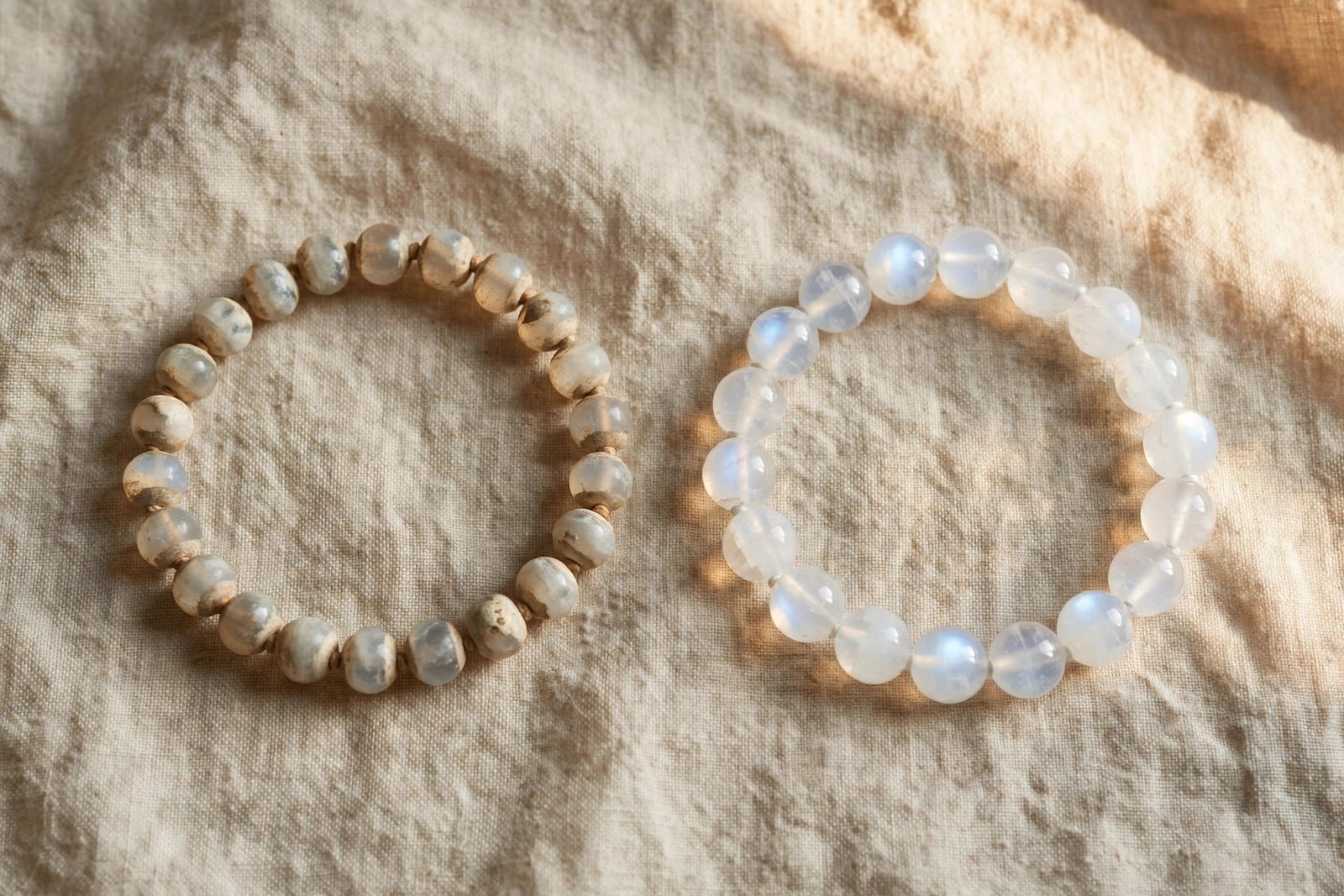
Vintage wins on character. Older beads were often cut and polished with techniques that produce a softer, warmer finish. Natural patina — the gentle mellowing of stone surfaces over decades — cannot be faked convincingly, and many collectors prize it. Vintage pieces can also be genuinely rare: discontinued cuts, old-mine stones, handmade stringing.
New wins on reliability. Fresh elastic, intact knots, verified materials, and a seller who answers questions. A new bracelet from a reputable maker — like a moonstone crystal bracelet with documented stone quality — removes every gamble on the checklist below. Moonstone’s signature adularescence, that floating blue-white sheen caused by light scattering through feldspar layers (described on the Trang giới thiệu đá quý moonstone), is easier to verify in a new piece with clear provenance.
Neither is inherently better. The right choice depends on what you value: story and uniqueness, or certainty and longevity. Many collectors happily own both.
The 7-Point Inspection Checklist
Run through this list for any vintage or secondhand bracelet, whether it costs five dollars or five hundred:
- 1. The elastic test. Stretch the bracelet gently. Fresh elastic snaps back crisply; tired elastic returns slowly or stays slightly elongated. If it feels gummy or loose, budget for an immediate restring.
- 2. The knot check. Find the knot (usually hidden inside a bead). A secure knot sits tight with no visible gap between beads. Widening gaps mean the knot is walking loose.
- 3. Bead hole inspection. Hold a bead up to the light and look through the drill hole. Rough, chipped, or off-center holes stress the cord and suggest lower-quality cutting. Smooth, centered holes indicate careful work.
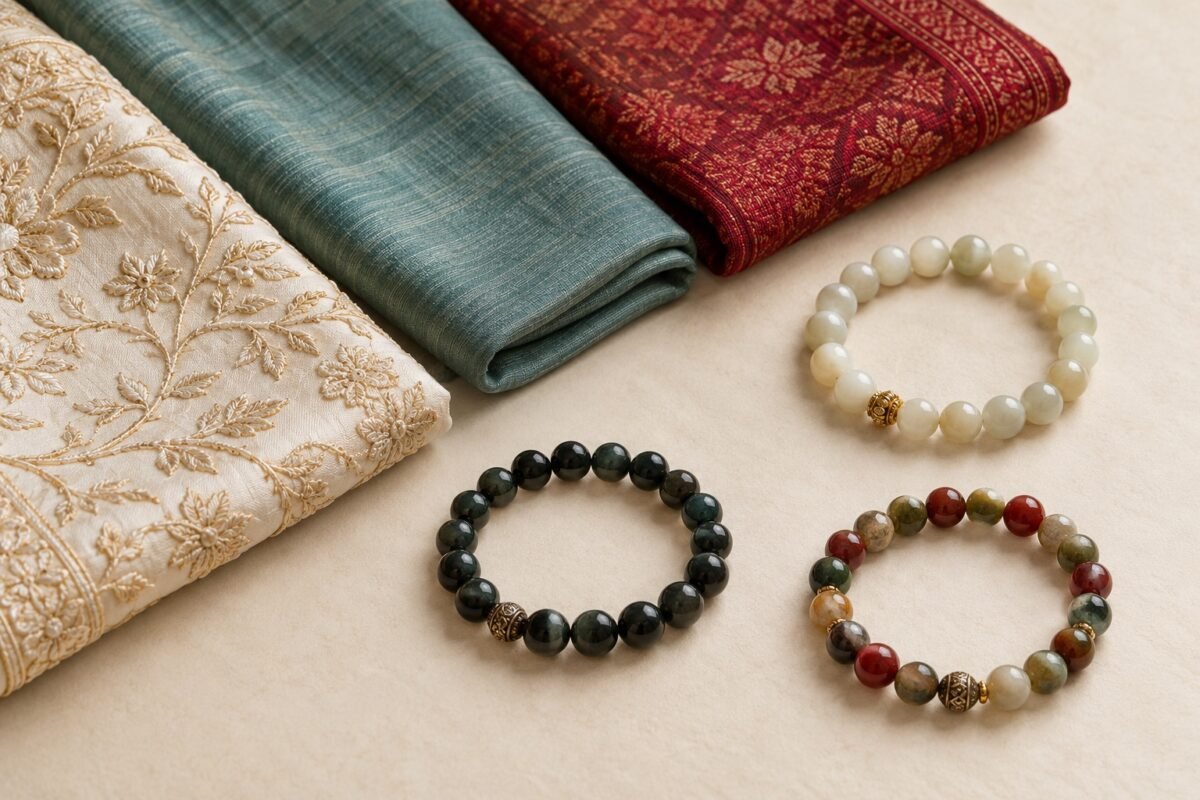
- 4. Surface honesty. Natural stones have subtle variation — slight color shifts, tiny inclusions, gentle asymmetry. Perfectly uniform, vividly saturated beads in a “vintage” piece are a red flag for dyed agate or glass being passed off as something rarer.
- 5. The temperature touch. Real stone feels cool to the touch and warms slowly in your hand. Glass and plastic warm up almost immediately. This quick test catches the most common misrepresentation.
- 6. Weight in hand. Stone has satisfying heft; plastic imitations feel suspiciously light. Compare against a bracelet you know is genuine if possible.
- 7. The story sniff test. “My grandmother’s 1920s jade” deserves gentle skepticism when the elastic looks factory-fresh — old beads are often restrung, which is fine, but the story should match the evidence. Honest sellers welcome questions; evasive ones do not.
These same checks apply the moment any bracelet arrives by mail. Our delivery inspection guide walks through what to examine before the return window closes. For a dedicated walkthrough of spotting dyed glass and plastic imitations, see our real vs fake crystal bracelet guide.
Spotting Treatments and Enhancements
Vintage does not mean untreated. Heat treatment (common for amethyst-to-citrine and carnelian), dyeing (vivid blues, greens, and pinks in agate and howlite), and surface coatings have been used for over a century. Treatments are not automatically bad — many are stable and standard — but they should be disclosed and priced accordingly. A “natural untreated emerald-green vintage bracelet” at a bargain price is almost certainly dyed agate. Ask directly: “Has this stone been treated or enhanced in any way?” The answer — or the refusal to answer — tells you everything.
Pricing a Vintage Piece Fairly
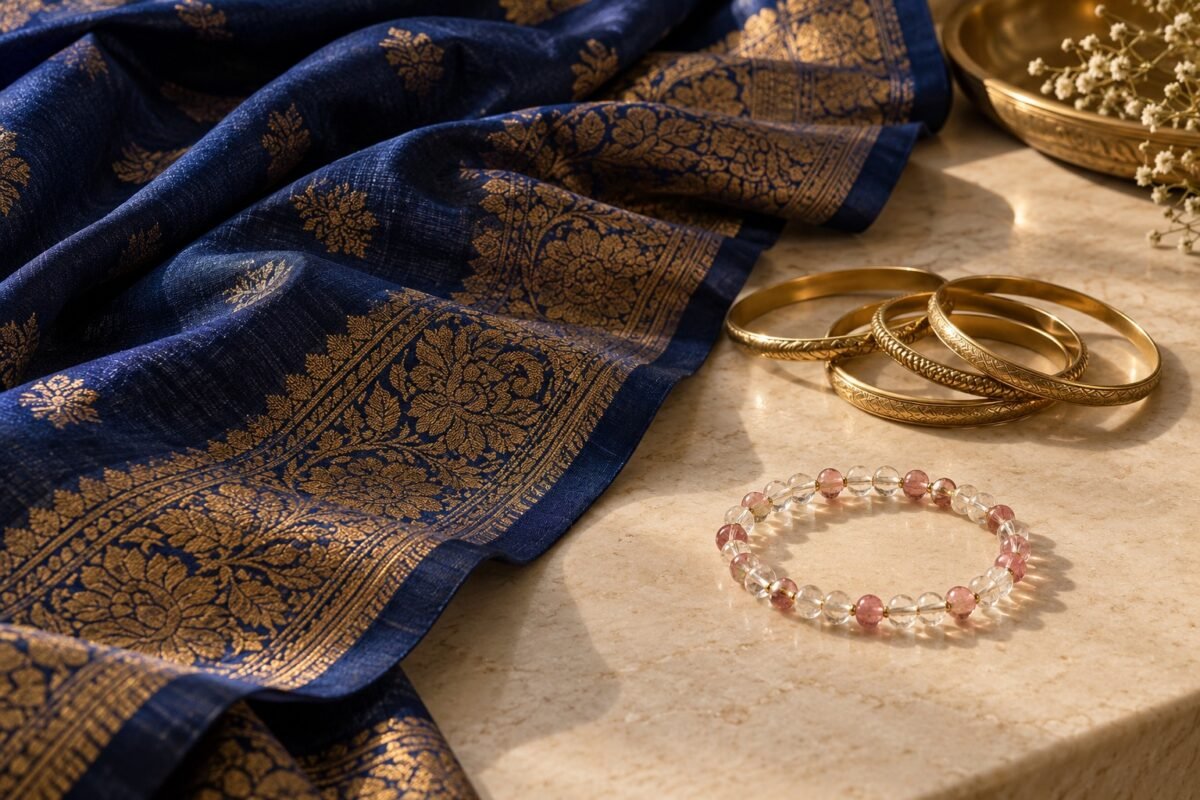
Vintage crystal bracelets are rarely valuable as antiques; their worth is in wearability and beauty, not investment. A fair price reflects the stone quality, the craftsmanship, and the condition — not the story. Compare against the cost of an equivalent new bracelet, then discount for wear, needed repairs, and uncertainty. If the vintage price approaches new retail, buy new. The premium for certainty is worth it.
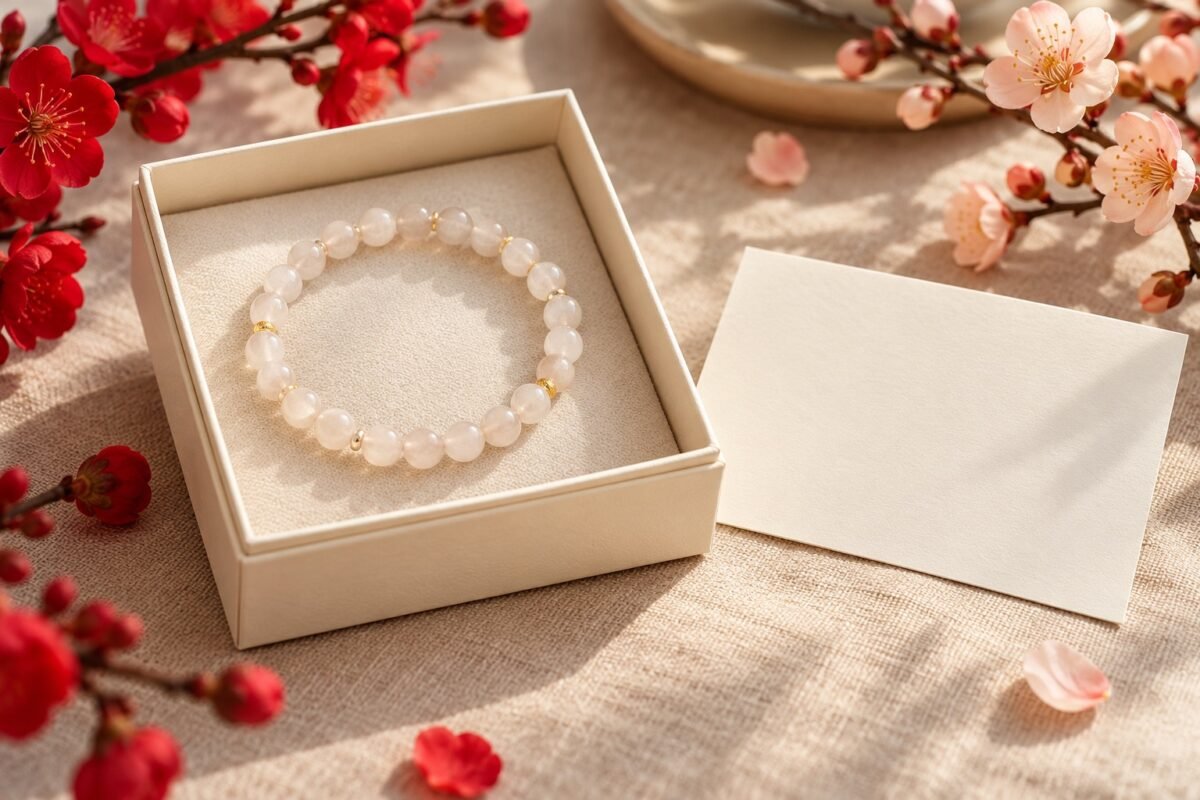
And if you do bring a vintage treasure home, give it a proper welcome: cleansing a secondhand crystal bracelet before first wear is both practical hygiene and a meaningful fresh start.
“Buy the bracelet, not the story. If the beads are beautiful, the elastic is sound, and the price is fair, the story is a bonus — not the product.”
More buying wisdom lives in our Hướng dẫn về vòng tay pha lê.
Các câu hỏi thường gặp
Are vintage crystal bracelets safe to wear?
Generally yes, once inspected. The main concerns are tired elastic (replace it), unknown treatments (ask the seller), and hygiene (cleanse before wearing). Very old pieces may contain lead-based stringing materials — when in doubt, restring on fresh cord.
How can I tell if a vintage bracelet is real stone or glass?
Use the temperature test (real stone stays cool longer), check for natural color variation and inclusions, and feel the weight. Glass beads often have visible mold seams or tiny bubbles; plastic feels warm and light immediately.
Should vintage bracelets be restrung before wearing?
If the elastic shows any age — slow snap-back, visible thinning, or a loose knot — yes, restring before wearing. It is a twenty-minute job and prevents the heartbreak of beads scattering across a parking lot on day three.
Do vintage crystal bracelets carry old energy?
Many wearers like to cleanse secondhand pieces before wearing them, as a practical reset and a symbolic fresh start. Whether you view it energetically or simply as good hygiene, a proper cleansing marks the bracelet as yours from day one.








 English
 Vietnamese