Both stones are pink, both are called love stones, and both show up in every “crystals for the heart” list — so it is no surprise that shoppers constantly ask: rose quartz vs rhodonite, which one should I actually wear? The short answer is that they work on different kinds of love. Rose quartz is the stone of gentle, unconditional love and self-compassion; rhodonite is the stone of emotional recovery, forgiveness, and loving through difficulty. This comparison walks through appearance, composition, meaning, and everyday wearability so you can pick the one that matches where you are right now.
Rose Quartz vs Rhodonite at a Glance
- Color: Rose quartz is soft, translucent pink; rhodonite is a deeper rose-red, often veined or mottled with black.
- Composition: Rose quartz is a variety of quartz (silicon dioxide); rhodonite is a manganese silicate with a distinctive black matrix.
- Hardness: Rose quartz scores 7 on the Mohs scale; rhodonite scores 5.5–6.5, making it somewhat softer.
- Traditional association: Rose quartz is linked with unconditional love and self-love; rhodonite is linked with emotional healing and forgiveness.
- Best for: Rose quartz suits daily self-love practice and gifting; rhodonite suits seasons of emotional repair and relationship work.
Appearance: Soft Pink vs Dramatic Rose-Red
Hold the two stones side by side and the difference is immediate. Rose quartz glows with a milky, translucent pink — calm, even, and easy to pair with any outfit. Its color comes from trace elements in the quartz structure, and genuine beads always show gentle variation rather than neon uniformity.
Rhodonite is bolder. Its rose-red to pink base is cut through with veins and patches of black manganese oxide, a dramatic contrast you can read about on the rhodonite mineral page. No two rhodonite beads look alike, which is exactly what draws people to it: every bracelet is one of a kind. If rose quartz whispers, rhodonite speaks up.
Style-wise, rose quartz layers beautifully with gold tones and other pale stones, while rhodonite’s black veining pairs naturally with darker beads like obsidian or hematite. Our rhodonite bracelet styling guide shows how the stone’s contrast works in real outfits.
Composition and Durability: What the Geology Means for Your Wrist
Rose quartz is quartz, one of the hardest common gemstones at Mohs 7. It shrugs off daily knocks, desk bumps, and bag rides without drama — a genuinely low-maintenance everyday stone.
Rhodonite, a manganese inosilicate, is softer at 5.5–6.5 and has good cleavage, meaning it can chip if struck hard at the wrong angle. In bracelet form this rarely matters — beads are polished and cushioned on elastic — but it is worth knowing: a rhodonite bracelet appreciates being taken off before workouts, heavy housework, or anything involving hard impacts. Think of it as the slightly more delicate of the two, deserving the same care you would give any favorite piece.
Both stones are fine with brief contact with water, though as a rule neither should live in chlorinated pools or sit in perfume. If you are comparing stones for their staying power, browse our crystal meaning guides for more mineral-by-mineral breakdowns.
Meaning and Association: Two Different Kinds of Love
This is where the choice gets personal. In crystal tradition, rose quartz is the stone of unconditional love — the warm, accepting kind you direct at yourself, your partner, your family, and your friends. It is the stone people reach for when building a self-love practice, softening self-criticism, or simply wanting more tenderness in daily life. That is why it anchors our heart chakra stones guide alongside green aventurine and jade.
Rhodonite, by contrast, is traditionally associated with emotional recovery. Crystal literature calls it a stone of forgiveness — of others and of yourself — and of staying loving through conflict, grief, or the slow work of repairing trust. Where rose quartz nurtures, rhodonite steadies. People often choose rhodonite during or after difficult chapters: a breakup, a family rift, burnout that has an emotional root.
Neither stone is “stronger”; they simply answer different questions. Ask yourself: do I want to cultivate more love, or do I want support while love feels hard?
Who Should Choose Which?
- Choose rose quartz if you are starting a self-love practice, buying a first crystal bracelet, or choosing a gift. It is gentle, universally wearable, and nearly impossible to get wrong — which is why a rose quartz gift is such a safe, meaningful choice.
- Choose rhodonite if you are moving through emotional difficulty and want a daily reminder of resilience and forgiveness. Its bolder look also suits people who prefer jewelry with presence.
- Choose both if you want the full picture: rose quartz for daily warmth, rhodonite for the deeper work. They are traditionally considered compatible and look striking worn together.
Wearing Them Together: Practical Tips
Rose quartz and rhodonite make a natural pair — soft pink against dramatic rose-red is one of the prettiest stacks in crystal jewelry. Wear rose quartz on its own for everyday gentleness, and add rhodonite on days when you want its steadier, more grounded energy beside it.
Because rhodonite is the softer stone, give it the outer-wrist position where it takes fewer knocks, or simply be mindful during active days. Clean both with a soft dry cloth, keep them away from harsh chemicals, and restring the elastic if it ever loosens — standard care that keeps any beaded bracelet beautiful for years.
“Rose quartz teaches you to love yourself. Rhodonite teaches you to keep loving when it is difficult. Most of us need both lessons — sometimes on the same day.”
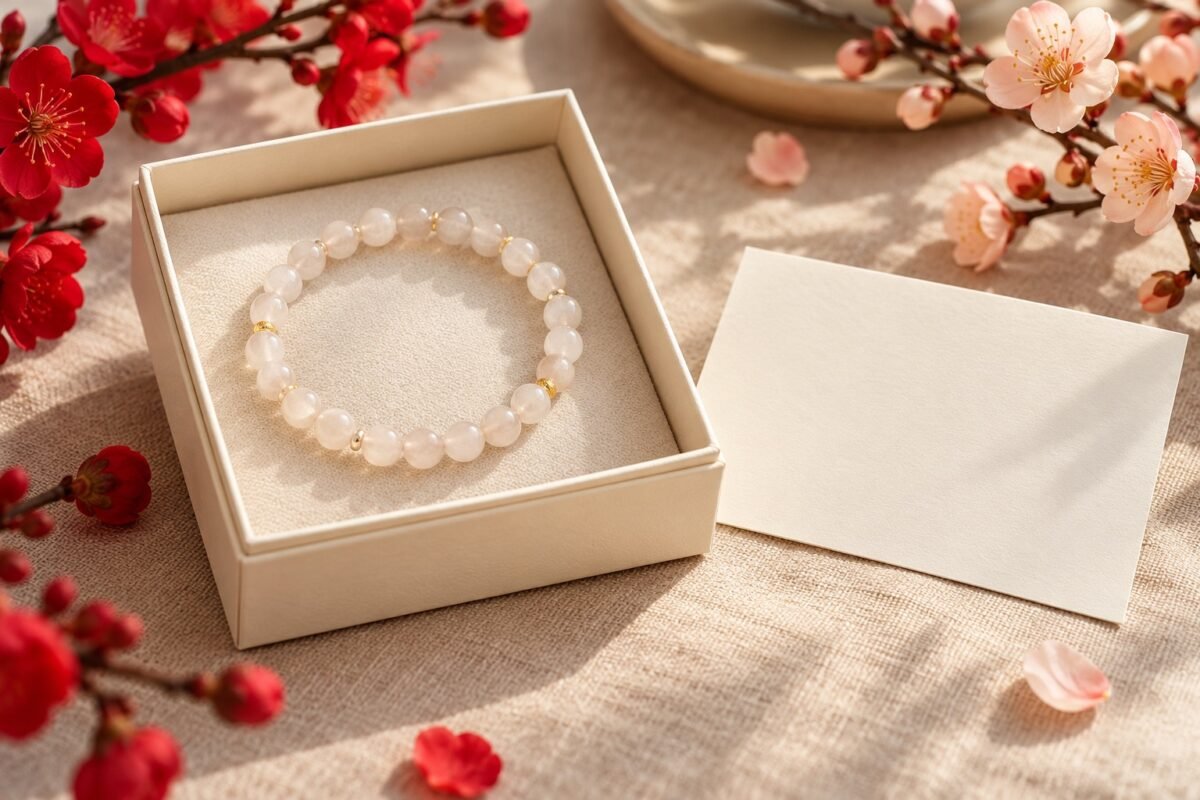
If the rose quartz side of this comparison speaks to you, the rose quartz self-love bracelet is designed exactly for a daily compassion practice: soft pink beads, comfortable elastic, and gift-ready packaging.
Frequently Asked Questions
Can you wear rose quartz and rhodonite together?
Yes. The two stones are traditionally considered complementary — rose quartz for unconditional love and self-compassion, rhodonite for emotional healing and forgiveness. Visually, the soft pink and the veined rose-red also stack beautifully together.
Which is better for self-love, rose quartz or rhodonite?
Rose quartz is the classic choice for self-love: it is traditionally associated with gentleness, acceptance, and emotional comfort. Rhodonite leans more toward forgiveness and recovery after emotional hurt. For a general self-love practice, most people start with rose quartz.
Is rhodonite rarer than rose quartz?
Yes, gem-quality rhodonite is less abundant than rose quartz, which is one of the most common gemstones in the world. That said, rhodonite bracelets remain widely available and affordable — you are paying for character, not scarcity.
How do I tell real rhodonite from dyed stone?
Real rhodonite shows natural variation: rose-red to pink tones with irregular black manganese-oxide veining, and a slightly waxy to vitreous polish. Perfectly uniform hot-pink beads with no matrix are a red flag for dyed material. Buy from sellers who describe the stone’s natural markings honestly.








 English
 Vietnamese