Every beaded bracelet hangs on a string — and the string decides how long the bracelet lives. Elastic cord and beading wire are the two dominant methods, and they fail differently: elastic stretches and snaps without warning, wire kinks and frays at stress points. Neither is universally better. Here is the honest comparison.
The Two Contenders
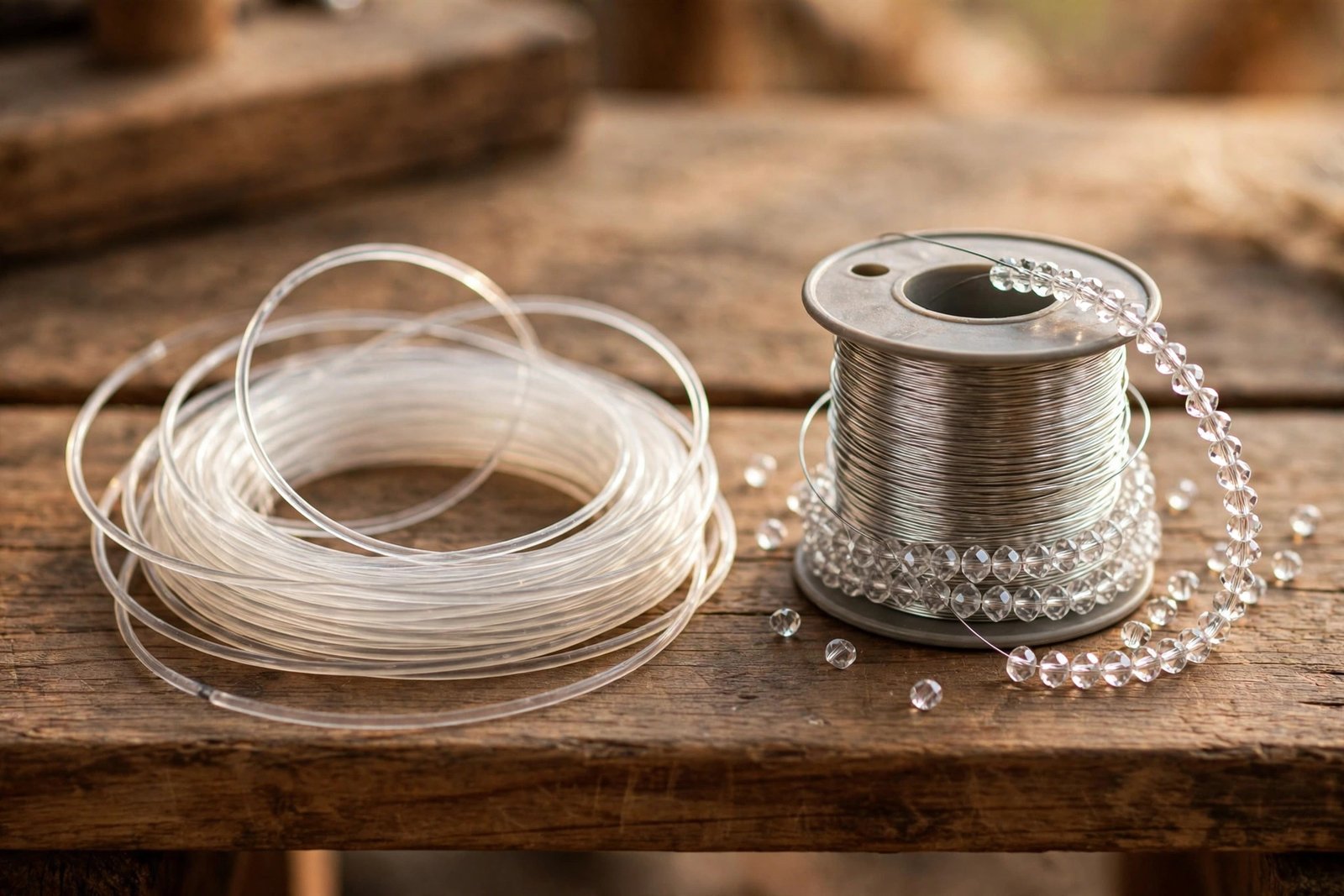
Elastic cord (usually polyurethane-based stretch cord, often sold as “crystal string”) is the default for most crystal bead bracelets. It stretches to slip over the hand, needs no clasp, and gives a clean, uninterrupted circle of beads. Beading wire (typically nylon-coated stainless steel cable, e.g., 49-strand) does not stretch — it is finished with a clasp and sized to the wrist. It looks more “finished” and jewelry-like, at the cost of convenience.
Most bracelets in our bracelet guides and shop are elastic-strung, because elastic suits daily-wear crystal jewelry. But wire has real advantages — especially if you are tired of restringing. For context on how elastic ages, see our elastic vs. adjustable clasp comparison.
Durability Head-to-Head
Lifespan under normal wear
Elastic: 6–18 months of daily wear before restringing. UV, skin oils, perfume, and repeated stretching degrade polyurethane gradually — the cord goes slack before it snaps, a useful warning sign. Wire: 2–5 years before coating wear or fraying. Wire does not degrade from body chemistry, so its lifespan is measured in abrasion, not chemistry.
Winner: wire, by a clear margin — roughly 3x the lifespan under comparable wear.
Failure mode
Elastic fails catastrophically: one moment it is fine, the next moment beads are bouncing across a tile floor. The snap usually happens at the knot, the weakest point. Wire fails gradually: the nylon coating frays near the clasp or crimps, individual steel strands poke out, the bracelet feels rough before it breaks. You get warnings.
Winner: wire — gradual failure beats surprise bead-scatter, especially with expensive stones.
Resistance to daily hazards
Water, sweat, sunscreen, and perfume attack elastic relentlessly; each exposure shortens its life. Wire shrugs off all of these — nylon-coated steel does not care about your moisturizer. However, wire loses to sharp bending: kink a wire bracelet (catching it in a drawer, folding it into a tight travel pouch) and the kink is permanent, creating a weak point. Elastic cannot kink.
Winner: tie — wire resists chemistry, elastic resists mechanical abuse.
Bead compatibility
Heavy beads stress elastic: large 10–12mm stone beads on elastic need thicker cord and more frequent restringing. Wire handles heavy beads gracefully — it was designed for them. Conversely, very small beads (4–6mm) with large drill holes can slide sloppily on wire but sit perfectly on elastic. Sharp or rough drill holes — common in cheaper beads — saw through elastic over time but barely mark wire.
Winner: wire for heavy or rough-drilled beads; elastic for small, smooth beads.
Comfort and convenience
Elastic slips on in one second, fits a range of wrist sizes, and has no clasp to dig into your wrist while typing. Wire needs a clasp (fiddly with one hand), must be sized precisely, and the clasp/crimp hardware can irritate sensitive skin. For all-day, everyday wear, most people find elastic meaningfully more comfortable.
Winner: elastic, decisively.
When to Choose Elastic
- Daily-wear crystal bracelets. The slip-on convenience means you will actually wear it — and a worn bracelet beats a drawer bracelet.
- Stacking and layering. Elastic bracelets stack without clasps clashing, and their slight give keeps stacks comfortable.
- Gifting. Elastic fits a range of wrists, removing the sizing gamble (see our gift guide).
- Active lifestyles. No metal hardware to catch, and if it snags, elastic gives rather than kinking.
- Budget pieces. When the beads cost less than a professional restringing, elastic’s easy DIY maintenance (see our restringing guide) wins on economics.
When to Choose Wire
- Expensive or irreplaceable beads. Wire’s gradual failure mode protects stones you cannot replace — heirloom jade, rare specimens.
- Heavy statement pieces. Big beads belong on wire; elastic under heavy load is a short-lived combination.
- Formal jewelry. The clasp and structured drape read as “fine jewelry” in a way elastic does not.
- Infrequent wear. Occasion pieces that sit in a box for months: wire does not age in storage the way elastic does (elastic degrades even unworn, though slowly).
- When you are done restringing. If you wear one signature bracelet daily and want years between maintenance, wire is the answer.
Maximizing the Life of Either String
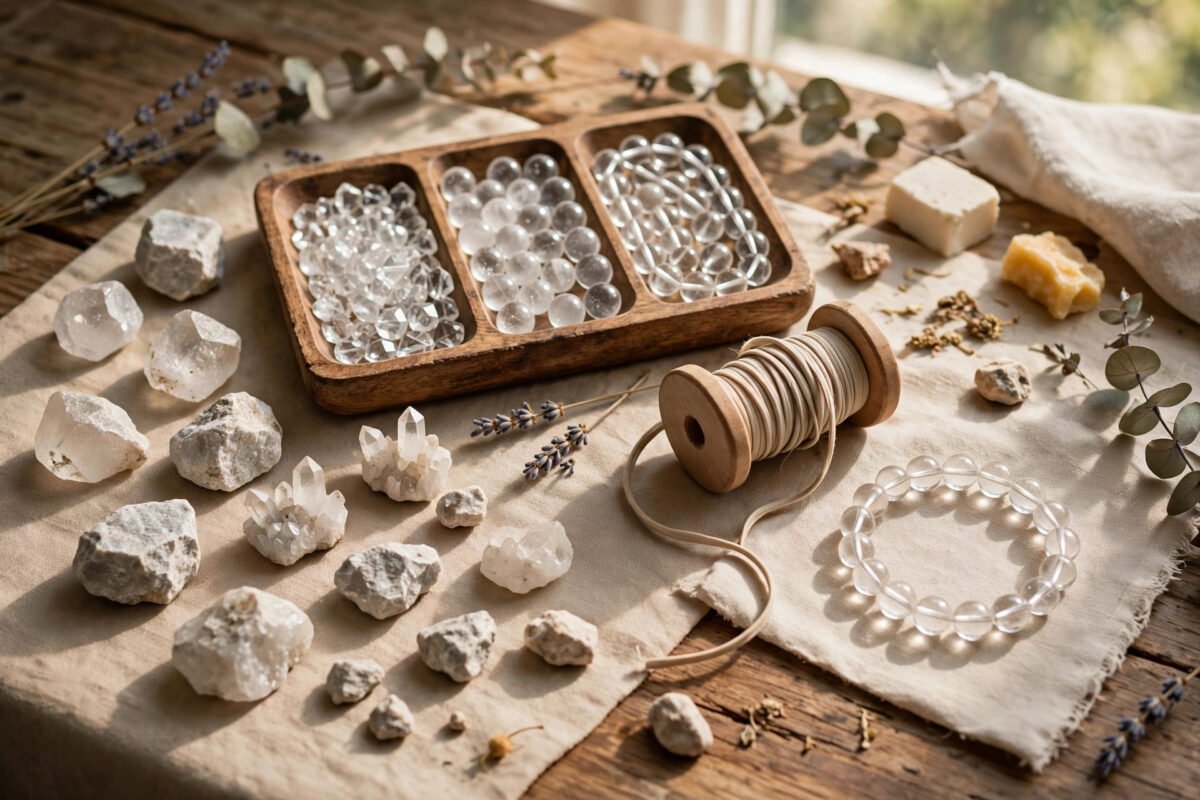
For elastic: roll the bracelet on and off rather than stretching it wide; keep it away from perfume, sunscreen, and water; store flat, not hanging; restring at the first sign of slackness — waiting for the snap risks losing beads. Most crystal beads are quartz varieties rated 7 on the Mohs scale (per the Trang về khoáng vật thạch anh), so the beads will outlive many cords — what kills elastic is chemistry and stretch cycles, not the stones themselves.
For wire: never kink or sharply fold it; store flat or loosely coiled; check crimps and clasp annually for fraying; keep it away from rough surfaces that abrade the nylon coating. If individual steel strands start poking through, restring before they snap — poking strands also scratch skin and snag clothing.
For both: remove bracelets for heavy labor, sports, and swimming. No stringing survives everything, and the five seconds of removal beats every repair.
“The best string is the one that matches your life. Elastic forgives your habits; wire rewards your care. Choose the one you will maintain — because the maintained bracelet always outlasts the neglected one.”
If you wear crystal bracelets daily, elastic’s convenience usually wins — budget 15 minutes a year for restringing and it becomes a non-issue. If you own one precious piece you want to wear for years untouched, wire earns its keep. Our Vòng tay pha lê giúp cân bằng năng lượng comes on quality elastic built for daily wear. For the full maintenance picture, read why crystal bracelets break next.
Các câu hỏi thường gặp
Which lasts longer, elastic or wire bracelets?
Wire lasts longer — typically 2–5 years versus 6–18 months for elastic under daily wear. Wire resists body chemistry, water, and UV that degrade elastic. However, wire kinks permanently if bent sharply, while elastic cannot kink, so real-world durability depends on how you treat the bracelet.
Why does my elastic bracelet keep breaking?
The usual culprits: stretching it wide to put it on (roll it instead), exposure to perfume, sunscreen, or water, UV degradation, and simply age — elastic degrades even in storage. Heavy beads accelerate the process. Restring at the first sign of slackness rather than waiting for a snap.
Can I restring an elastic bracelet myself?
Yes — it is one of the easiest jewelry repairs. You need elastic cord, a bead needle or wire, and scissors; the whole job takes about 15 minutes. Our step-by-step restringing guide walks through the knots that hold.
Is wire better for expensive crystal beads?
Generally yes. Wire’s gradual failure mode (fraying with visible warnings) protects irreplaceable stones far better than elastic’s sudden snap. For heirloom or rare-stone bracelets, the extra cost and clasp inconvenience of wire is worth it.





 English
 Vietnamese