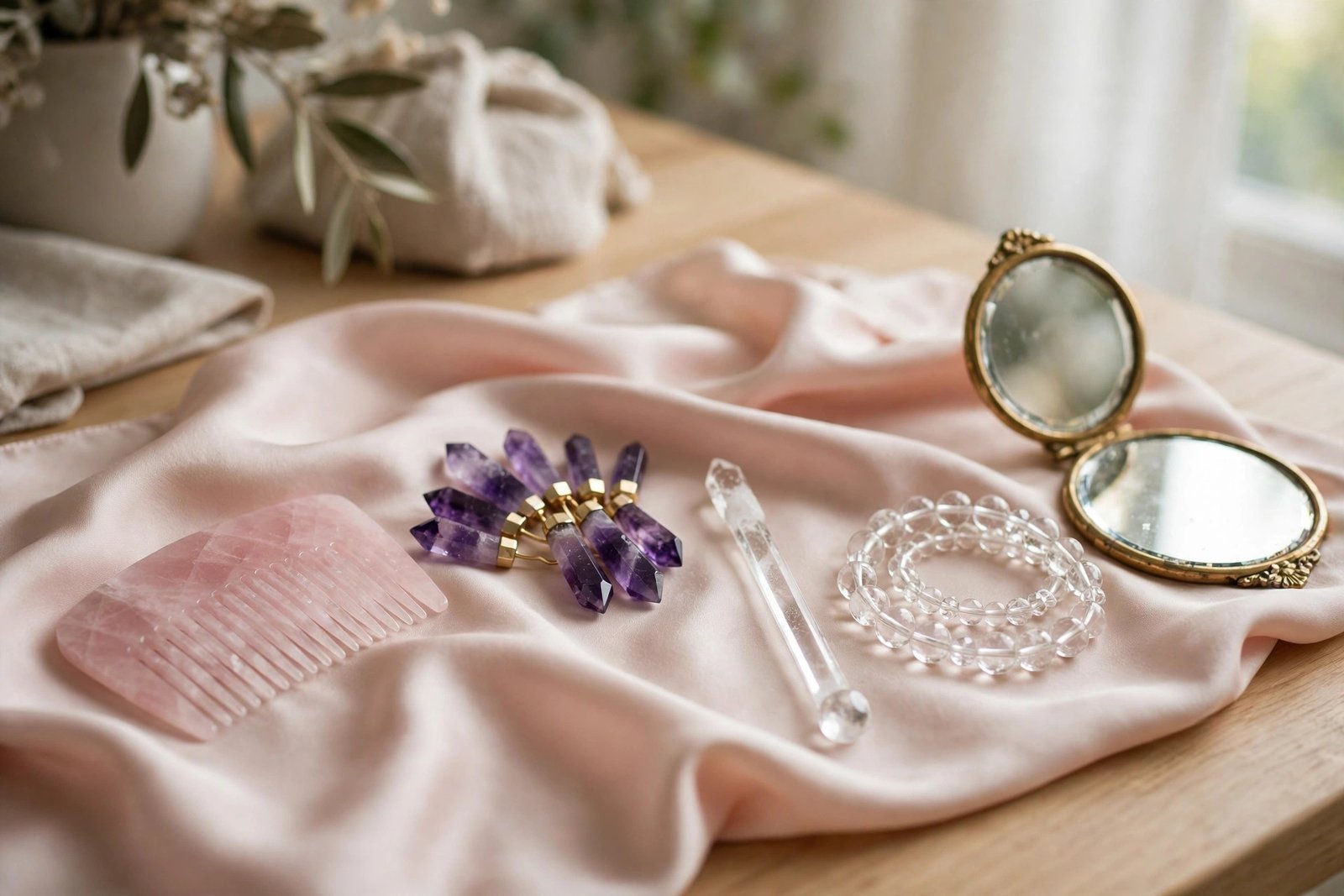
A crystal hair comb sits at the meeting point of jewellery and ritual. On a dressing table it looks like an ornament — a slab of rose quartz or amethyst cut into polished teeth — but in the hand it becomes a tool: for detangling gently, for a slow scalp massage, or as part of a gua sha-inspired routine borrowed from Chinese beauty tradition. Crystal hair pins and sticks carry the same idea into styling, turning an everyday bun into something deliberate.
This guide explains where crystal hair tools come from, which stones are used and why, how to use a crystal comb well, and the care that keeps delicate teeth and pins intact.
From Dressing-Table Ornament to Ritual Tool
Decorative combs are ancient: carved hair ornaments appear in many cultures, and in China, combs (shu) carried symbolic weight as gifts, while scalp combing became part of traditional self-care practice — a background outlined in general references such as the Wikipedia overview of gua sha, the skin-scraping tradition from which many modern stone beauty tools borrow their shapes and language. The jade and stone combs sold today descend from that dressing-table culture, updated by the crystal market into rose quartz, amethyst, aventurine and obsidian versions.
Modern crystal tradition adds its own associations: a rose quartz comb is traditionally linked with self-care and tenderness (see our Hướng dẫn về ý nghĩa của thạch anh hồng), amethyst with calm evening rituals, and clear quartz with clarity and simplicity. These are beliefs and aesthetic associations, not cosmetic claims — a crystal comb will not change your hair’s biology. What it genuinely offers is a slower, cooler, more pleasant ritual than a plastic comb grabbed in a rush, and for many people that change of pace is the entire point.
The Main Forms: Combs, Pins, Sticks and Claws
Crystal combs are cut from a single slab of stone, with wide teeth suited to detangling dry hair gently or distributing oil, rather than fine styling. Their weight in the hand is part of the appeal, and the stone stays naturally cool against the scalp. Hair pins and forks — two-pronged pieces in metal tipped with crystal, or carved stone — secure buns and twists; the crystal element is usually a bead or small point. Hair sticks work the same way with a single elegant rod, sometimes topped with a quartz point. Crystal-embellished claw clips and barrettes put small stones on a standard mechanism, giving sparkle without the fragility of an all-stone piece.
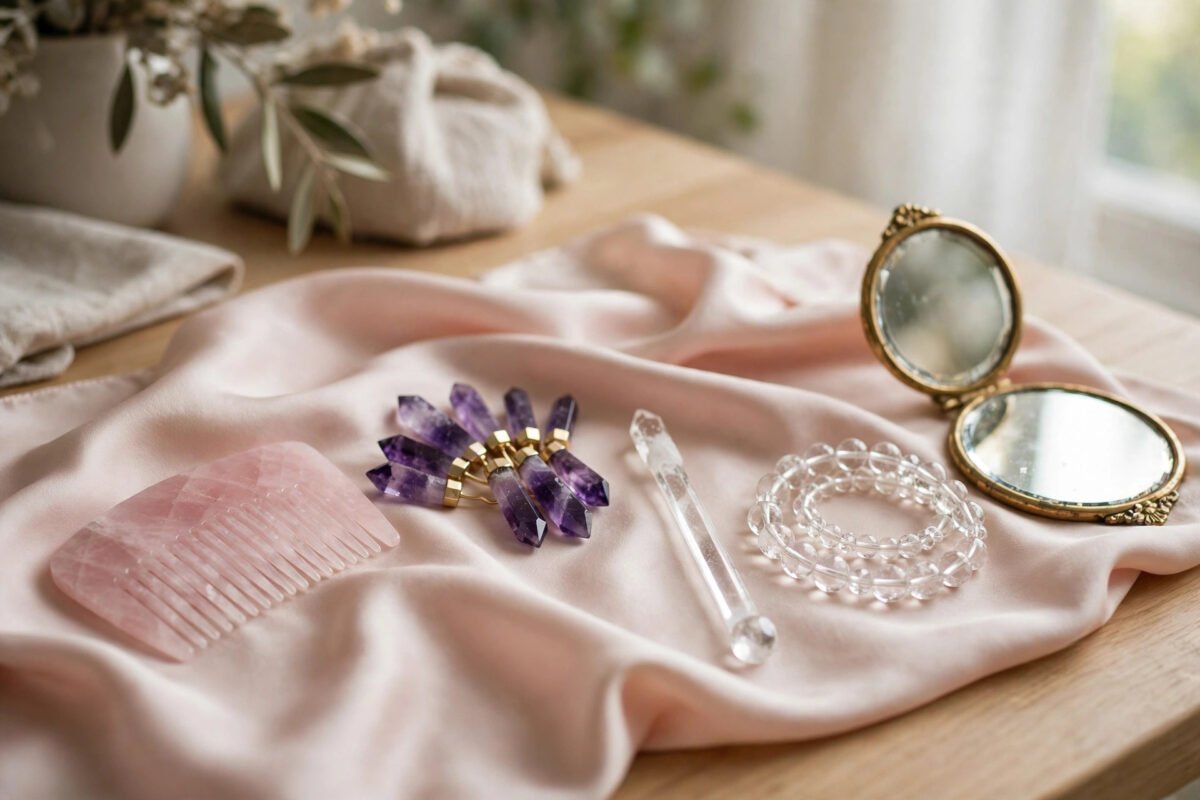
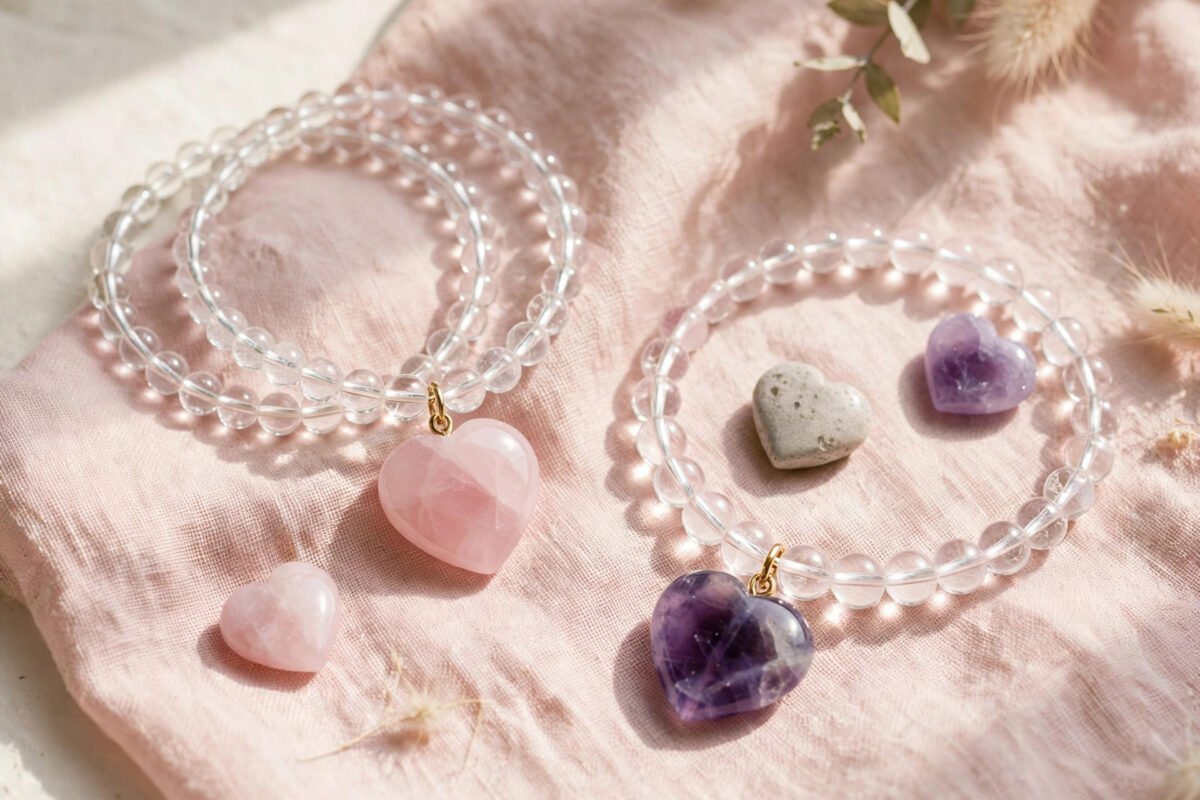
If you enjoy matching your tools to your jewellery, a dressing table with an AVENSU rose quartz crystal bracelet resting beside a rose quartz comb makes a small, coherent ritual set; the bracelet range is in the Cửa hàng AVENSU. For choosing complementary stones by association, our crystal shape meanings cheat sheet gives the wider shape context.
How to Use a Crystal Comb
Work with dry or very slightly oiled hair. Start at the ends and detangle in short, gentle strokes, moving upward only when the ends are clear — stone teeth do not flex like plastic, so forcing them through a knot risks both your hair and the comb. Once hair is smooth, long strokes from forehead to crown and down the back of the head make a relaxing scalp routine; many people do fifty or a hundred slow strokes in the evening as a wind-down ritual, a number borrowed from traditional combing practice.
Keep pressure light. A crystal comb should glide, not scrape, and the scalp work should feel like a massage, never a scratch. If you use hair oil, apply a drop to your palms first rather than soaking the comb, and wipe the comb afterwards. For a fuller beauty-ritual setup, pair the comb with a small dish of tumbled stones or a bracelet stand on the dressing table, arranged with the shelf principles in how to display a crystal collection.
A note on expectations: claims that stone combing stimulates hair growth or treats scalp conditions circulate widely in marketing, but they are not established medical findings. Enjoy the comb as a massage and grooming ritual, and see a professional for actual hair or scalp concerns.
Choosing and Caring for Crystal Hair Pieces
Choose by hardness and honesty. Quartz-family stones — rose quartz, amethyst, clear quartz — rate 7 on the Mohs scale described in Wikipedia’s Mohs scale overview, which makes them the most durable choice for combs. Jade-look pieces are often nephrite or aventurine rather than true jadeite; a reputable seller will name the actual stone. The checks in how to tell if a crystal is real help you buy with confidence.
Inspect the teeth: they should be evenly cut, smoothly polished and free of hairline cracks, because teeth are where combs break. Weight should feel substantial but comfortable. For pins and sticks, check that crystal tips and beads are firmly set, not loosely glued.
Care is mostly about drops: stone combs shatter or chip on tile floors, so use them seated at the dressing table when you can, and store them in a pouch or lined drawer, not loose in a bathroom cabinet. Wash with mild soapy water, dry thoroughly — especially metal fittings on pins — and keep embellished pieces away from hairspray buildup by wiping them after use. The gentle storage principles in how to store crystal bracelets and the routines in our crystal care kit essentials guide work just as well for hair tools as for jewellery.
Các câu hỏi thường gặp
What is a crystal hair comb used for?
Gentle detangling and scalp massage as part of a beauty ritual. Its wide stone teeth suit dry hair and slow, relaxing combing routines rather than fine styling, and in crystal tradition the stone’s associations — rose quartz with self-care, amethyst with calm — are part of the appeal.
Which stone is best for a crystal comb?
A quartz-family stone such as rose quartz, amethyst or clear quartz. At hardness 7, quartz resists everyday knocks better than softer stones, keeps a good polish and stays naturally cool on the scalp. Whatever you choose, check the teeth are smooth, even and uncracked before buying.
Can a crystal comb help my hair grow?
There is no solid evidence that crystal combing changes hair growth. Scalp massage in general feels relaxing and many people enjoy it as a ritual, but treat growth claims as marketing tradition rather than fact, and consult a professional about genuine hair or scalp concerns.
How do I stop a crystal comb from breaking?
Use it seated, over a soft surface where possible, never force it through knots, and store it in a pouch or lined drawer rather than loose in a cabinet. Tiles and stone bathroom floors are the usual cause of breakage, so keep a small mat or towel on the dressing table surface where you set it down.



 English
 Vietnamese