A crystal collection has a way of spreading: a point on the desk, a cluster on the bookshelf, tumbled stones in every dish in the house. Bringing it together into one deliberate display changes how it feels — the pieces start to talk to each other, colours group and graduate, and visitors actually stop and look. Good display is also good care: stable shelves, sensible light and room to dust keep specimens safer than a crowded windowsill ever will.
This guide covers choosing shelves, lighting that flatters different stones, layout rules that work at any collection size, and the practical details — stands, labels, dust and safety — that keep a display looking intentional.
Choosing Shelves and Surfaces
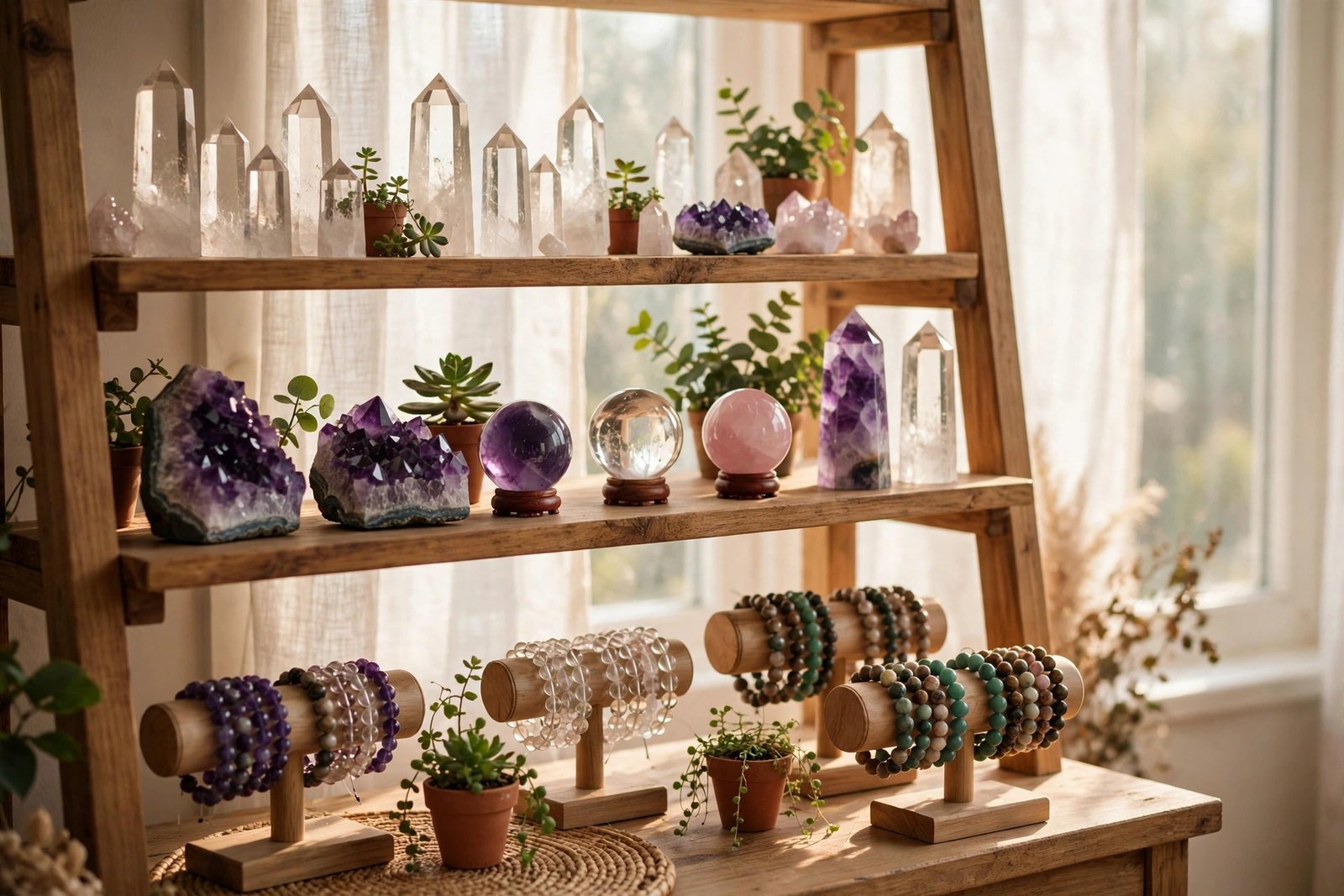
Start with stability. Crystals are heavier than they look, so choose shelving that is level, fixed to the wall where possible, and rated for real weight; a sagging particleboard shelf is a risk to the pieces below it. Open wooden shelves suit most collections and warm up the mineral look, while glass shelves in a cabinet protect from dust and pets and let light pass between levels.
Depth matters: 15–20 cm is enough for most towers, clusters and spheres, and shallower shelves keep small pieces from disappearing at the back. If your collection includes a few large specimens, give them a dedicated low surface — a sideboard or the bottom shelf — rather than squeezing them in among small pieces. Keep the display out of high-traffic bump zones and, in homes with cats, consider a cabinet with doors: cats find crystal shelves fascinating, and gravity always wins.
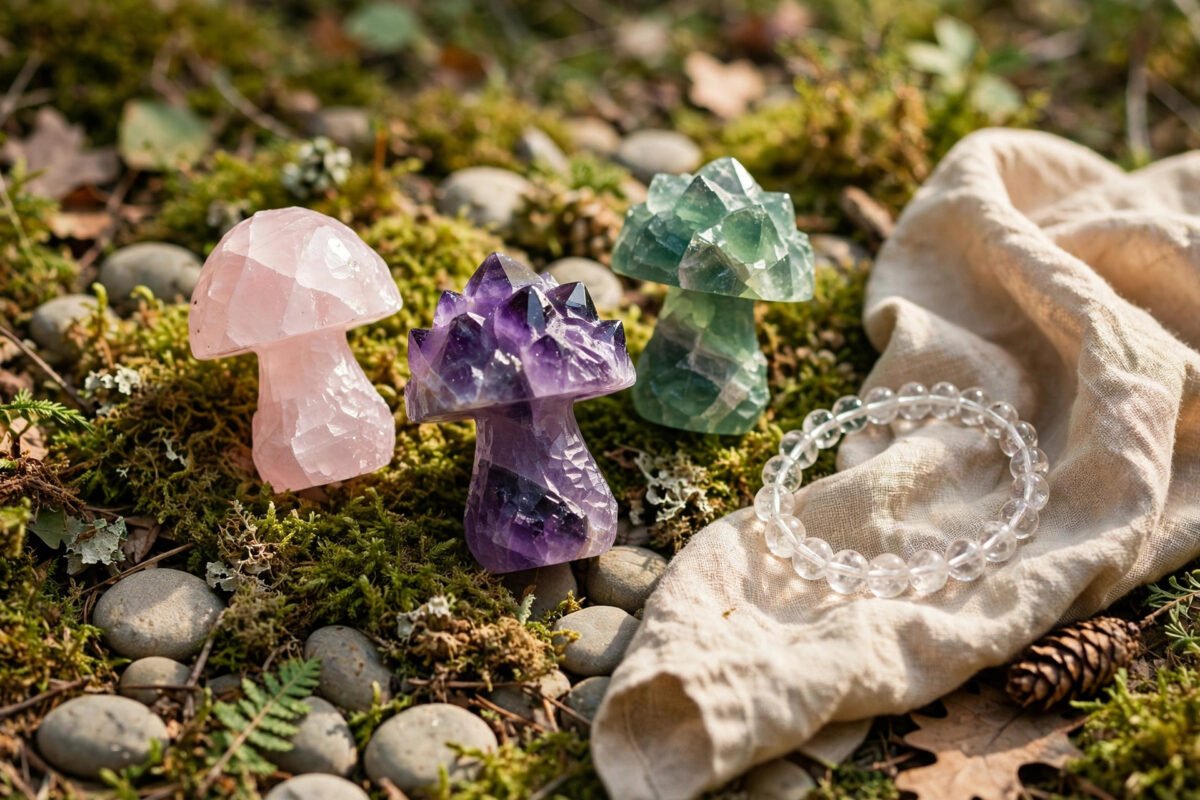
Sunlight is the other placement factor. A bright spot flatters most stones, but prolonged direct sun can fade amethyst, fluorite, rose quartz and kunzite. A shelf near a window, lit indirectly, is the sweet spot for most collections.
Lighting That Makes Crystals Glow
Light is what separates a display from a storage shelf. Natural daylight shows true colour best, so position the collection where it receives soft, indirect daylight if you can. For artificial light, warm-white LED strips (around 2700–3000K) fitted under the shelf above make translucent stones glow without the heat of older bulbs, and LEDs are safe near wood and fabric. Background on how light interacts with gemstone colour can be found in the GIA’s gem encyclopedia resources, which serious collectors use as a reference for stone properties.
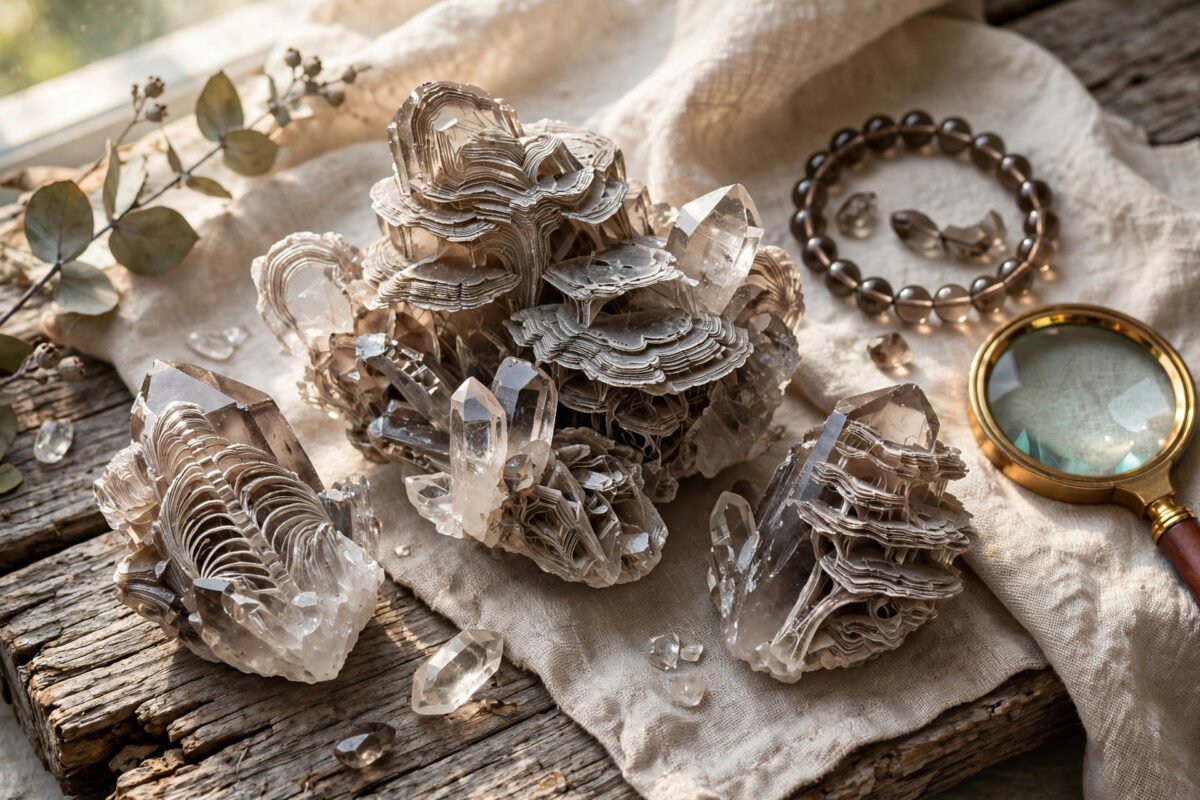
Backlighting works beautifully for translucent pieces — agate slices, fluorite towers, quartz points — because light passes through and reveals banding and inclusions. Opaque stones such as jasper, onyx and malachite prefer front or side light that shows their pattern and polish. Spheres and polished pieces love a light source slightly above, which gives them a bright highlight; raw clusters sparkle best under a small focused spotlight that creates tiny reflections across the crystal faces.
Avoid coloured party lighting as your main display light: it distorts the colours you chose the stones for. Save it, if you like it, for a single accent piece.
Layout Rules That Always Work
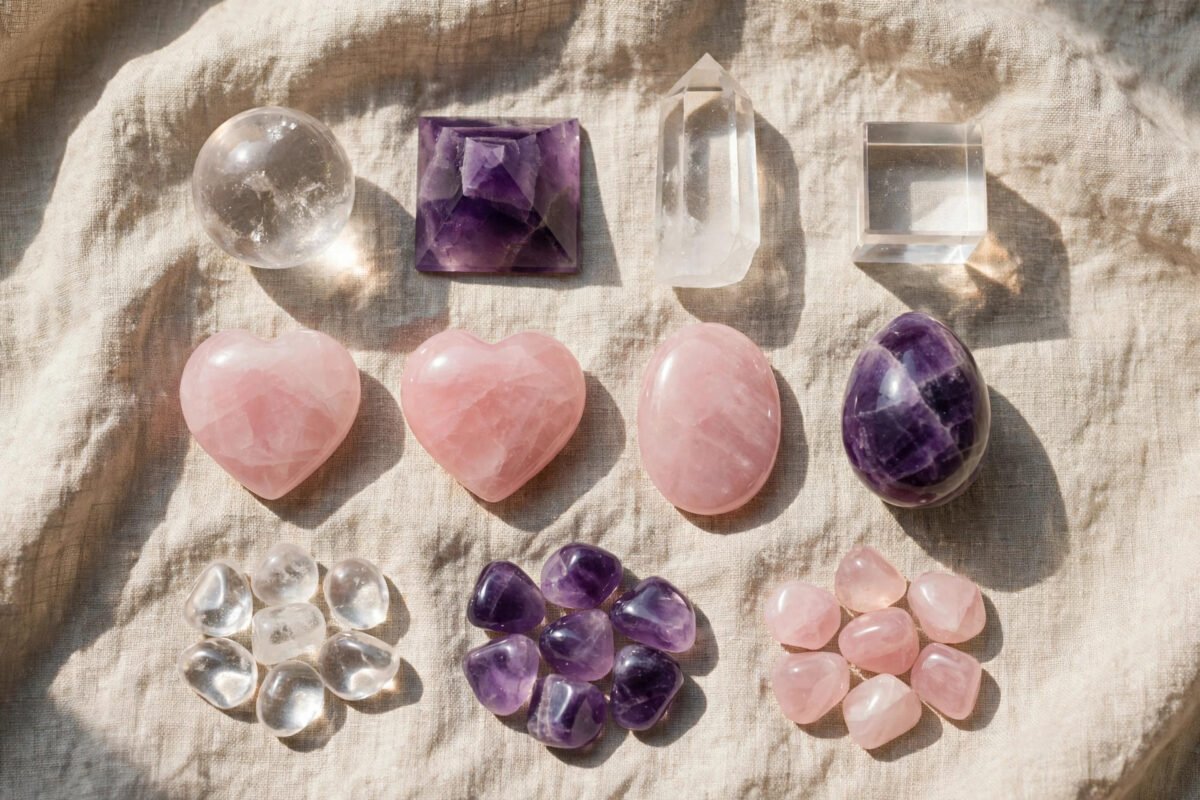
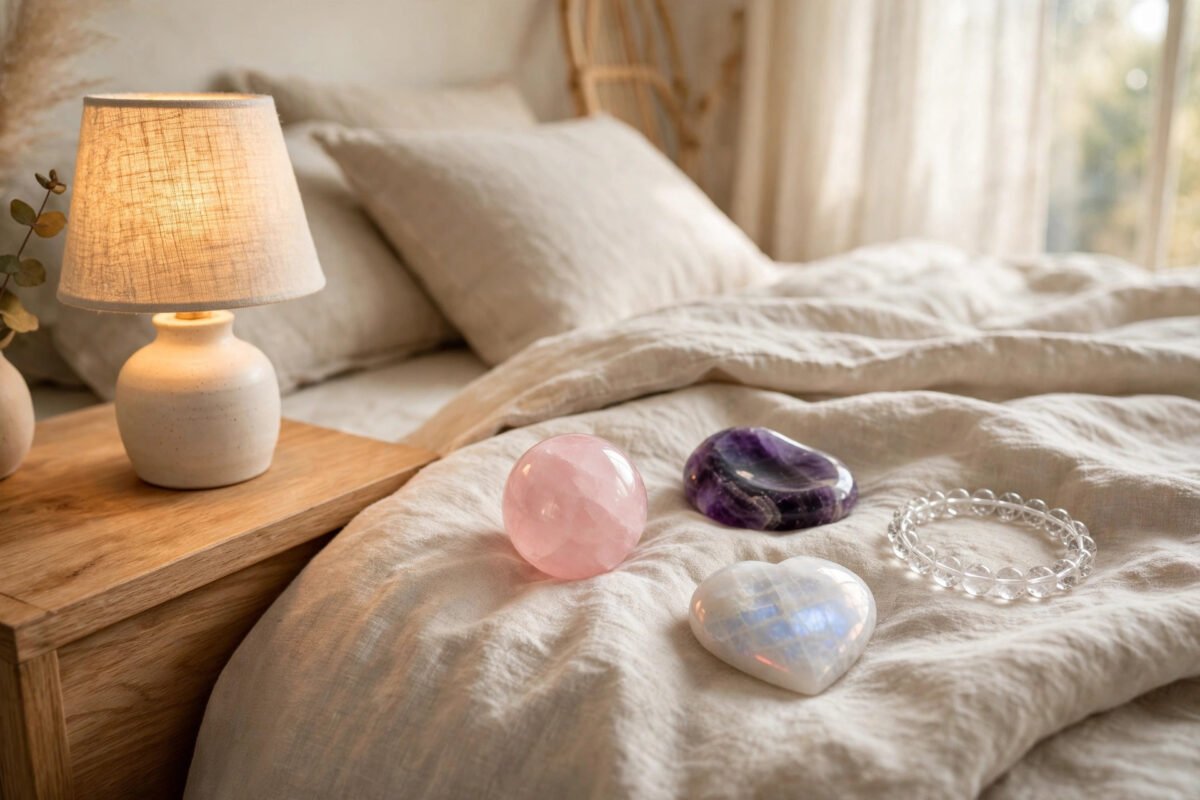
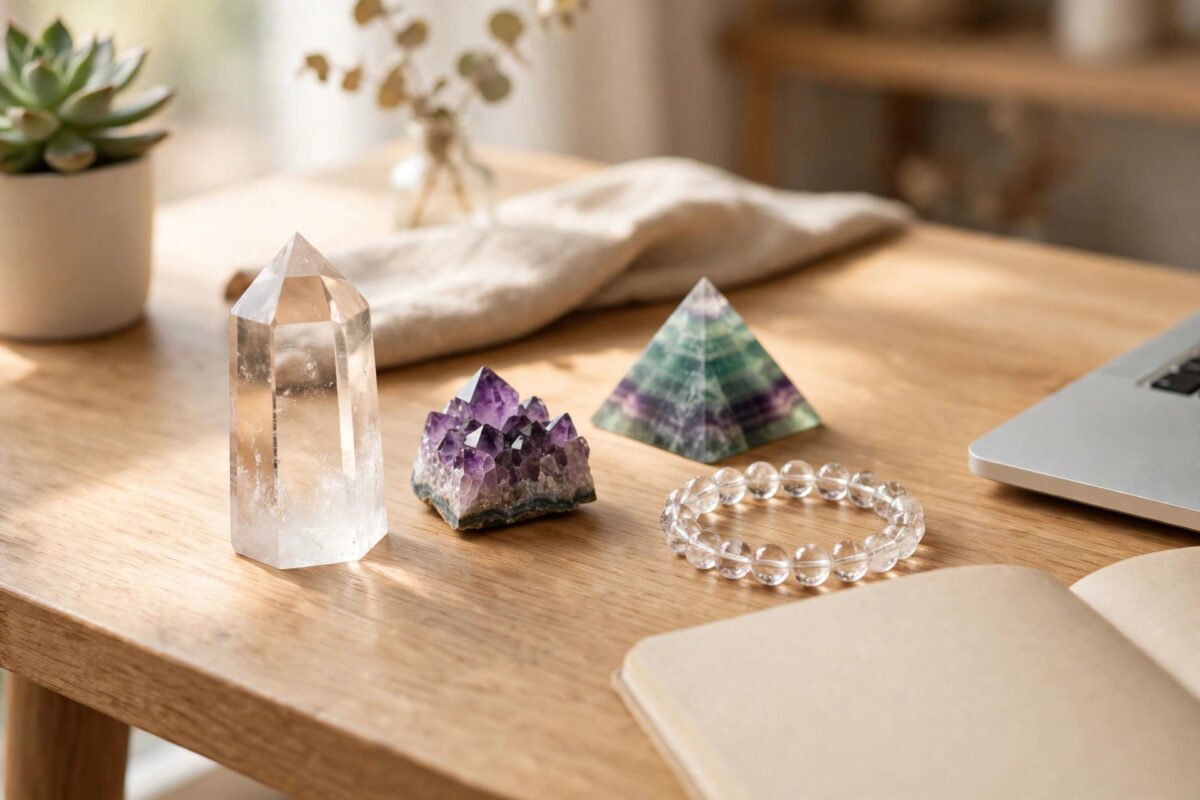
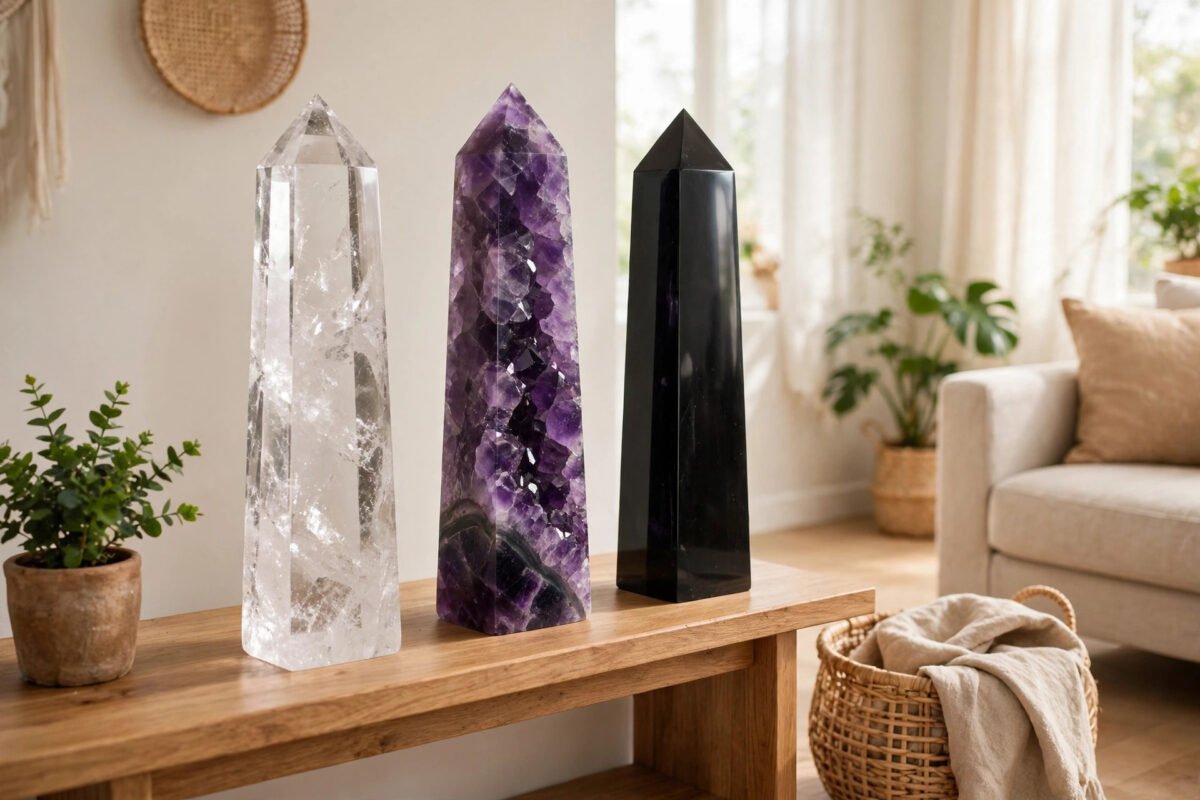
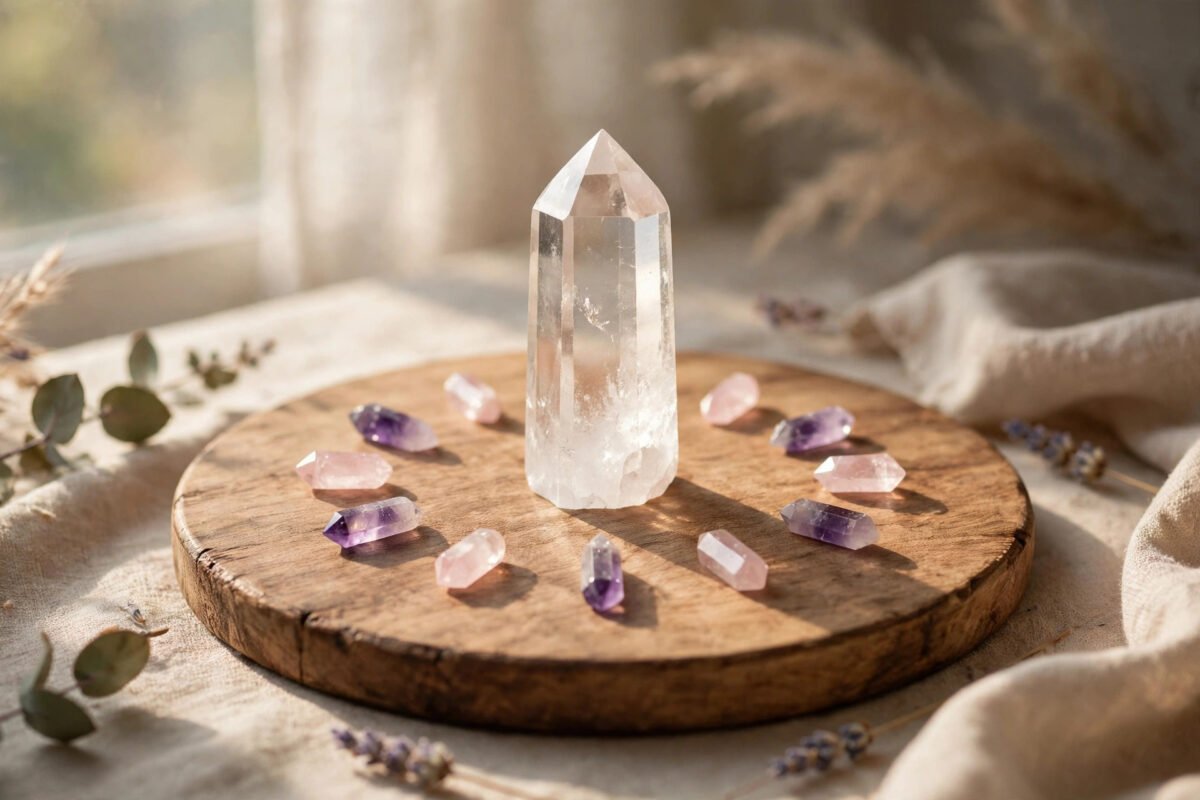
Group by family, colour or theme — pick one. Grouping by colour, moving from clear and white through pink, purple, blue, green to black, is the easiest scheme to keep beautiful as a collection grows. Grouping by stone family suits mineral collectors; grouping by theme (a desk set, a bedroom set, a chakra shelf) suits practitioners. Our crystal shape meanings cheat sheet can help you theme by form, and pieces meant for specific rooms follow the logic in crystal shapes for your desk và crystal shapes for the bedroom.
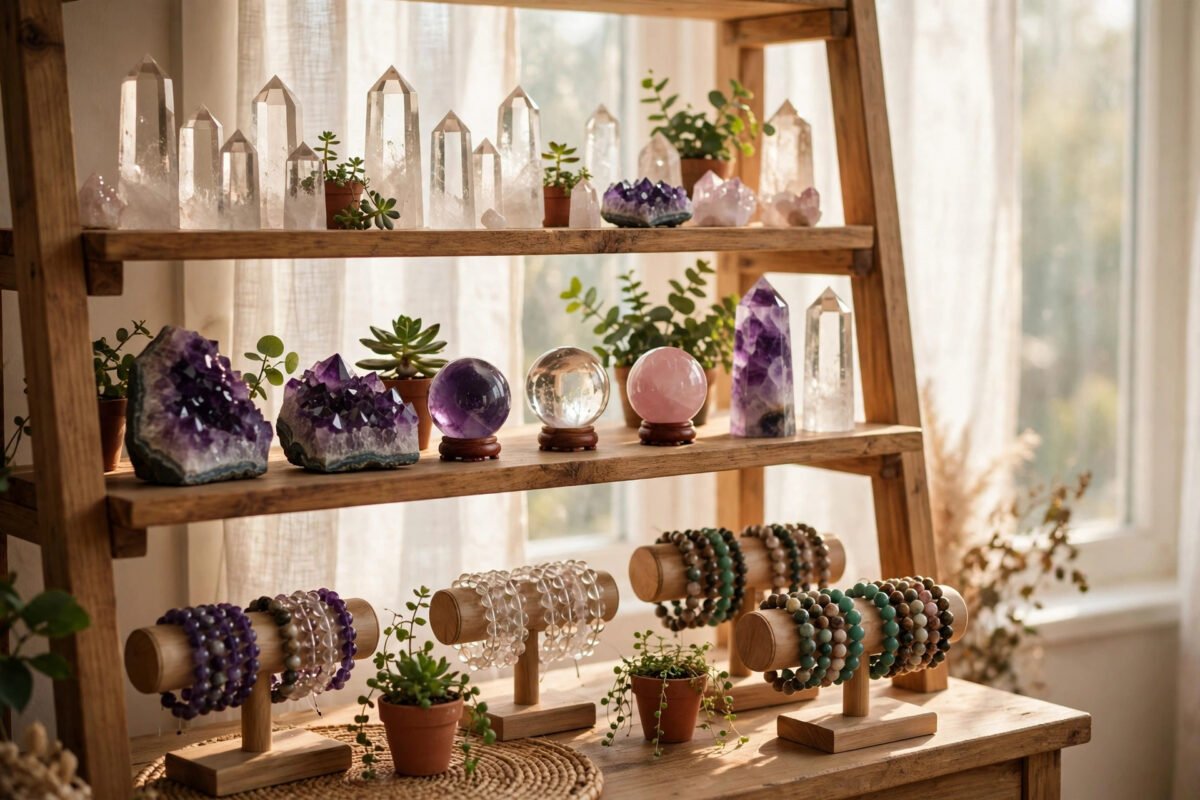
Vary the heights. A display of pieces all one height looks like a shop stockroom. Alternate tall towers and obelisks with low clusters and dishes of tumbled stones, and use small risers, wooden blocks or stacked books to lift back-row pieces so they are visible. Our article on crystal obelisks in feng shui and decor shows how one tall form can anchor a whole arrangement.
Leave breathing room. Negative space is a design tool: pieces displayed with gaps look chosen, pieces crammed edge to edge look stored. As a rough rule, if you cannot dust between pieces without moving three others, the shelf is too full — edit, rotate pieces seasonally, and keep the rest stored safely using the principles in how to store crystal bracelets.
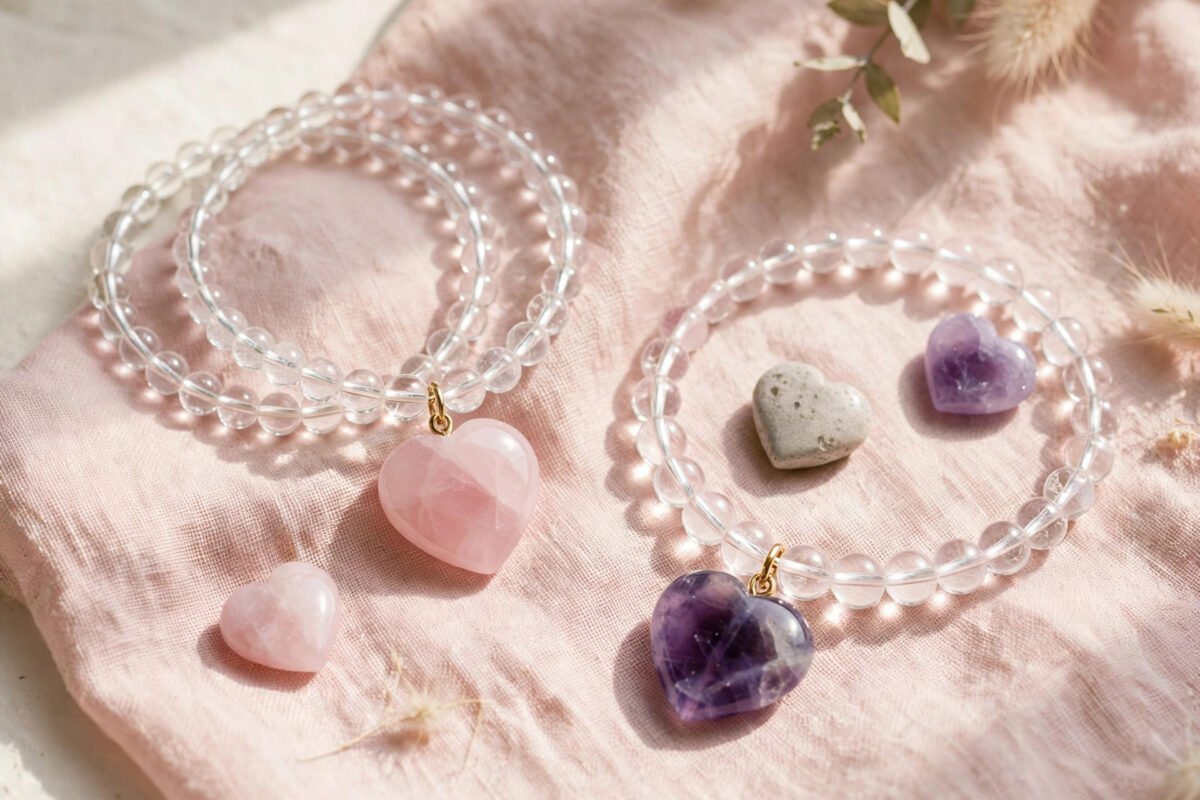
Use stands and dishes. Spheres need stands, slabs and slices look best on small easel stands, and bracelets display beautifully on a T-bar stand or draped over a small selenite plate. A bracelet stand also makes your wearable collection easy to choose from each morning — browse the Cửa hàng AVENSU if your stand has empty space, and an AVENSU crystal bracelet displayed among same-stone specimens makes a collection feel curated rather than accumulated.
Dust, Labels and Long-Term Care
Dust is the enemy of sparkle. Dust open displays weekly with a soft brush or microfibre cloth, and give washable quartz-family pieces an occasional rinse; our complete crystal bracelet care routine covers safe cleaning by stone type. Cabinet displays need dusting far less often, which is their main advantage.
Labels divide collectors. Small, neat labels with the stone name (and locality, for mineral specimens) make a display feel like a museum and help you remember what you own; others prefer a clean look and keep records in a notebook or phone note. Either is fine — but do keep records somewhere, including where each piece came from.
Finally, rotate with intention. Swap a few pieces with the seasons, move a stone to the room where you currently spend time, and let the display change as you do. A collection that moves is a collection that stays loved.
Các câu hỏi thường gặp
What is the best lighting for displaying crystals?
Soft, indirect daylight is ideal for true colour. For artificial lighting, warm-white LED strips under shelves (2700–3000K) make translucent stones glow without heat. Add backlighting for translucent pieces and a small spotlight for clusters, and avoid strongly coloured bulbs that distort stone colours.
How do I stop my crystal shelves looking cluttered?
Choose one grouping scheme — colour is easiest — vary heights with risers, and leave visible gaps between groups. If a shelf needs pieces moved before you can dust it, it is too full. Edit down, rotate stored pieces in seasonally, and let each group have its own space.
Should I display crystals in direct sunlight?
Brief sun is fine for most stones, but prolonged direct sunlight can fade amethyst, fluorite, rose quartz and other coloured varieties. A bright spot with indirect light is safer for a permanent display. Sun-sensitive pieces can still be enjoyed near a window if they are shaded at midday.
How do I display crystal bracelets with my collection?
Use a T-bar bracelet stand, a padded roll, or a shallow dish or selenite plate on the shelf. Displaying bracelets beside specimens of the same stone looks deliberate and makes choosing what to wear easy. Keep them out of constant direct sun to protect the elastic and the colour of the beads.



 English
 Vietnamese