Grief does not follow a schedule, and letting go is rarely a single moment. It is more often a long, uneven process of missing someone, adjusting to an changed life, and slowly making room for new routines. If you have found this article during a hard season, please read it in that spirit: heart chakra stones are offered here as a small comfort ritual, a tangible object to hold while feelings move through — never as a treatment, cure, or replacement for human support.
In chakra tradition, the heart centre is associated with love, compassion and connection, including compassion for yourself. Stones linked to it, especially rose quartz and rhodonite, are traditionally chosen for their soft colours and gentle symbolism. For many people, that symbolism is enough: a bracelet becomes a quiet reminder that grief and love can exist at the same time.
A Kind Note Before Anything Else
Support from people matters most in grief. Talk with friends, family, a faith or community leader, a support group, or a professional counsellor or therapist — especially if grief feels overwhelming, persists without easing, or affects your ability to work, sleep or care for yourself. There is no strength in carrying loss entirely alone, and asking for help is not a failure of any spiritual practice.
General information about grief and coping is available from Britannica’s overview of grief and through national bereavement charities. Crystals belong, at most, in the background of that support: a personal ritual alongside real care, not instead of it. AVENSU states this plainly because honest framing matters more than selling a bracelet.
Rose Quartz, Rhodonite and Gentle Companions
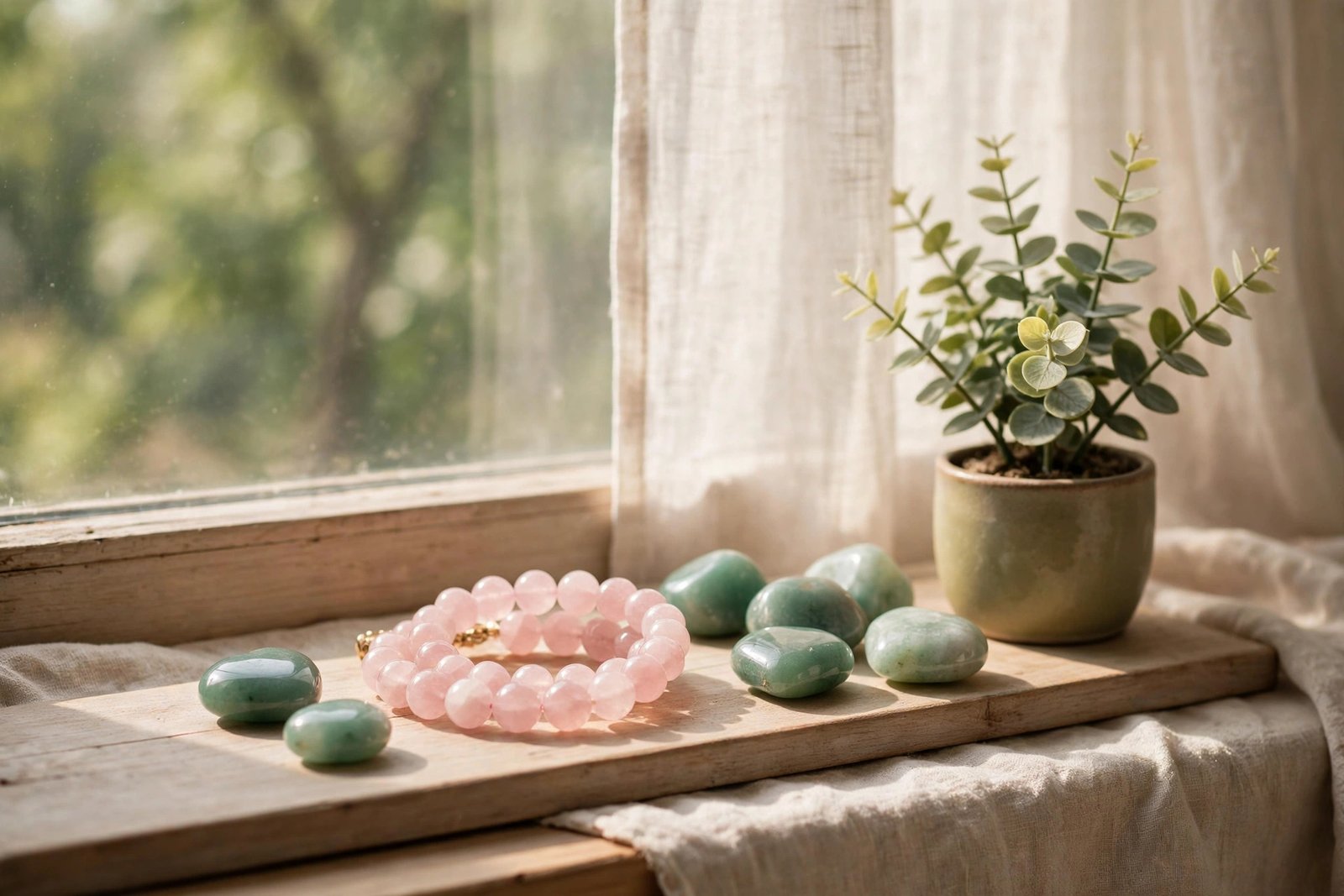
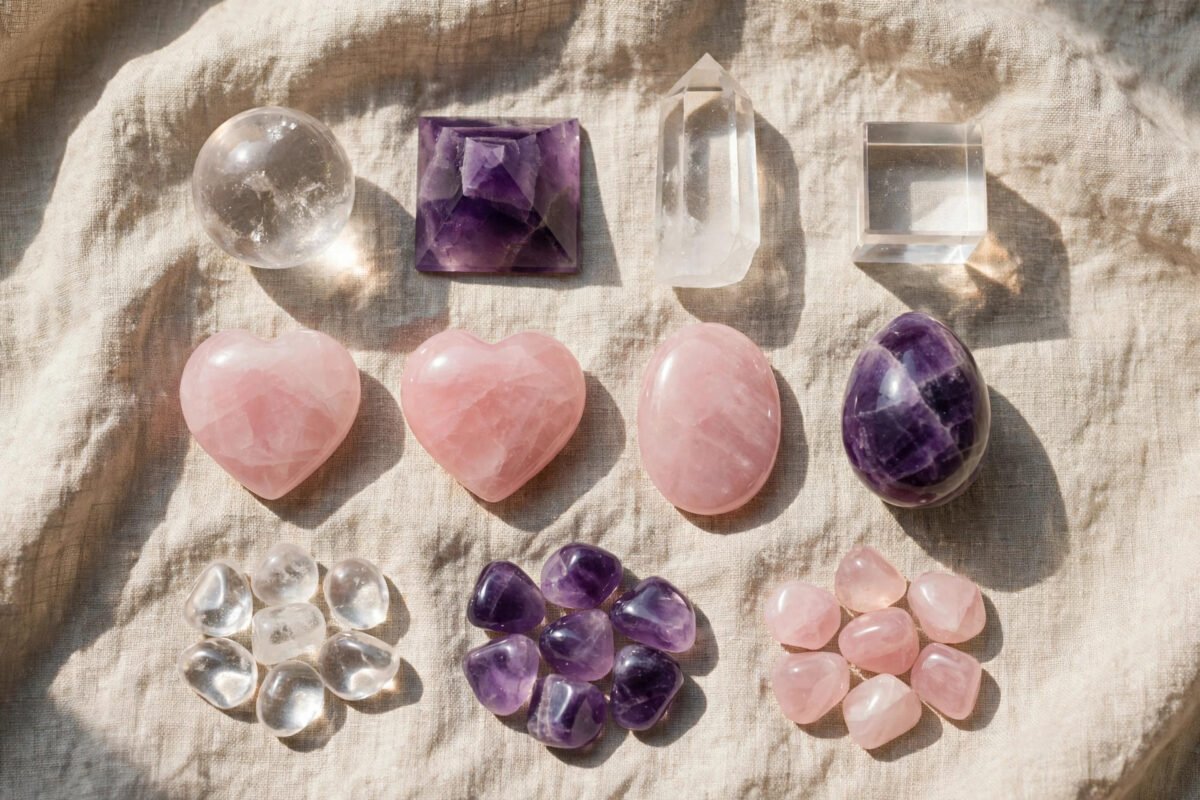
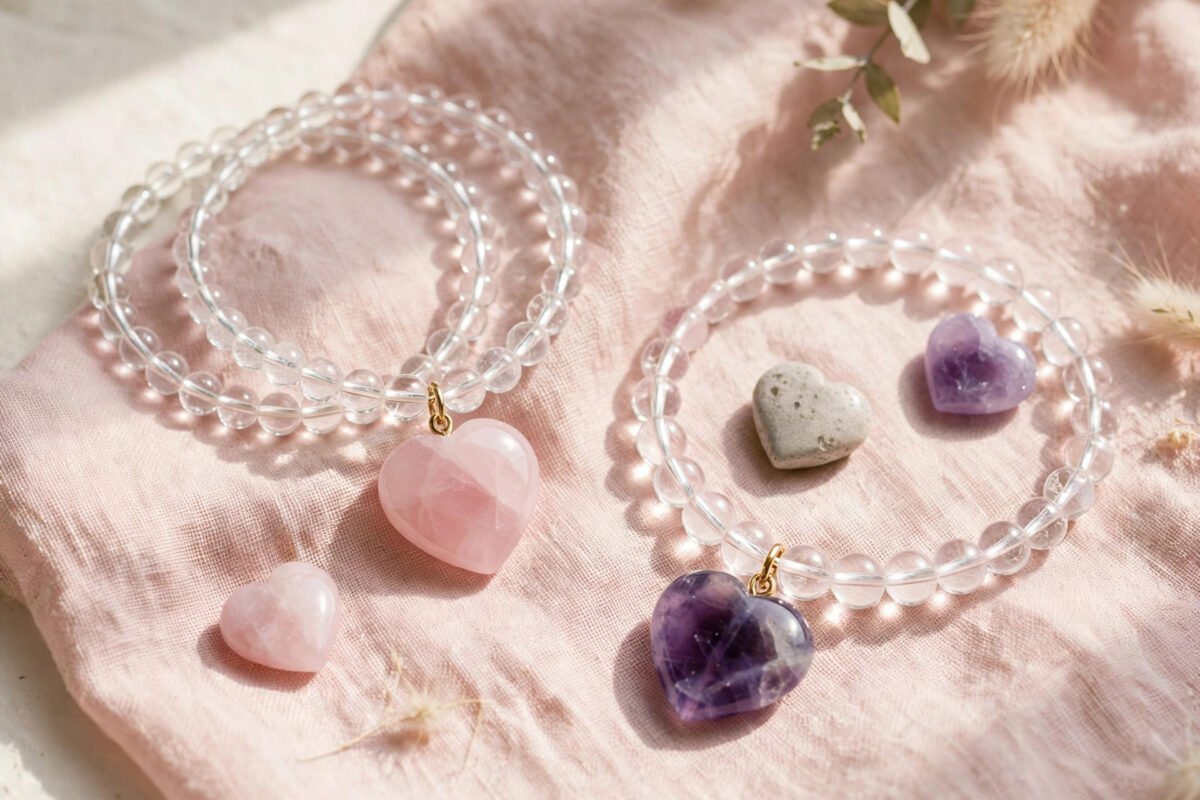
Rose quartz is the heart chakra stone most people know. Its pale pink colour is traditionally associated with unconditional love and emotional tenderness, and its full background is covered in our Hướng dẫn về ý nghĩa của thạch anh hồng. The ready-to-wear Vòng tay tình yêu bằng thạch anh hồng is the piece readers most often choose as a memorial or self-comfort gift.
Rhodonite, pink with dark veining, is traditionally linked with compassion through difficulty and emotional balance — many find its less perfect appearance fitting for a less-than-perfect process. Green stones such as aventurine also belong to the heart centre; see green aventurine’s meaning and our wider heart chakra stones guide for comparisons. Amazonite and unakite appear in grief sets too. Mineral details for each stone can be checked at Mindat, which helps if you are verifying authenticity.
Small Rituals of Comfort and Letting Go
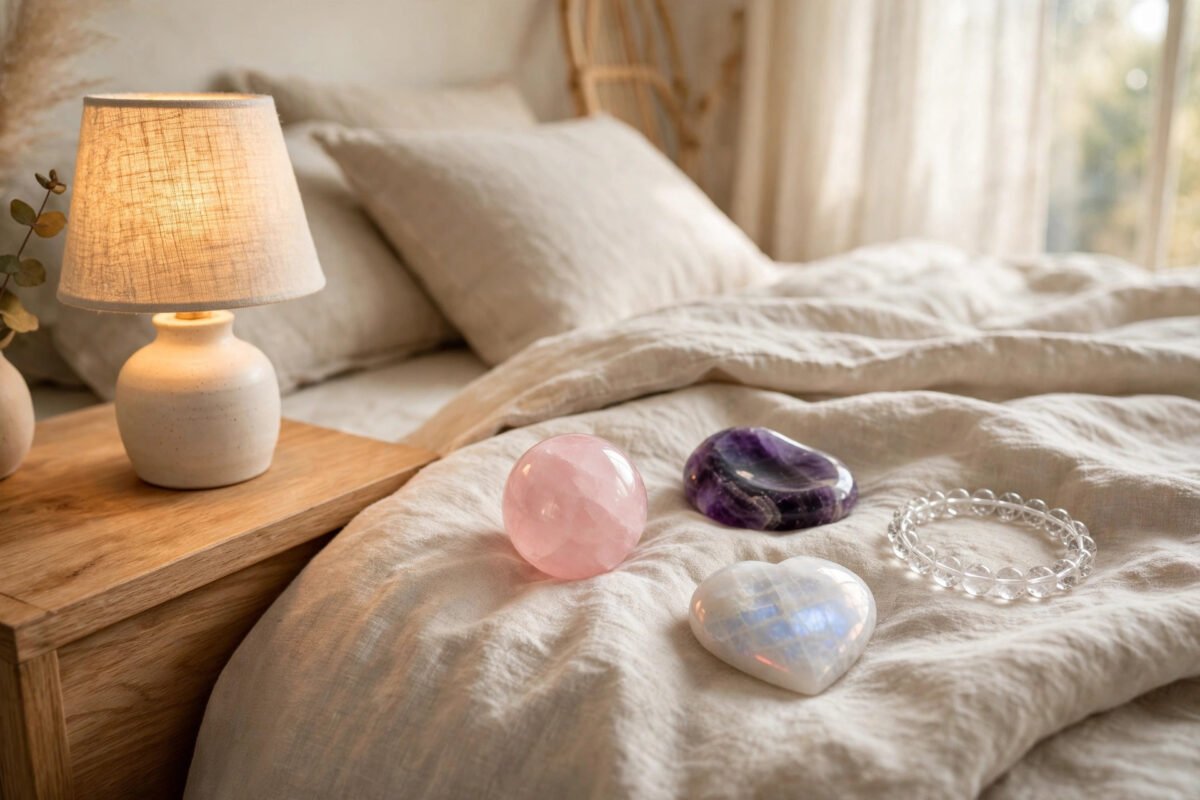
Keep rituals simple and optional. Some people hold a stone or bracelet during a morning cup of tea and silently name the person they miss, then name one kind thing they will do for themselves that day. Others place a stone beside a photograph, or carry it to a place that mattered to both of them. Our heart chakra meditation crystals guide offers short, seated practices you can adapt, and the morning crystal ritual shows how to build a two-minute routine without pressure.
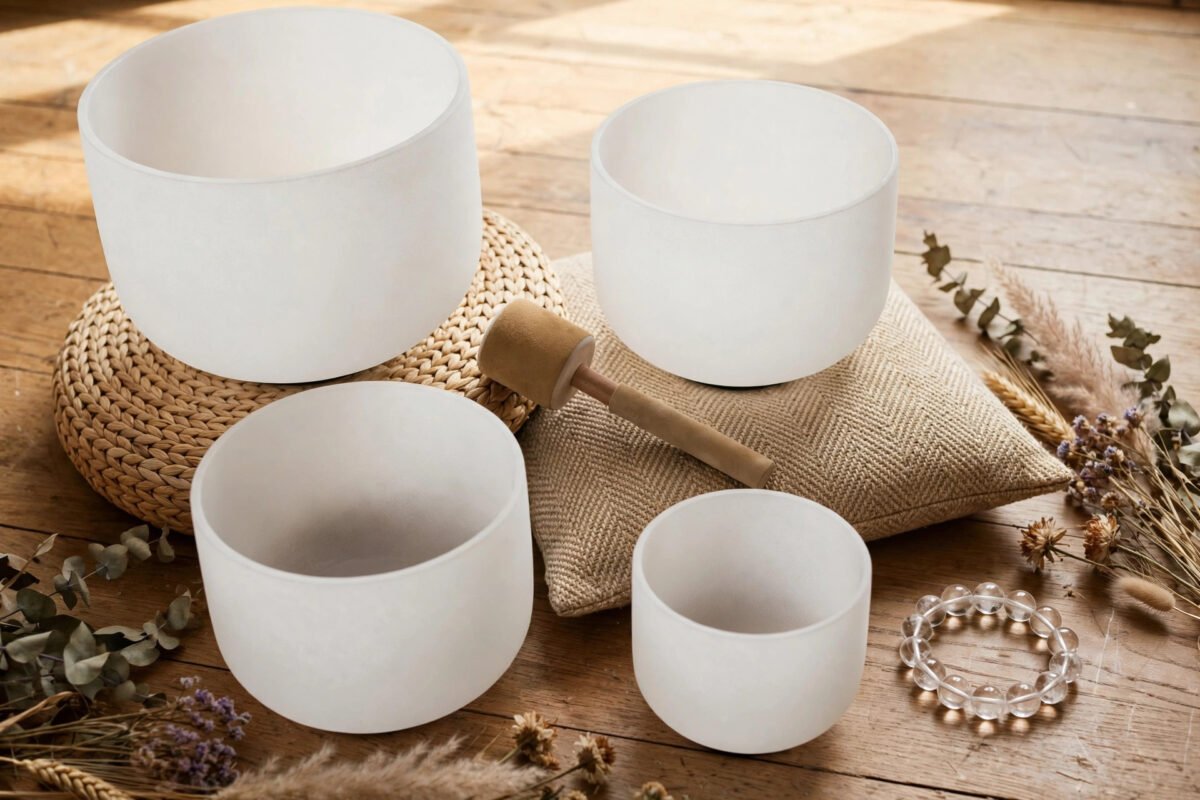
Letting go, in this context, does not mean forgetting or “moving on” on someone else’s timetable. A more honest ritual framing is release of what cannot be carried daily: the habit of rehearsing apologies that can no longer be delivered, or the expectation that a special date will stop hurting quickly. Writing a letter you never send, then resting a stone on the folded page overnight, is a tradition some readers find symbolic and settling. Cleanse stones gently afterwards with sound if the ritual is part of your practice.
If you are choosing a piece for someone else who is grieving, keep the gesture modest and pressure-free. A stone with a card that says “thinking of you, no need to reply” respects their space far better than claims about healing energy. You can see gentle gift options in the Cửa hàng AVENSU.
Living With the Stone Over Time
Many people wear a grief-related bracelet daily for months, then gradually reach for it only on anniversaries or difficult days. That changing pattern is normal and healthy — the stone served as company during a phase, not as a permanent requirement. Some readers later move the bracelet to a keepsake box alongside letters and photographs, where it becomes part of the story rather than a daily necessity.
If a bracelet breaks during this period, try not to read catastrophe into it. Elastic wears out, especially with daily wear. Our wider care guides explain restringing and storage, and the sentiment attached to the stones can be transferred to a repaired or new piece. What mattered was the intention and the love it represented, and those are not fragile.
Các câu hỏi thường gặp
Which heart chakra stone is most chosen for grief?
Rose quartz is chosen most often, for its traditional association with gentle love and its soft, unobtrusive colour. Rhodonite is a close second for people who want a stone traditionally linked with compassion through hardship. Personal resonance matters more than rankings.
Can crystals help me recover from grief?
Crystals are not a treatment for grief and there is no evidence they heal loss. At best, in tradition and personal ritual, they offer comfort, focus and a symbolic object to hold. Recovery support comes from people, time, rest and, when needed, professional help.
What is a respectful grief ritual with a stone?
Simple ones work best: holding the stone while remembering the person, placing it by a photo, or wearing a bracelet on significant dates. Keep the ritual private, brief and entirely optional. Stop any practice that increases distress and talk to a supportive person instead.
Is it appropriate to gift a heart chakra bracelet to someone grieving?
It can be, if the gift is modest, comes without healing claims, and expects no response. Include a kind, simple note and let the person decide whether to wear it. When in doubt, offer company and practical help first; objects come second.



 English
 Vietnamese