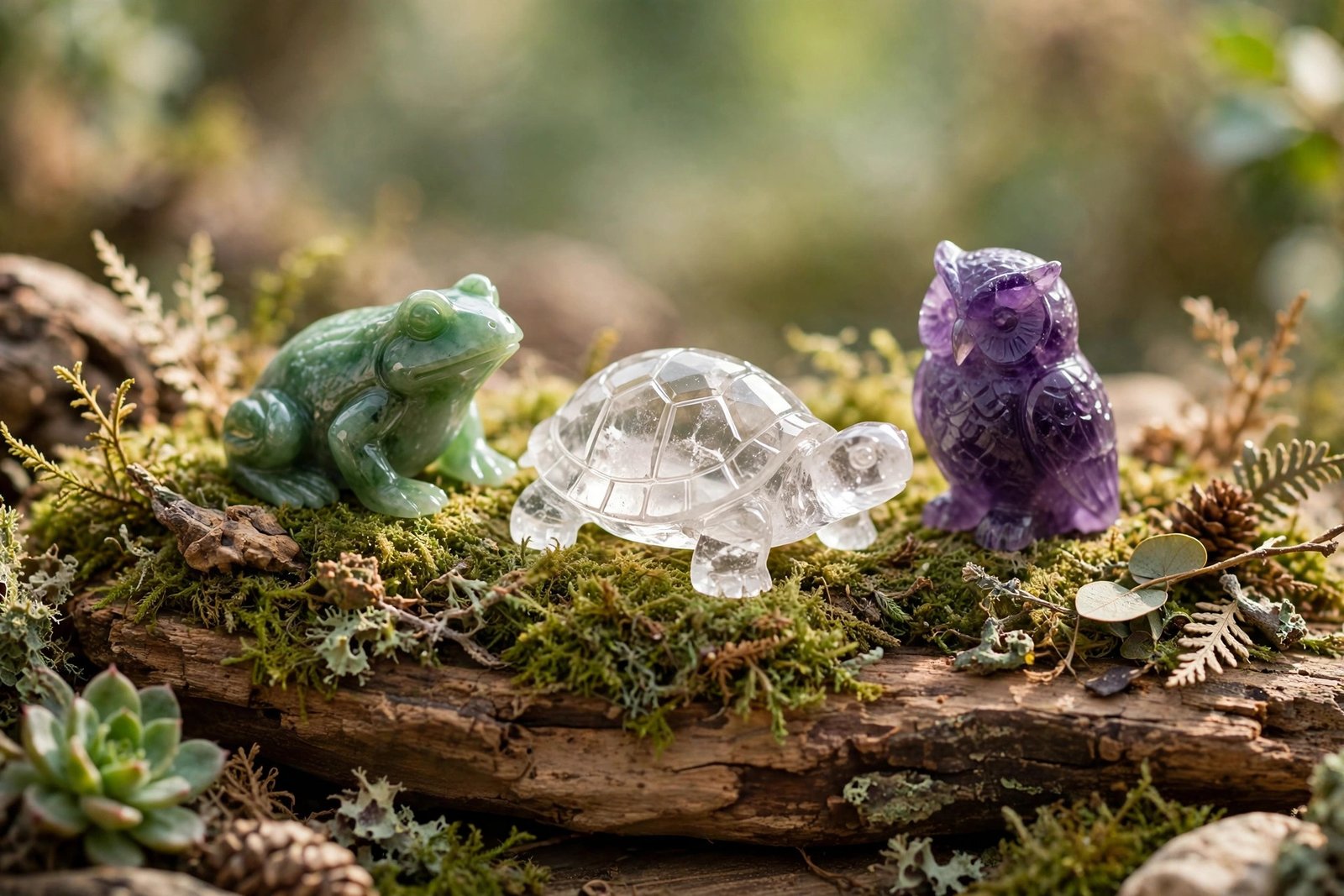
A tiny frog in green jade, a turtle in smoky quartz, an owl watching from a bookshelf — carved crystal animals combine the beauty of natural stone with the symbolism of the creatures they depict. Animal carvings have a long history in many cultures, from Chinese jade figures to Netsuke and Victorian desk ornaments, and modern crystal carvers carry the tradition forward in dozens of stones.
This guide introduces the traditional meanings behind the most popular animal figures, explains how the choice of stone adds a second layer of symbolism, and offers placement and care tips. If you prefer your symbolism wearable, the Cửa hàng AVENSU carries crystal bracelets whose stones share many of the same traditional themes.
Why Animals? Symbolism Across Cultures
Animals carry meanings that need no explanation. Across cultures, certain creatures consistently stand for certain qualities: the turtle for longevity, the owl for wisdom, the frog for renewal. Carving the figure in crystal adds the stone’s own traditional associations, creating a small object layered with personal meaning.
In Chinese tradition, jade carvings of animals have been treasured for centuries, and the Metropolitan Museum of Art’s collection includes celebrated examples of animal figures in hardstone. Feng shui practice also assigns animals to intentions such as prosperity, protection, and harmony, which is why carved animals so often appear on desks and by front doors.
Remember that these meanings are cultural traditions and beliefs. A crystal turtle will not literally extend your life — but as a daily visual reminder of patience and steadiness, it earns its place honestly.
Popular Figures and Their Traditional Meanings
The frog is traditionally associated with abundance and fresh starts, because frogs transform and return with the rains. Money frogs in feng shui are placed facing into the home or business. Turtles symbolize longevity, patience, and protection; a turtle near your workspace is a quiet emblem of steady progress. Owls stand for wisdom and clear sight in the dark, making them favorite gifts for students and graduates.
Elephants are beloved across Asian traditions as symbols of strength, memory, and good fortune, especially with the trunk raised. Cats — from Egyptian Bastet statues to the Japanese maneki-neko — are traditionally associated with protection of the home and welcoming luck; our guide to how to activate a lucky bracelet explores similar welcoming-luck traditions for wearable pieces. Dolphins and fish suggest flow and abundance, butterflies transformation, and bears strength and rest.
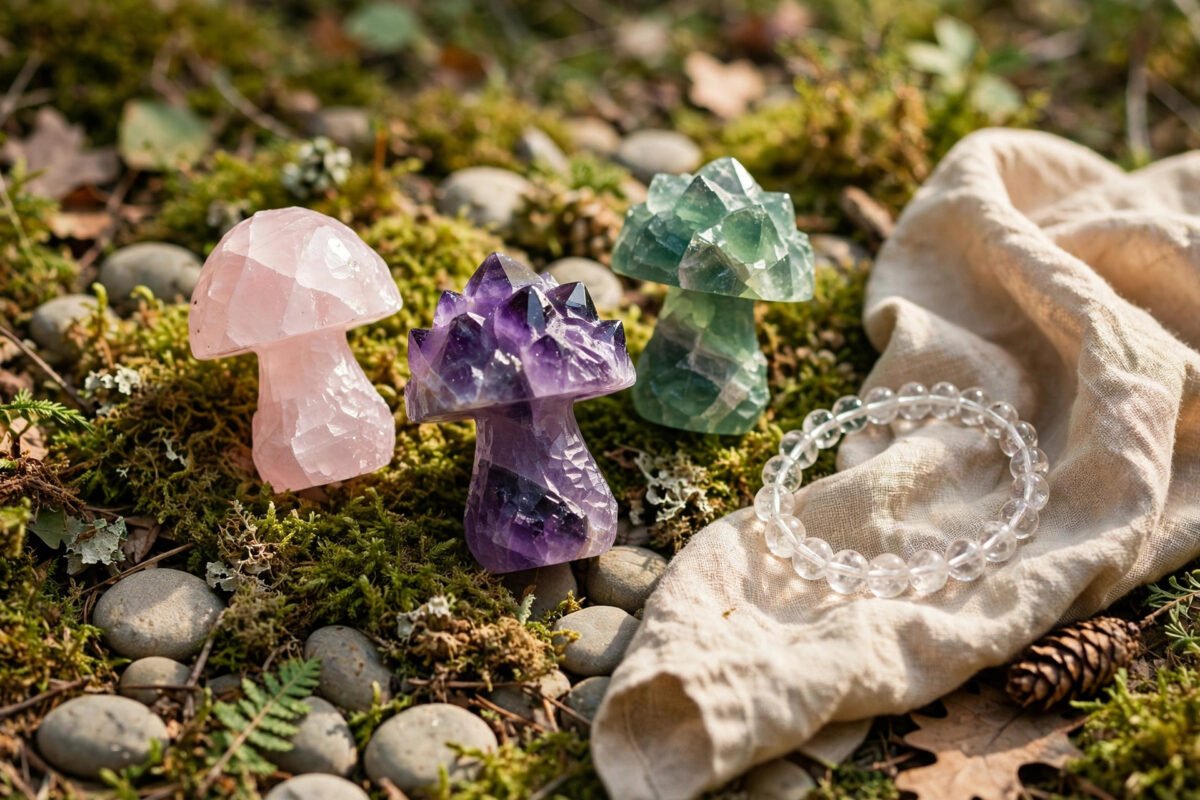
Stone choice deepens the message. A rose quartz turtle layers the love-stone tradition described in our Hướng dẫn về ý nghĩa của thạch anh hồng with the turtle’s patience, while an amethyst owl pairs wisdom with amethyst’s traditional association with clear thinking, covered in our amethyst properties guide.
Choosing a Carving and a Stone
Start with the figure whose meaning you want nearby, then choose the stone by color, hardness, and detail. Fine detail — feathers, scales, whiskers — shows best in hard, fine-grained stones such as quartz, agate, and jade. Softer stones like fluorite carve beautifully but suit simpler, bolder shapes and gentler handling.
Check the carving in good light. Details should be crisp and symmetrical, the polish even, and the base flat enough to sit steadily. Small natural inclusions are normal in real crystal; learn the basics with our guide on how to tell if a crystal is real so you can spot glass copies.
Size sets the role. Miniature animals under five centimeters suit desks, windowsills, and gifts, while larger carvings anchor a shelf or entryway. Many collectors build a small menagerie over time, adding one meaningful figure at a time — an approach that also works with AVENSU bracelets, where each stone’s traditional theme can mark a chapter or intention.
Placement and Care
Traditional placement follows the symbolism. Prosperity figures face inward, guardians sit near doors, and wisdom figures belong where you study or work. Our Nghi lễ cầu may vào đêm trăng tròn article shows how collectors weave carvings into seasonal traditions at home.
Practically, keep carvings out of heavy traffic where they can be knocked over, and dust them with a soft brush — ears, legs, and tails are fragile. A crystal care kit brush reaches the details a cloth misses. Wash hard stones in lukewarm water; keep softer fluorite and selenite figures to dry dusting. When moving house, wrap each carving individually, just as we recommend for bracelets in our guide on how to store crystal bracelets.
Các câu hỏi thường gặp
What is the most popular carved crystal animal?
Frogs, turtles, owls, and elephants are consistently the most popular, each with long-standing traditional meanings of abundance, longevity, wisdom, and good fortune.
Does the stone change an animal carving’s meaning?
Yes, in tradition the stone adds its own layer of symbolism. An amethyst owl and a rose quartz owl share the owl’s wisdom theme but carry different stone associations.
Where should I place a carved crystal animal?
Follow its symbolism: prosperity figures facing into the room, protective figures near entrances, and study animals on your desk. Always choose a stable spot safe from knocks.
Are small crystal animals good gifts?
They are excellent gifts because the meaning can be matched to the occasion — an owl for a graduate, a turtle for a milestone birthday, a frog for a new business.



 English
 Vietnamese