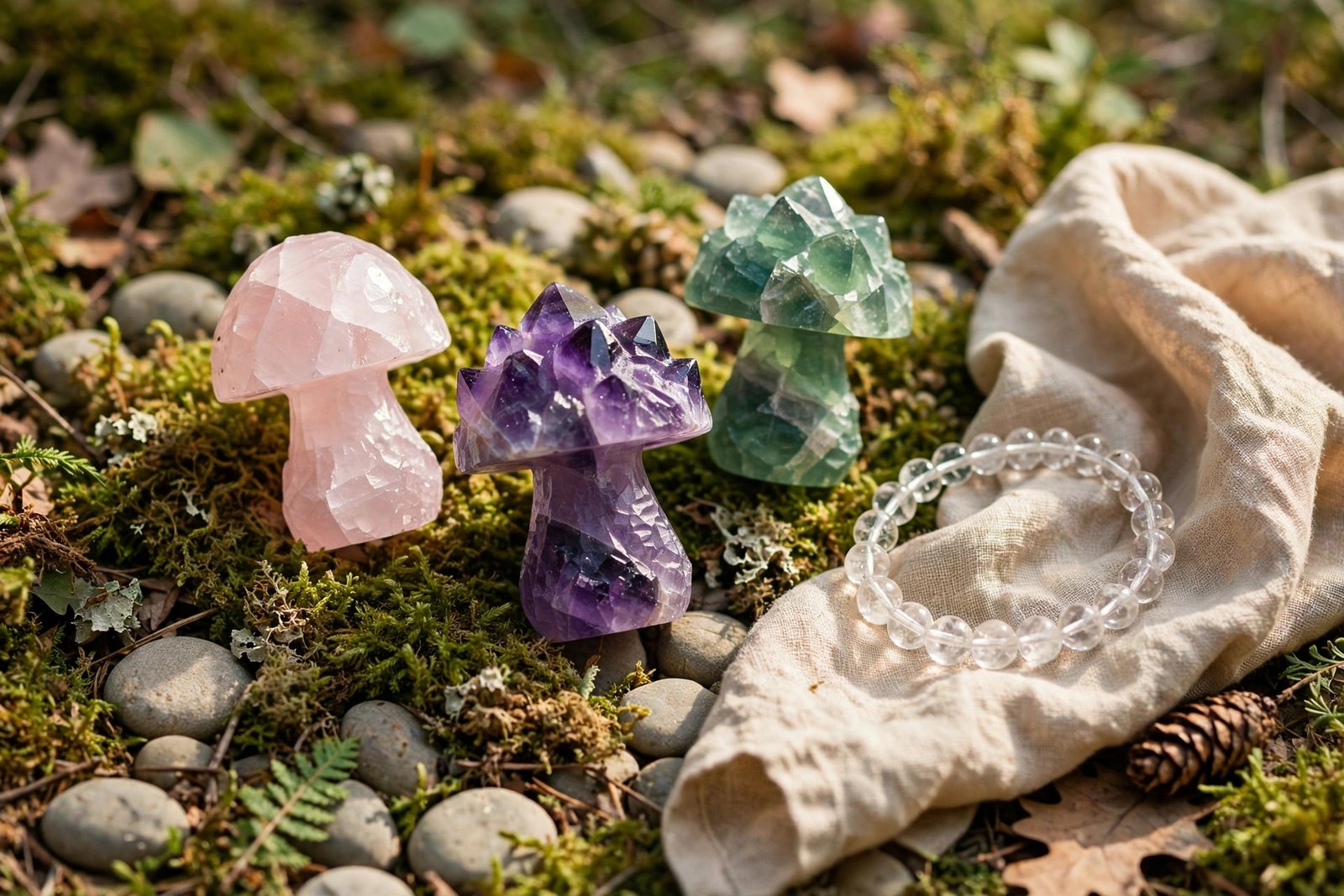
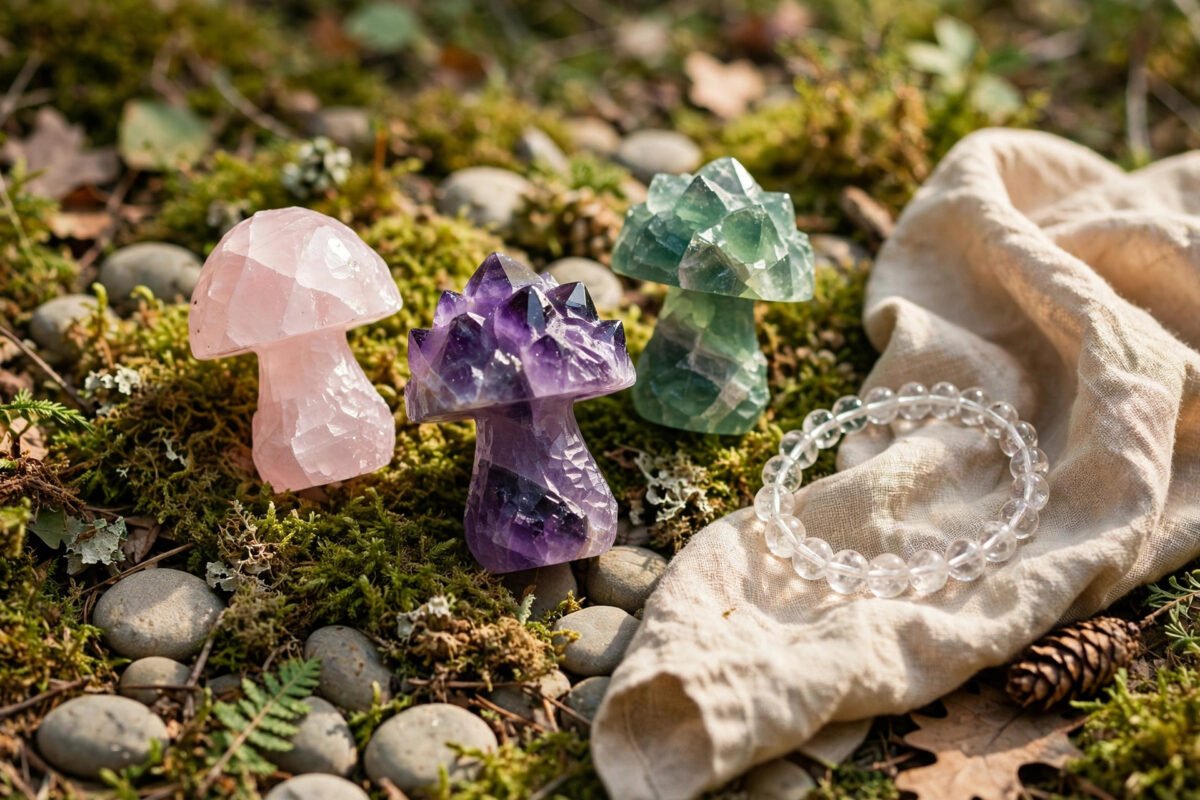
Scroll through any cottagecore home feed and you will spot them: tiny crystal mushrooms clustered beside a houseplant, a carved fluorite leaf leaning against a stack of books, a rose quartz frog keeping watch over a windowsill garden. Crystal mushrooms and nature carvings have become the playful corner of the crystal world, where mineral collecting meets woodland whimsy. They are small, affordable and endlessly giftable — and unlike a large statement cluster, a two-inch mushroom can bring a shelf to life without rearranging the whole room.
This guide explains why these carvings took off, which stones are used most often, how to style them at home, and how to choose pieces that will last.
Why Crystal Mushrooms Became a Cottagecore Favourite
Cottagecore celebrates a slower, nature-led aesthetic: linen, dried flowers, houseplants, handmade objects and gentle colour. Crystal carvings fit that mood perfectly because they take a natural material and shape it into a form already found in the woods. A mushroom carved from real stone feels both decorative and grounded, and collectors often say the shape softens the sometimes formal look of points and towers.
There is also a practical side. Small carvings are usually inexpensive, easy to post as gifts and simple to collect in sets. Many people start with one mushroom, then add a snail, a leaf, a tiny pumpkin in autumn or a carved flower in spring, building a miniature stone garden over time. If you are new to crystal shapes in general, our crystal shape meanings cheat sheet gives a quick overview of fifteen common forms and what each is traditionally said to represent.
Symbolism plays a part too. In folklore, mushrooms are linked with forests, fairy rings, renewal and the quiet recycling work of nature. Within crystal tradition, a mushroom carving is therefore often described as a symbol of growth and good fortune, and some collectors place them near plants as a small wish for thriving things. These are beliefs and associations, not guarantees — but as a daily visual reminder of patience and growth, the little carvings do their job well.
Popular Stones and Their Traditional Associations
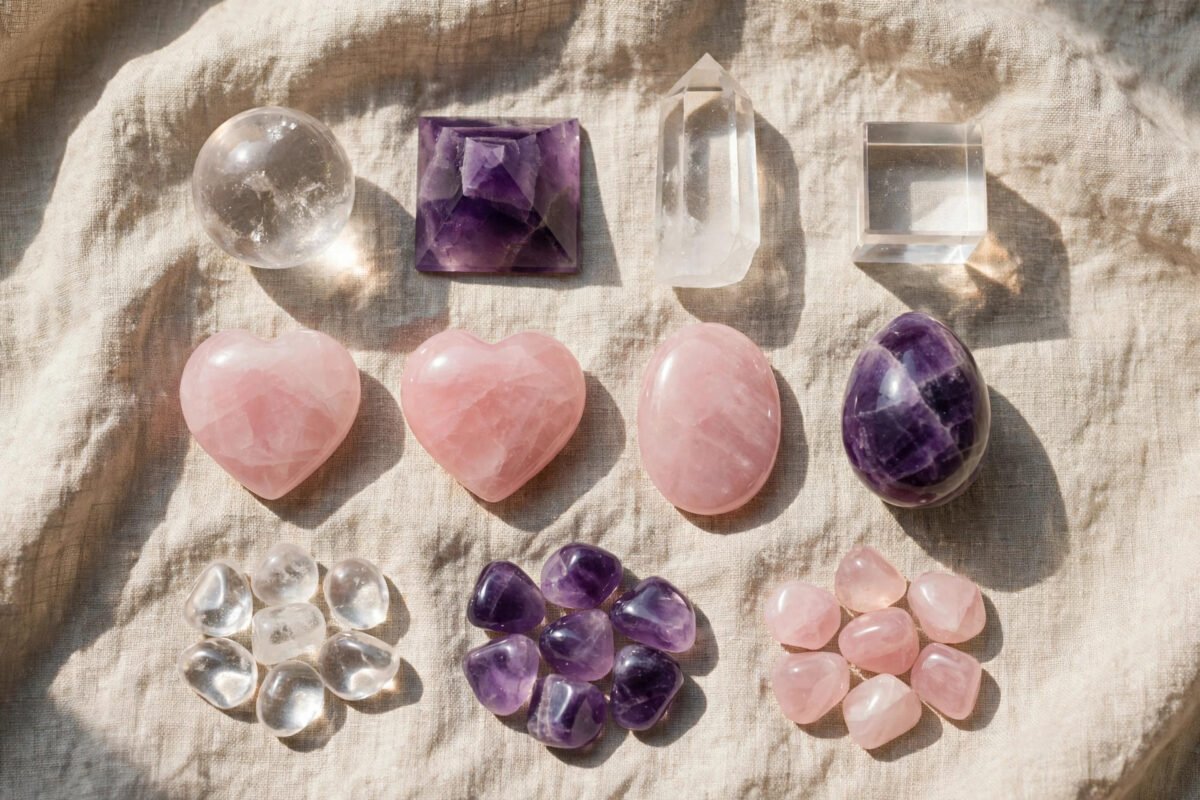
Almost any carvable stone appears as a mushroom sooner or later, but a few dominate the shelves. Rose quartz mushrooms, in soft pink, are traditionally associated with love and tenderness; our Hướng dẫn về ý nghĩa của thạch anh hồng covers that stone in depth. Amethyst brings purple tones and a long-standing link with calm and clear thinking, explored further in our amethyst meaning guide. Green fluorite, moss agate and green aventurine suit the woodland palette best and are often chosen for plant corners, while carnelian and red jasper add warm autumn colour.
Beyond mushrooms, the nature-carving family is wide: leaves, acorns, frogs, snails, owls, bees, flowers, fruit and tiny trees are all common. Carvers choose stone partly for colour match — a leaf looks convincing in green agate, a pumpkin in orange calcite — and partly for how the material behaves under tools. Background on how minerals are classified and how hard they are can be found in the Mohs hardness scale overview on Wikipedia, which helps explain why soft stones like calcite need gentler handling than quartz.
When you buy, look at the carving itself: a neat stem, an even cap and a flat base so the piece stands without wobbling. Natural colour banding is a good sign in agate and fluorite, while a completely flat, identical colour across many pieces can suggest dyed or synthetic material. Our guide on how to tell if a crystal is real lists simple checks that work for carvings as well as beads.
How to Style and Display Crystal Mushrooms
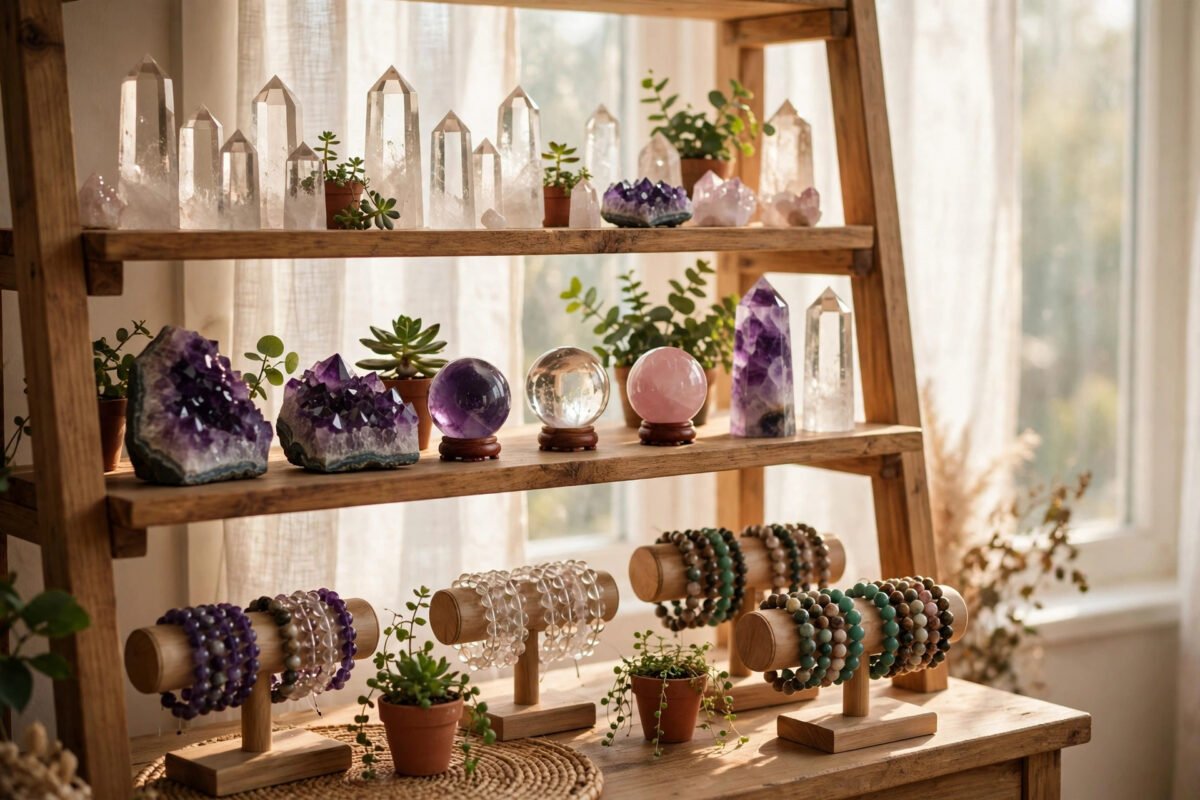
The classic arrangement is a small scene: group three mushrooms of different heights on a wooden slice, a bed of pebbles or a patch of preserved moss, then add a tumbled stone or two. Odd numbers tend to look more natural than pairs, and mixing one translucent stone with two opaque ones keeps the group from looking flat. For larger collections, our guide to displaying a crystal collection covers shelving, lighting and layout in detail.
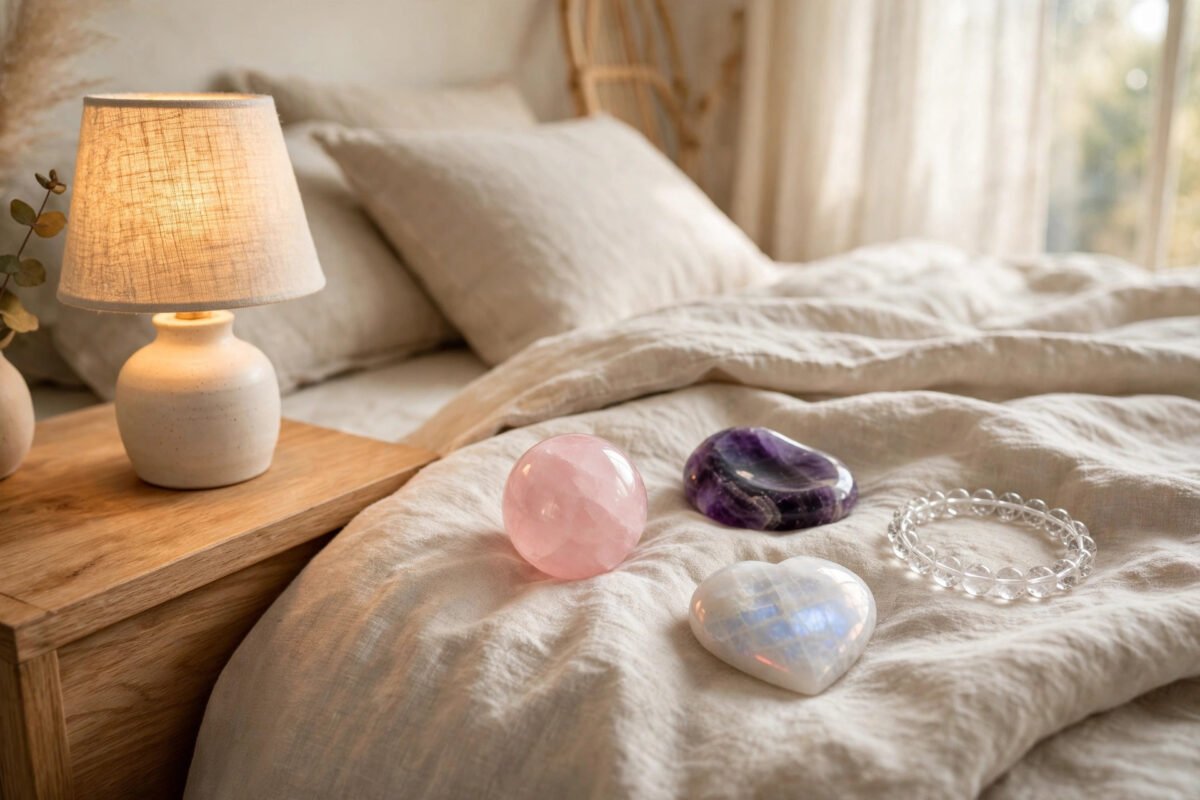
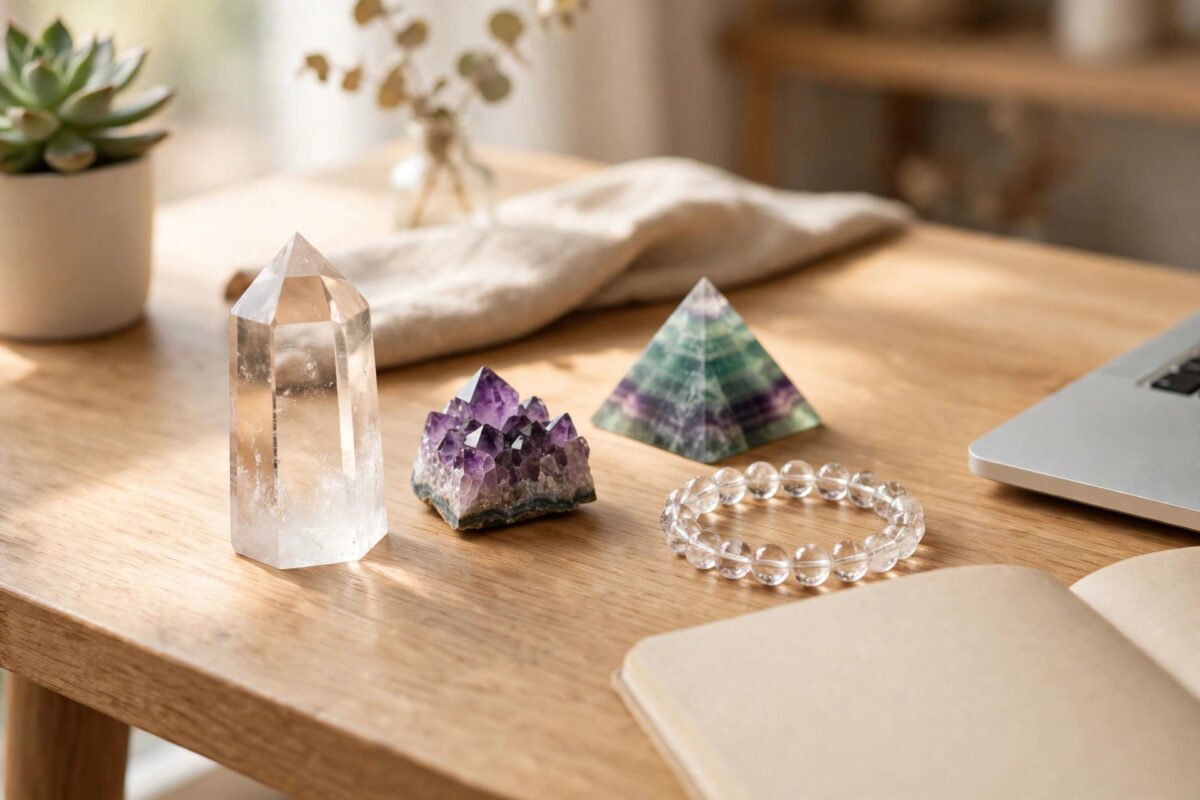
Popular spots include plant shelves, where mushrooms echo the greenery; reading nooks, beside a lamp and a stack of novels; bathroom shelves styled like a small spa corner; and desks, where a single mushroom works as a light-hearted paperweight. In children’s rooms, choose larger, sturdy carvings and keep small pieces out of reach of very young children, since tiny carvings can be a choking hazard.
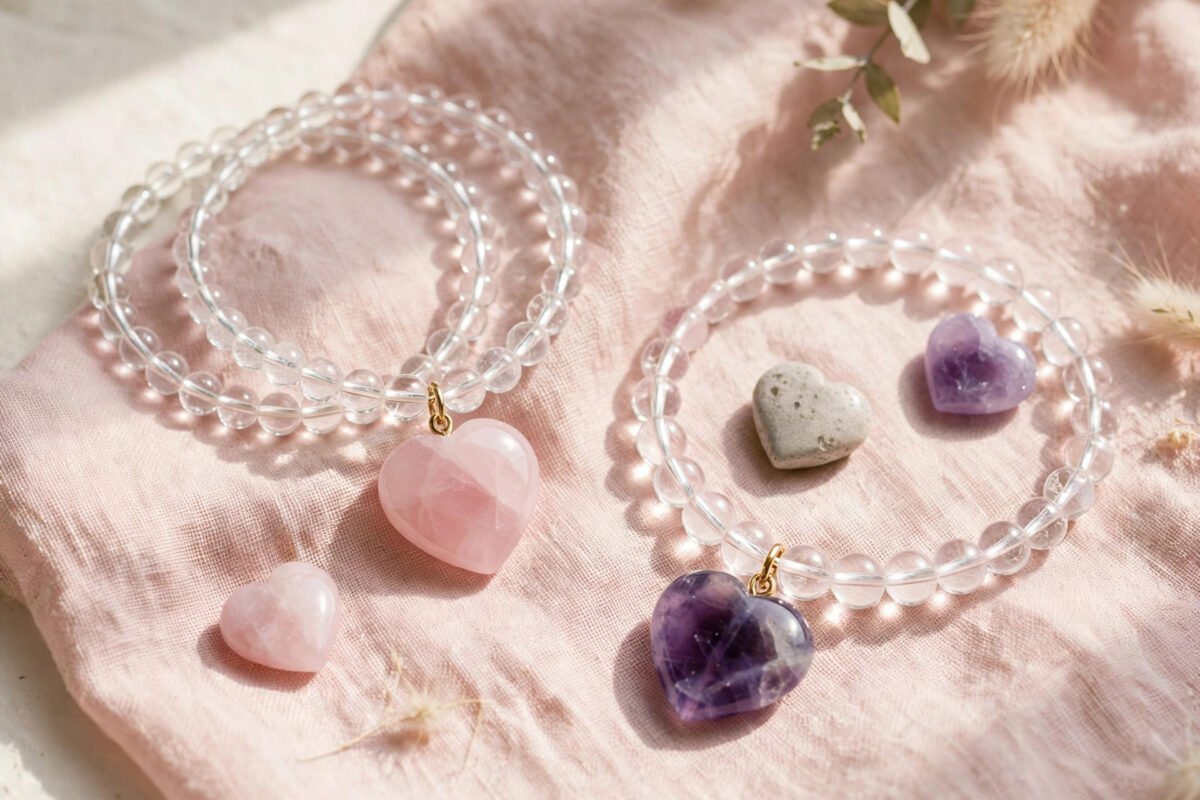
You can also wear the theme. Many collectors pair a mushroom display with the same stone worn daily — an AVENSU rose quartz crystal bracelet on the wrist, for example, with a matching rose quartz mushroom on the shelf. The Cửa hàng AVENSU keeps bracelet stones consistent in colour family, which makes that kind of matching simple.
Choosing, Pairing and Caring for Your Carvings
Start with one hero piece you genuinely like looking at, then build around it. Check the base is flat, the stem is not chipped, and thin details such as frog legs or leaf tips are intact, because those are the first places carvings break. Buy from sellers who photograph the actual piece or describe natural variation honestly.
Care is easy but stone-dependent. Quartz-family carvings (rose quartz, amethyst, clear quartz) tolerate a rinse under lukewarm water and a soft cloth. Softer stones such as calcite, selenite and fluorite should only be dusted or wiped with a barely damp cloth, and all carvings are best kept out of prolonged harsh sunlight, which can fade amethyst and fluorite. Store delicate pieces separately rather than in a shared bowl where stems can snap. Our complete crystal bracelet care routine covers the same hardness-based logic that applies to carvings, and the storage principles in how to store crystal bracelets translate well to small carvings too.
Các câu hỏi thường gặp
What do crystal mushrooms symbolise?
In folklore and modern crystal tradition, mushrooms are associated with growth, renewal, woodland luck and the cycles of nature. A crystal mushroom is therefore usually kept as a symbol of patience and new growth — a belief-based association rather than a proven effect.
Which stone is best for a first crystal mushroom?
Rose quartz and green aventurine are the most popular starting points: both are affordable, widely available and hard enough to handle everyday display. Choose the colour you will enjoy seeing daily, and check the carving stands flat and feels sturdy.
Can I keep crystal mushrooms with my houseplants?
Yes, many collectors tuck them into pots or beside planters for a woodland look. Keep them on top of the soil rather than buried, rinse off soil and fertiliser residue promptly, and avoid very soft stones in constantly wet pots, where minerals in water can dull the polish.
How do I clean crystal nature carvings?
Dust regularly with a soft brush, and wash quartz-family pieces in lukewarm water with a drop of mild soap if needed. Dry thoroughly, especially around stems and under caps. Avoid ultrasonic cleaners and harsh chemicals, which can crack delicate carved details.



 English
 Vietnamese