Two pieces of the same stone can be used quite differently depending on their shape. A clear quartz point and a clear quartz sphere contain the same mineral — silicon dioxide, as the quartz entry on Wikipedia describes — but tradition treats the pointed form as directional and focused, and the round form as even and all-encompassing. Shape is the grammar of a crystal collection: learn it once, and you can “read” almost any piece you meet.
Below are the fifteen shapes you will encounter most often, each with its traditional meaning and its most practical use. All meanings are traditional associations and beliefs, not proven effects — use the cheat sheet to choose shapes that fit the reminder or mood you want.
Upright and Directional Shapes
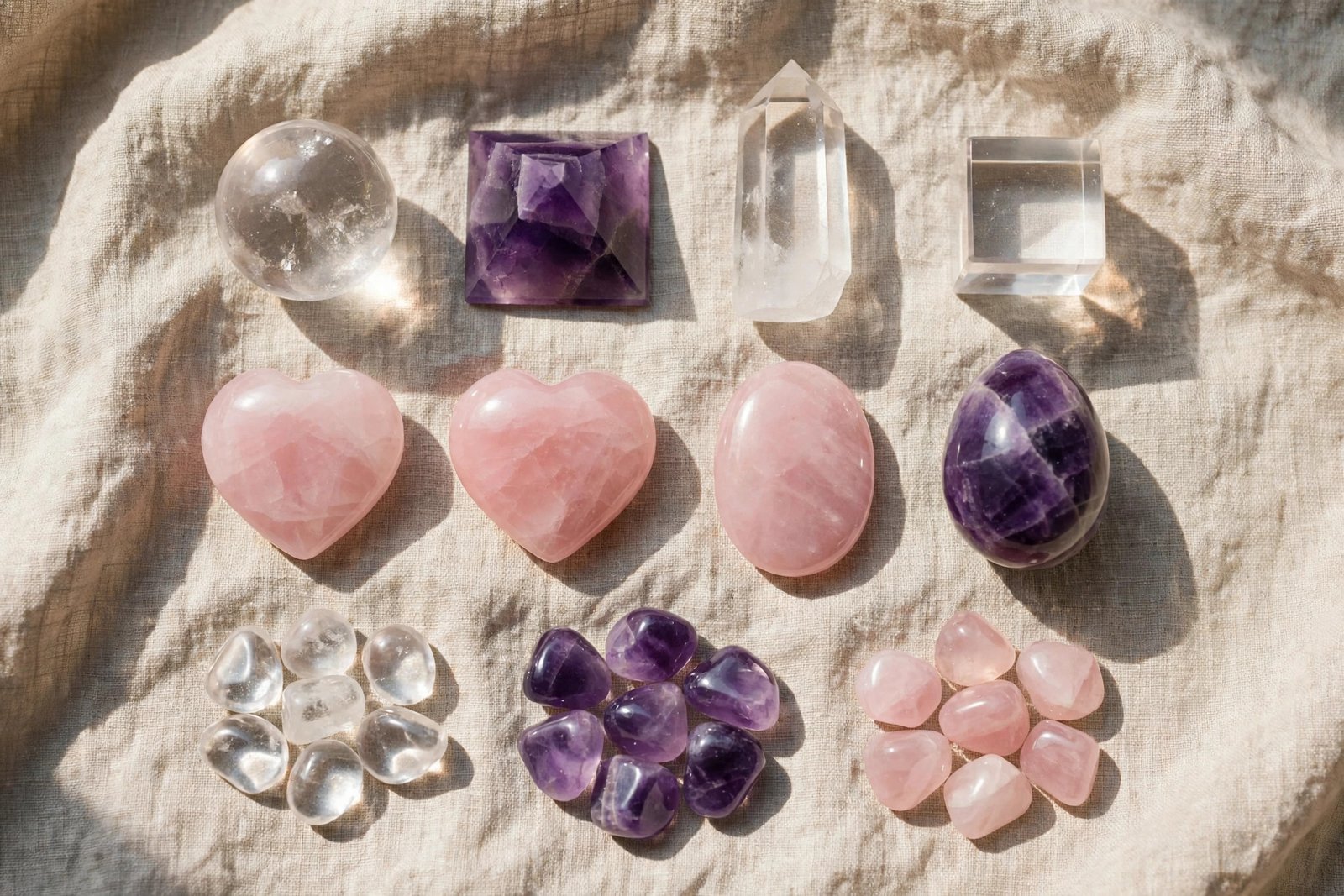
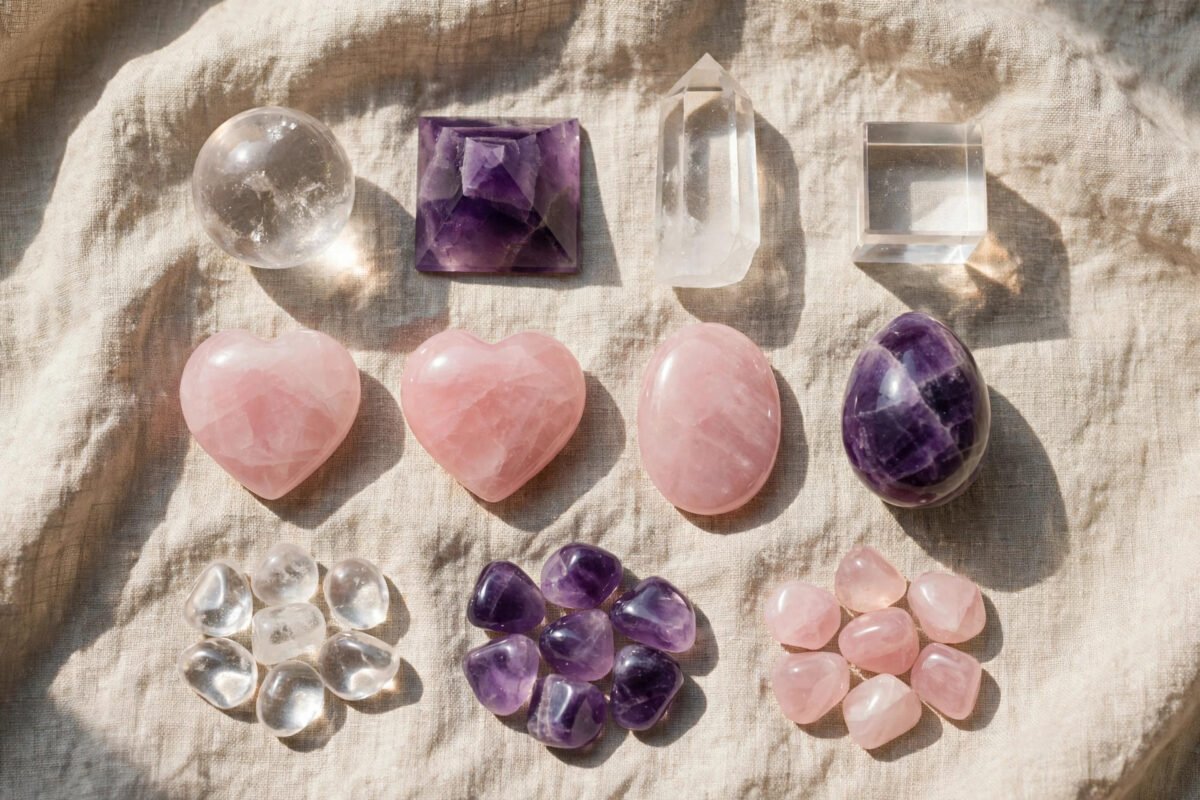
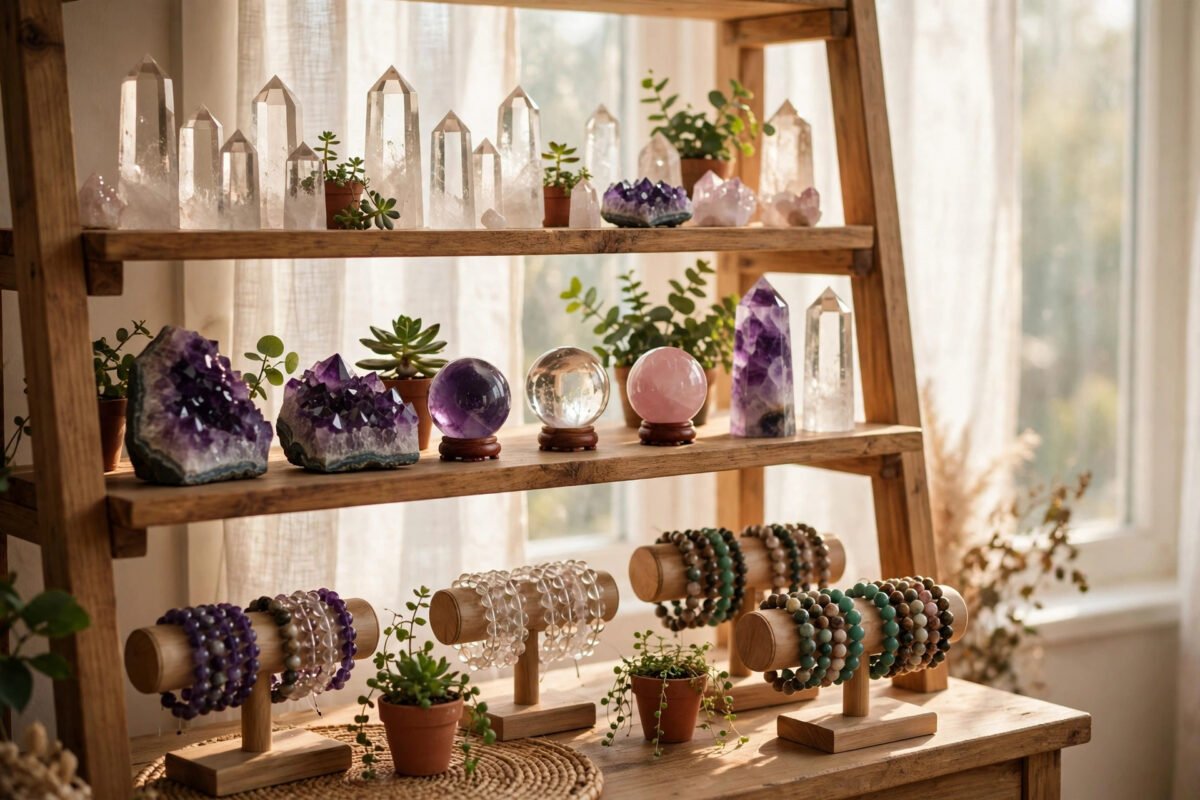
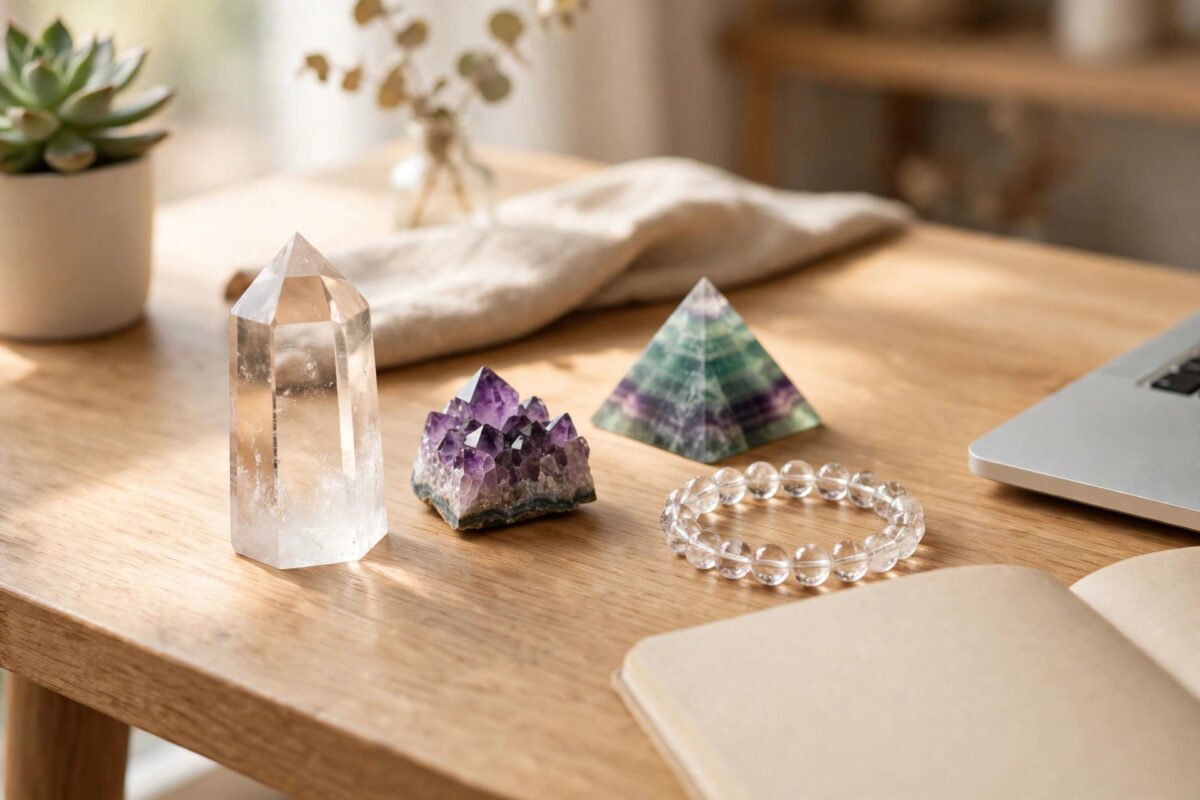
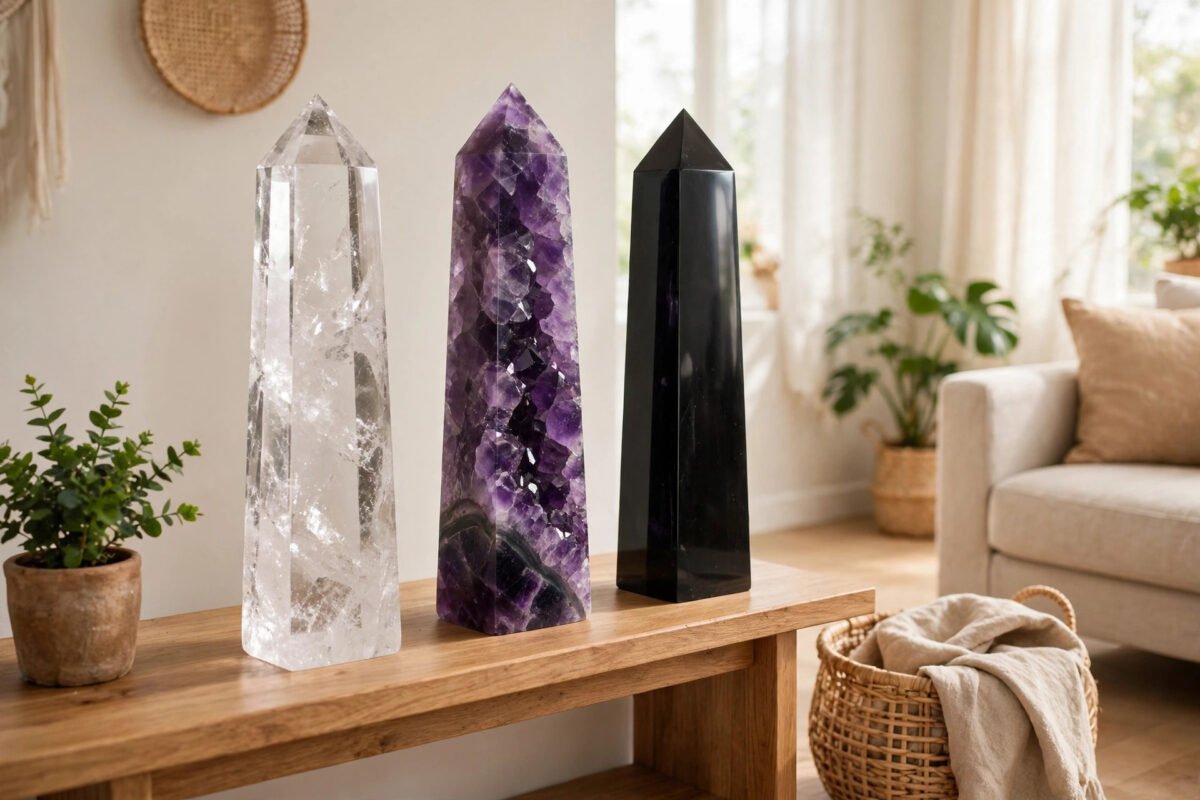
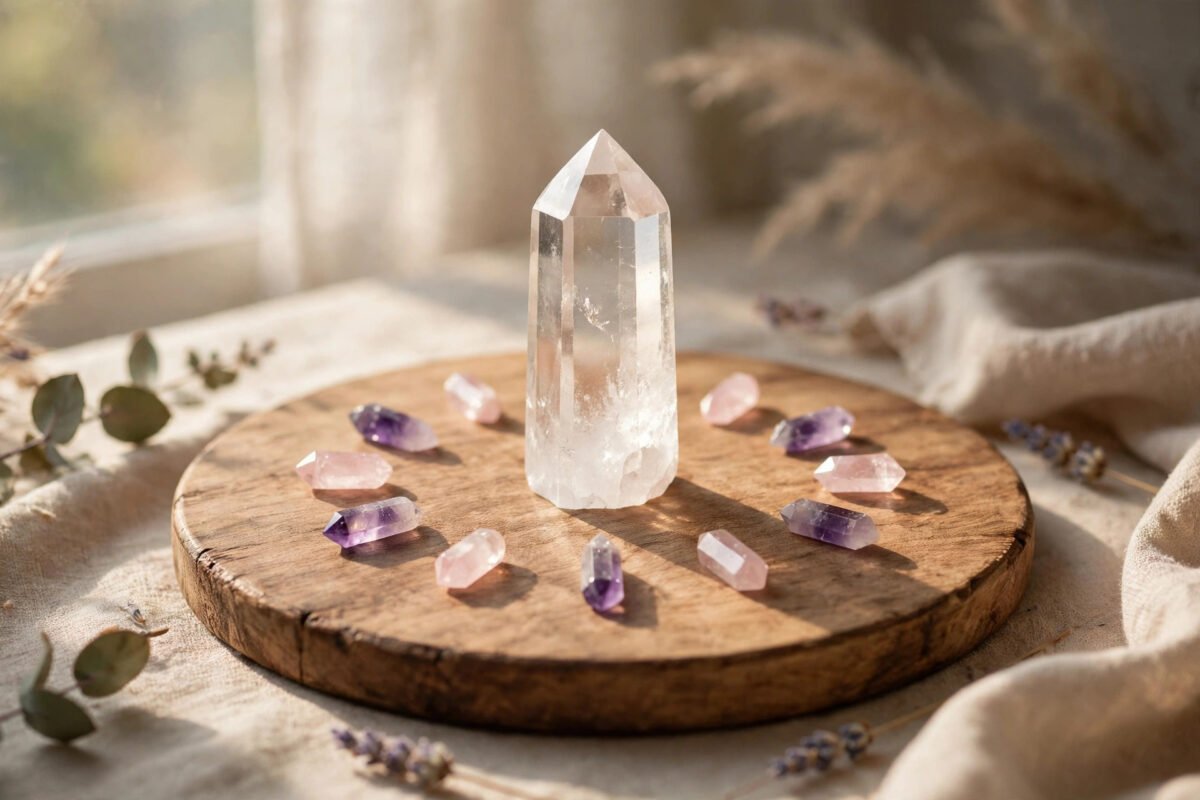
1. Point / Tower. A single termination, natural or polished. Traditionally believed to direct and focus energy upward and outward, and associated with clarity and intention-setting. Best for: desks, display shelves, the centre of an arrangement. See choosing crystal shapes for your desk for workspace use.
2. Obelisk. A four-sided pillar with a pyramid tip. Associated in tradition with stability, order and upward movement. Best for: entryways, mantels and formal displays — covered in depth in crystal obelisks in feng shui and decor.
3. Pyramid. A wide base rising to an apex. Traditionally said to ground energy through its base and focus it through the tip; a symbol of aspiration. Best for: desks (it will not topple), study spaces and meditation corners.
4. Cluster. Many points growing together on one base. Believed to radiate energy in many directions at once and associated with community and harmony in a room. Best for: living rooms and any space where people gather.
5. Geode. A hollow rock lined with crystals, usually amethyst. Associated with protection, home and hidden depth — ordinary outside, sparkling inside. Best for: display pieces and bookends.
Rounded and Hand-Held Shapes
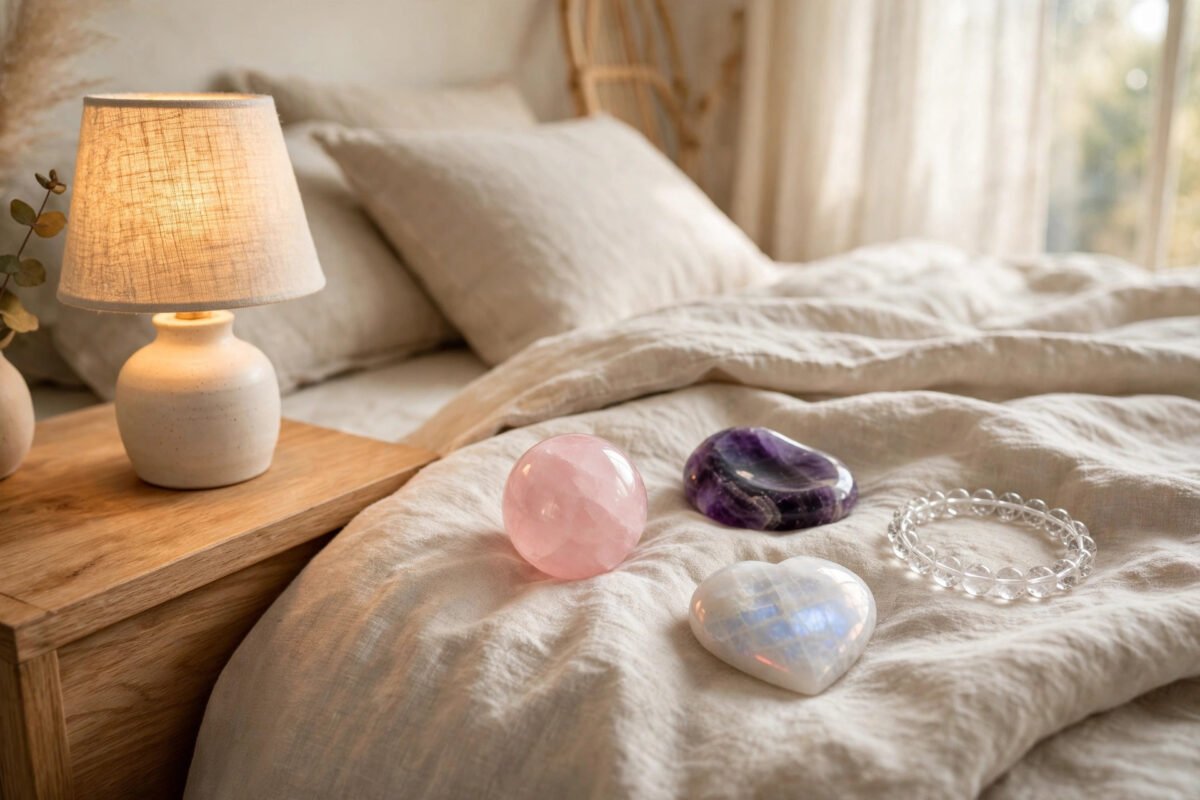
6. Sphere. A perfect ball, always displayed on a stand. Traditionally believed to emit energy evenly in all directions, and associated with wholeness, unity and calm. Best for: bedrooms and central display pieces; placement advice is in choosing crystal shapes for the bedroom.
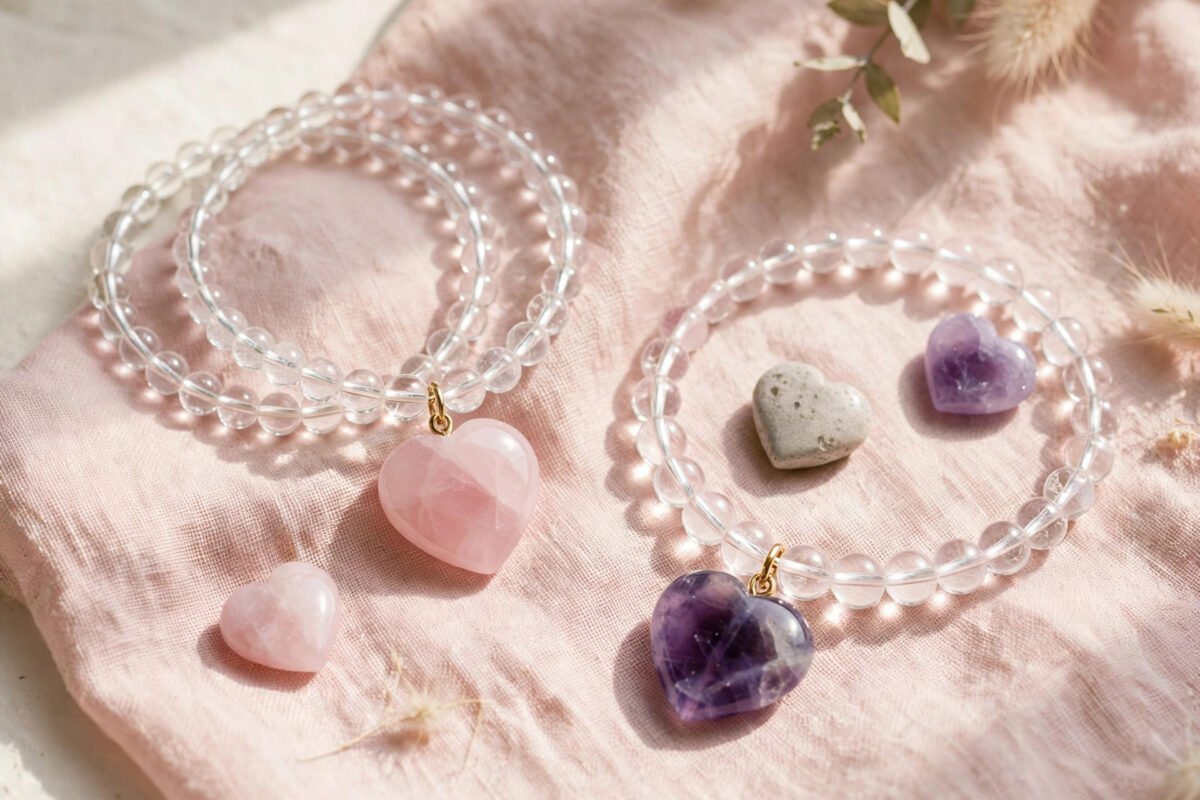
7. Heart. A flat-backed carved heart. Associated with love, compassion and emotional healing in tradition — rose quartz hearts are the classic example in our Hướng dẫn về ý nghĩa của thạch anh hồng. Best for: gifts, bedrooms and bedside tables.
8. Palm stone. A smooth, flat oval made to be held. Associated with comfort and grounding through touch. Best for: pockets, desks, meditation and bedtime routines.
9. Tumbled stone. A small, river-smooth pebble. The beginner shape: inexpensive, portable and traditionally used for carrying a stone’s association with you through the day. Best for: pockets, bags, bowls and starter collections.
10. Egg. An egg-shaped carving. Associated in tradition with new beginnings, fertility of ideas and potential. Best for: spring displays, desks during new projects, and as a palm stone with more presence.
11. Cube. A polished cube, often in fluorite or onyx. Associated with structure, stability and solid foundations — the shape itself is the message. Best for: work desks and corners of rooms where an ordered feel is wanted. Cubes feature in several of the arrangements in how to display a crystal collection.
Carved and Functional Shapes
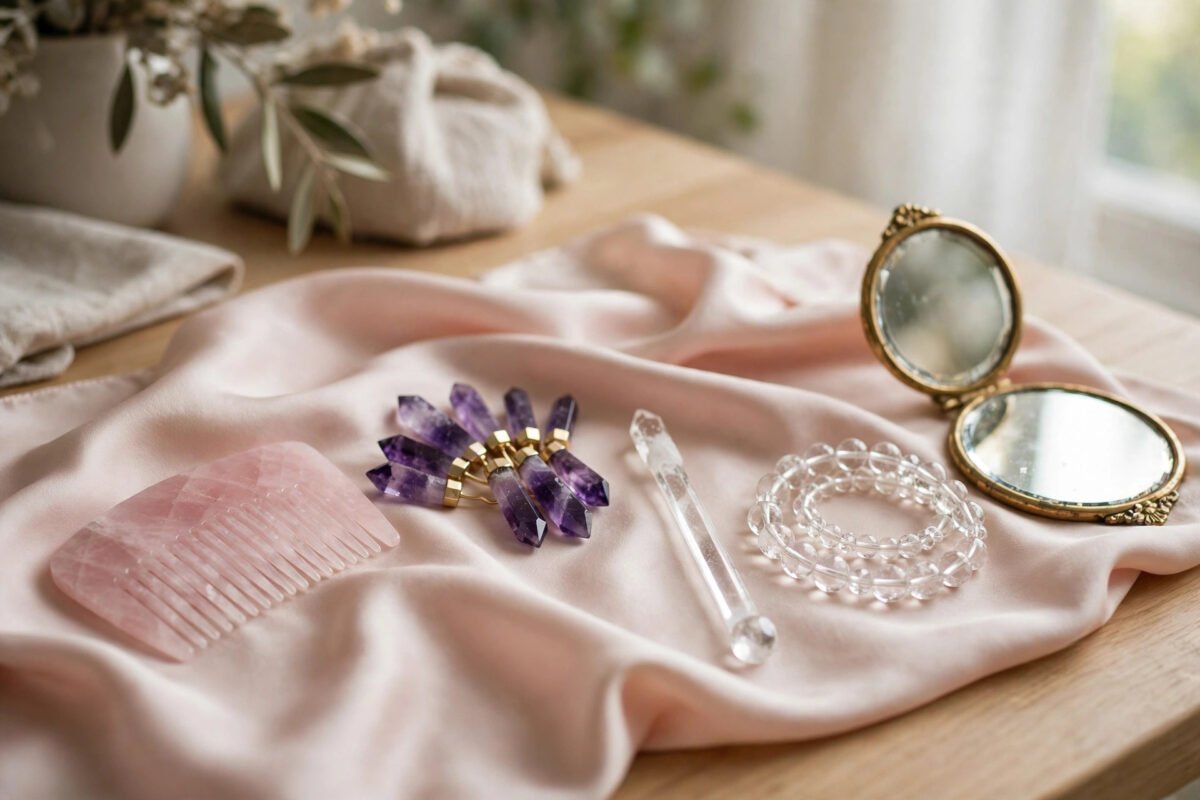
12. Wand. A long, rounded or pointed rod. Traditionally used to direct attention in meditation and body-layout practices, and believed to focus intention along its length. Best for: practitioners, kept stored safely because tips can be fragile.
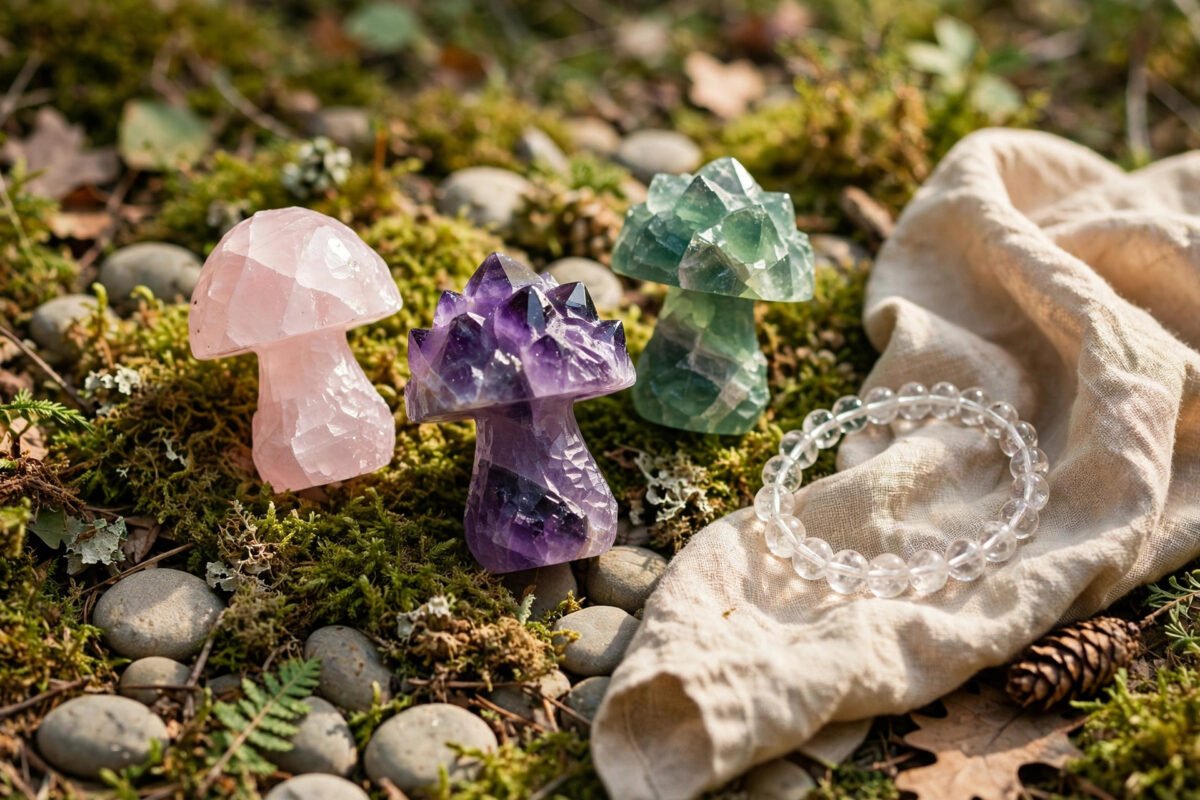
13. Angel and animal carvings. Figurative carvings — angels, owls, frogs, mushrooms and more — carry the symbolism of the figure itself: an owl for wisdom in folklore, a mushroom for growth and woodland luck. Best for: gifts, themed displays and cottagecore styling, as in our guide to crystal mushrooms and nature carvings.
14. Merkaba and sacred geometry forms. Multi-pointed stars and platonic solids, such as the octahedron and dodecahedron described in geometry references like Britannica’s entry on polyhedra. Associated in modern tradition with balance and meditation. Best for: meditation spaces and collectors who enjoy geometric forms.
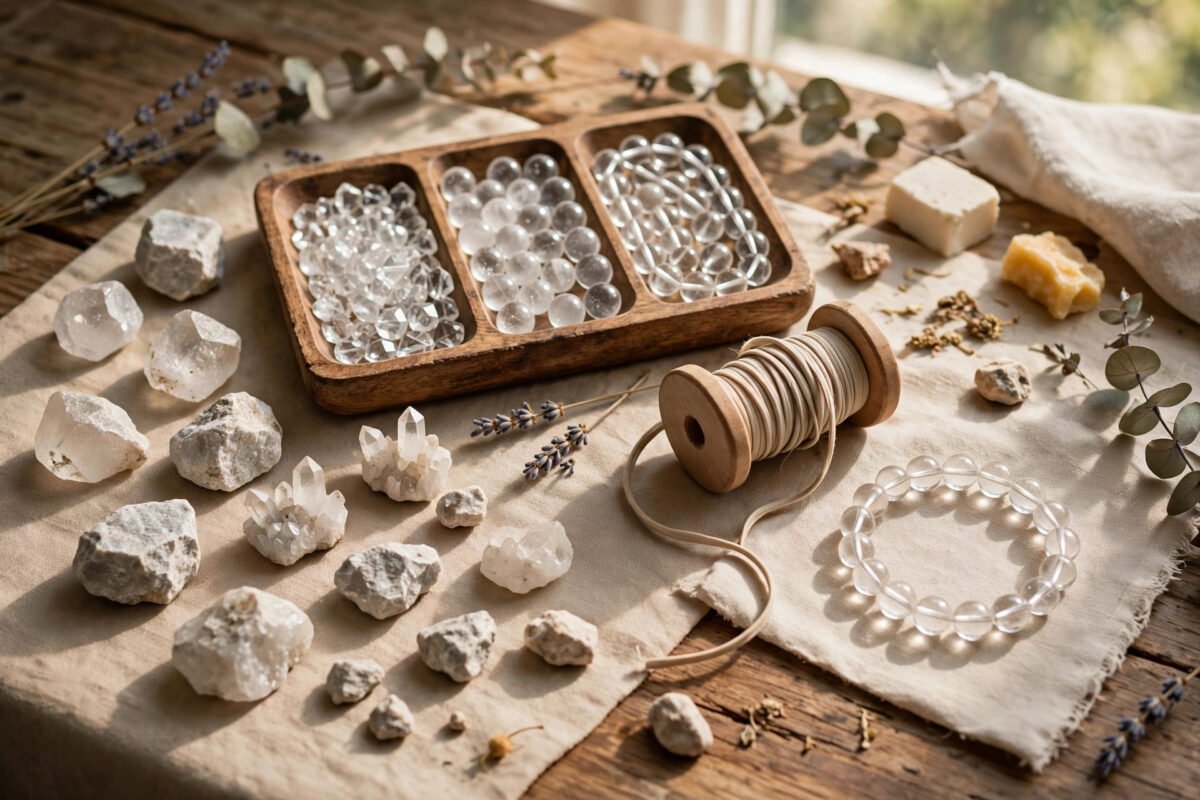
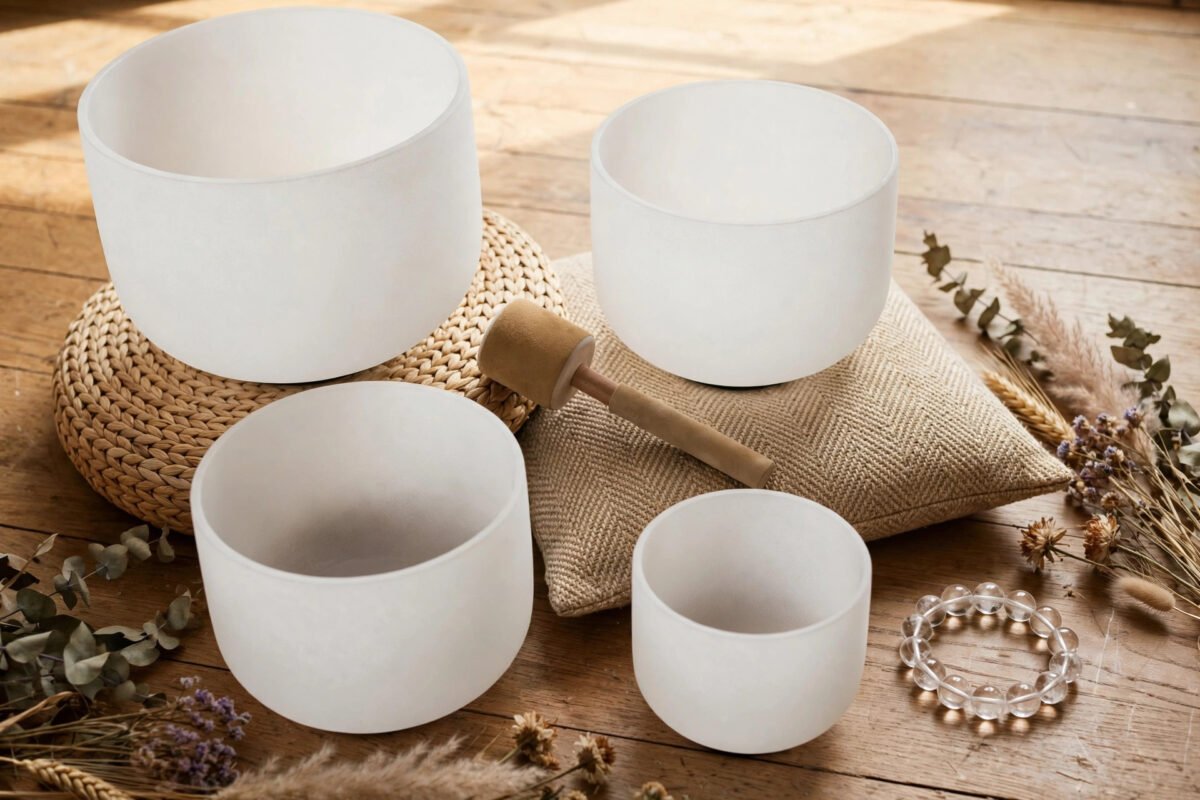
15. Beads and bracelets. The wearable shape: small polished spheres strung together. A bracelet keeps a stone in contact with you all day and acts as a constant, gentle reminder of the association you chose it for — which is why many collectors who own display pieces still reach daily for an AVENSU crystal bracelet from the Cửa hàng AVENSU. Choosing bead sizes is covered by our bracelet bead size guide, and fit by the crystal bracelet sizing guide.
How to Use This Cheat Sheet
When you shop, ask two questions: what do I want this piece to do in my day (sit, be held, be worn, anchor a room), and which shape does that job best? Stone choice comes second, guided by colour and traditional association. A fluorite pyramid and a fluorite sphere are both fluorite, but one belongs on a study desk and the other on a bedside stand.
Keep this page bookmarked as your quick reference, and explore the linked guides whenever one shape becomes your next obsession — most collections grow exactly that way, one form at a time.
Các câu hỏi thường gặp
Does crystal shape really change a stone’s meaning?
In crystal tradition, yes: shape is believed to change how a stone’s energy is expressed — points are considered directional, spheres even and all-around, palm stones personal and tactile. Geologically the mineral is identical; the difference lies in the traditional interpretation and in how you practically use the piece.
Which crystal shape is best for beginners?
A tumbled stone or palm stone. They are affordable, unbreakable by crystal standards, easy to carry and easy to hold, so you quickly learn whether you enjoy working with crystals at all before investing in towers, spheres or clusters.
What is the difference between a tower and an obelisk?
A tower is usually a six-sided polished point modelled on a natural crystal termination, tapering along its whole length. An obelisk is four-sided with mostly parallel sides and a small pyramid tip, modelled on Egyptian monuments. Both are display shapes; the difference is silhouette and symbolism.
Which shape is best for wearing every day?
Beads. A crystal bracelet is comfortable, durable and keeps the stone with you without pockets or display space. Match the stone to the association you want as your daily reminder, and size it properly so it sits comfortably above the wrist bone.



 English
 Vietnamese