A quartz singing bowl looks deceptively simple: a smooth white bowl that, when its rim is circled with a mallet, fills the room with a clear, sustained tone. Unlike metal singing bowls from Himalayan traditions, crystal bowls are a modern creation — instruments spun from pure quartz, usually tuned to specific musical notes and used in sound baths, yoga studios and home meditation corners.
This guide explains what quartz singing bowls are made of, how they produce sound, the difference between frosted and clear bowls, how to play and choose one, and how to care for an instrument that is, after all, made of glass-like material.
What Quartz Singing Bowls Are Made Of
Modern crystal bowls are manufactured from high-purity quartz silica — the same silicon dioxide that forms natural quartz crystals, whose properties are described in the Mindat quartz entry. The silica is melted at very high temperatures and spun or moulded into a bowl shape, then finished and tuned. Because the material is essentially quartz glass, a bowl shares quartz’s hardness but also glass’s brittleness: it sings beautifully and chips if mistreated.
This manufacturing origin explains the bowls’ consistency. A metal bowl’s tone depends on its hand-hammered alloy; a quartz bowl can be made to a precise diameter and wall thickness, so makers produce bowls tuned to specific notes — commonly the notes C through B — with reasonable accuracy. In sound-healing practice, those notes are often matched to the chakra system, so a set of seven bowls corresponds to seven chakras. That correspondence is a modern tradition rather than an ancient one, and the bowls’ history as meditation instruments only goes back a few decades; the Wikipedia overview of singing bowls gives useful background on the older metal-bowl traditions from which the practice borrowed.
Frosted, Clear and Coloured Bowls
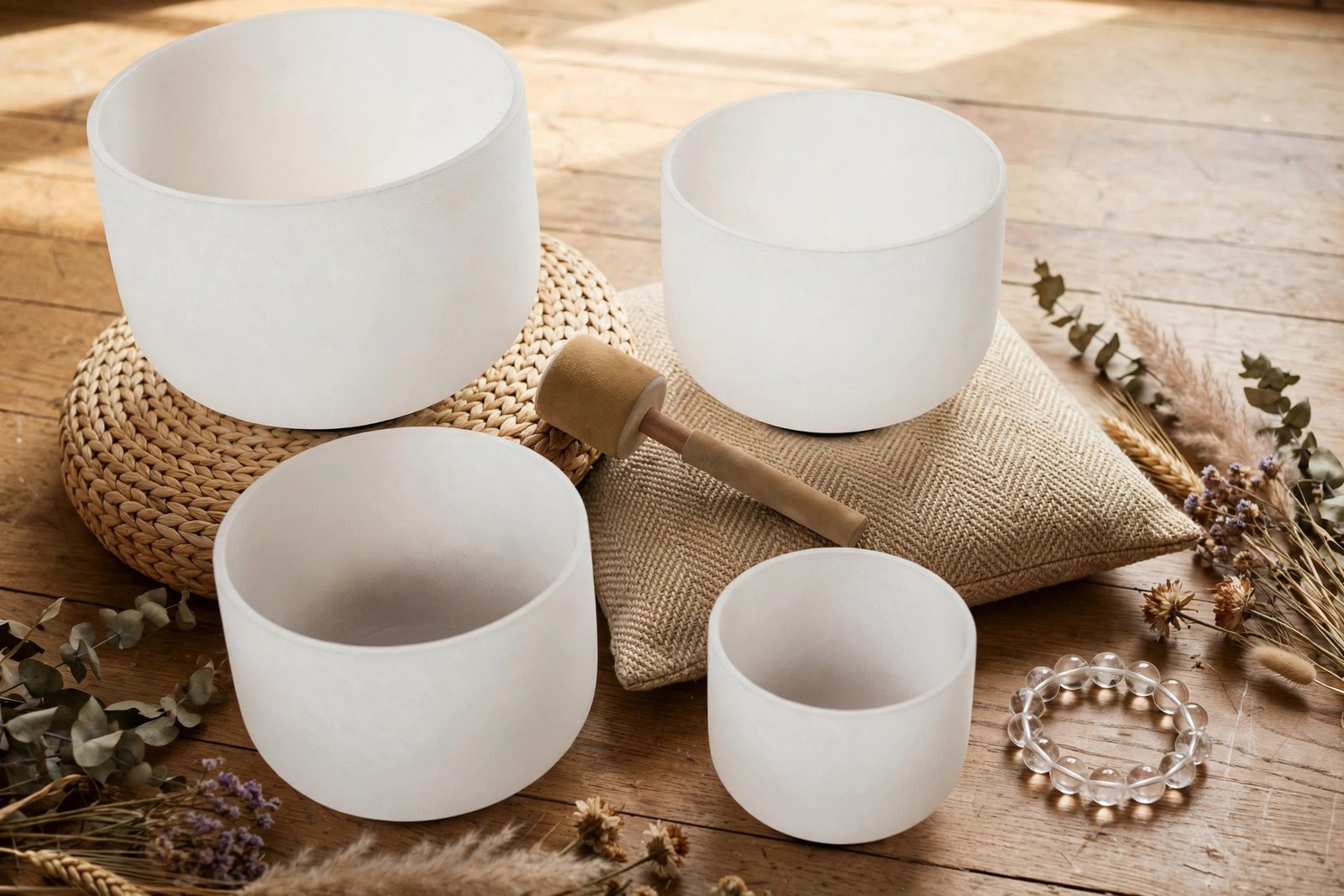
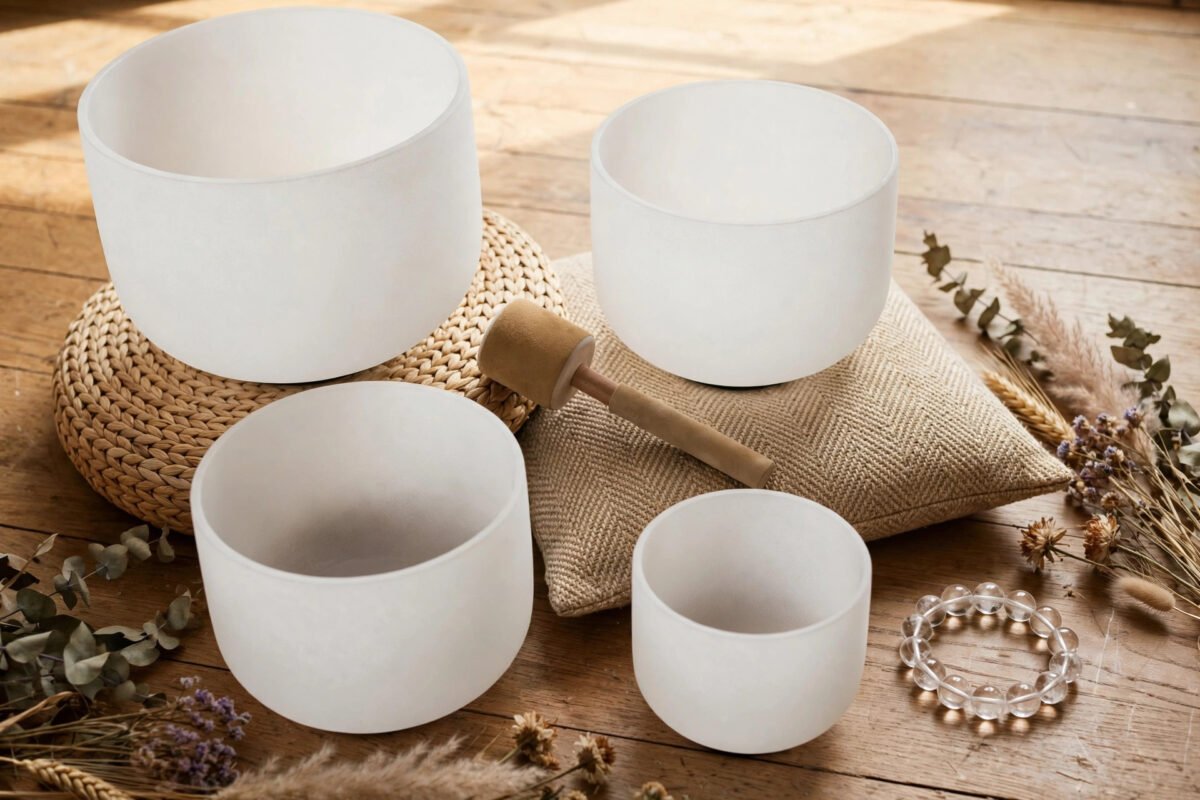
Frosted bowls are the most common: opaque white with a matte surface, the loudest and most resonant type, and usually the most affordable. The frosting is part of the formed surface, and it gives the mallet grip, which makes frosted bowls the easiest to play. Clear bowls are transparent, visually striking and produce a purer, sometimes quieter tone; they are more delicate and typically cost more. Coloured and coated bowls — including bowls fused with minerals or metals for colour, sometimes marketed with gemstone names — sit between the two, and their sound varies with the coating.
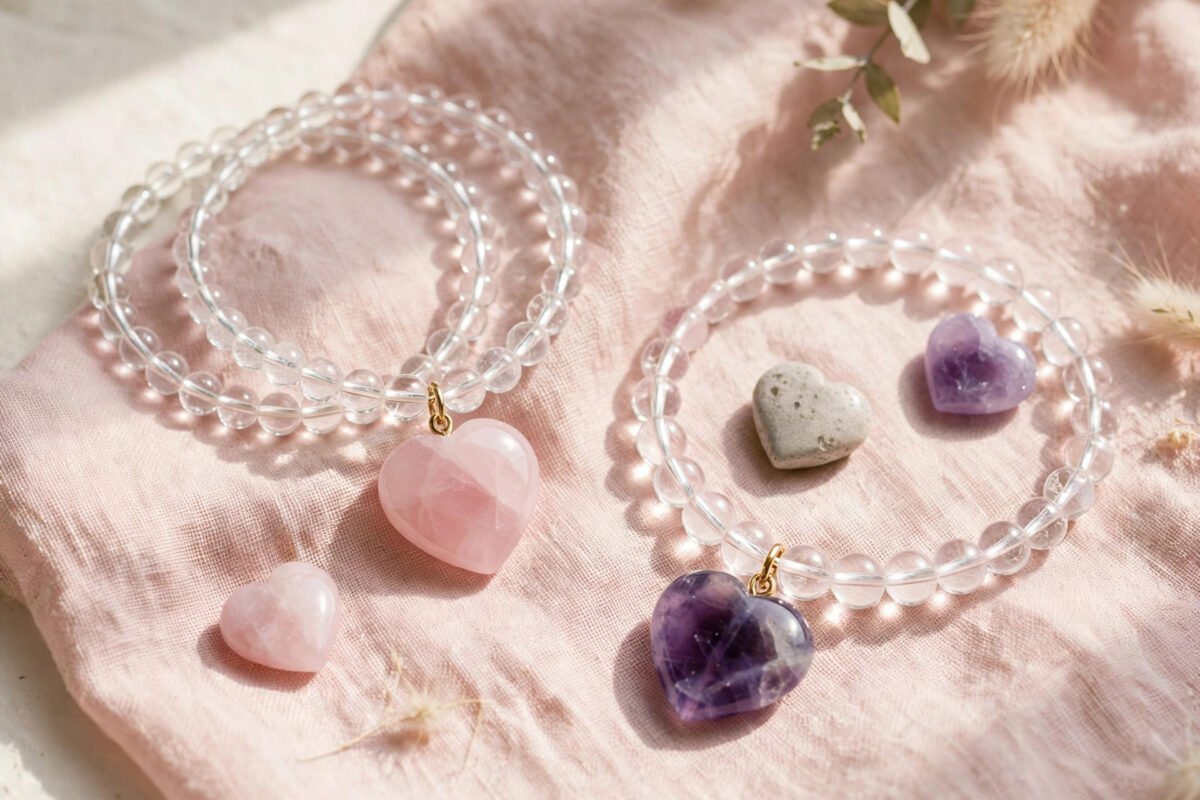
Size drives pitch: large bowls (30 cm and above) sound deep and slow-building, suited to relaxation sessions, while small bowls (15–20 cm) sound bright and high. If you plan to use a bowl alongside a personal practice with stones, many people enjoy pairing the session with a held palm stone or the bracelet they wear daily — an AVENSU clear quartz crystal bracelet from the Cửa hàng AVENSU is a natural match in material. Sound is also traditionally used to refresh the stones themselves between wears, with a bowl played near — not touching — the pieces; pairing that habit with the gentle methods in our complete crystal bracelet care routine keeps a practice simple and safe for delicate beads.
How to Play a Quartz Singing Bowl
Place the bowl on its rubber ring or cushion on a stable surface — never directly on hard flooring, where vibration and knocks can damage the base. Hold the mallet like a pen for striking, or grip it mid-shaft for rimming. To strike, tap the outside of the bowl gently at its widest point and let the tone bloom. To rim, press the mallet against the outer rim and circle steadily, keeping even pressure; the sound builds gradually, and patience matters more than speed.
Common beginner mistakes are pressing too hard, circling too fast, and gripping the bowl with a free hand, which mutes it. If the mallet starts rattling against the rim, slow down and lighten the pressure. Play at moderate volume: a quartz bowl can become surprisingly loud, and forcing volume by hard rimming can, in the worst case, crack a bowl — a risk makers warn about at extreme intensity.
Remember the framing: claims that specific notes heal specific conditions are beliefs within sound-healing tradition, not established medical findings. What is well documented anecdotally is simpler — a sustained, pleasant tone gives the mind a single point of focus, which is why the bowls work so naturally in meditation and relaxation settings.
Choosing and Caring for Your Bowl
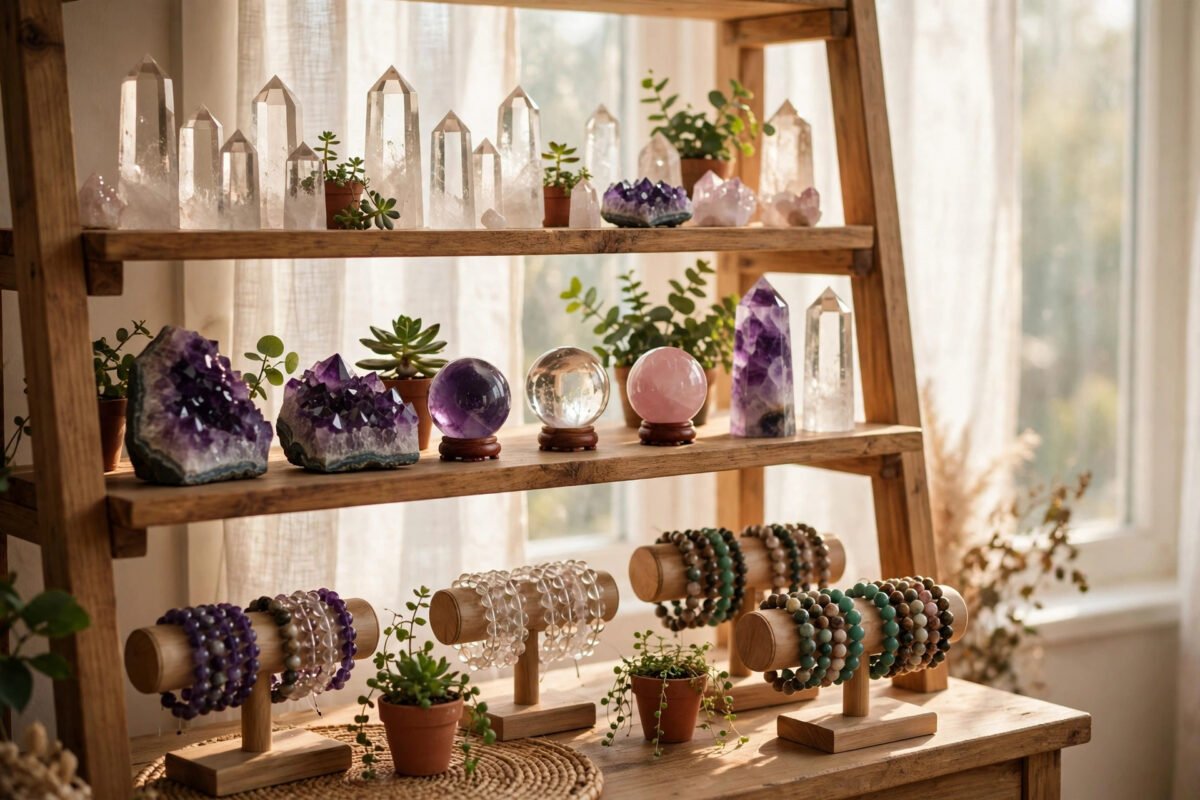
Choose in person if you can: play the bowl, listen for a tone you find genuinely pleasant rather than impressive, and check the tuning if you want a specific note. Inspect the rim and base for chips, and ask about the maker’s note accuracy and whether a mallet and ring are included. Sets of bowls look beautiful displayed together, and our guide to displaying a crystal collection covers shelving that suits them — though bowls in regular use are better kept on their cushions at floor or low-shelf level, ready to play.
Care means treating the bowl like the glass-family instrument it is. Transport it in a padded case, never nest other objects inside it, clean it with a soft cloth and mild soapy water if needed, and dry it fully. Keep it away from the edge of shelves and from temperature extremes. Storage logic from how to store crystal bracelets — separate, padded, stable — applies at instrument scale.
Các câu hỏi thường gặp
What is a quartz singing bowl made from?
From high-purity quartz silica that is melted and formed into a bowl, making the finished instrument essentially quartz glass. That is why the bowls produce such a clear, sustained tone — and why they must be handled like glass, protected from knocks, drops and hard surfaces.
What is the difference between frosted and clear singing bowls?
Frosted bowls are opaque white, louder, more resonant and generally more affordable, and their matte rim is easier for beginners to play. Clear bowls are transparent, visually striking and produce a purer tone, but they are more delicate and usually more expensive. Most people start with a frosted bowl.
Are quartz singing bowls tuned to chakras?
In modern sound-healing tradition, bowls are made in notes C through B and those notes are commonly matched to the seven chakras, so a set can be used in chakra-themed sessions. This is a contemporary belief framework rather than an ancient system or a medical claim; choose a note primarily because you enjoy its sound.
How do I stop my singing bowl from rattling when I play it?
Slow down and lighten the pressure. Rattling usually means the mallet is bouncing because it is pressed too hard or moved too fast around the rim. Keep steady, even contact just below the rim’s edge, let the tone build gradually, and never hold the bowl itself while it is sounding.



 English
 Vietnamese