A mini crystal collection can hold fifty pieces in the space a single large cluster would occupy, and that is exactly its charm. Miniatures — tiny points, thumbnail carvings, small tumbled stones and miniature spheres — let collectors explore many stones, shapes and colours without a big budget or a big shelf. They are also wonderfully giftable and easy to rearrange whenever a display needs refreshing.
This guide covers the miniature forms collectors look for, how to build a collection with a theme, and the display and storage methods that keep small pieces safe and easy to enjoy.
The Miniature Forms Collectors Love Most
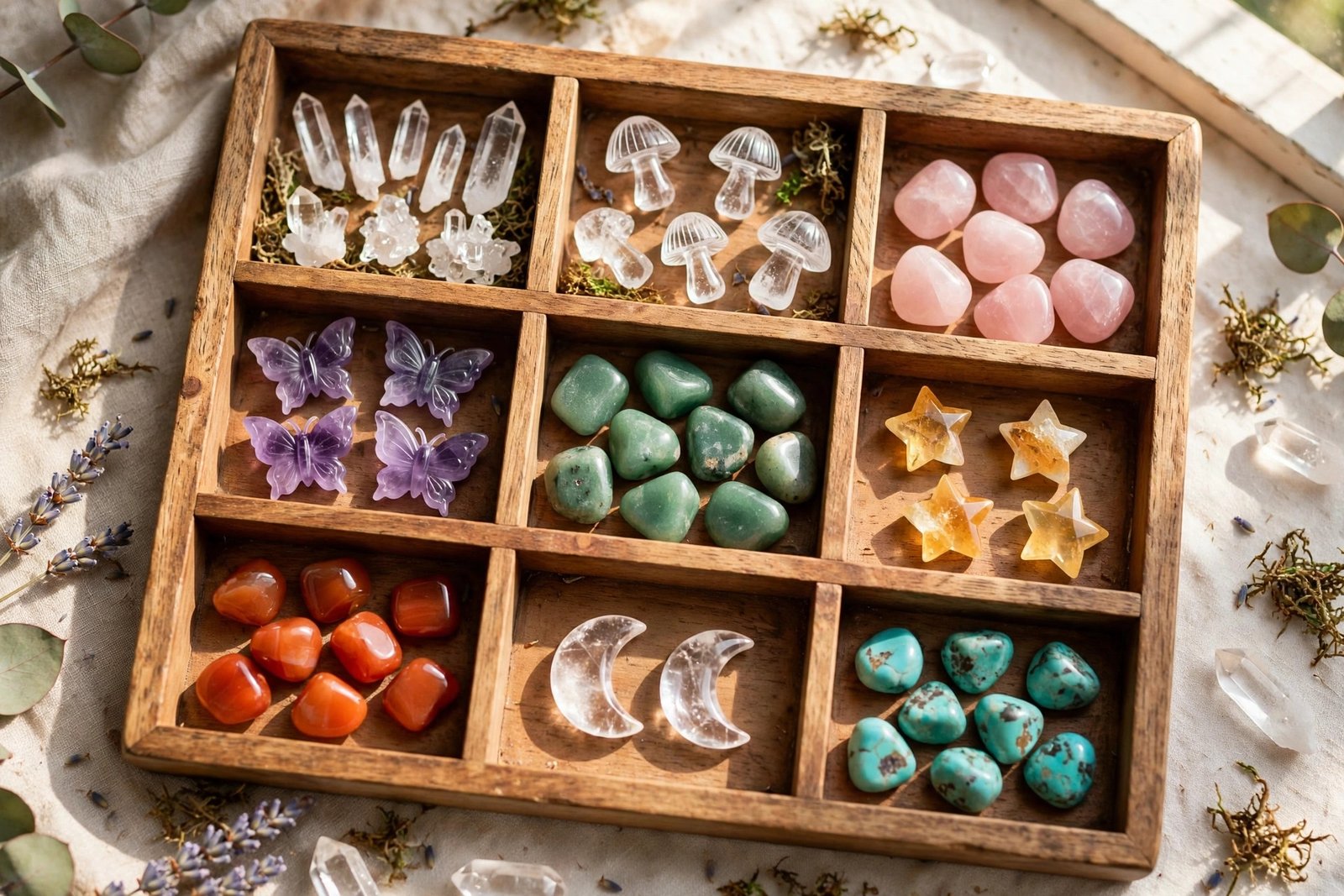
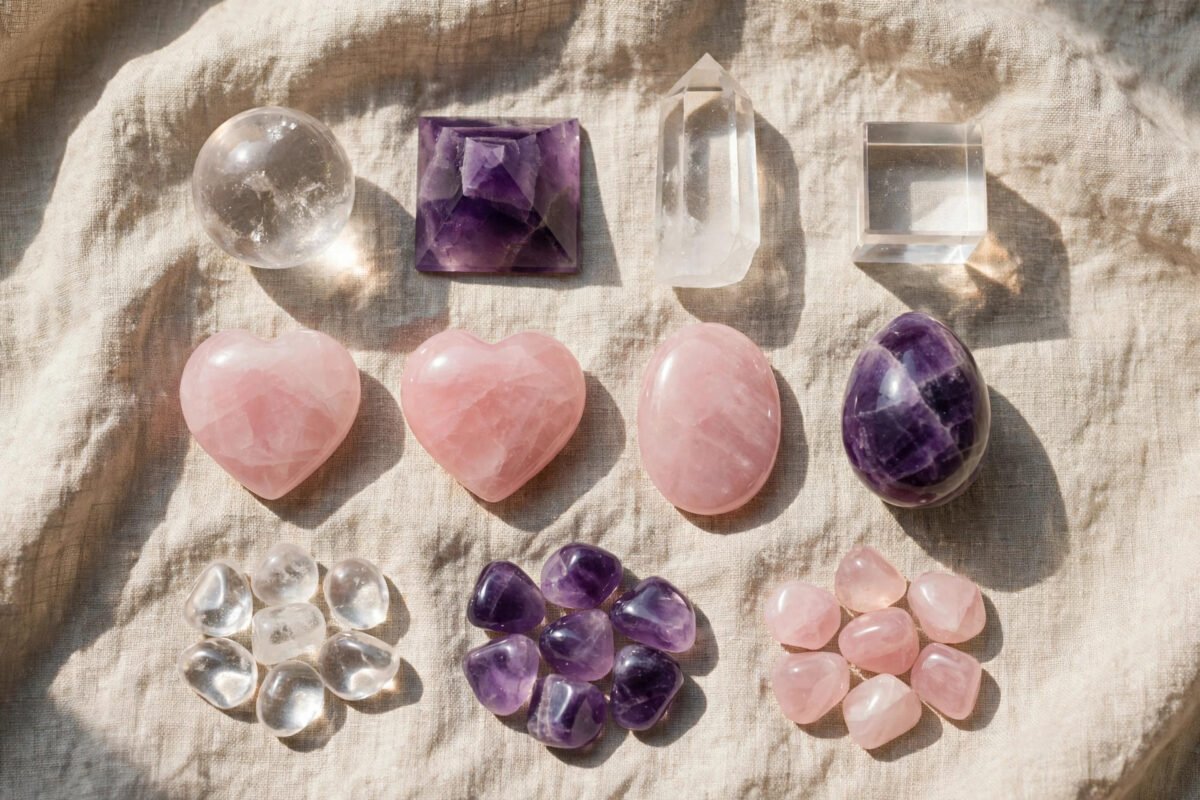
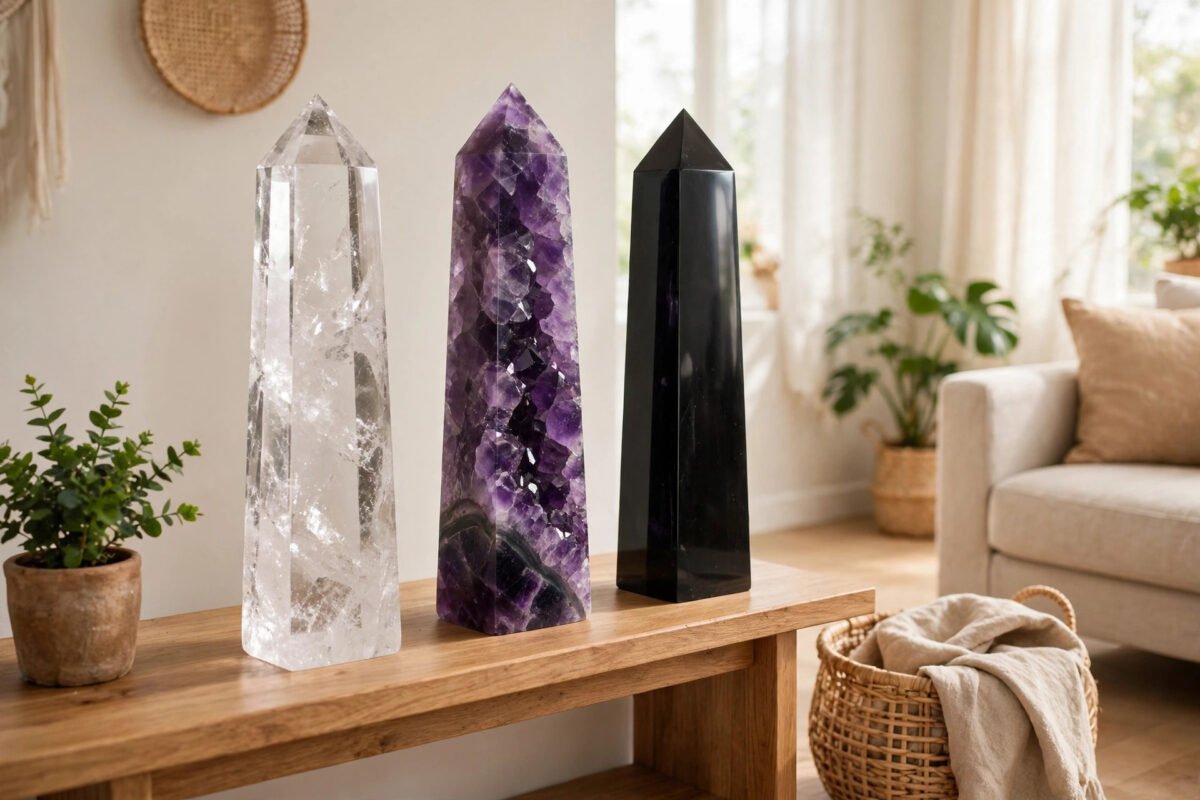
Mini points are the backbone of most collections: small quartz, amethyst or citrine points, usually one to three centimetres tall, that show natural crystal faces at pocket-money prices. Tiny towers and generator crystal points in miniature extend the same idea upward. Small spheres are another favourite, because a sphere shows a stone’s pattern from every angle and rolls satisfying colour into a very small footprint.
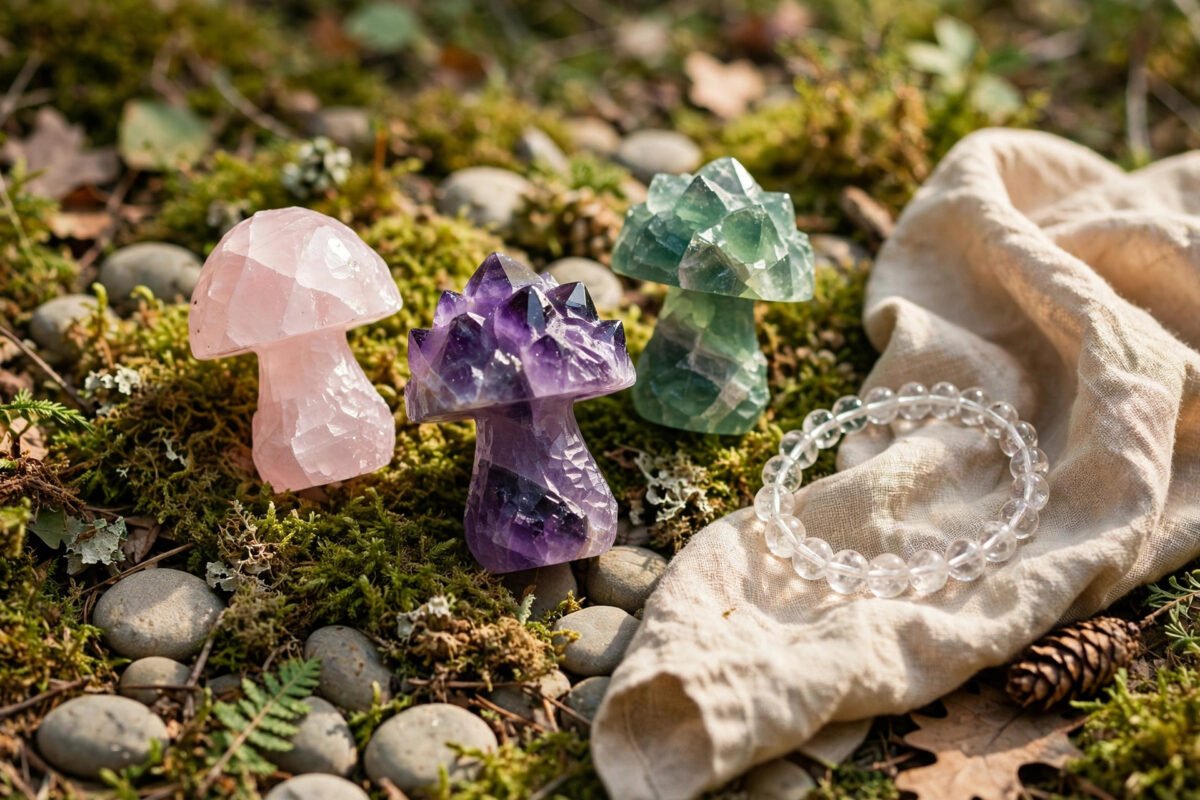
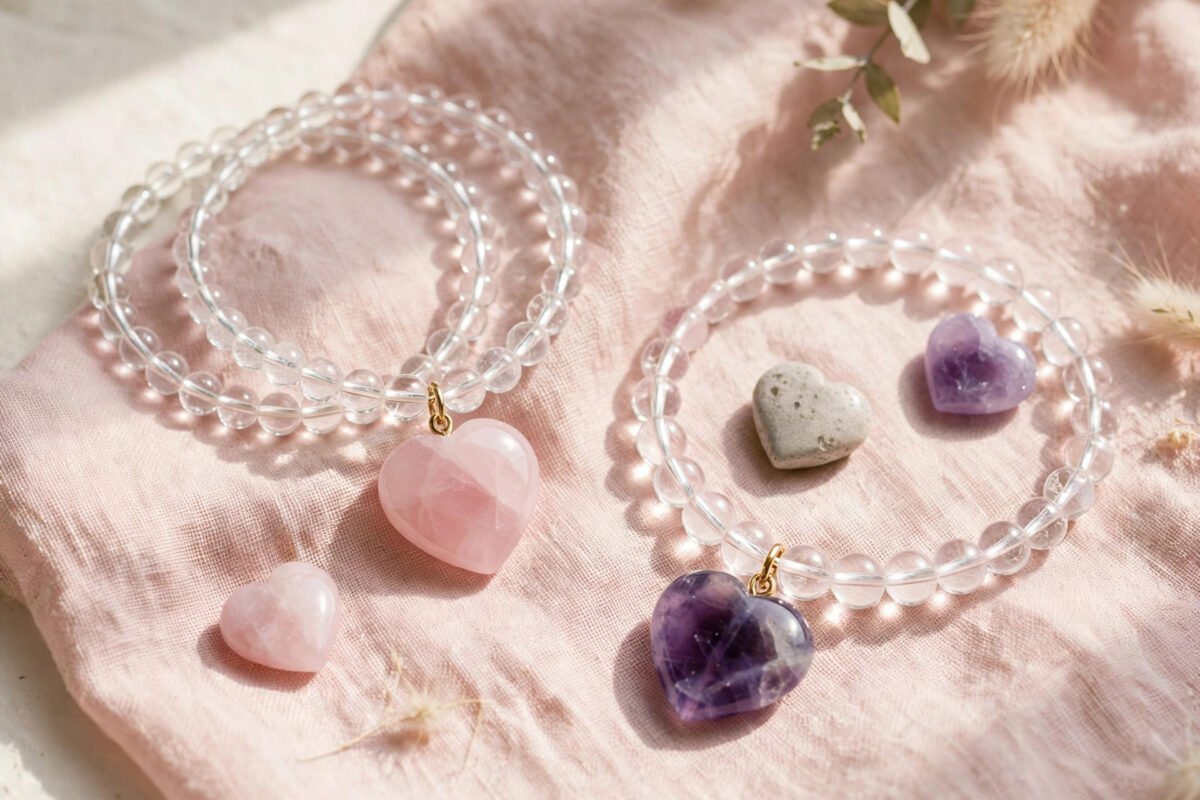
Carved miniatures add personality. Tiny moons and stars, covered in our guide to crystal moon and star carvings, sit alongside miniature animals, hearts, mushrooms and skulls in many collections. Mini hearts connect naturally with the romantic forms in our heart-shaped crystal jewellery guide, though at miniature scale they are display pieces rather than jewellery.
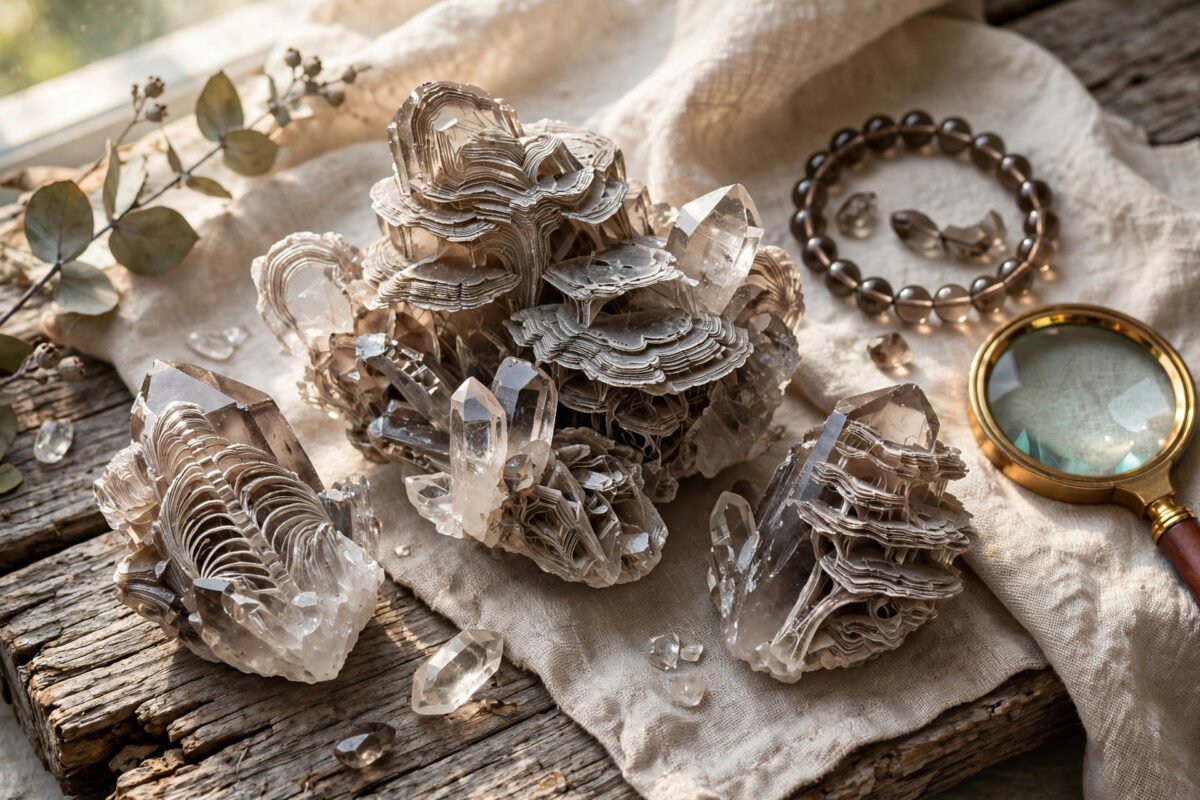
Finally, there are specimen minis: small but well-formed natural pieces such as a single fluorite octahedron, a tiny garnet crystal or a thumbnail cluster. Mineral collectors call palm-sized and smaller specimens by size classes such as thumbnail and miniature, a system outlined on Mindat’s size guide. Even casual collectors benefit from the idea: sorting minis by size class makes a display look deliberate.
Building a Collection with a Theme
Random handfuls of minis are fun, but themed collections grow more satisfying over time. Popular themes include one stone in many shapes (all amethyst: point, sphere, heart, moon, tower), one shape in many stones (a rainbow of mini spheres), a colour gradient from clear quartz through rose, amethyst and smoky tones, or a chakra set of seven minis in traditional chakra colours.
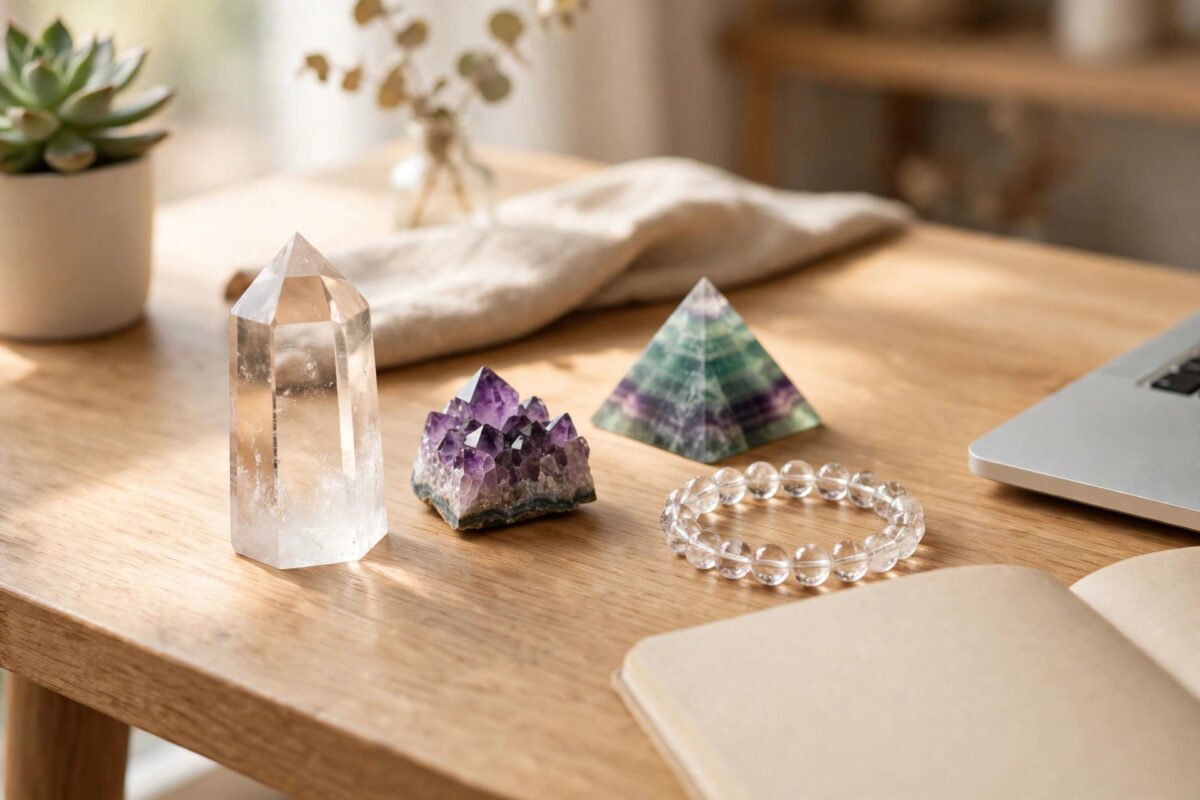
A theme also disciplines buying. Instead of grabbing every pretty piece at a market, you ask whether it fills a gap: the missing blue in a gradient, the fluorite version of a shape you own in quartz. AVENSU collectors often pair a mini display with the bracelet they wear daily, choosing miniatures in the same stones as their favourite piece from the Cửa hàng AVENSU — an amethyst bracelet, for instance, matched with a mini amethyst tower and moon on the desk.
Start small and complete one theme before opening another. A finished row of seven chakra minis on a narrow shelf looks far better than thirty unrelated pieces, and completion gives the collection a natural pause point before the next hunt begins.
Display Ideas for Very Small Pieces
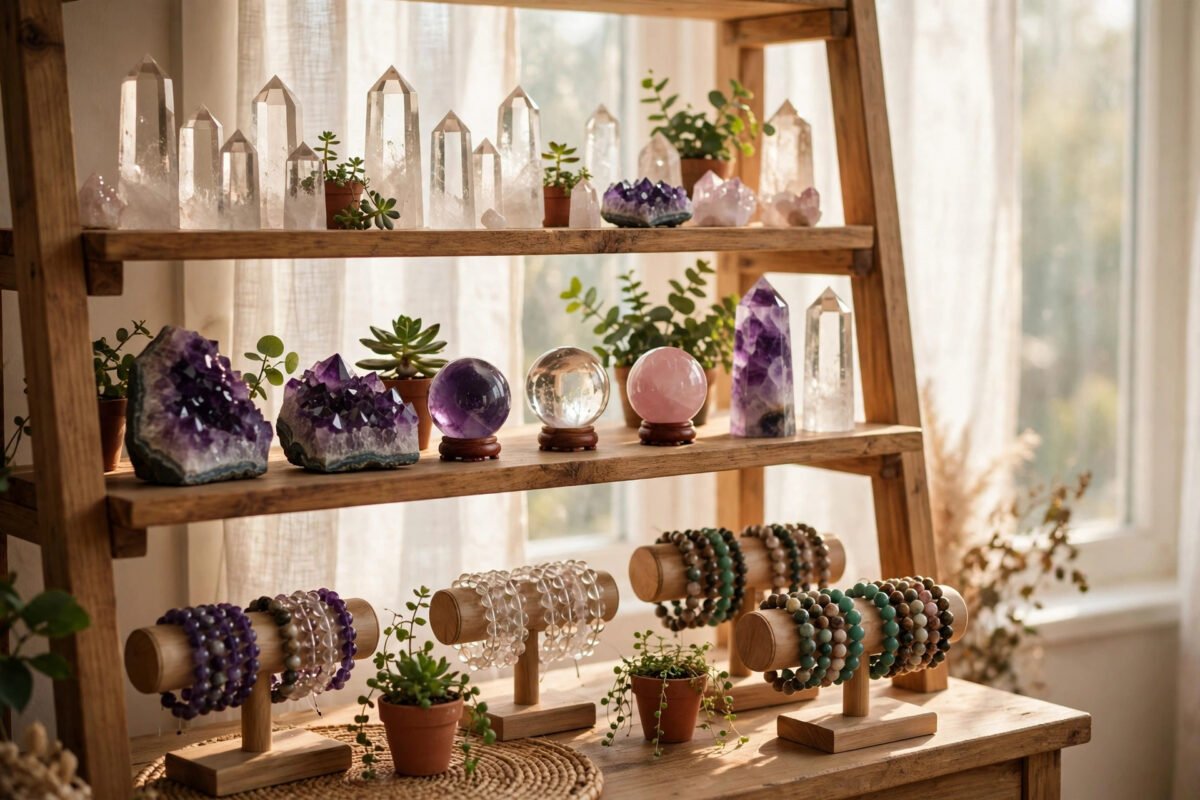
The classic display is a compartment tray or printer’s drawer, where each mini gets its own cell and the whole collection reads as a grid of colour. Glass-fronted boxes protect against dust while keeping pieces visible, and small acrylic stands lift spheres and eggs off the surface so their shape reads properly. For a softer look, a shallow ceramic dish lined with pale sand or fine gravel lets points and tumbled minis nestle at natural angles.
Lighting transforms minis. Translucent stones such as moonstone, opalite and fluorite glow on a small LED light base or a bright windowsill, while opaque stones like jasper and hematite look better under warm side light that shows their polish. Rotate pieces seasonally: a dozen minis on display and the rest stored looks curated, whereas everything out at once can look like clutter.
Label discreetly if you collect seriously. A tiny numbered dot under each piece, matched to a notebook or phone note with the stone name and where you bought it, prevents the classic problem of forgetting which blue stone is sodalite and which is lapis. Our guide on how to tell if a crystal is real helps when identifying unlabelled finds later.
Storage and Care Without the Chips
Small pieces chip each other when stored loose, so compartments are the rule. A jewellery box with divided sections, a bead organiser, or individual small pouches inside one box all work. Keep harder quartz away from soft fluorite, calcite and selenite minis, which scratch at a touch; the hardness-based approach in our guide to how to store crystal bracelets applies directly to miniatures.
Dust minis with a soft brush rather than washing whole handfuls together, which knocks tips together. The brushes and cloths in our crystal care kit essentials list are sized well for miniature work. When travelling with minis — for a trip grid or a gift — wrap each piece in tissue inside a rigid small box; a pocket of loose minis is the fastest route to chipped points, as anyone who has carried a crystal gem tree without padding can confirm about delicate crystal forms generally.
Các câu hỏi thường gặp
How much does it cost to start a mini crystal collection?
Very little. Small tumbled stones and mini points often cost less than a coffee each, and a themed set of seven to twelve minis can be assembled gradually. Spend more only on the centrepiece pieces — a fine mini sphere or carving — and let inexpensive pieces fill the supporting roles.
What is the best first miniature to buy?
A small clear quartz point is the classic start: inexpensive, durable and easy to pair with everything that follows. After that, buy toward a theme — the stone of your favourite bracelet, or the next colour in a planned gradient — rather than at random.
How do I stop mini crystals getting lost or mixed up?
Give every piece a fixed home: one compartment, one pouch or one spot in a tray, and return it after handling. Photograph your display once it is arranged; the photo becomes a map for putting everything back after cleaning, and a record of what you own when shopping for additions.
Are mini crystals suitable for crystal grids?
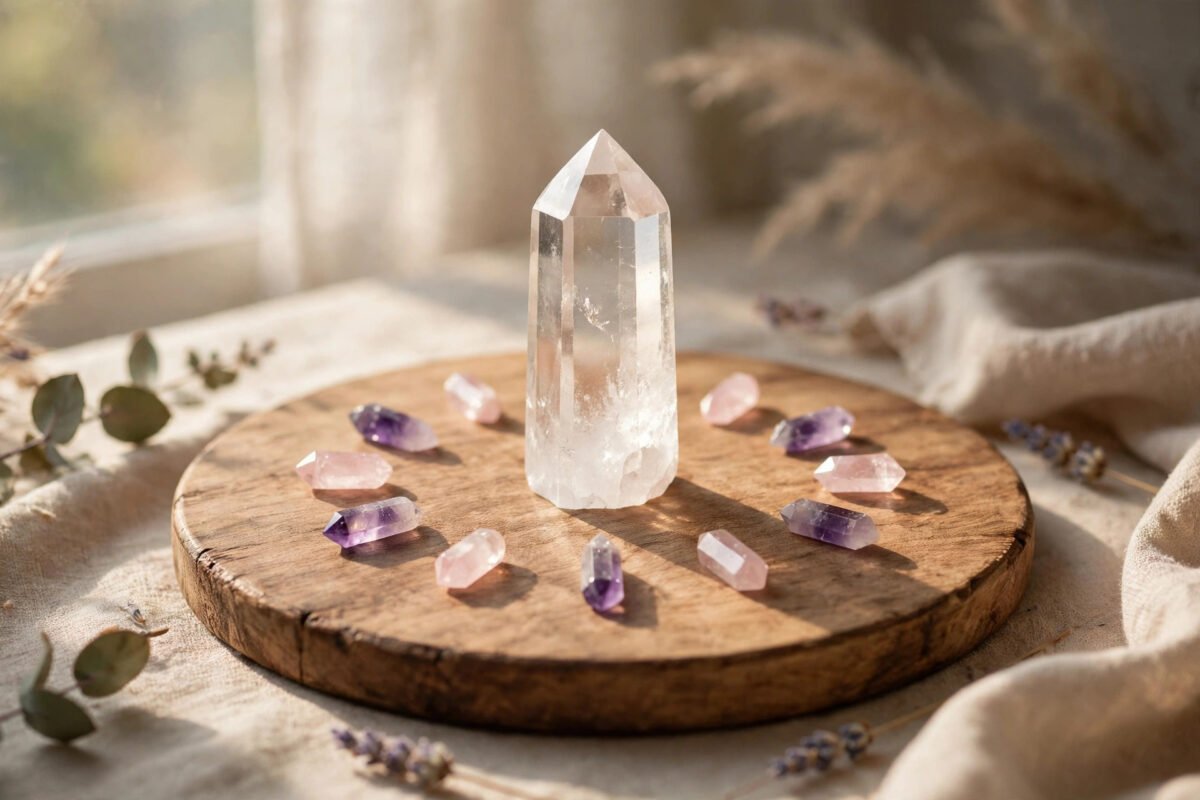
Yes. Minis are ideal for small grids on a desk, tray or travel kit, where full-size points would overwhelm the pattern. Use one slightly larger point as the centre and minis around it, following the layout principles in our crystal points for grids guide at a smaller scale.



 English
 Vietnamese