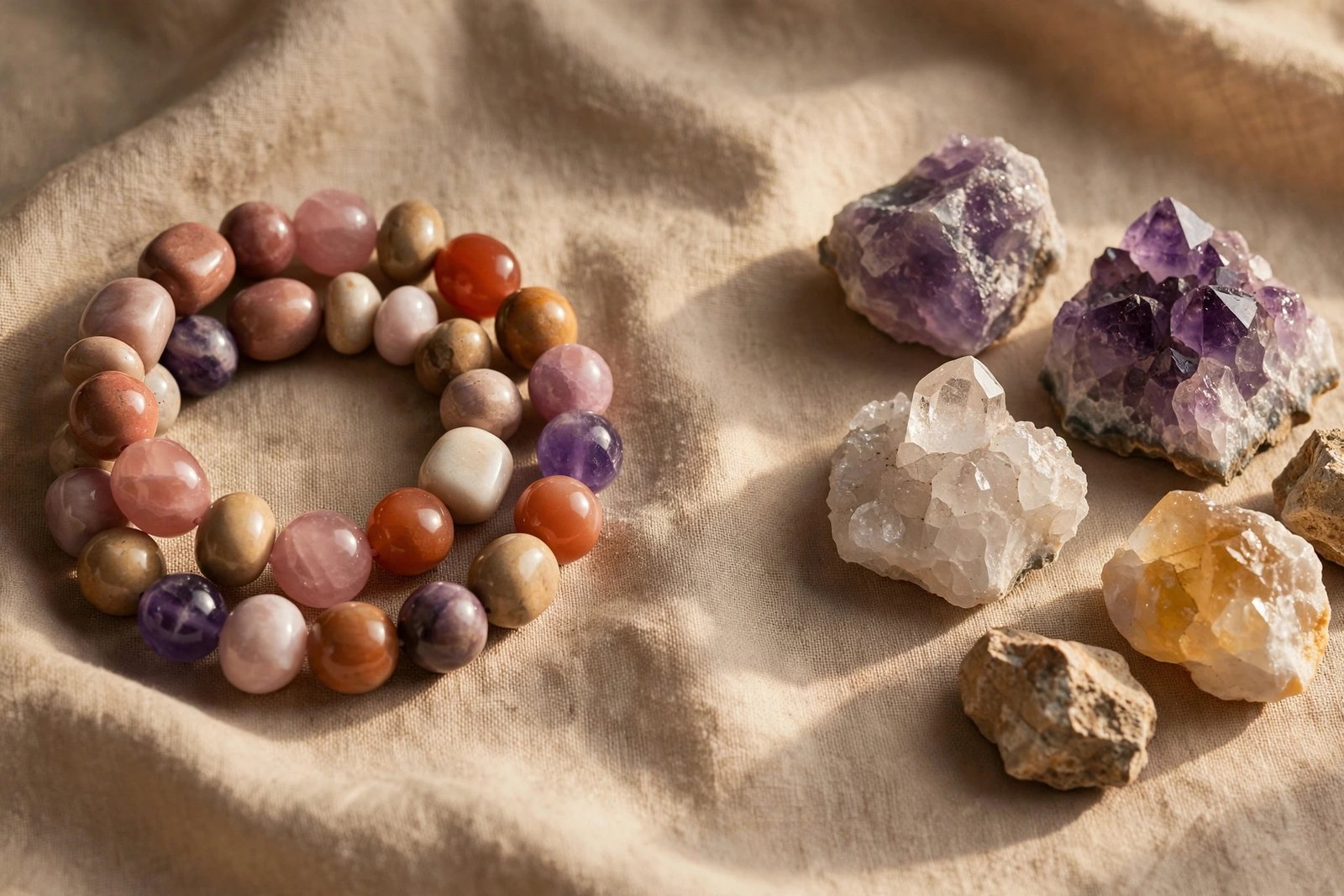
Scroll through any crystal shop and you will notice two distinct aesthetics: smooth, glossy beads that glow like candy, and rough, craggy stones that look freshly pulled from the earth. Both are genuine crystal — but tumbled and raw finishes create completely different bracelets in feel, look, durability, and the traditions around them. If you have ever wondered which is “better,” this comparison will help you choose based on your life, your style, and your wrist, not on hype.
What “Tumbled” Actually Means
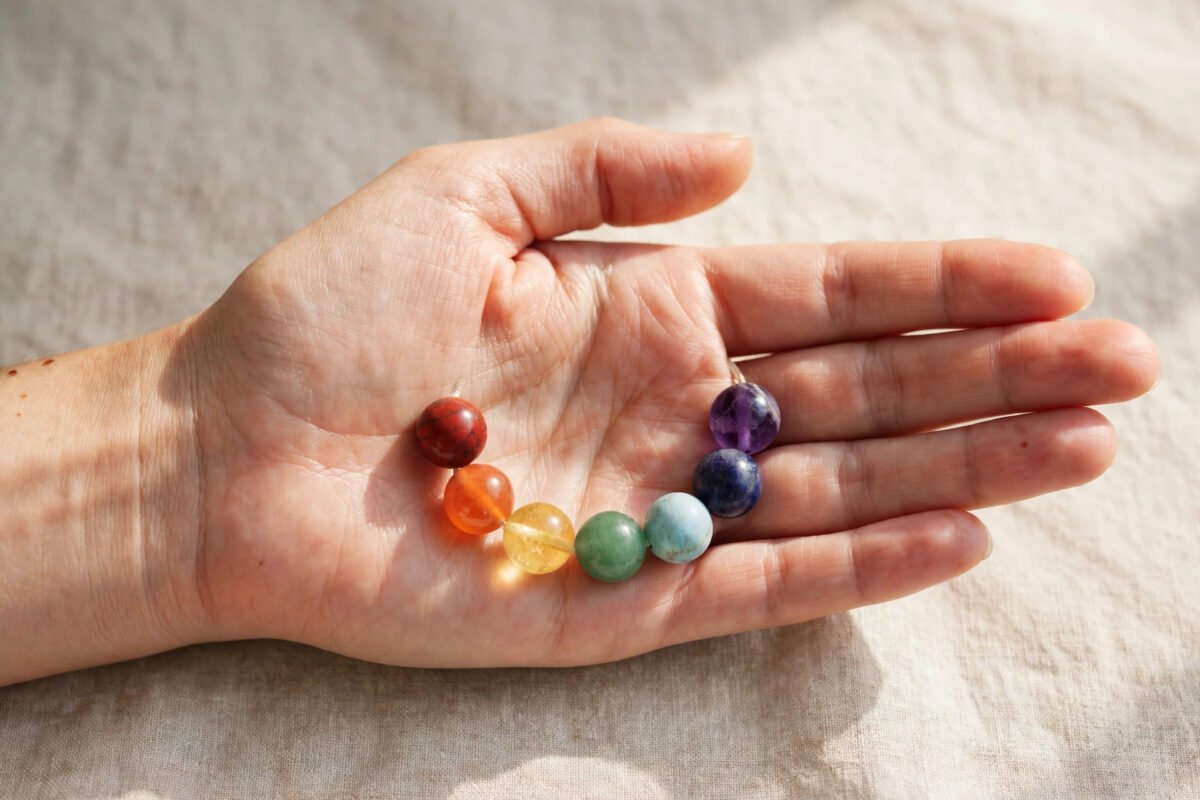
Tumbled stones are rough crystals that have been smoothed and polished — traditionally in rotating tumblers with progressively finer grit, the same principle behind polished river pebbles. The result is the classic bracelet bead: round or oval, glossy, comfortable against skin, with colors that appear richer because the polished surface reflects light evenly.
Nearly every beaded bracelet you see — from delicate 6mm strands to chunky statement pieces — uses tumbled beads. They are uniform enough to string neatly, smooth enough for all-day wear, and durable: polishing removes the fragile outer edges that would otherwise chip. Quartz, the mineral family behind amethyst, rose quartz, and clear quartz, has been shaped into jewelry since antiquity precisely because it takes such a beautiful polish (see the quartz mineral page for the geology behind the shine).
What “Raw” Actually Means
Raw stones are left close to their natural state — rough surfaces, visible crystal structure, irregular shapes. In bracelets, “raw” usually means rough nuggets or chips wire-wrapped or knotted onto cord, since truly raw stones cannot be drilled and strung like beads without some shaping. The look is earthy, organic, and unmistakably natural: no two pieces are alike.
Raw-style bracelets appeal to wearers who want the most direct connection to the stone as nature made it. They read as bohemian, artisanal, and a little wild — a deliberate contrast to the tidy uniformity of tumbled beads.
Head-to-Head Comparison
- Comfort: Tumbled wins clearly. Smooth beads glide over skin and slide under sleeves. Raw nuggets can scratch, snag knitwear, and press uncomfortably during sleep or desk work.
- Durability: Tumbled wins again. Polishing removes weak edges; raw stones keep every fragile point and cleavage plane. A raw bracelet knocked against a desk is far more likely to chip.
- Everyday wearability: Tumbled bracelets suit offices, workouts (light ones), and sleep. Raw pieces are better as occasional-wear statement jewelry.
- Visual impact: Raw wins for drama. A rough amethyst point or raw quartz cluster draws the eye in a way polished beads rarely do. Tumbled wins for versatility — it goes with everything.
- Price: Roughly comparable at the bead level, but raw-style bracelets often cost more in labor: each irregular stone must be individually wrapped or set, while tumbled beads string quickly.
- Care needs: Tumbled beads wipe clean in seconds. Raw stones trap dust, lotion, and oils in their crevices and need gentle brushing to stay fresh.
- Energetic traditions: This is where opinions split. Some traditions hold that raw stones carry a wilder, more intense presence because they are unaltered, while tumbled stones offer a gentler, more refined feel. Others consider the difference purely aesthetic. There is no scientific measure — choose the story that resonates with you, and be wary of anyone selling certainty here.
Which Fits Your Life? A Quick Decision Guide
Choose tumbled if: this is your first crystal bracelet, you want daily wear, you work at a desk, you like clean minimalist styling, or you plan to stack multiple bracelets (smooth beads stack far more comfortably). A grounding crystal bracelet in polished beads is the workhorse choice — durable, versatile, and easy to live with.
Choose raw if: you want a statement piece, you love organic bohemian style, you wear bracelets selectively rather than daily, or you feel drawn to the untouched character of natural stone. Treat it as art jewelry: beautiful, meaningful, and a little demanding.
Choose both if: you are building a varied collection. Many experienced wearers keep tumbled bracelets for daily life and one or two raw pieces for days when they want presence. The two finishes also contrast beautifully in a mixed stack — just place the raw piece where it will not grind against polished beads.
Care Differences Worth Knowing
Tumbled beads need little: a wipe with a soft cloth, occasional restringing when the elastic tires (see our home restringing guide). Raw stones need more attention: brush crevices gently with a soft toothbrush, keep them away from hard knocks, and store them separately so rough edges do not scratch your polished pieces. Our matte vs polished bracelet guide covers the finish spectrum in between these two extremes.
And whichever finish you choose, wear it in the right number: our guide to how many bracelets to wear at once keeps any stack comfortable.
“Tumbled is the stone at its most polite; raw is the stone at its most honest. Neither is more ‘real’ — they are just the same truth told in different tones of voice.”
Explore more material wisdom in our crystal bracelet guides.
Frequently Asked Questions
Are raw crystal bracelets more powerful than tumbled ones?
Some traditions say raw stones feel more intense and tumbled stones feel gentler, but there is no scientific basis for an energy difference — the distinction is aesthetic and tactile. Choose based on comfort, style, and how you plan to wear the piece.
Can raw crystal bracelets be worn every day?
They can, but they are less practical for it: rough edges snag clothing, chip more easily, and feel uncomfortable during sleep or desk work. Most wearers reserve raw pieces for occasional wear and choose tumbled beads for daily rotation.
Do tumbled stones lose their natural properties?
Tumbling only changes the surface — the stone’s composition is identical. Polishing removes the outer skin and fragile edges but does not alter what the stone is. Any tradition attributing different qualities to raw versus tumbled is about finish philosophy, not chemistry.
How do I clean raw crystal bracelets?
Use a soft dry brush (a clean makeup brush works) to lift dust from crevices, and wipe accessible surfaces with a barely damp cloth. Avoid soaking raw pieces — water lodges in cracks and can weaken wire wrapping over time.








 English
 Vietnamese