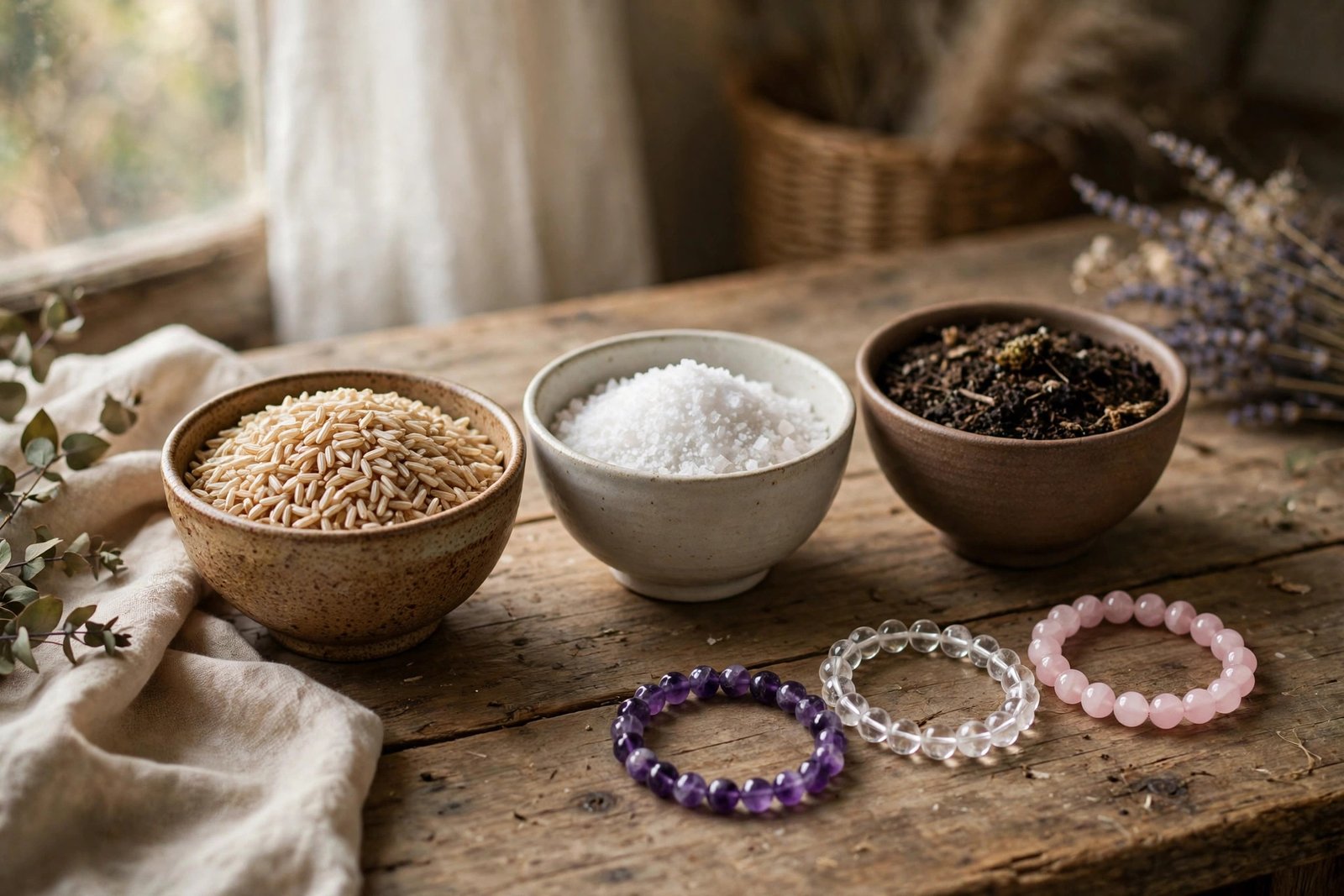
Some cleansing methods lift and lighten; grounding methods do the opposite. Rice, earth, and salt burial all rest a crystal in a dry, natural material for hours or days, and in tradition they are believed to draw out heavy, stagnant energy and return the stone to a neutral state. They are among the oldest cleansing ideas — and also among the easiest to get wrong, because each material can damage the wrong stone.
This comparison explains how each method is traditionally used, how long it takes, which stones to keep away from it, and how to clean up afterwards. Used selectively, they can be a satisfying monthly reset for hard-wearing bracelets. Used carelessly, they can dull polish, corrode metal accents, or crack a soft bead.
Rice Burial: The Gentlest of the Three
In the rice method, dry uncooked brown rice fills a bowl, the bracelet is nestled into it until covered, and the bowl rests somewhere undisturbed for 12 to 24 hours. Traditionally, the rice is believed to absorb unwanted energy, which is why the used rice is discarded afterwards rather than eaten or reused for cleansing.
Rice is the kindest burial option for delicate pieces: it is dry, soft, and free of the abrasives and chemicals that make salt risky. It suits an AVENSU moonstone bracelet far better than salt does. Its main downsides are practical — rice dust can settle in bead holes and around knots, so brush the bracelet gently with a soft, dry brush afterwards, and tiny grains can jam between small beads if you press the bracelet down hard. Lay it on the surface and cover it, rather than forcing it deep.
Our related guide to cleansing crystals with rice and herbs adds scented variations for those who enjoy them.
Earth Burial: The Traditional Deep Reset
Earth burial means resting the stone in soil — traditionally in a garden, wrapped in natural cloth — for 24 hours to several days. In feng shui tradition and many earth-based practices, direct contact with soil is believed to ground a stone completely, which is why this method is often reserved for pieces that feel especially “heavy” or that have been through a difficult period.
It is also the messiest and riskiest method for a finished bracelet. Soil is damp, and damp soil against elastic for days can weaken the cord and stain porous stones. Soil can contain grit that scratches anything softer than quartz, referencing the Mohs scale of mineral hardness before burying anything below hardness 6. Never bury selenite, malachite, turquoise, or lapis, and never bury a bracelet with metal accents you care about.
A safer compromise used by many owners: place the bracelet in a small unglazed clay pot or a cloth pouch, and set that on top of soil or bury only the container shallowly for a few hours. You keep the grounding symbolism with far less moisture and grit. Whichever version you choose, wash hard stones gently afterwards and dry everything thoroughly.
Salt Burial: Strong, Popular, and Often Misused
Dry salt burial covers a stone in coarse sea salt for 12 to 24 hours; salt water soaking is a separate, harsher method covered in our guide to cleansing crystals with salt water. In tradition, salt is believed to be a powerful purifier, and it is probably the most recommended — and most overused — cleanse online.
The caution is real. Salt is abrasive at bead edges, it can dull polished surfaces, and in humid air it draws moisture that corrodes metal spacers, clasps, and Pixiu pendants. Soft and porous stones, stones with natural fractures, and anything set with glue should never be buried in salt. Even quartz, which tolerates a short dry-salt rest, should be brushed completely clean afterwards, because lingering salt in the knot area can work on the elastic over time.
If you love the idea of salt, a gentler pattern is indirect contact: set the bracelet on a small dish placed on top of a bowl of salt, so it rests “over” the salt without touching it. Many practitioners believe proximity is sufficient, and your bracelet avoids every physical risk. The Gemological Institute of America care guidance likewise encourages keeping chemicals and abrasives away from treated and porous gems.
Which Method Should You Choose?
Choose rice for a routine, low-risk grounding cleanse, especially for softer stones and elastic bracelets you wear daily. Choose earth, in its contained form, for an occasional symbolic reset of hard, durable stones such as quartz, jasper, or obsidian. Reserve direct salt burial for hard, unpolished or tumbled stones without metal parts — and skip it entirely for most finished bracelets, including an AVENSU green aventurine bracelet with accent beads.
All three methods share aftercare: brush or rinse appropriately for the stone, dry fully, inspect the elastic, and store the bracelet separately by hardness as described in storing crystals by hardness. If a bracelet comes out of a burial cleanse looking cloudy, our guide to cleaning cloudy crystals explains what can and cannot be reversed.
Finally, remember these are deep cleanses, not weekly chores. For most bracelets, moonlight, selenite, or sound — described in our complete crystal bracelet care routine — handles regular upkeep, with a grounding burial once a season at most. When in doubt, browse the care notes alongside each piece in the AVENSU shop, and choose the gentlest method that fits your stone.
Frequently Asked Questions
How long should a crystal stay buried?
Rice and dry salt are typically 12 to 24 hours. Earth burial traditionally runs from 24 hours to three days, though a few hours in a cloth pouch or clay pot is a safer modern compromise for finished bracelets.
Can I reuse the rice or salt afterwards?
Tradition says no: the material is believed to have absorbed what it drew from the stone, so it is discarded — and rice used for cleansing should never be eaten. Compost plain rice or soil, and dispose of salt in household waste.
Which stones should never be buried in salt?
Avoid salt for selenite, malachite, turquoise, lapis lazuli, fluorite, hematite, and any stone that is porous, fractured, dyed, or set with metal or glue. Salt can dull, pit, or corrode all of them.
Is burial cleansing better than moonlight or selenite?
Not better — different. Burial methods are traditionally seen as deep, grounding resets, while moonlight and selenite are gentler maintenance cleanses. Most bracelets do best with gentle methods regularly and a burial cleanse only occasionally, if at all.








 English
 Vietnamese