Rice and herbs for crystal bracelets appear in many cleansing rituals. They can be meaningful symbols, but they are not a proven way to clean jewelry. A bowl of dry grains does not reliably remove skin oil, sunscreen, perfume, or residue from a bracelet. Our earlier version of this guide said that burying beads in rice was safe for every stone and carried “zero risk.” That was incorrect, and we have removed that advice.
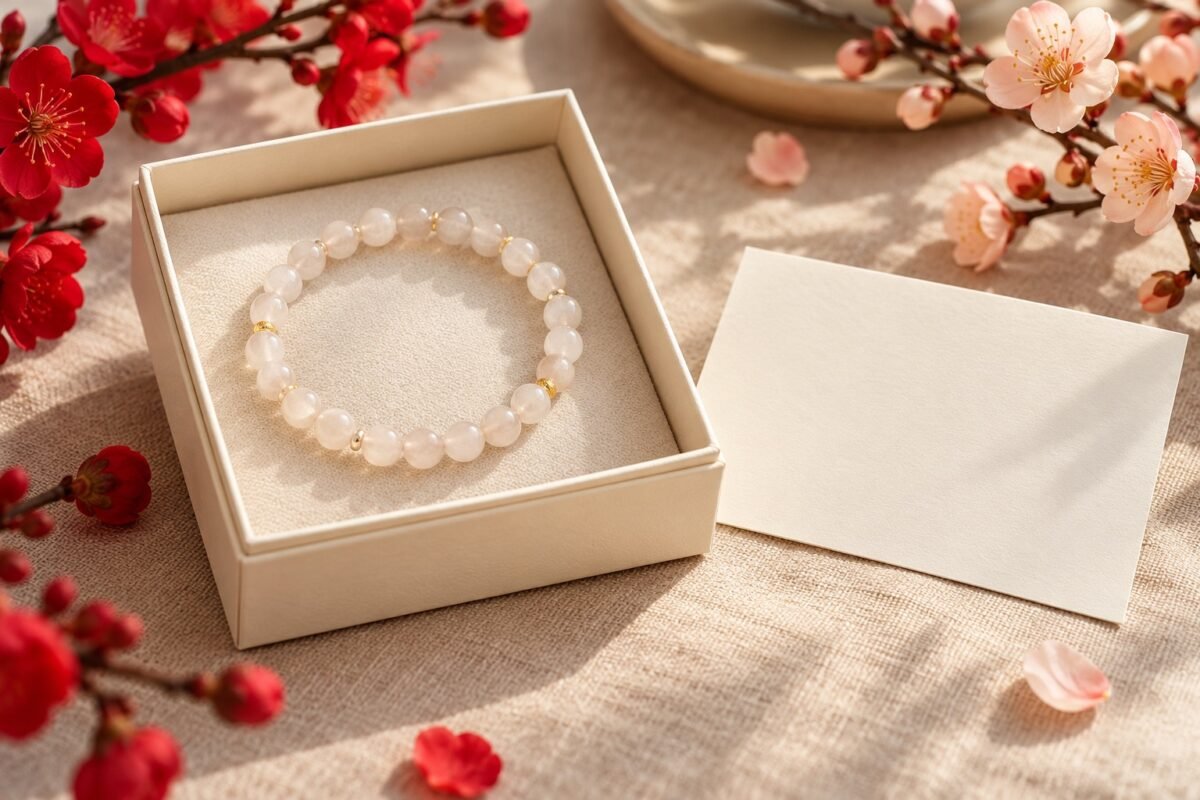
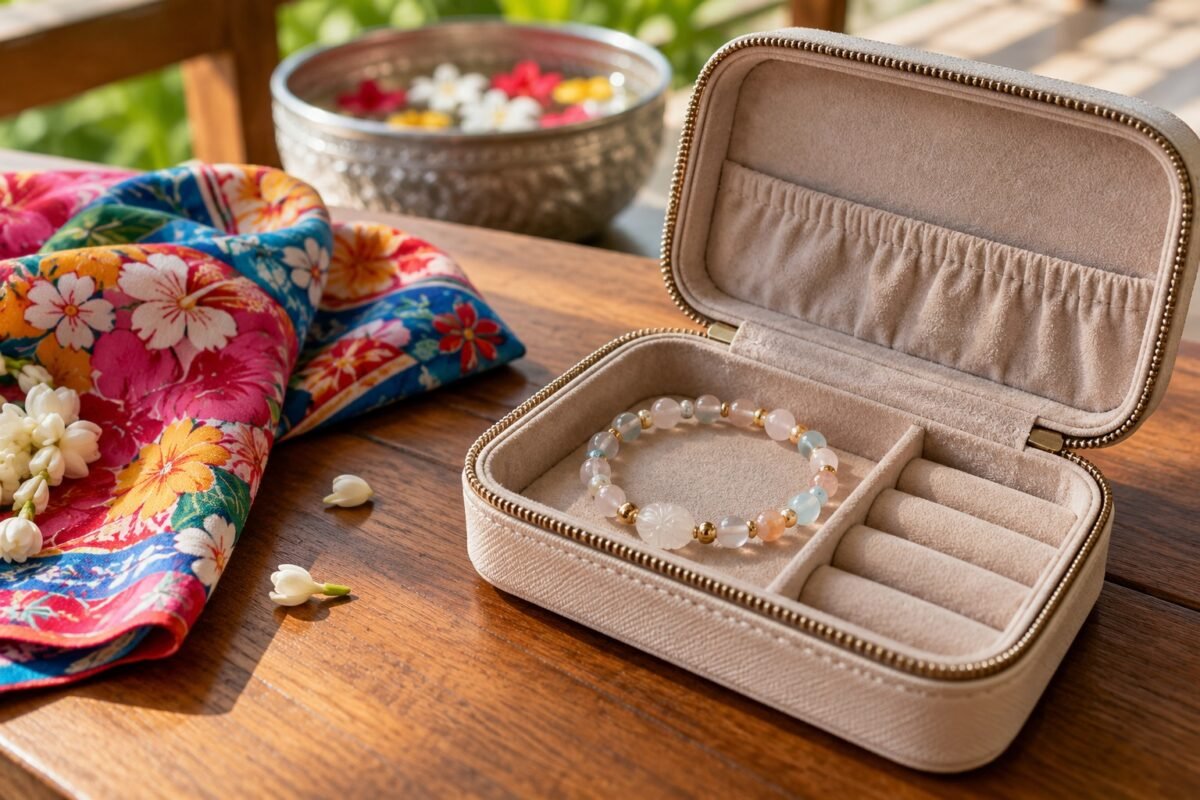
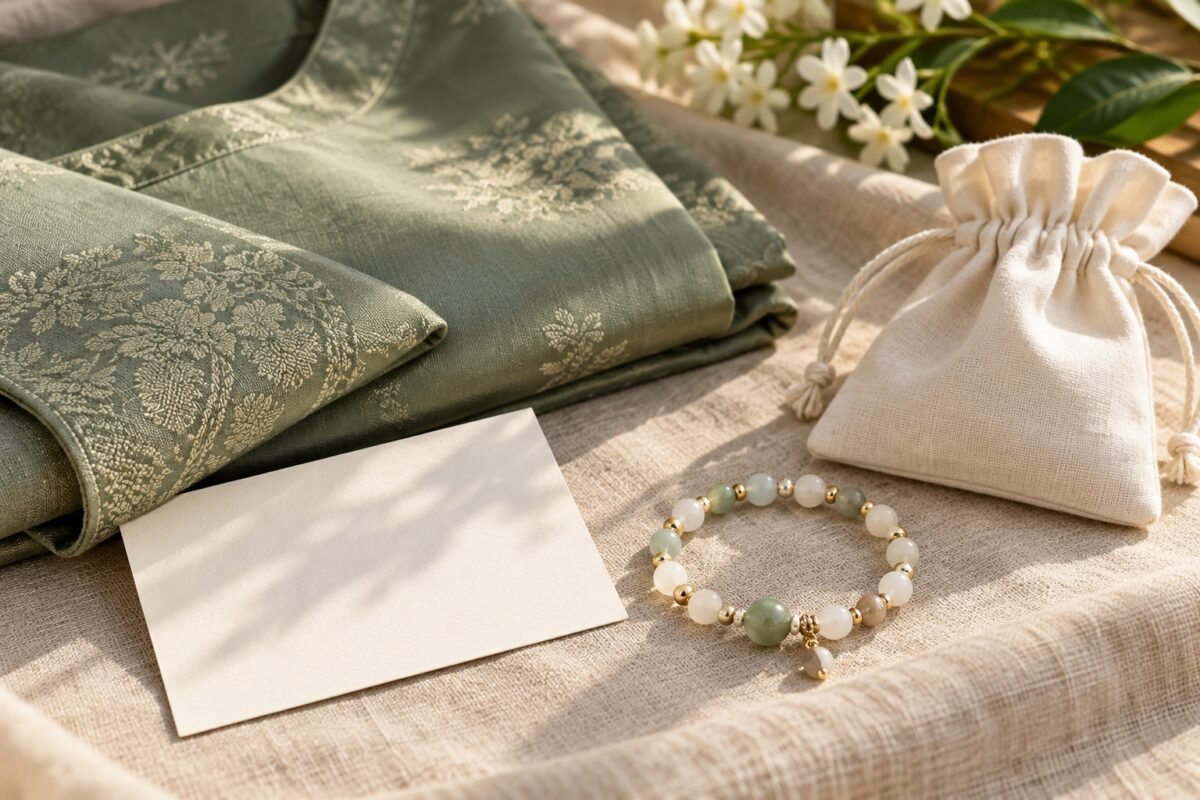
Editorial image note: the featured image is AI-generated and illustrates a bracelet on a cloth with rice and herbs kept separate. It is not a product photograph.
Separate a personal ritual from physical cleaning
If rice or dried herbs are part of a personal or cultural practice, you can keep them in a separate dish near your bracelet without putting the jewelry inside. There is no established gem-care basis for claiming that rice draws grime from a bead, that it safely dries drill holes, or that an overnight rice bath is suitable for every bracelet. Dried plant fragments and grain dust can lodge around spacers, knots, or bead holes. Fragrance and oils may also affect sensitive materials. A ritual can still be personally meaningful without being presented as a cleaning method.
A gentler everyday routine
After wear, lay the bracelet on a clean, soft surface. Wipe accessible bead surfaces gently with a clean, soft, lint-free cloth, then let the piece air out before storing it in a separate pouch or compartment. Do not tug at the elastic or scrub the spacers. Check for a loose bead, stretched cord, worn plating, or residue that a cloth will not lift. If you notice damage, stop wearing the bracelet until it can be assessed or repaired. The AVENSU bracelet care guide covers routine handling and storage.
Water, soap, brushes, ultrasonic cleaners, steam, salt, oils, and polishing compounds are not universal solutions. Care depends on the confirmed bead material, any dye or coating, metal components, adhesives, and stringing. GIA notes that porous or treated gems and some assembled jewelry need special caution; its jewelry-care guidance is a useful general reference, not a verification of any AVENSU product’s materials.
What if you do not know the materials?
Do not infer a bracelet’s mineral identity or finish from its product name or an editorial image. Check the current product description and ask AVENSU about the exact beads, accents, coating, and cord before trying a wet or chemical method. The white jade bracelet listing, for example, is the right place to review its current stated details; this article does not independently certify that any particular bead is jade. If a surface is tacky, discolored, cracked, or shedding, use a professional jeweler familiar with the actual materials rather than experimenting at home.
If you still want a rice-and-herb ritual
Keep the bracelet dry on its own clean cloth or tray, with the grains and herbs nearby rather than in contact with the beads. Keep loose grains, fragrant botanicals, and the jewelry itself away from young children and pets. Do not treat the ritual as a substitute for physical cleaning or repairs, and do not assume that a material is water-safe simply because another bracelet is. For fit, see the bracelet size guide; a comfortable fit reduces unnecessary strain on the cord.
Quick answers
Does brown rice remove oils from crystal beads?
There is no good basis for treating dry rice as a reliable jewelry cleaner. A soft cloth is a simpler starting point for ordinary surface dust and fingerprints.
Are dried herbs safe against every stone?
No universal claim is possible. Keep them separate from jewelry, especially when the bead material or treatment is unknown.
Can I soak the bracelet instead?
Only after confirming the care requirements of every component. When in doubt, avoid soaking and ask the seller or a qualified jeweler.









 English
 Vietnamese