A home with small children or curious pets changes how crystal bracelets should be stored and worn. The stones themselves are not the main issue — the size of the beads, the strength of the cord, and where a bracelet is left at night are what matter.
This guide keeps the advice practical and factual: which risks are real, which minerals need extra care, and the simple storage habits that let you keep enjoying an AVENSU clear quartz bracelet in a family home without worry.
The Main Risk: Small Beads and Broken Cords
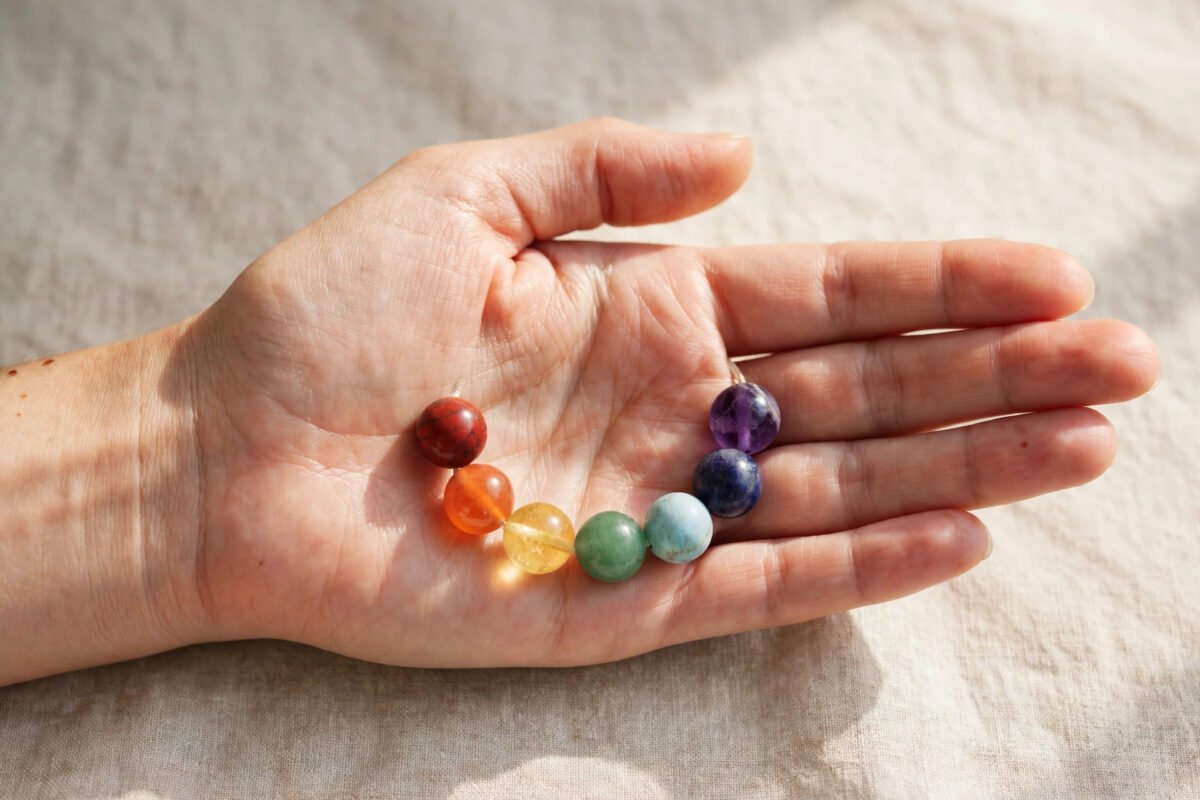
Small beads are a choking hazard for small children and pets. Most bracelet beads are 6–10 mm across — well within the size range that a toddler can put in their mouth and that can block a young child’s airway. If an elastic cord snaps, a dozen loose beads appear on the floor at once, at exactly the height where crawling babies and dogs explore with their mouths.
Treat a broken bracelet like spilled medication: pick up every bead immediately, count them if you can, and check under furniture. Our guide on what to do when a crystal bracelet breaks covers the cleanup and restringing steps. Prevention is simpler: inspect elastic monthly, restring at the first sign of fraying using our restringing guide, and never let a child play with a bracelet as a toy, even a sturdy-looking one. Government safety guidance on small parts and choking hazards is published by the U.S. Consumer Product Safety Commission, and its small-parts rules are a useful benchmark for bead sizes.
Minerals That Need Extra Care
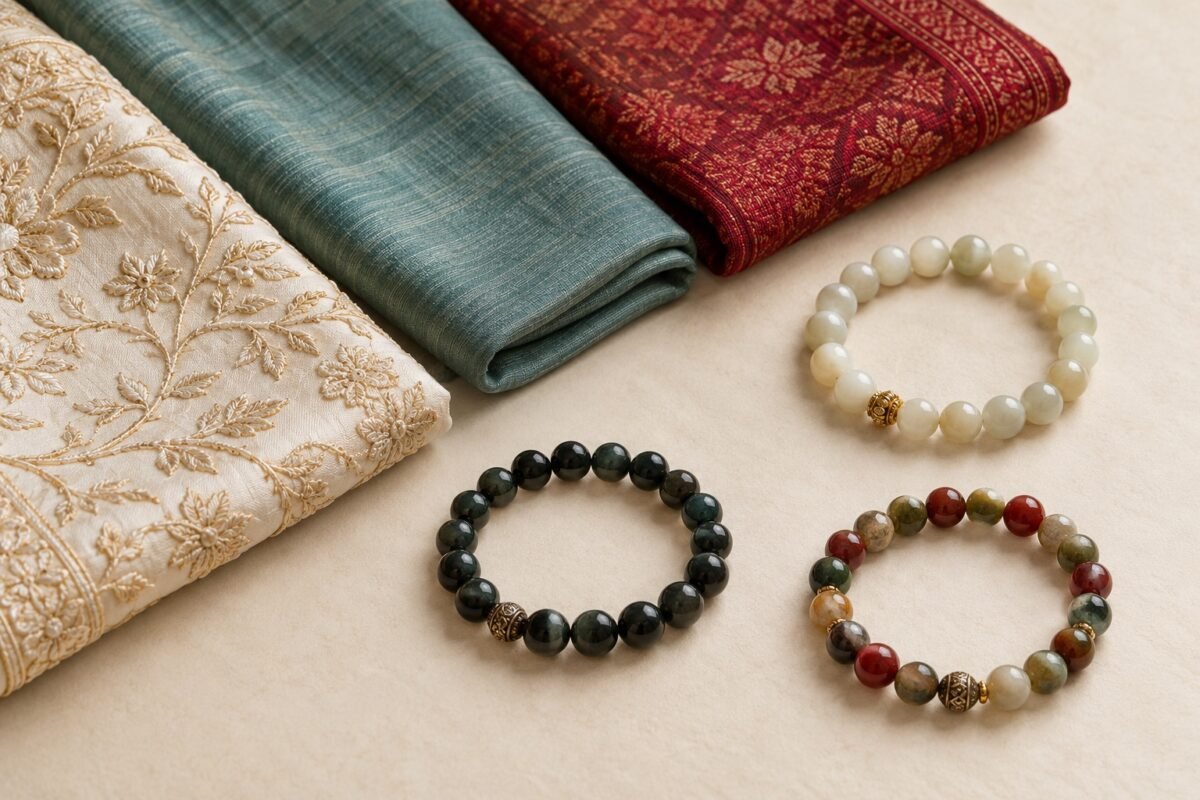
Most common bracelet stones — quartz, amethyst, rose quartz, aventurine, and jade — are chemically stable and present no special risk beyond the bead-size issue above. A smaller group of minerals deserves more respect. Malachite dust is harmful if inhaled or ingested, so a malachite bead should not be chewed, sanded at home, or left where a pet could gnaw it. Selenite is soft and splinters into sharp, fibrous pieces when broken, and it dissolves slowly in water bowls if a piece is dropped in.
Any stone that is dyed, coated, or of unknown origin should be kept out of mouths entirely, because coatings are not made to food-safety standards. Mineral data, including hardness and composition, can be checked on Mindat.org. When buying for a household with children, choose well-described pieces from the AVENSU shop and check the material list on pages such as the green aventurine bracelet so you know exactly what is on the strand.
Safe Storage in a Family Home
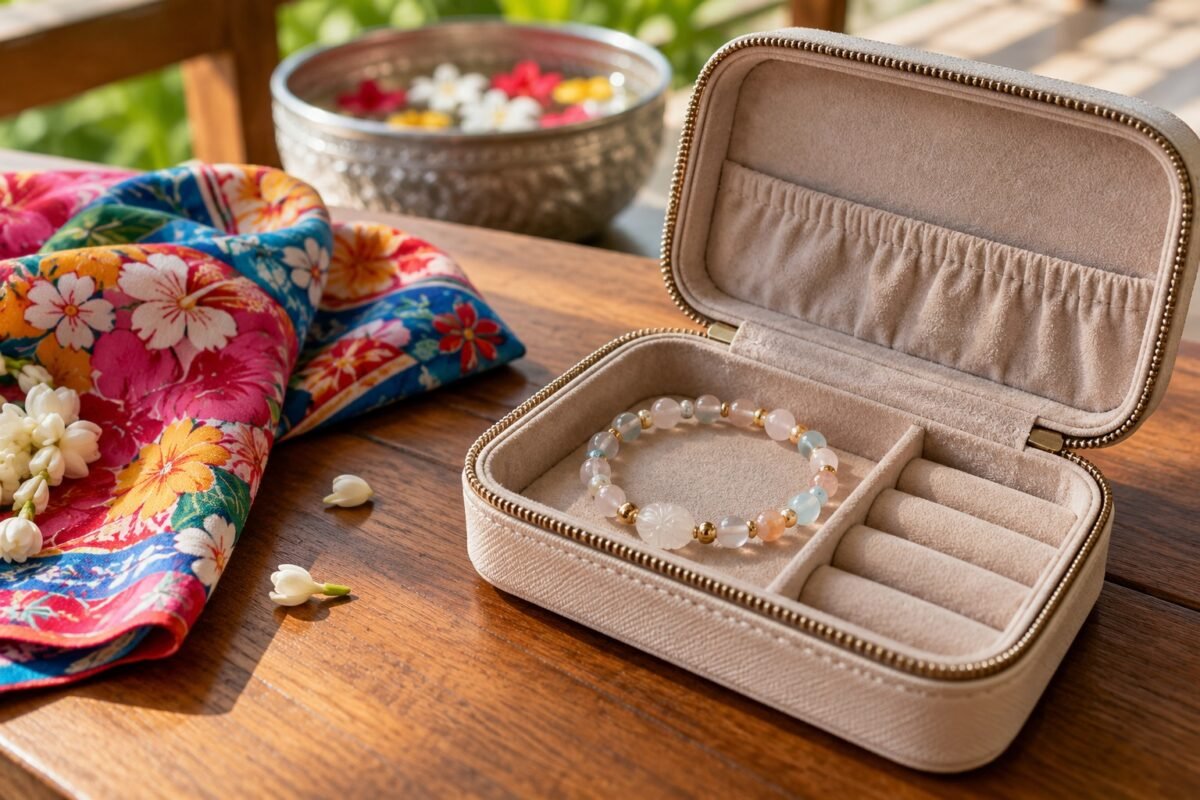
Store bracelets the way you store medicines: up high, in a closed container, in a room where unsupervised play does not happen. A lidded box or a drawer with a child-resistant catch beats an open dish on a nightstand, which is at perfect grabbing height for a toddler pulling up on furniture.
Keep each bracelet in its own pouch inside that box, following our general advice on how to store crystal bracelets — this prevents tangling and means a dropped box does not scatter loose beads. Do not store bracelets in a pet’s reach either: a dog that chews a bracelet can crack teeth on hard quartz beads and may swallow beads or elastic, both of which can require veterinary care. If a pet does swallow a bead, contact your vet rather than waiting to see.
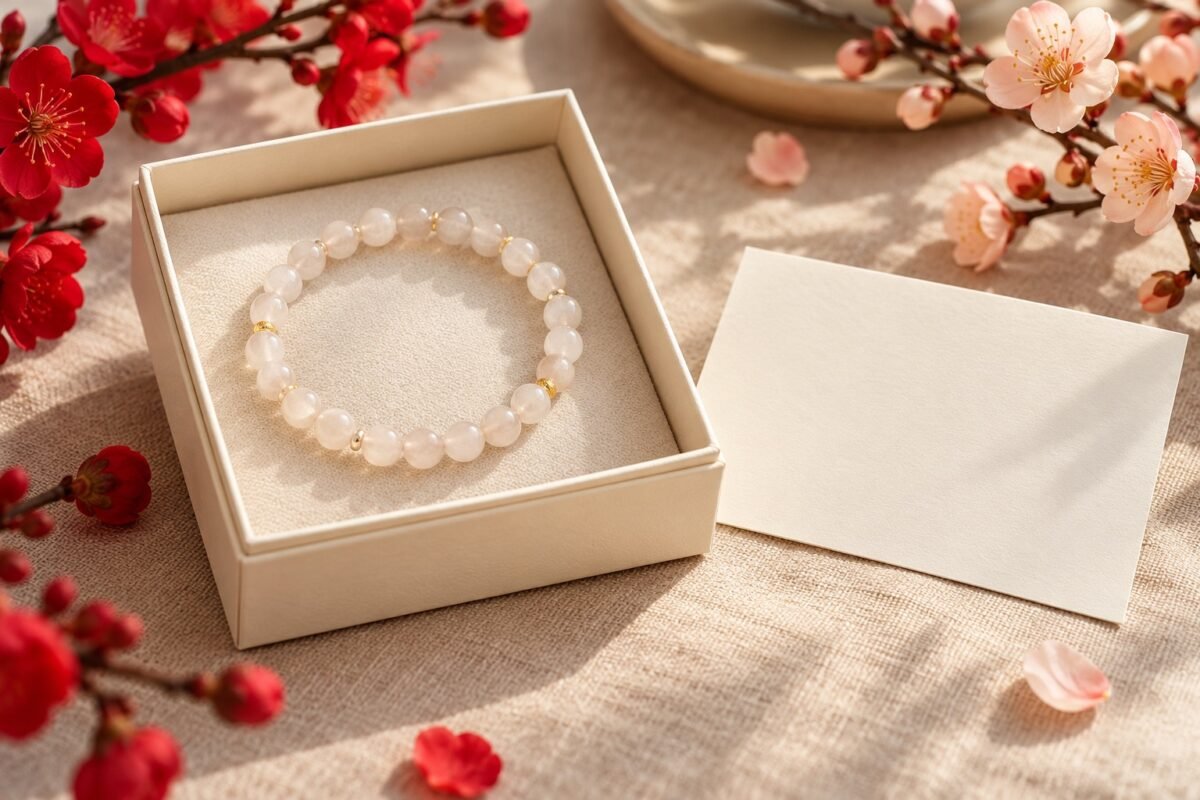
Night-time habits matter. Take your AVENSU white jade bracelet off before bed and put it straight into its closed box — not on the bedside table edge, not in the bathroom where a cat can bat it to the floor and shatter a bead into sharp pieces. See our white jade bracelet page for its bead size when choosing storage.
Wearing Bracelets Around Children and Pets
Wearing a bracelet while you hold a baby is generally fine, but check two things: the bracelet should fit snugly enough that a small hand cannot pull it off or get fingers trapped under it, and it should have no dangling charms a baby can grab and yank. Our crystal bracelet sizing guide helps you find a fit that stays on your wrist, not in a fist.
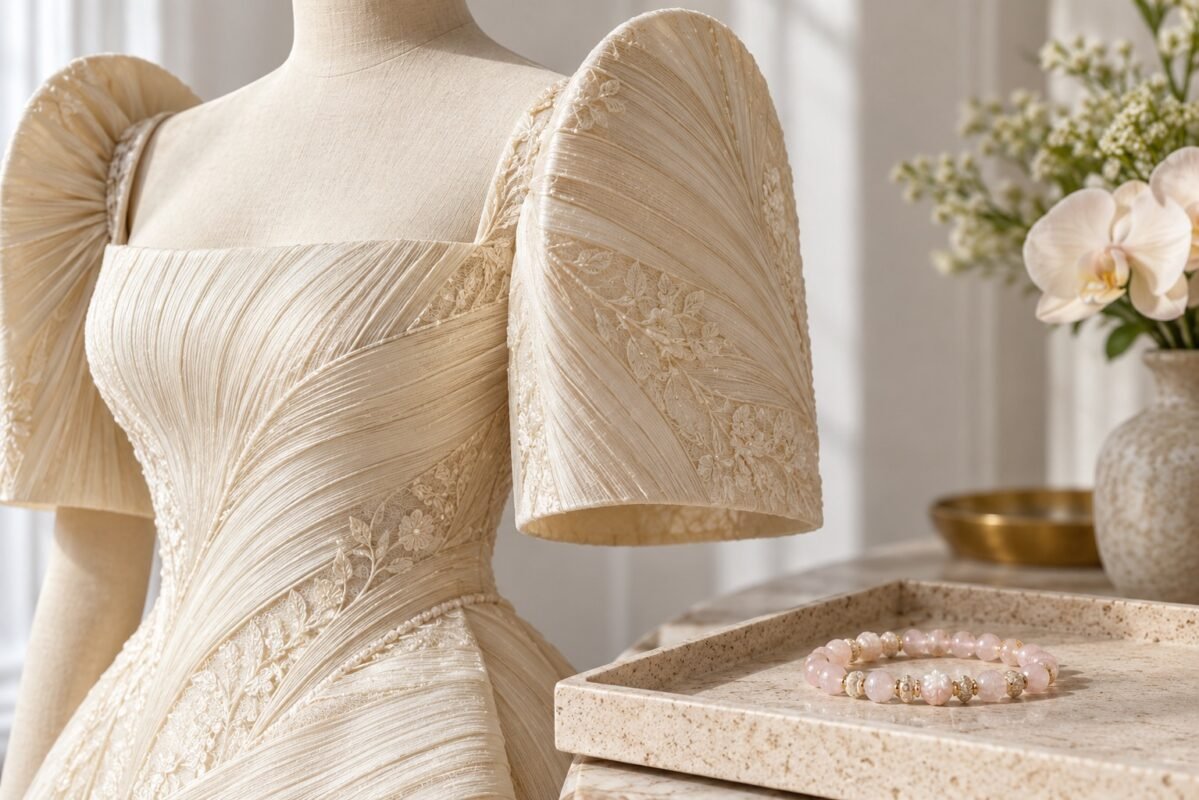
During rough play with dogs or toddlers, consider pocketing the bracelet or leaving it in its box; a caught cord can snap, scratch skin, or pinch. Teach older children a simple rule: bracelets are for wearing on their own wrist, not for chewing, throwing, or putting in pockets where beads get lost. If an older child has their own bracelet, choose larger beads, a strong cord, and supervise wear — our first crystal bracelet guide covers choosing a sensible first piece. For a gentler daily option, an AVENSU rose quartz bracelet with larger beads is easier to inspect and keep track of than a fine, small-bead strand; see the rose quartz love bracelet.
If Something Goes Wrong
If a child swallows or inhales a bead, or you think they might have, seek medical advice immediately rather than waiting for symptoms, and take a matching bead with you so staff can judge its size. If a pet swallows beads or elastic, call your vet the same day; elastic can be as problematic as the beads themselves in a digestive tract.
Broken beads on the floor should be swept and then vacuumed, because quartz and glass-like fragments can cut bare feet and paws. Dispose of sharp fragments wrapped, in a rigid container, so they cannot tear a bin bag. Once the area is clean, restring the surviving beads or refresh the piece using our guide to refreshing an old bracelet. Calm, quick clean-up — not blame — is what keeps a small accident small.
Frequently Asked Questions
Are crystal bracelets toxic to pets or children?
Common bracelet stones such as quartz, amethyst, and jade are chemically stable and not considered toxic, but the beads themselves are a choking and swallowing hazard. A few minerals, such as malachite, need extra care, and any dyed or coated stone should be kept out of mouths.
What bead size is safest in a home with toddlers?
No bead size makes a bracelet safe for a toddler to handle unsupervised, because cords can break. For adults in a toddler’s home, larger beads (10 mm and up) are easier to count and retrieve if a cord fails, and storage out of reach remains essential.
My dog chewed my bracelet. What should I do?
Remove any remaining pieces from reach, check the dog’s mouth for fragments or cuts, count the beads to see if any are missing, and call your vet the same day — especially if beads or elastic may have been swallowed.
Where is the best place to store bracelets with kids in the house?
In individual pouches, inside a lidded box or latched drawer, on a high shelf or in an adult’s bedroom — treated with the same routine as medicines or jewellery, and never in open dishes at child or pet height.









 English
 Vietnamese