Most bracelet damage does not happen on your wrist. It happens in the drawer, the shared jewellery box, and the travel bag, where hard beads rub against softer stones, elastic stretches over hooks, and metal charms dig into polished surfaces. A bracelet can survive years of daily wear and still be ruined by a single month of careless storage.
Good storage is simple: keep pieces separate, keep them flat and relaxed, and keep them dry and out of constant light. This guide compares pouches, boxes, rolls, and stands, explains the hardness rule that prevents scratches, and gives you a system that scales from two bracelets to a full collection.
The Hardness Rule: Why Pieces Must Be Stored Separately
Crystals scratch each other according to hardness. The Mohs scale runs from talc at 1 to diamond at 10, and any stone can scratch anything softer than itself. Quartz at 7 will mark fluorite at 4, selenite at 2, and even polished metal. In a shared box, bracelets shift every time the drawer opens, so contact is constant.
That is why separation matters more than padding alone. One bracelet per pouch, compartment, or slot stops stone-on-stone contact entirely. Our deeper guide to storing crystals by hardness groups common bracelet stones so you know which combinations are riskiest, including soft stones such as moonstone and opal that chip at edges.
Metal needs the same respect. Plated spacers and charms scratch and get scratched, and Pixiu accents have raised details that catch on cord. Keeping each piece in its own space protects finishes on both the stones and the metalwork. The GIA jewellery care guidance likewise recommends storing gems separately to prevent exactly this kind of contact damage.
Pouches, Boxes, Rolls, and Stands Compared
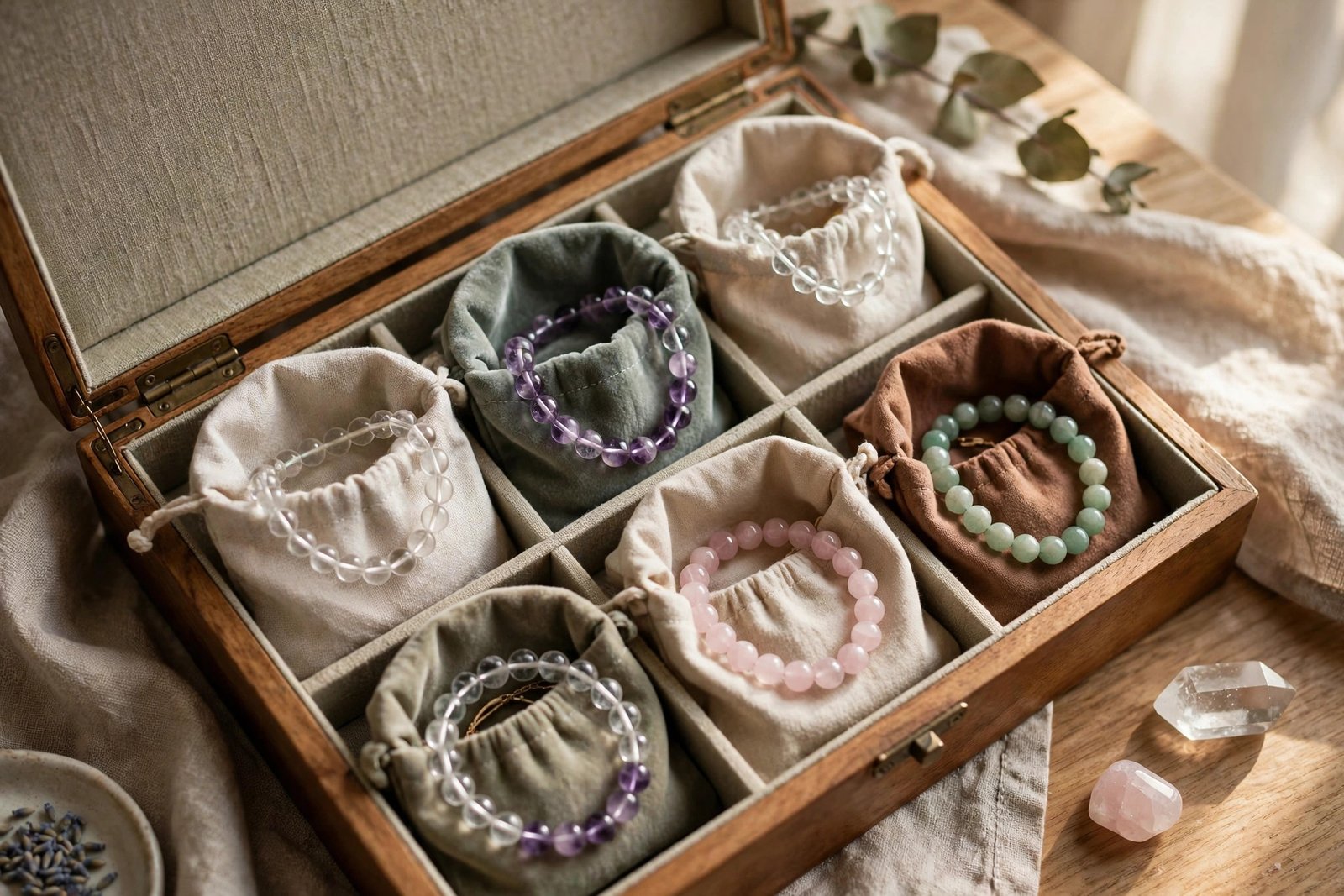
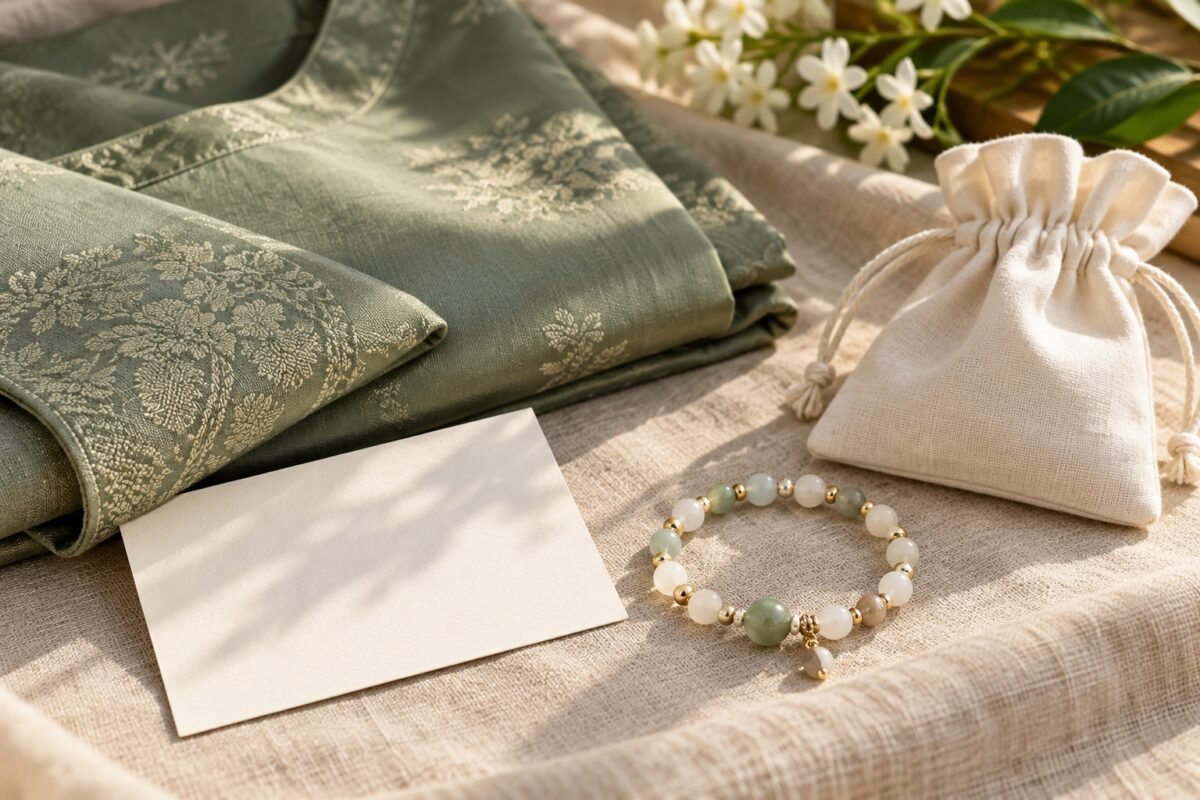
Soft individual pouches are the best budget system. Cotton, microfibre, or velvet pouches stop scratches, breathe well, and slip into any drawer. Label the outside or use different colours per stone family so you can find a piece without opening every pouch. An AVENSU bracelet arrives ready for daily wear, and keeping its pouch as its home is the easiest habit to maintain.
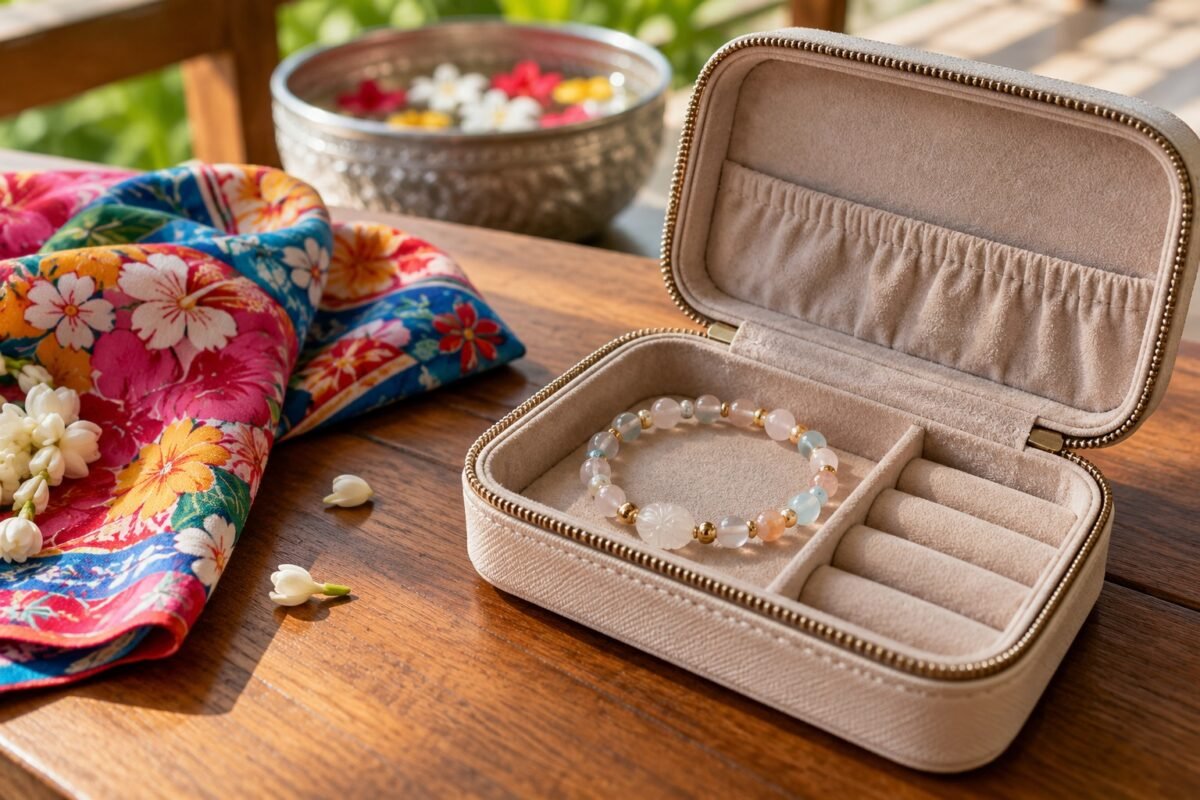
A compartment jewellery box suits collections of six to twenty pieces. Look for soft lining, individual sections large enough for a bracelet to rest in a relaxed circle, and a lid that does not press down on the beads. Avoid tall hooks and T-bars for elastic bracelets: hanging stretches cord over time and lets pieces swing into each other.
Travel rolls are ideal on the move, with padded individual slots and a wrap that keeps everything still. For travel-specific packing, see our travelling with crystals guide. Display stands look beautiful but leave pieces exposed to dust, sunlight, and knocks, so use stands only for the one or two bracelets in current rotation, and move them off the stand for long-term storage.
Whichever system you choose, add it to your dressing area where you actually take bracelets off. Storage that lives in another room does not get used. Browse current pieces in the AVENSU shop and plan a pouch or compartment for each one you add.
Protecting Elastic, Knots, and Metal While Stored
Store elastic bracelets in their natural, relaxed circle. Never hang them, never stretch them over a wide stand, and never store them pulled tight around a box edge. Constant tension is what ages elastic fastest, even faster than wearing. Our elastic crystal bracelet care guide explains how to spot cord that is starting to tire.
Keep storage dry. Bathrooms are the worst room in the house for bracelets, because steam, humidity, and sprays attack cord, metal plating, and porous stones. A bedroom drawer or wardrobe shelf is far better. In humid climates, add a small silica gel packet to the box and replace it monthly; our guide to crystal care in a humid climate covers the full routine.
Keep bracelets out of permanent direct sunlight on open stands. Colour-sensitive stones fade slowly with constant exposure, so a closed box or pouch doubles as light protection. Rest a bracelet on a selenite charging plate overnight if you like, then return it to its pouch or compartment in the morning.
A Simple System for a Growing Collection
Start with one rule: every bracelet gets its own pouch or compartment from day one. Add a small inventory note on your phone listing stone, size, and purchase date; it takes a minute and helps with restringing, insurance, and reordering the right fit. Our crystal bracelet sizing guide helps you record sizes accurately.
Rotate deliberately. Keep two or three pieces in current rotation near your mirror, and store the rest properly. A monthly rotation is a good moment to inspect cord, wipe beads, and recharge pieces using our complete crystal bracelet care routine.
For larger collections, our guide to organising a crystal bracelet collection covers trays, labels, and cataloguing in depth. Whether you own two bracelets or twenty, the principle never changes: separate, relaxed, dry, and dark is how crystal jewellery stays beautiful for years.
Frequently Asked Questions
Can I store all my crystal bracelets in one box?
Only if the box has separate lined compartments and each bracelet rests in its own section. A single open box where pieces touch will cause scratches, because harder stones mark softer ones every time the box moves.
Is it okay to hang elastic bracelets on a stand?
Not for long-term storage. Hanging stretches elastic under the bracelet’s own weight and ages the cord. Use a stand only for short display of pieces in current rotation, and store elastic bracelets flat in a relaxed circle.
Where is the worst place to store bracelets?
The bathroom. Humidity, steam, and cosmetic sprays damage elastic, tarnish metal accents, and cloud porous stones. A dry bedroom drawer or wardrobe, in individual pouches, is a much safer home.
Should I store bracelets on a selenite plate permanently?
A plate is excellent for overnight charging and short stays, but its soft, open surface collects dust and offers no protection from knocks. For long-term storage, move pieces into pouches or a lined box after charging.








 English
 Vietnamese