How a crystal bracelet is made depends on its materials, design and maker. A typical beaded piece starts with selected material, then moves through bead cutting, finishing, stringing and a fit check. This overview explains those possible steps without claiming that every AVENSU bracelet follows the same workshop process. For a particular item, rely on its current product listing and ask us where details are missing.
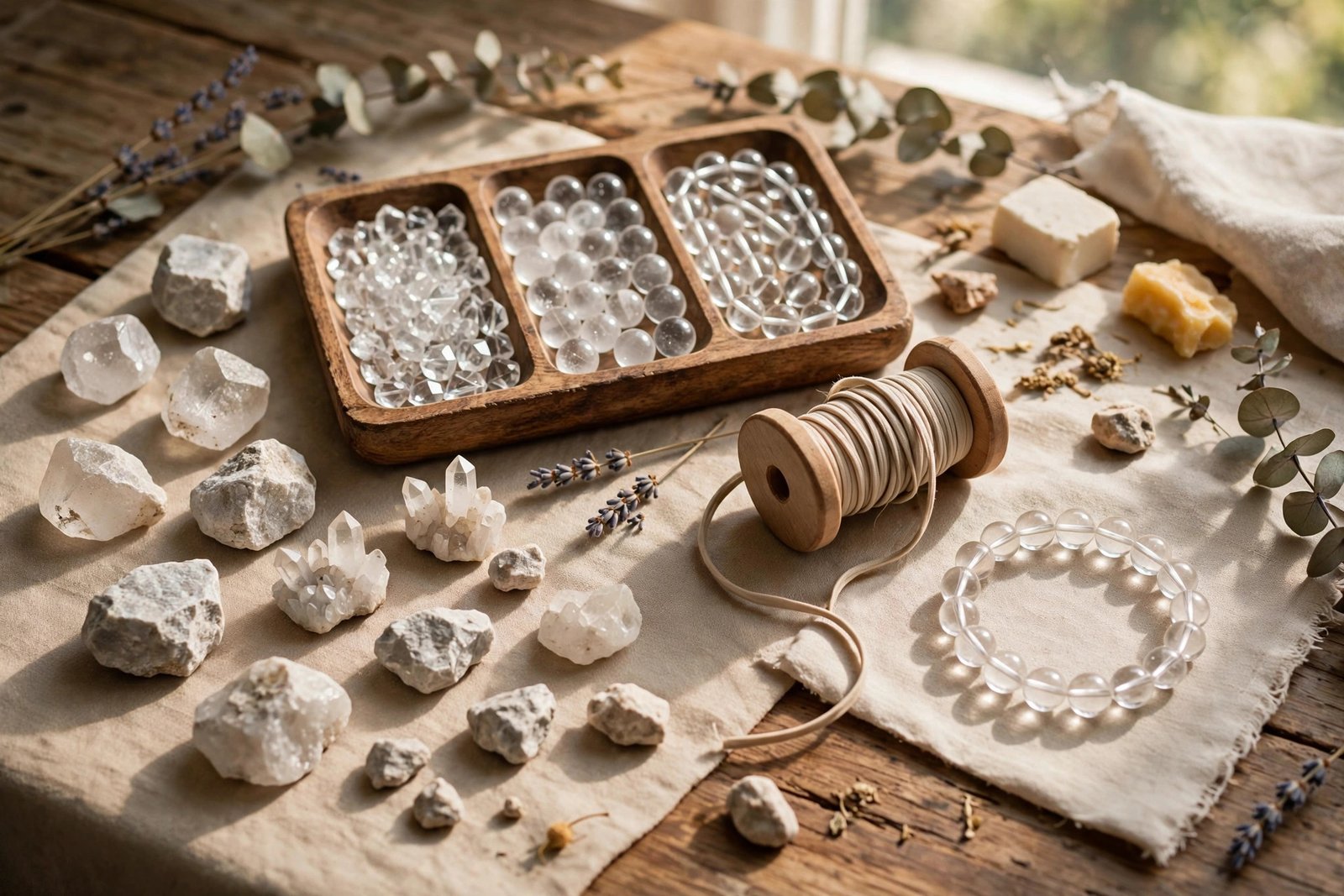
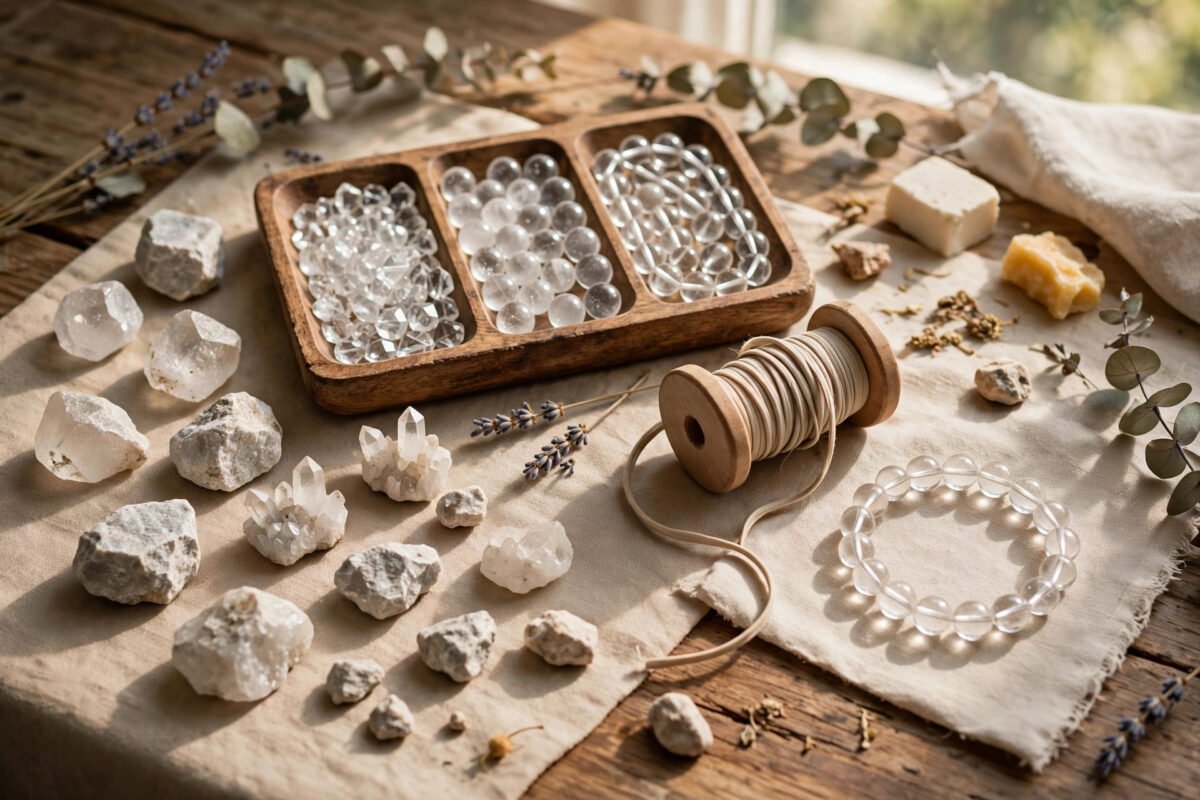
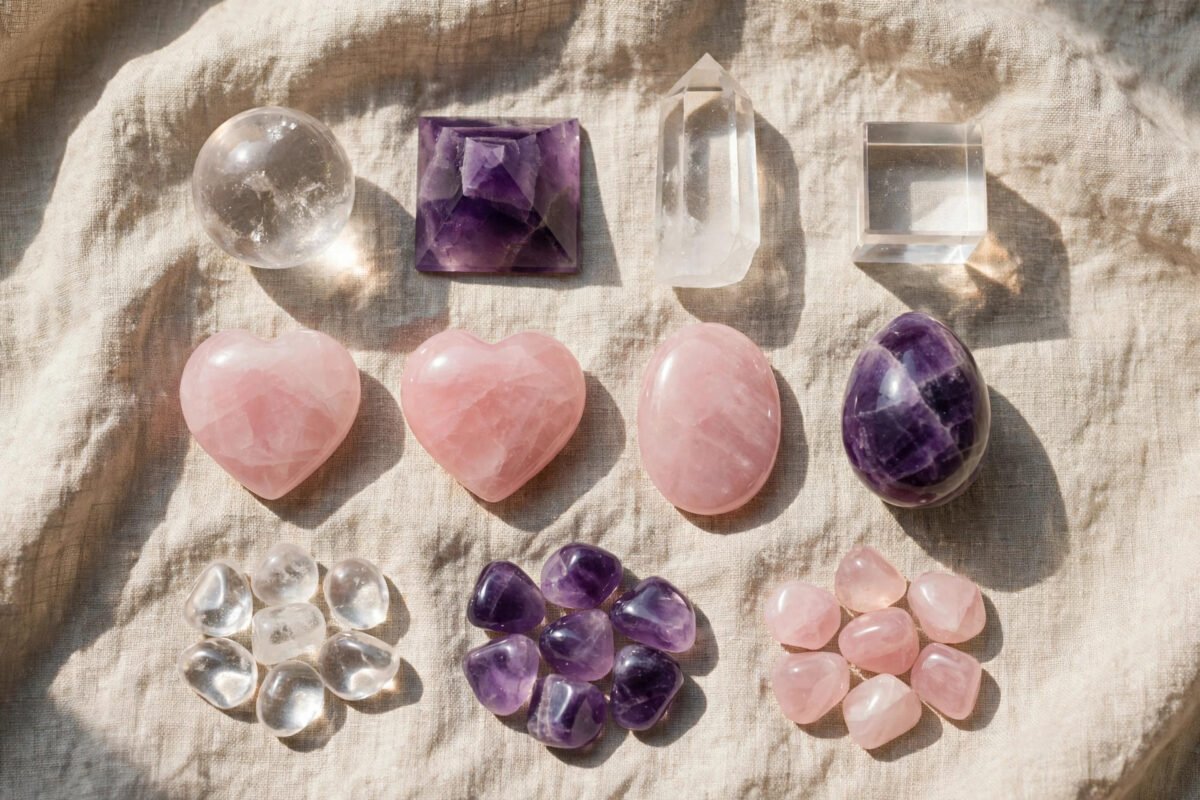
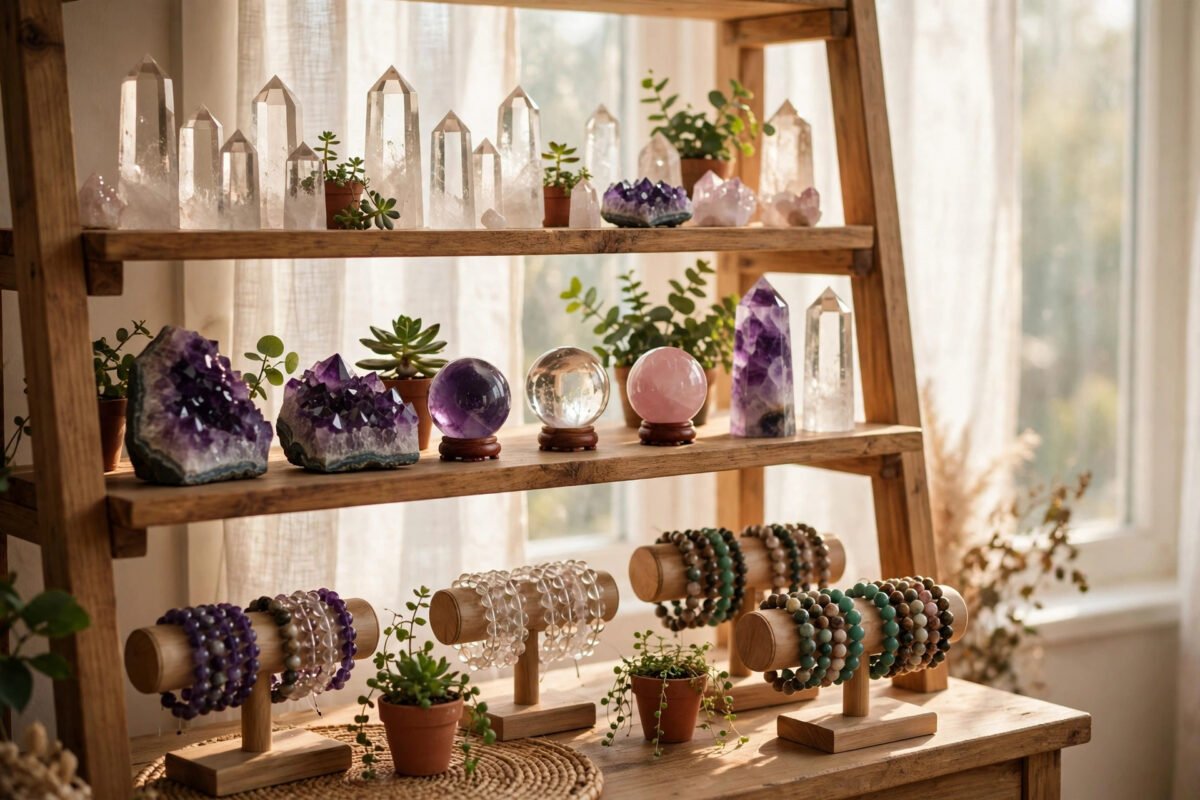
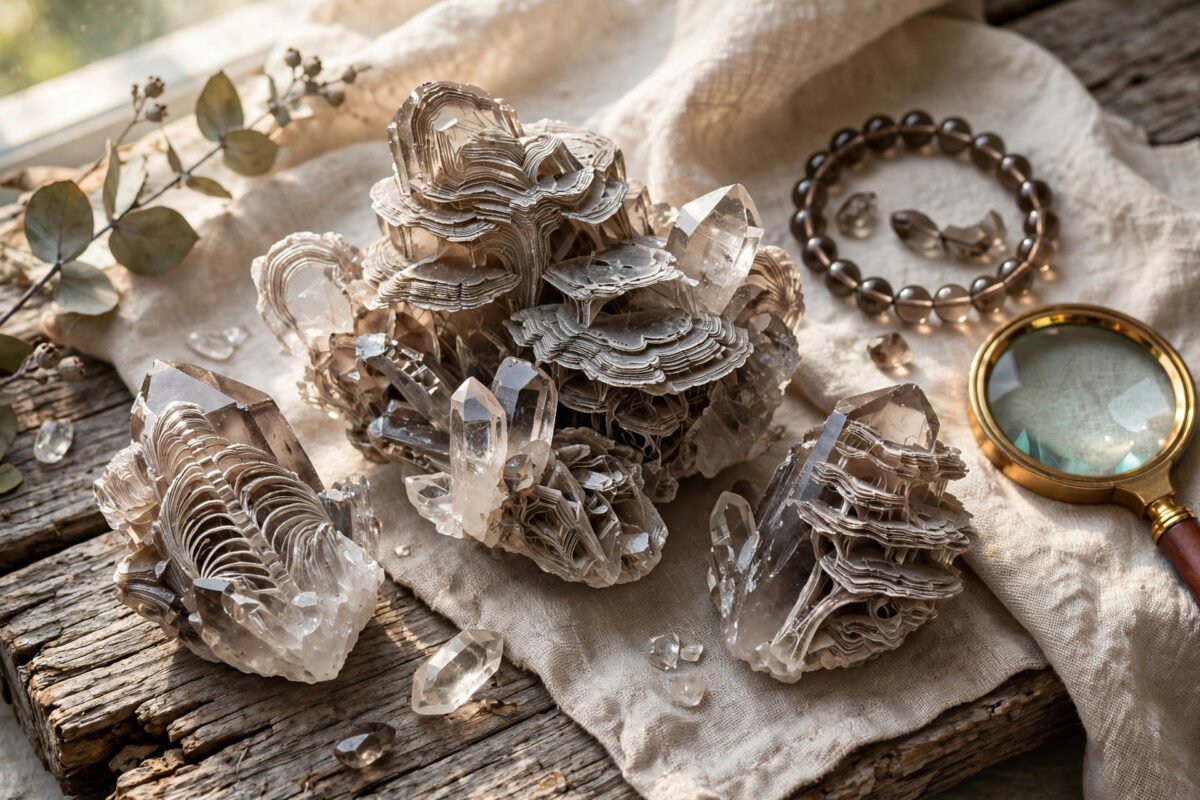
Image note: the featured image is an editorial illustration of loose pale stones, clear beads, cord and a finished bracelet. It does not document an AVENSU workshop or verify the identity of the pictured material.
Start with a material description, not an authenticity shortcut
A maker first chooses beads or rough material for the intended colour, size and appearance. The source may be natural, synthetic, treated or assembled material; similar-looking pieces can have different identities. GIA documents common gemstone treatments, including coatings and dyes. It also reports that polished synthetic quartz can resemble natural quartz. Therefore, small inclusions, colour variation or an image alone cannot prove that a bead is natural.
For any bracelet you are considering, read the exact material name, dimensions and component list on the listing. If an item is important for its origin or treatment status, request evidence appropriate to that claim. The AVENSU materials page explains the general terms we use, while a product page should supply the details for the current design.
Shape and finish the beads
Depending on the design, rough or preformed material may be cut into blanks, shaped, drilled and polished. Workshops use different equipment and sequences; this is a broad description, not a documented tour of a particular supplier. A bead’s finished diameter, hole placement and surface condition affect how it looks and strings. Different beads can be combined intentionally for colour or texture, so perfect visual sameness is not a universal quality standard.
Check the finished item for chips at drill holes, visibly uneven polish and sharp edges that might catch clothing. Those observations help you judge finishing quality, but they cannot establish the mineral identity or treatment history of a bead.
Arrange the design and choose a cord
Before stringing, the maker or designer can lay out the beads to choose a rhythm, focal point and any spacers or charms. A stretch bracelet, clasped bracelet and adjustable cord design need different construction decisions. The strength and comfort of the finished piece depend on the entire assembly, including cord, knot or clasp, not just the stones.
We cannot infer the knot type, adhesive or test procedure of every AVENSU item from a general article. Check the Clear Quartz bracelet product page for its current photographs and stated components, and contact us if a material or construction detail matters to you before ordering.
Check the size on a real wrist
The total bead count and cord length set the fit. Measure your wrist where you plan to wear the bracelet and compare that measurement with the listed finished size and stretch or clasp style. A bracelet that is too tight can strain its cord; one that is too loose can slide over the hand. Use our bracelet size guide before buying rather than assuming that a photograph shows your fit.
Try the piece during ordinary movements: opening a bag, resting a hand on a desk and putting on a sleeve. The right amount of movement is a personal preference, provided the bracelet feels secure and comfortable.
Review the finished item and care instructions
Before wearing, look for damaged beads, loose hardware and a cord that has changed shape. Keep the bracelet away from harsh cleaners, perfume and unnecessary soaking unless the maker’s instructions cover every component. The bracelet care guide covers gentle handling and storage.
A finished bracelet can be appreciated for design and workmanship without assigning it a medical, financial or guaranteed spiritual effect. Materials and construction differ by product, so the most useful question is specific: what are the beads and components in this listing, and how should this exact piece be sized and cared for?




 English
 Vietnamese