Bedroom crystals have a different job from desk or living-room pieces. Nobody needs a dramatic, spiky statement next to the bed: the shapes that work here are smooth, soft-edged and calm to look at in low light — pieces you might reach for during a bedtime routine, and that will not hurt if a sleepy hand knocks them at 3 a.m.
This guide compares the shapes best suited to bedrooms, the stones traditionally chosen for restful spaces, and where to place everything safely, from the bedside table to the dresser.
What Makes a Shape Bedroom-Friendly?
Three qualities matter. First, softness of form: rounded shapes such as spheres, hearts, eggs and palm stones read as gentle, and in crystal tradition rounded forms are believed to radiate energy evenly in all directions rather than directing it at a point — one reason spheres are so often recommended for rest spaces. Second, stability: a bedroom piece should not topple easily in the dark. Third, touchability: bedtime routines are tactile, so a piece that feels pleasant in the hand gets used, while a fragile cluster gathers dust.
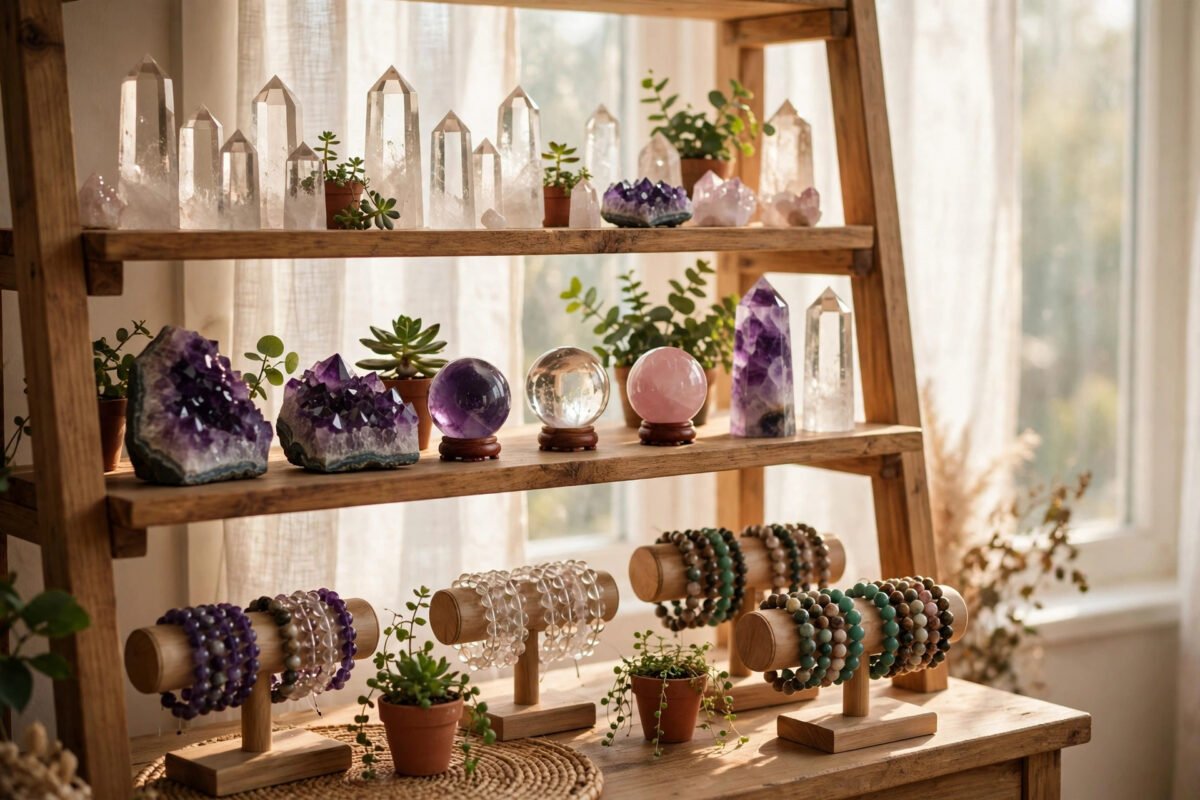
Our crystal shape meanings cheat sheet summarises how each shape is traditionally interpreted, and it is a useful companion when you are deciding between, say, a heart and a sphere for the same spot. For open-shelf arrangements in a bedroom, the layout and lighting ideas in how to display a crystal collection also apply.
The Best Bedroom Shapes, One by One
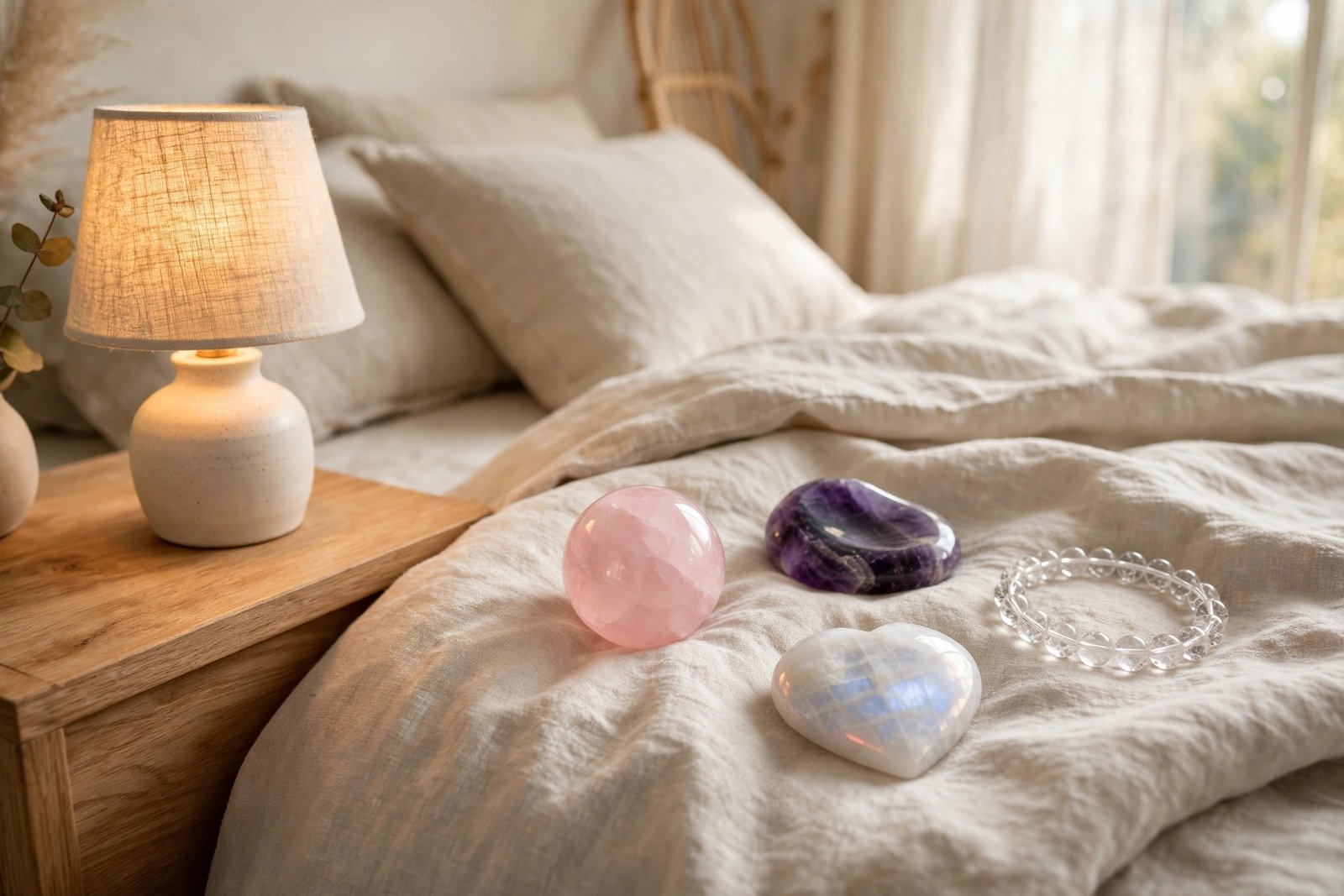
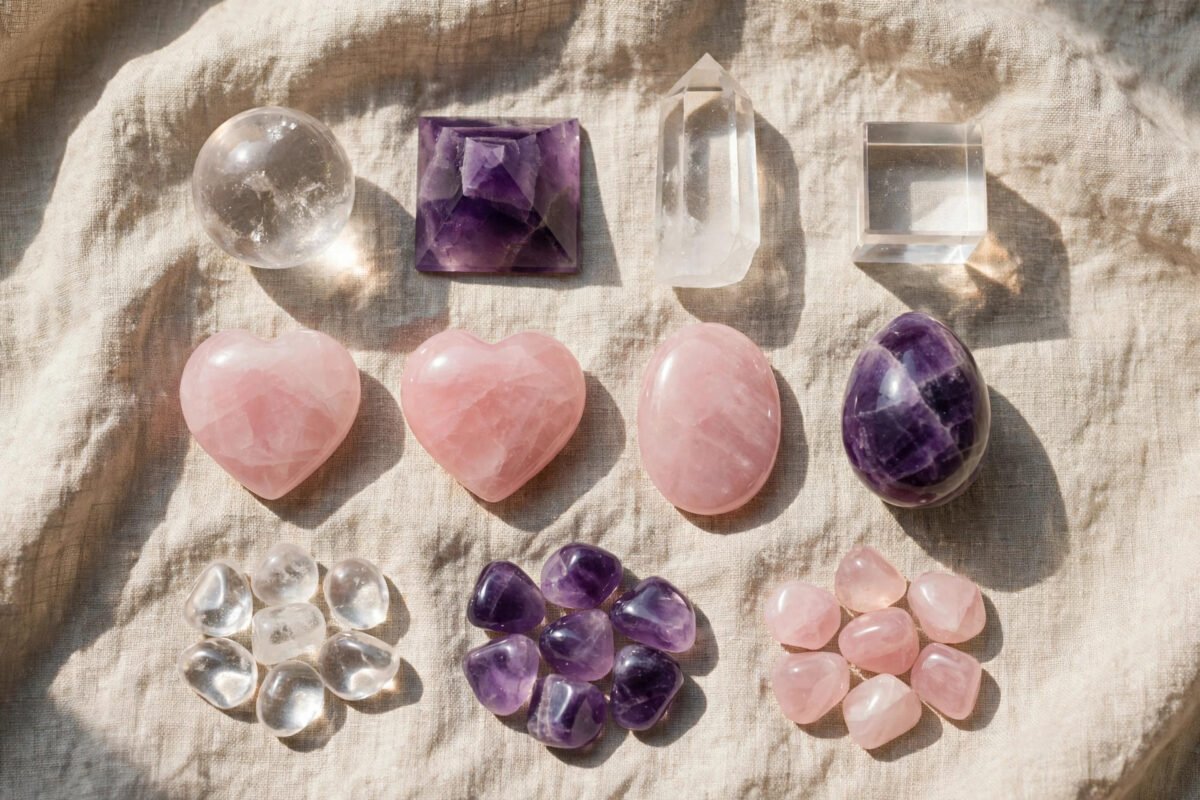
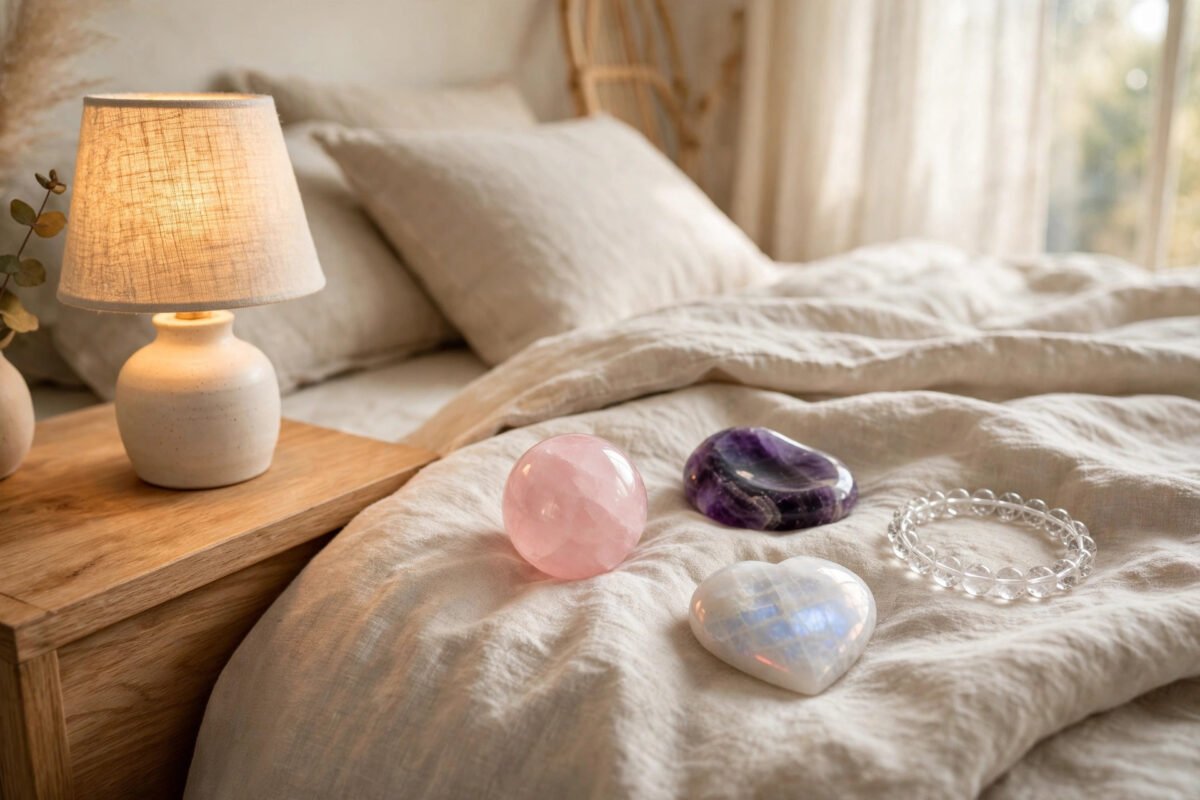
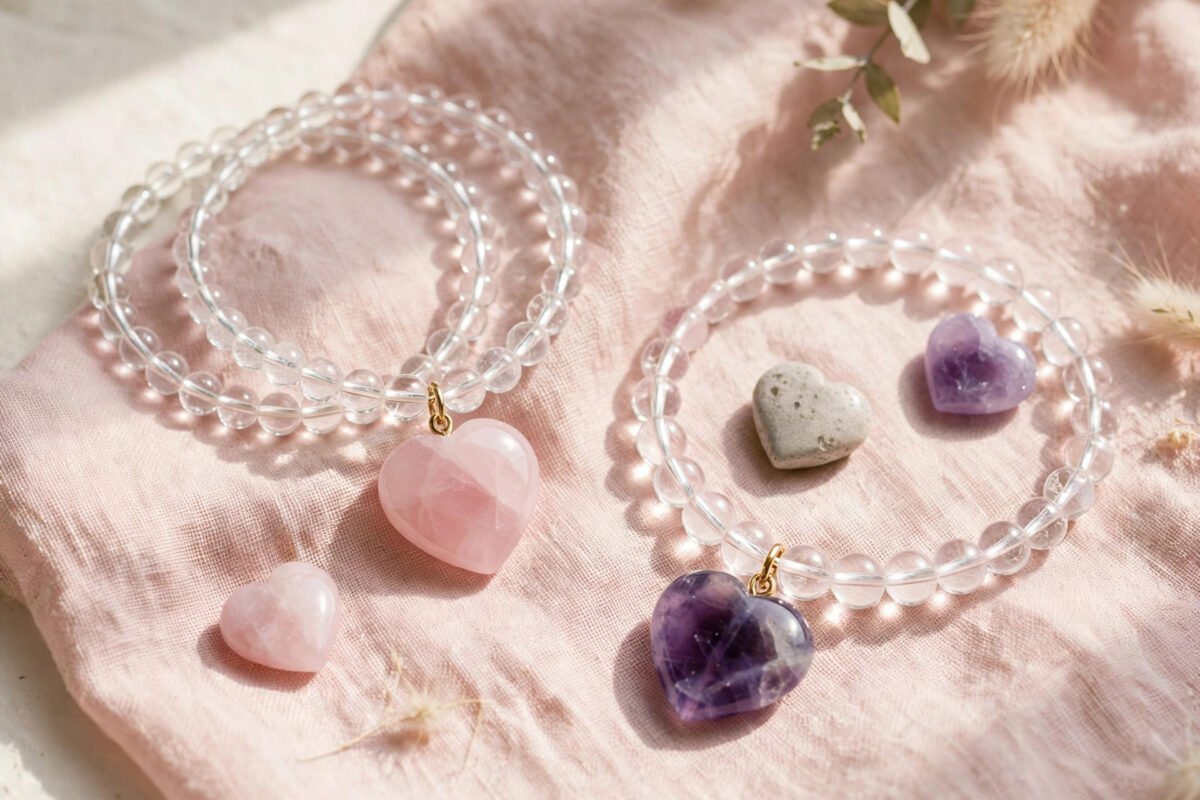
Spheres are the bedroom classic. A rose quartz or amethyst sphere on a small wooden stand catches lamplight softly and has no sharp points. Always use a stand — a sphere on a flat table will roll at the first knock. Hearts are flat-based, stable and symbolically suited to the room; rose quartz hearts are traditionally associated with love and emotional ease, as our rose quartz meaning guide explains.
Palm stones belong on the bedside table itself. A smooth amethyst or moonstone palm stone can be held during reading or a few minutes of slow breathing before sleep. Moonstone is traditionally linked with intuition and cycles, covered in our moonstone meaning guide, and its soft glow suits evening light. Eggs and pebbles behave like palm stones with a little more presence, and sit happily in a small dish.
Lamps and bowls work on a dresser rather than the bedside: a selenite lamp gives a moon-like glow for the evening (keep it dry and away from splashes), and a shallow crystal or selenite bowl makes a beautiful overnight home for the bracelet you take off at night. Storing jewellery that way follows the same gentle principles as how to store crystal bracelets.
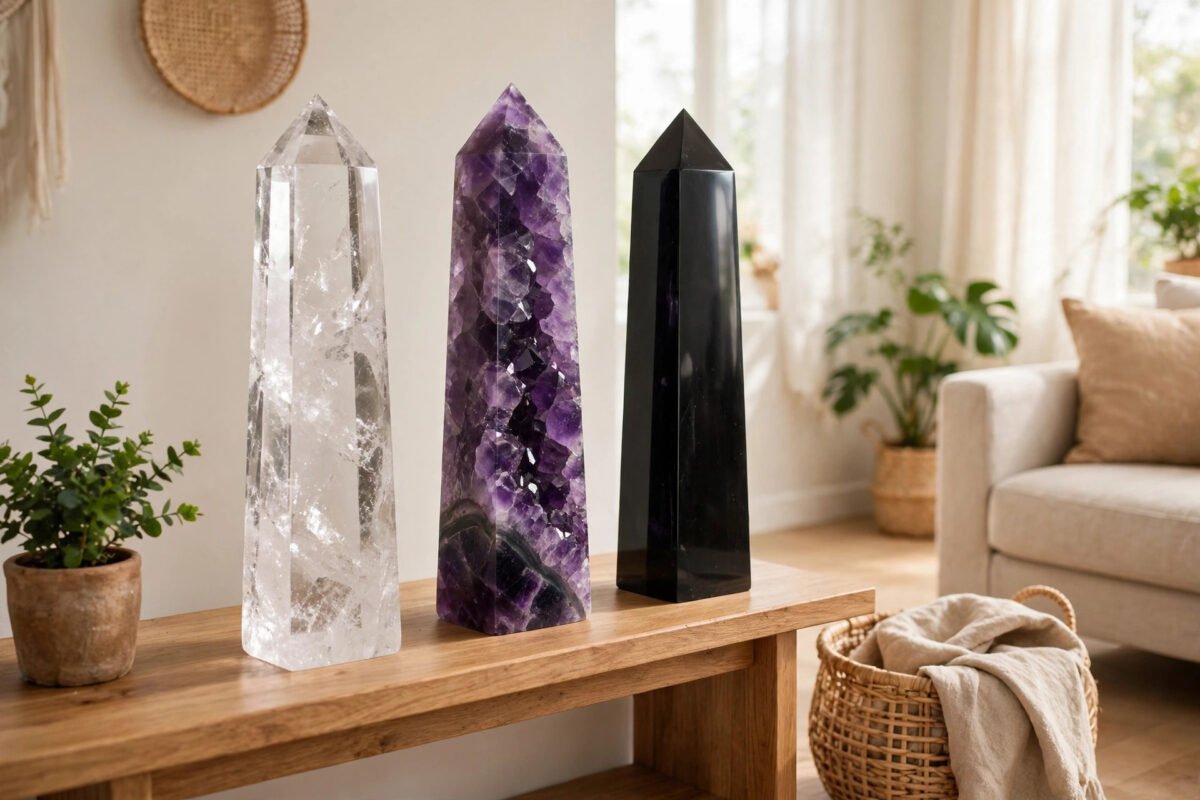
Clusters and points are better kept small and away from the bed itself. A modest amethyst cluster on a dresser adds texture; large, spiky pieces beside the pillow can feel visually busy in a room meant for rest, and sharp points are not ideal within arm’s reach in the dark.
Stones Traditionally Chosen for Restful Rooms
Amethyst is the most traditional bedroom stone of all, long believed to be associated with calm, dreams and a quiet mind; our amethyst meaning guide traces that history, and the Wikipedia entry on amethyst covers its long cultural history more broadly. Rose quartz is chosen for warmth and tenderness, moonstone for its soft, night-time associations, and lepidolite and howlite appear often in bedtime collections because tradition links them with settling down. Selenite is used for its bright, clean look and is often placed on windowsills or dressers.
These are traditional associations, not medical claims: crystals are not a treatment for insomnia or anxiety. Think of them as part of an environment and routine — dim light, a tidy bedside, a held stone, a few slow breaths — that helps you switch off.
Placement and Safety Tips
Keep the bedside table itself minimal: one palm stone, or one sphere on a stand, plus your usual lamp and book. Crowding the surface guarantees a knock in the night. Taller or heavier pieces belong on a dresser or shelf across the room. Keep small tumbled stones out of bedrooms used by very young children, and avoid placing heavy clusters on high shelves above the bed.
Think about light, too. Moonlight is traditionally used to refresh bedroom stones — our piece on the full moon luck-drawing ritual describes that gentle practice — while strong direct sun through a bedroom window can fade amethyst over time, so a north-facing sill or a shaded spot is better for long-term display.
Finally, make the bedroom part of your wearing routine: many people keep their AVENSU crystal bracelet in its bedside bowl overnight and put it on as part of getting dressed, a small bookend to the day. You will find the bracelet range in the AVENSU shop.
Frequently Asked Questions
What is the best crystal shape for a bedside table?
A palm stone or a small sphere on a stand. Both are smooth, stable and pleasant to hold during a bedtime routine. A palm stone is the safer choice if your bedside table is narrow, because it lies flat and cannot roll or topple.
Are crystal points suitable for a bedroom?
Small points are fine on a dresser or shelf, but they are not ideal right beside the bed: they can feel visually sharp in a rest space and can be knocked in the dark. If you love a point in the bedroom, keep it short, stable and across the room rather than within arm’s reach.
Which crystals are traditionally placed in bedrooms?
Amethyst, rose quartz, moonstone, selenite and lepidolite are the most common choices in crystal tradition, associated respectively with calm, love, intuition, clarity and settling down. These are belief-based associations; choose the stones whose look and feel you find genuinely restful.
Can I sleep with a crystal bracelet on?
Many people do, but it is usually better to take it off: elastic lasts longer, beads avoid knocks against the bed frame and headboard, and most people sleep more comfortably without it. Keep a small bowl or pouch on the bedside table as its regular overnight spot.



 English
 Vietnamese