Amethyst has calmed minds for over two thousand years — or at least, people have turned to it for calm for that long. From Greek drinking vessels to bishops’ rings to the bracelet on your wrist, this violet quartz has one of the richest backstories in the crystal world. This guide covers the full amethyst meaning and its physical properties: what the stone is, why ancient cultures prized it, what it symbolizes today, and how to choose an amethyst bracelet.
What Is Amethyst? Key Properties
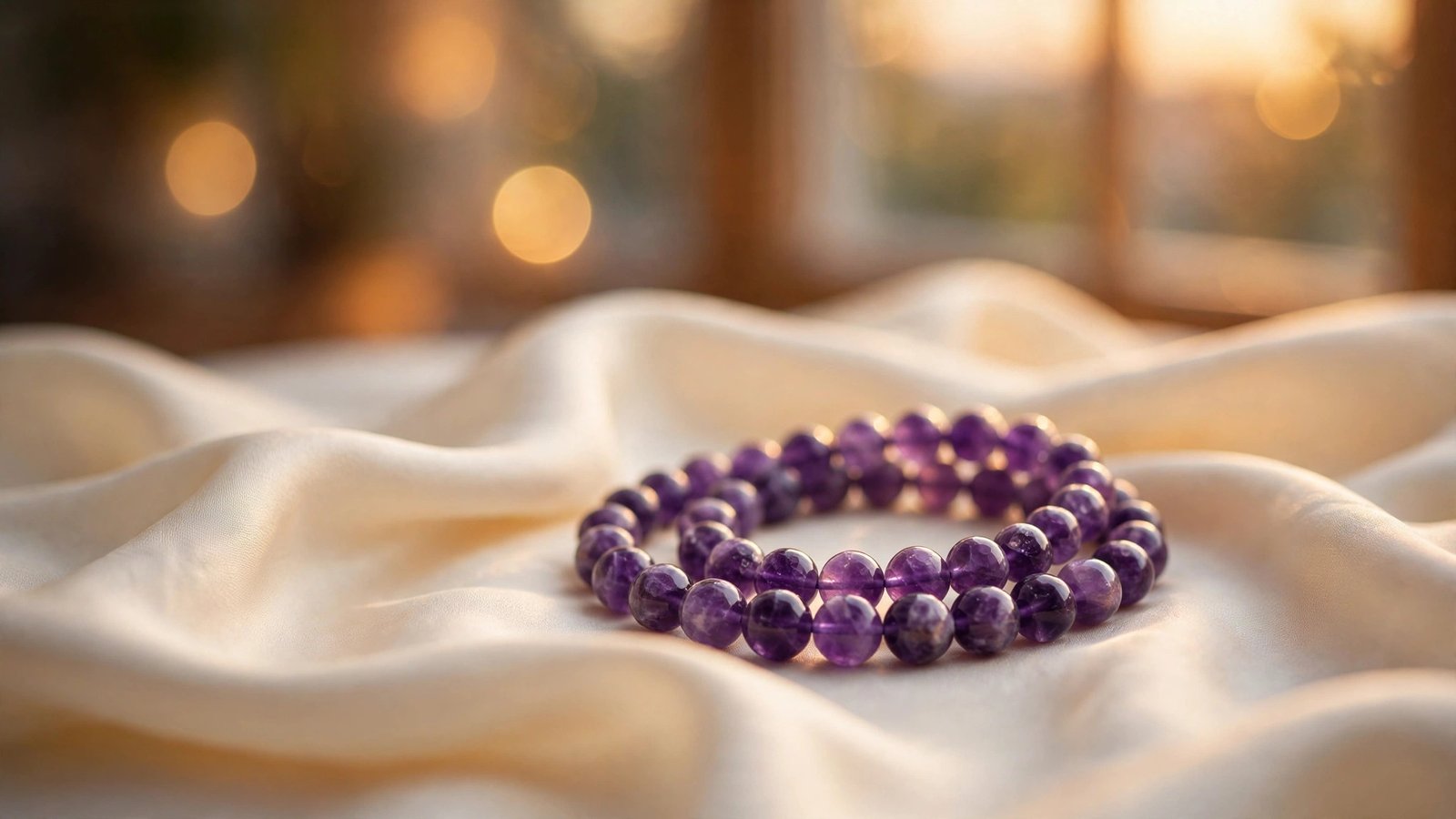
Amethyst is a violet variety of quartz. Its purple color comes from iron impurities in the crystal lattice combined with natural irradiation — a process described in detail on the amethyst mineral page. The color ranges from pale lavender (“rose de France”) to deep Siberian purple, and the stone often shows natural color zoning, with the richest color at the crystal tips.
- Mineral family: quartz (silicon dioxide)
- Hardness: 7 on the Mohs scale — durable for daily-wear bracelets
- Color range: pale lilac to deep violet, sometimes with red or blue secondary hues
- Care note: prolonged strong sunlight can fade the color, so store amethyst away from sunny windowsills
Before Brazil’s vast deposits were discovered, amethyst was counted among the most precious gemstones in the world, alongside diamond, sapphire, ruby, and emerald. It is more abundant today, but the finest deep-purple material remains highly prized.
The Ancient Story Behind the Calm Stone
The name amethyst comes from the Greek amethystos — “not intoxicated.” Ancient Greeks believed the stone could prevent drunkenness and carved wine goblets from it. The symbolism widened from there:
- Ancient Egypt: amethyst beads and amulets were buried with pharaohs as protective talismans.
- Medieval Europe: soldiers wore amethyst amulets into battle in the belief that the stone kept them cool-headed and protected.
- The Church: bishops wore amethyst rings as symbols of piety and spiritual clarity — a tradition that continues in some denominations today.
- Tibet: amethyst is considered sacred to the Buddha, and prayer beads are still carved from it.
Across all of these cultures, the through-line is the same: a clear, calm mind. That is why amethyst earned its modern nickname, the calm stone.
What Amethyst Is Traditionally Associated With
As with all crystal meanings, these are traditional and symbolic associations — not medical claims. Amethyst is traditionally associated with:
- Calm and emotional balance: the stone’s signature association — a settled, unhurried state of mind.
- Restful evenings: many people keep amethyst on the nightstand or wear it in the evening as part of a wind-down ritual.
- Mental clarity: said to support clear thinking and focus during meditation or journaling.
- The crown chakra: purple stones connect with the crown center in chakra traditions, linked to awareness and spiritual connection.
- Protection from negativity: medieval soldiers started it; the protective association stuck.
Explore more symbolic stones in our crystal meaning guides, or compare crown chakra stones in our crown chakra stones guide.
How to Wear an Amethyst Bracelet
Lavender-toned bracelets are among the easiest to style — the color reads as a soft neutral against most outfits. Practical tips:
- Evening wear: amethyst’s calm associations make it a natural evening bracelet; pair it with your wind-down routine. Our amethyst evening meditation guide has a simple practice to try.
- Bead finish: polished beads glow with vitreous luster; matte beads give a softer, modern look.
- Layering: amethyst stacks well with clear quartz or moonstone for a cool-toned wrist.
- Sunlight: because strong sun can fade the purple over time, take the bracelet off for long beach days.
“Amethyst’s two-thousand-year reputation rests on a single idea: that a calm mind is worth protecting. Whatever you believe about crystal energy, that is a good intention to carry on your wrist.”
If the calm stone resonates with you, the lavender crystal bracelet brings amethyst’s violet tones into an everyday design. For gifting, our amethyst Christmas gift guide covers calm jewelry picks for stressful Decembers.
Frequently Asked Questions
What is the spiritual meaning of amethyst?
Amethyst is traditionally associated with calm, mental clarity, and spiritual awareness. Its name means “not intoxicated” in Greek, reflecting a two-thousand-year symbolism of a clear, steady mind.
What are amethyst’s physical properties?
Amethyst is a violet quartz with Mohs hardness 7, colored by iron impurities and natural irradiation. Colors range from pale lavender to deep purple, and the stone can fade with prolonged sun exposure.
Is amethyst good for sleep?
In crystal lore, amethyst is said to support restful evenings and is a popular nightstand stone. Many wearers include it in a wind-down ritual. These are traditional associations, not medical advice — persistent sleep problems deserve professional help.
Can amethyst go in sunlight?
Brief daylight is fine, but prolonged strong sunlight can gradually fade amethyst’s purple color. Store it away from sunny windows and remove the bracelet for long hours outdoors in intense sun.







 English
 Vietnamese