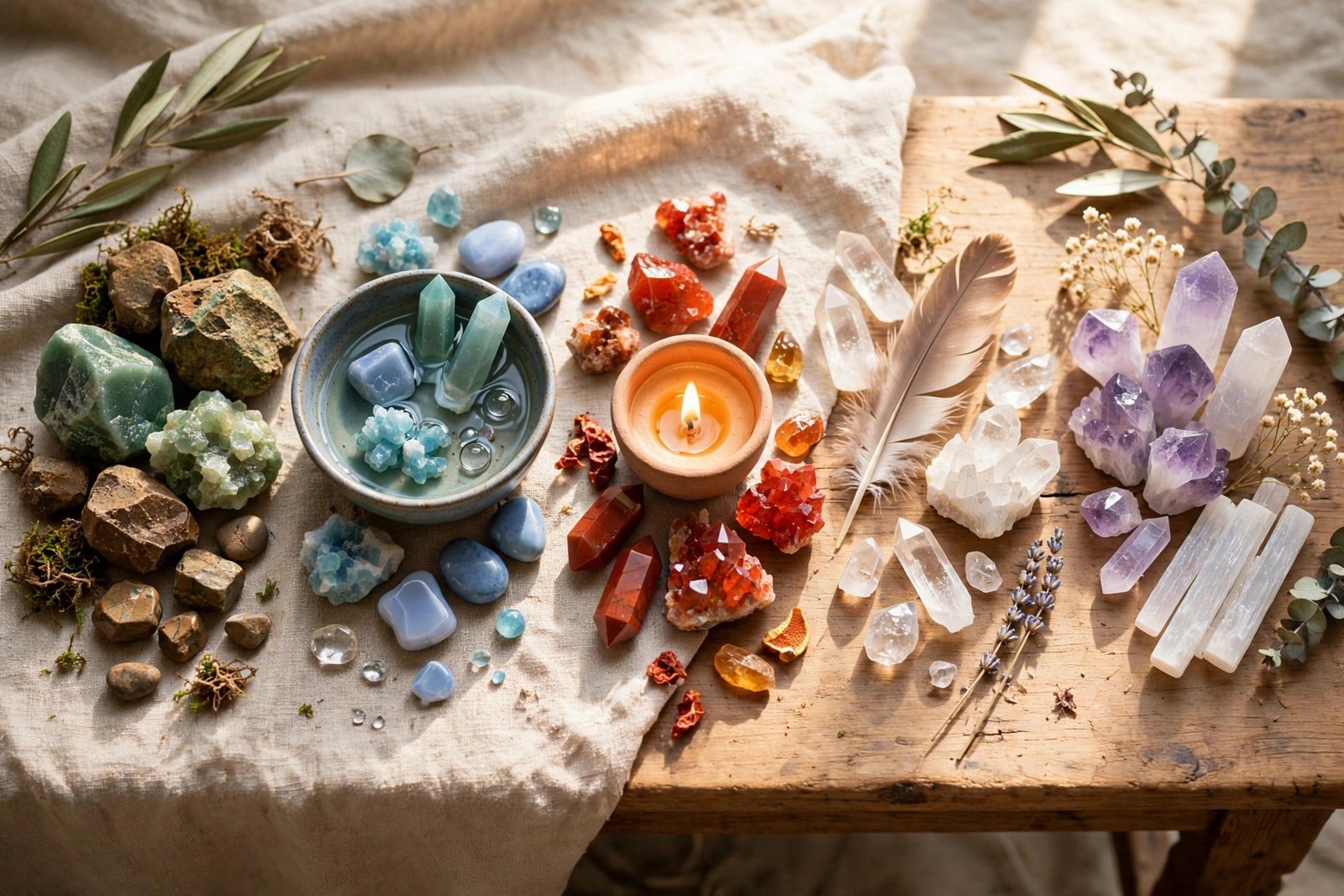
Long before chakra jewelry, there were the elements. In the Indian traditions from which the chakra system grew, everything in nature was understood through five great elements — earth, water, fire, air, and ether, or space. The lower chakras were each linked to one of these elements, giving practitioners a vivid, sensory way to think about energy: the solidity of earth at the root, the flow of water at the sacral, the heat of fire at the solar plexus, the lightness of air at the heart, and open space at the throat and beyond.
This guide maps each element to its chakra and its traditional crystals, so you can build a small elemental altar, choose stones by the quality you want more of, or simply understand your bracelet more deeply. For the color side of the same map, see our chakra colors and crystals guide.
Earth and Water: Stability and Flow
Earth belongs to the root chakra. Its qualities in tradition are weight, patience, and endurance — the ground that everything else stands on. Earth crystals are typically dense, dark, or red: hematite, red jasper, smoky quartz, and black tourmaline. Our grounding stones meaning guide and root chakra crystals guide explore why these stones are believed to help attention settle into the body and the present moment.
Water belongs to the sacral chakra, the center of creativity and feeling. Water’s qualities are movement, adaptability, and pleasure. Its crystals often look like they hold light the way water does: carnelian with its sunset translucency, moonstone with its shifting sheen, and orange calcite. The sacral chakra crystals guide lists the full family. If your life feels rigid or dry, tradition suggests spending time with the water center — literally as well as symbolically, with baths, rivers, and unhurried tea.
At AVENSU, earth and water stones are the ones we recommend for a first grounding-and-creativity stack, worn low and close through busy weeks.
Fire and Air: Will and Openness
Fire belongs to the solar plexus, the center traditionally associated with confidence, digestion of experience, and personal will. Fire crystals are warm and bright: citrine, tiger’s eye with its moving bands of gold, and yellow jasper. See our solar plexus chakra crystals guide for choosing among them. Fire’s lesson in tradition is transformation — wood becomes light — and its shadow is burnout, which is why fire work is usually paired with rest rather than more striving.
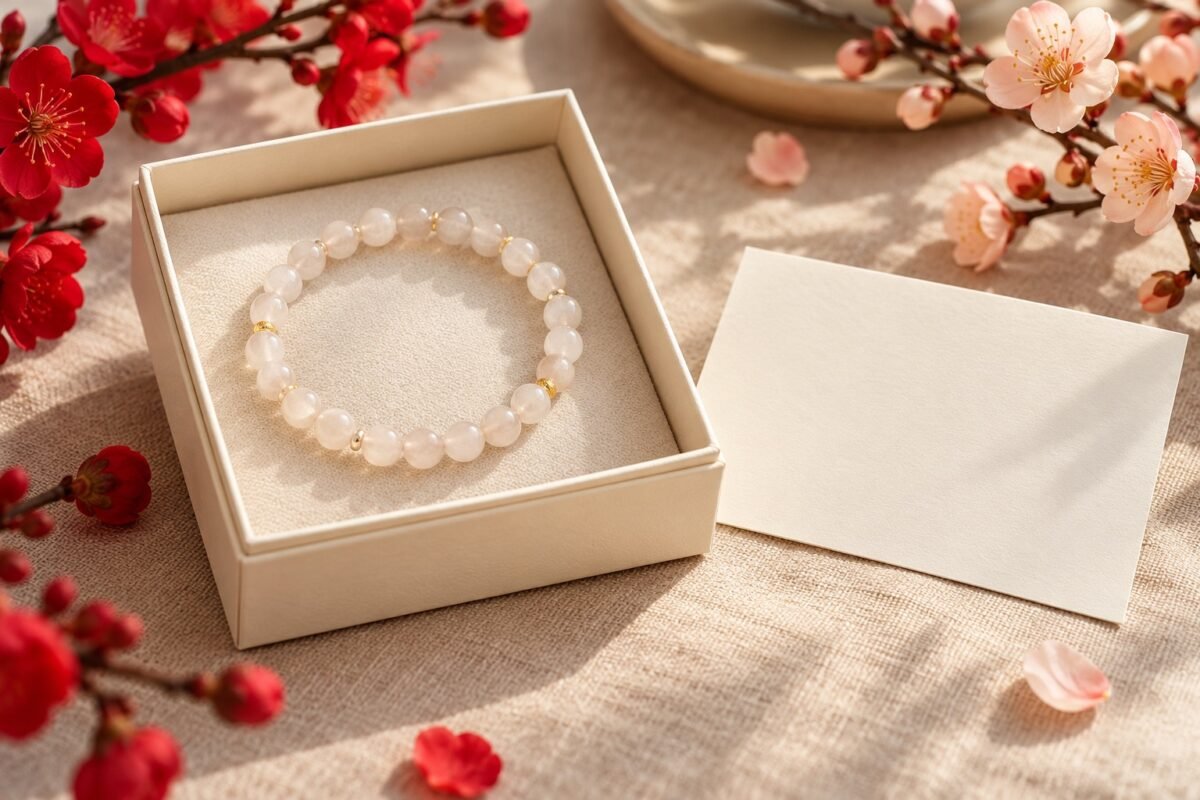
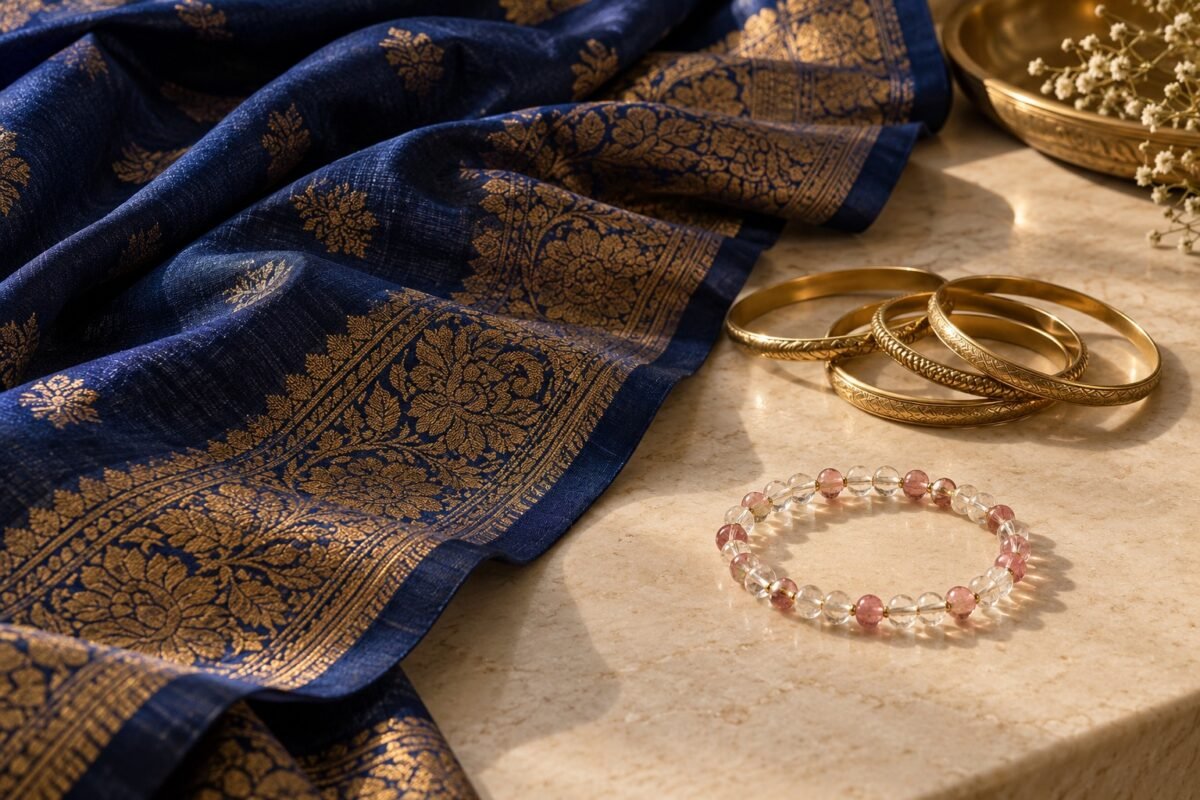
Air belongs to the heart chakra. Air is light, mobile, and impossible to hold, much like affection itself. Heart crystals — rose quartz, green aventurine, jade — are traditionally linked to this element, and our heart chakra stones guide explains the green and pink families, while the rose quartz meaning guide tells the pink stone’s story. The popular rose quartz love bracelet is, in elemental terms, an air piece: something light worn where the pulse moves.
The elemental framework appears throughout classical yoga and Ayurveda sources, summarized in references like Britannica. Noticing which element dominates your temperament — heavy earth, quick air, hot fire — is an old and surprisingly practical self-observation exercise.
Ether: Space, Sound, and the Upper Centers
Ether, or akasha, is the subtlest element — the space in which everything else exists. It is traditionally linked to the throat chakra, and by extension to the third eye and crown, where form gives way to awareness itself. Ether crystals are blue, violet, and clear: lapis lazuli, amethyst, selenite, and clear quartz. Our crown chakra stones guide and crown chakra meditation guide show how these pale stones are used in quiet practice.
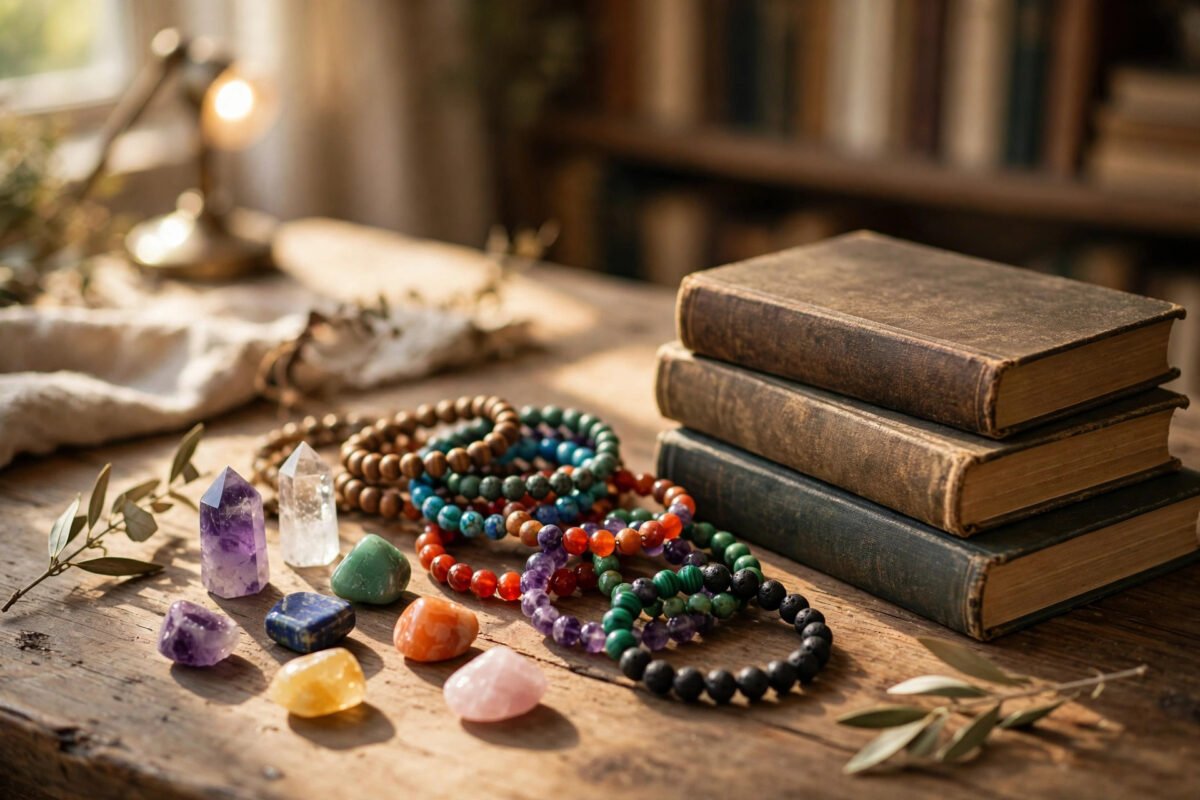
Sound is ether’s sense, which is why cleansing with sound feels so natural for upper-center stones — see our guide to cleanse crystals with sound. To work with all five elements at once, arrange one stone per element on a small tray: jasper, carnelian, citrine, rose quartz, and amethyst. That five-stone layout is a complete practice in itself, and every piece is available through the AVENSU shop if you are building the set gradually.
Frequently Asked Questions
Which element is connected to each chakra?
Tradition links earth to the root, water to the sacral, fire to the solar plexus, air to the heart, and ether to the throat, with the third eye and crown often considered beyond the elements or refined expressions of ether and light.
How do I know which element I need more of?
Notice your dominant pattern. Feeling scattered suggests earth; feeling stuck or rigid suggests water; feeling hesitant suggests fire; feeling closed or heavy-hearted suggests air; feeling noisy and crowded inside suggests ether and space. Choose the element whose qualities you lack, not the one you already have in excess.
Can I wear crystals from different elements together?
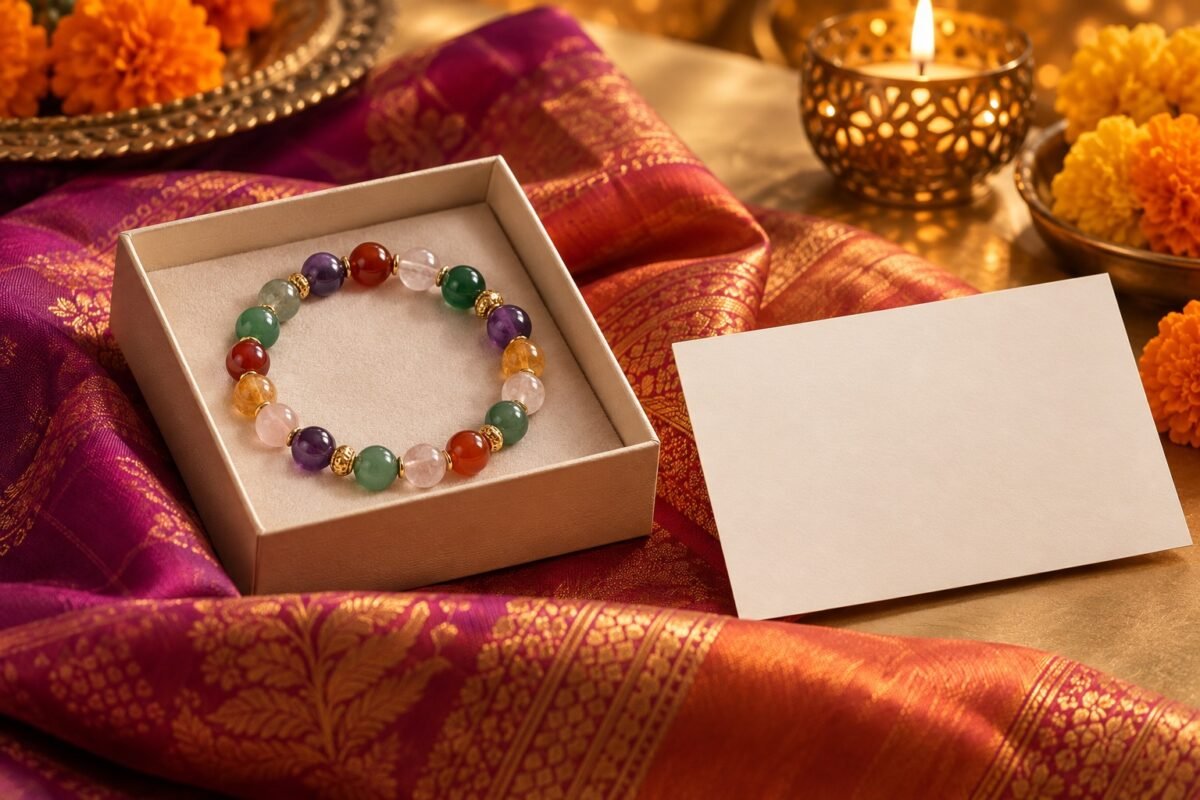
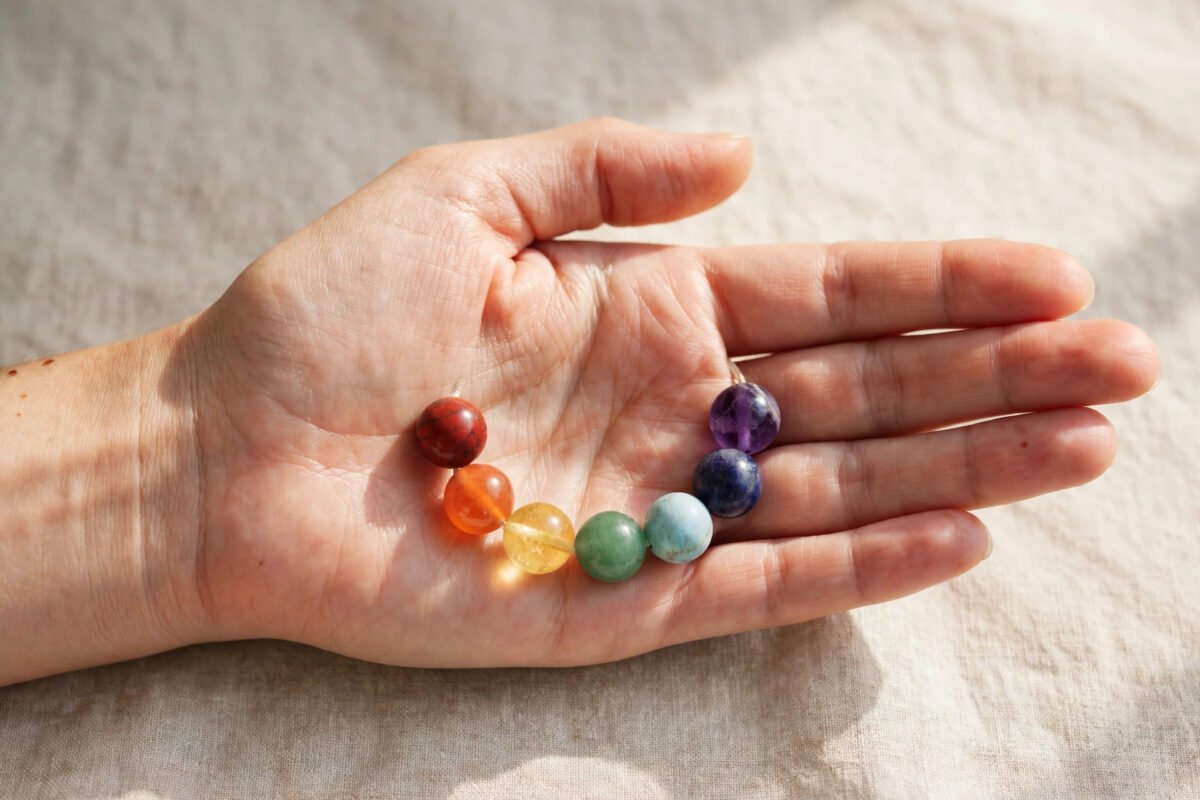
Yes — most chakra jewelry does exactly that. A 7-chakra bracelet contains all five elements in sequence. Stacks that deliberately pair elements, like earth with air for grounding while opening up, are a traditional and popular approach.
Is the five elements system the same in Chinese tradition?
The names overlap but the systems differ. Chinese wuxing uses wood, fire, earth, metal, and water as phases of change, while the Indian pancha mahabhuta — earth, water, fire, air, ether — underlies the chakra model used in this guide.







 English
 Vietnamese