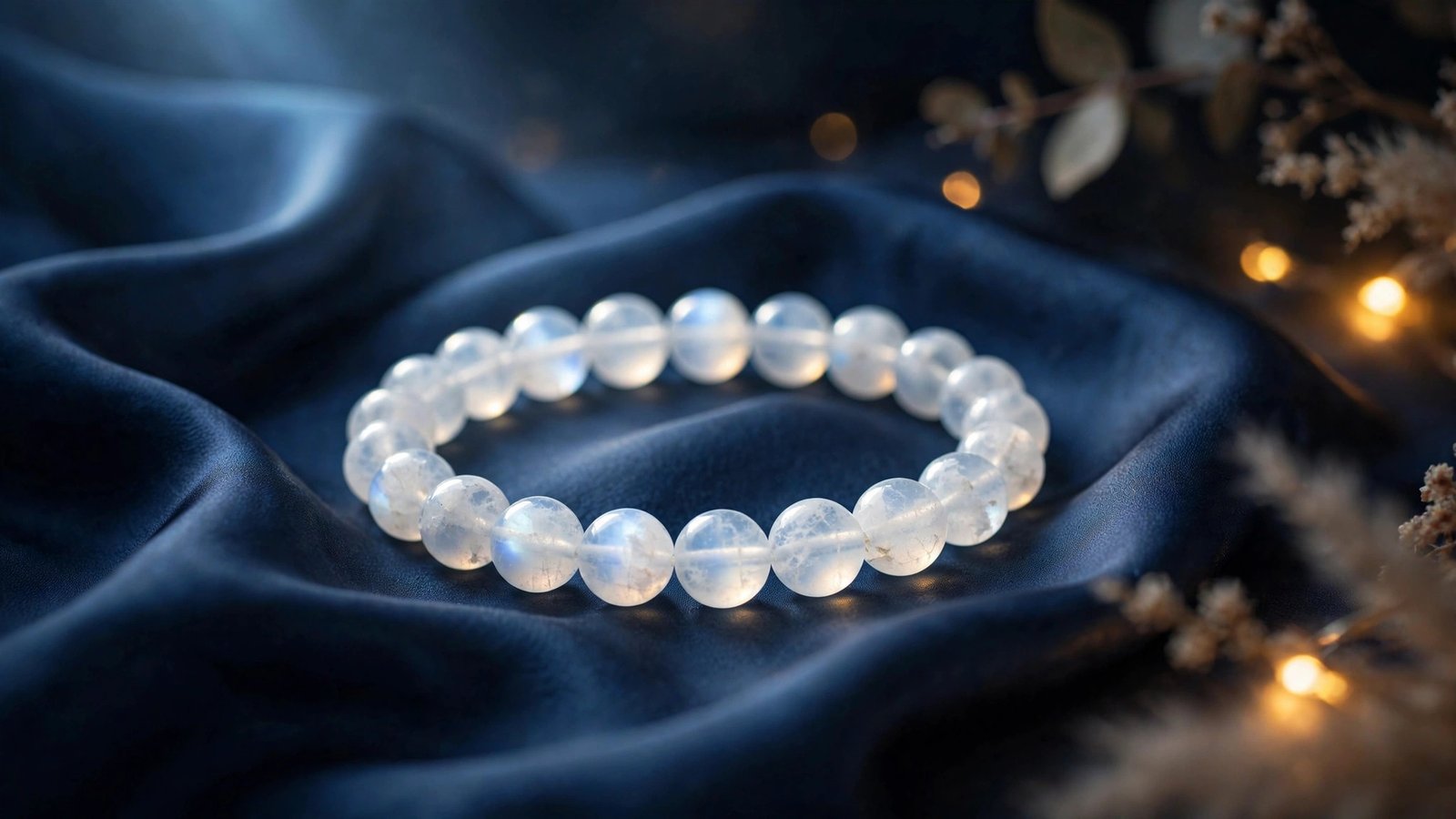
Hold a moonstone up to the light and it seems to hold the moon itself — a soft blue-white glow that drifts across the surface as you turn it. That glow has a name, a geology, and about two thousand years of folklore behind it. This guide explains the moonstone meaning: why it is called the intuition stone, what it symbolizes across cultures, and how to wear it as a bracelet.
What Is Moonstone? The Science of the Glow
Moonstone is a variety of feldspar (not quartz), composed of layered orthoclase and albite. Its signature glow — called adularescence — comes from light scattering through those microscopic alternating layers, producing the milky blue sheen that seems to float inside the stone. You can read the full mineralogy on the moonstone gemstone page.
- Mineral family: feldspar group (orthoclase variety)
- Hardness: 6–6.5 on the Mohs scale — softer than quartz, so treat bracelets gently
- Colors: colorless, white, peach, gray, and rainbow varieties, with blue sheen the most prized
- Care note: feldspar cleaves easily; avoid hard knocks and remove the bracelet for sports or manual work
Historically, the finest moonstones with strong blue sheen came from Myanmar; today most commercial moonstone comes from Sri Lanka.
Moonstone Folklore: Two Thousand Years of Lunar Magic
The moonstone meaning is inseparable from the moon itself:
- Ancient Rome: Romans believed moonstone was formed from solidified moonbeams and associated it with their lunar deities.
- Ancient Greece: the stone was linked to Selene and Artemis, goddesses of the moon.
- India: moonstone has been sacred in India for centuries, traditionally associated with dreams, intuition, and new love — it remains one of the country’s beloved sacred stones.
- Art Nouveau Europe: around 1900, jewelers like René Lalique made moonstone a centerpiece of dreamy, nature-inspired jewelry.
- Modern symbolism: designated the Florida state gemstone in 1970 to honor the moon landings.
What Moonstone Is Traditionally Associated With
These are traditional, symbolic associations — not medical or scientific claims. Moonstone is traditionally associated with:
- Intuition: the stone’s core meaning — trusting inner knowing and subtle perception.
- New beginnings: like the moon’s monthly renewal, moonstone symbolizes fresh starts, new chapters, and second chances.
- Emotional balance: said to soothe emotional turbulence with the moon’s calm, cyclical rhythm.
- Feminine energy: long linked with lunar, receptive qualities across cultures.
- Travel protection: an old traveler’s tradition holds moonstone as a protective stone for journeys, especially at night or over water.
For a ritual built around the stone’s lunar ties, see our moonstone new beginnings guide, and explore the wider symbolic library in our crystal meaning guides.
Moonstone and the Lunar Cycle
Because its symbolism is lunar, many wearers sync their moonstone practice with the moon’s phases. The new moon is traditionally treated as a time for setting intentions — a natural fit for moonstone’s “new beginnings” meaning — while the full moon suits reflection and gratitude. You do not need an elaborate ritual: holding the bracelet for a minute on the new moon and naming one intention for the cycle ahead is enough. Some wearers also rest their moonstone on a windowsill overnight during the full moon as a symbolic “recharge,” a practice shared across many moon-associated stones.
How to Wear a Moonstone Bracelet
Moonstone bracelets reward good light — the adularescence flashes best in soft natural daylight. Practical tips:
- Handle with care: at 6–6.5 hardness with perfect cleavage, moonstone chips more easily than quartz. Put the bracelet on last and take it off first.
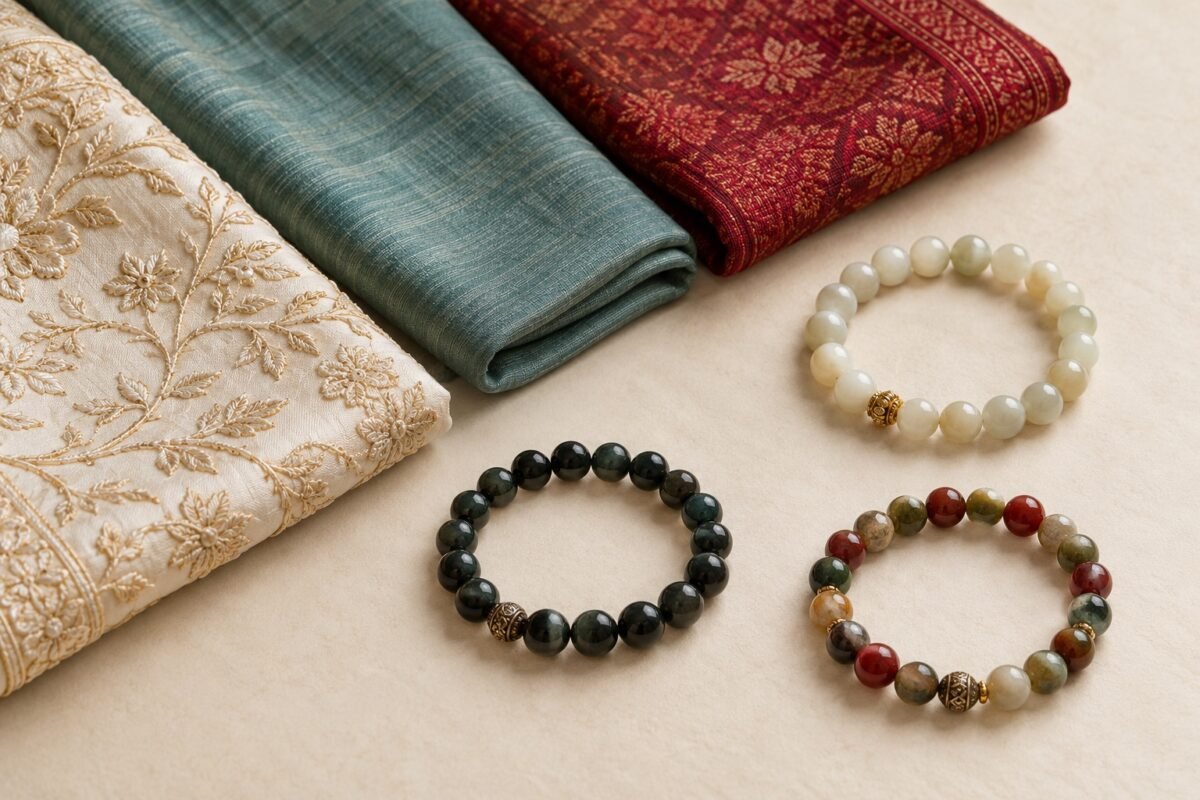
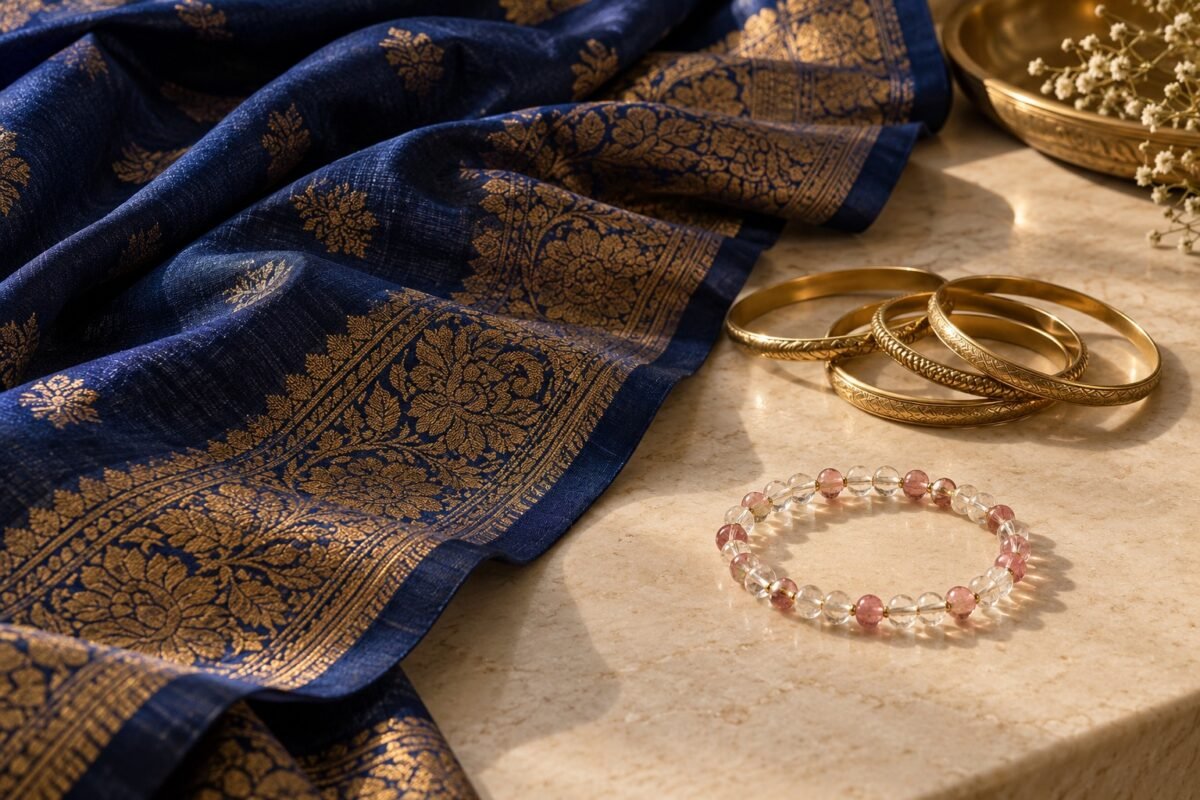
- Style it: the milky glow pairs beautifully with navy, charcoal, and silver tones; rainbow moonstone’s transparency suits minimalist outfits.
- Layer thoughtfully: pair with harder stones like clear quartz, but let moonstone sit where it takes fewer knocks.
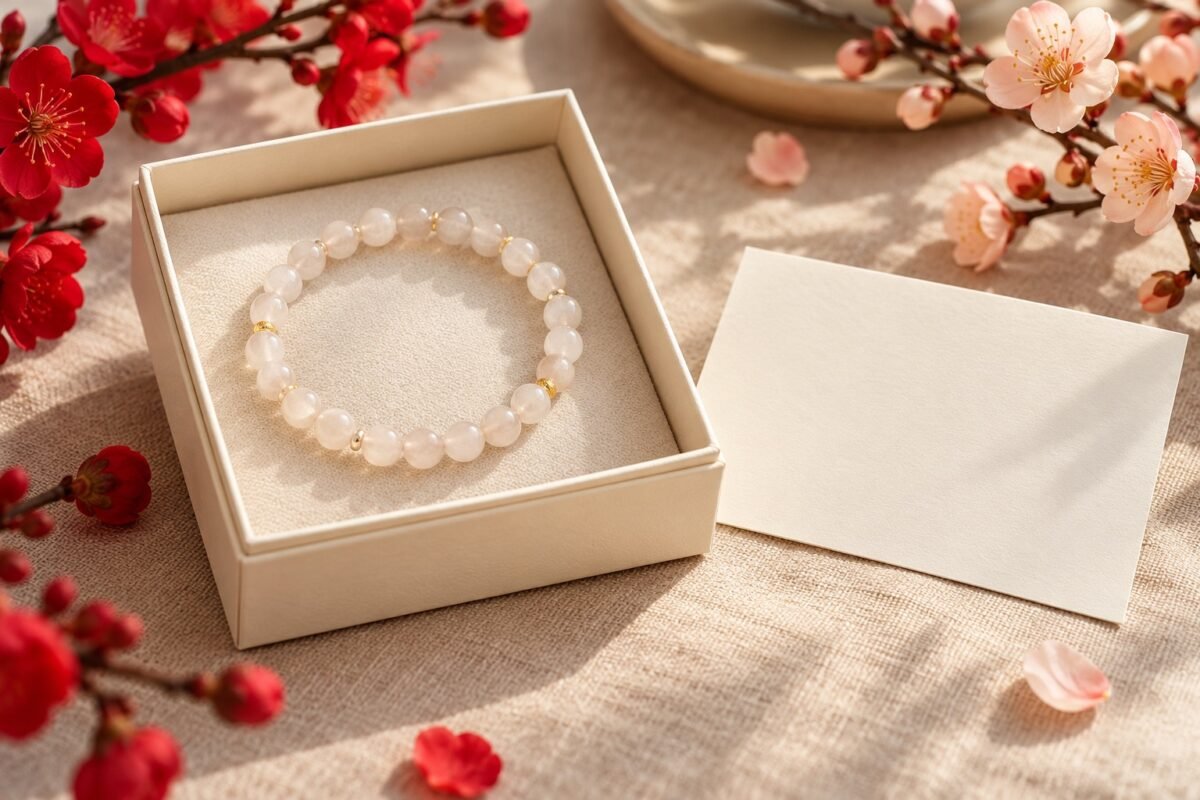
- Mark new chapters: many wearers gift themselves moonstone at life transitions — a new job, a move, a new year — as a tangible symbol of beginning again.
“Moonstone’s glow never sits still — it moves as you move. That is the whole meaning in miniature: intuition is not a fixed answer, it is a light you learn to follow.”
The moonstone bracelet captures that drifting glow in an everyday design, while the moonstone crystal bracelet offers a brighter, more translucent cut. Wondering how it stacks up against its closest rival? Read our moonstone vs opal comparison, see the stone in a gifting context in moonstone Christmas gift meaning, or explore our moonstone gift guide for new moms.
Frequently Asked Questions
What does moonstone symbolize?
Moonstone symbolizes intuition, new beginnings, and emotional balance. Its lunar associations span Roman, Greek, and Indian traditions, all connecting the stone’s inner glow with inner knowing.
What causes moonstone’s glow?
The glow is called adularescence: light scattering through microscopic alternating layers of orthoclase and albite feldspar inside the stone. The effect shifts from white to blue as you turn the stone.
Is moonstone durable enough for a daily bracelet?
It needs more care than quartz. Moonstone rates 6–6.5 on the Mohs scale and cleaves easily, so remove it for sports, manual work, and harsh impacts. With gentle wear, it lasts beautifully.
Who should wear moonstone?
Traditionally, moonstone is recommended for anyone starting a new chapter, seeking emotional steadiness, or drawn to lunar symbolism. In crystal lore it is also considered a supportive stone during times of change.







 English
 Vietnamese