Left or right? It is the most-asked question about pixiu bracelets. The traditional answer is clear — the left wrist — but the reason behind it is what matters, because once you understand the principle, you will know when to follow the rule and when an exception is legitimate.
The Short Answer: Left Wrist for Wealth Pixiu
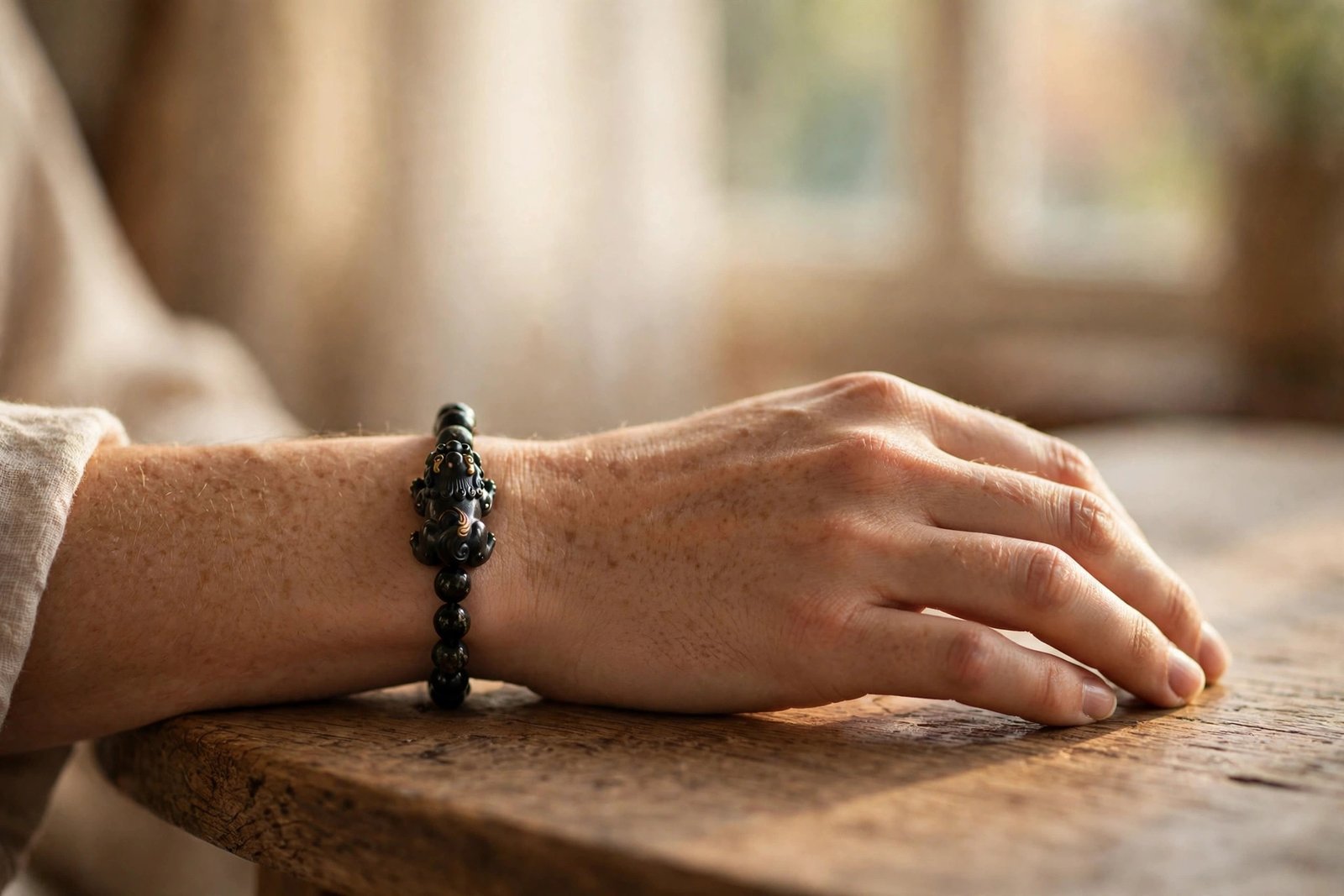
For the vast majority of wearers, a pixiu bracelet belongs on the left wrist. In feng shui tradition, energy flows in a specific direction through the body: the left side receives, the right side gives. This is the principle of zuo jin you chu — “left in, right out.” Since a wealth pixiu exists to draw prosperity toward you, practitioners believe it must sit on the receiving side. Placing it on the right wrist, the giving side, is traditionally said to push wealth away rather than attract it.
If that is all you needed, you can stop here: left wrist, pixiu head facing inward, done. The interesting questions start with the exceptions — and there are several worth knowing. (New to pixiu bracelets? Read our complete pixiu bracelet rules guide first; it covers head direction, taboos, and daily care.)
Why the Left Hand Is the Receiving Hand
The left-in-right-out principle is one of the oldest ideas in feng shui practice, rooted in the concept of qi — the flow of vital energy through the environment and the body (see the feng shui Wikipedia page for the tradition’s foundations). The wrist-level logic is straightforward: practitioners believe the left side of the body is more receptive, more open to incoming fortune. A wealth charm placed there sits at the doorway where prosperity enters. Note this is about the side of the body, not handedness — a point our guide to wearing bracelets on the non-dominant wrist explores from the comfort angle.
Left-Handed? The Rule Does Not Flip
This is the most common misunderstanding. If you are left-handed, the rule does not reverse — you still wear the pixiu bracelet on the left wrist. The left-in-right-out principle describes energy flow, not handedness. Your dominant hand does not change which side of the body receives.
That said, left-handed wearers face a genuine practical annoyance: the bracelet sits on the hand you write with. Two fixes help. First, choose a snug-but-comfortable fit so the bracelet does not slide while writing. Second, consider smaller beads — 8mm instead of 10mm or 12mm — so the bracelet sits flatter. The tradition cares about the wrist, not the bead size.
When the Right Wrist Is Acceptable
Tradition is firm, but real life negotiates. Here are the situations where practitioners generally accept the right wrist:
- Your watch lives on the left. The classic conflict. Some practitioners insist the pixiu still goes left and the watch moves right; others accept the pixiu on the right rather than stacked awkwardly against a watch crown. Our take: if you wear a watch daily and will not move it, the right wrist with the head facing inward beats a left wrist where the bracelet is constantly shoved aside. Consistency matters more than perfection.
- You do heavy manual work with your left hand. Chefs, mechanics, musicians — if your left wrist takes daily punishment, protecting the bracelet on the right is reasonable. The pixiu cannot guard wealth if it is smashed against a workbench.
- You wear a protective pixiu, not a wealth pixiu. Remember the two pixiu types: the male Tianlu attracts wealth, while the female Bixie wards off evil. If your bracelet is a protective Bixie charm, some traditions place warding items on the right — the “giving” side, projecting protection outward. Most commercial pixiu bracelets, including our pixiu feng shui bracelet, are wealth-oriented Tianlu style and belong on the left. New to the legend? Our pixiu meaning guide explains what the wealth beast symbolizes.
Pixiu Bracelet and Watch: How to Stack Them
If you wear both a watch and a pixiu bracelet, you have three workable arrangements. Option one, the traditionalist’s choice: watch on the right wrist, pixiu on the left. Option two: both on the left, with the bracelet worn slightly up the forearm so it does not grind against the watch case — this only works with a snug fit. Option three: pixiu on the right wrist as a practical compromise (see above).
What you should avoid is sandwiching the pixiu directly against a metal watch case all day. The pixiu charm is usually the hardest, heaviest element on the bracelet, and it will scratch a watch case and get scratched in return. Whatever arrangement you choose, give the charm breathing room.
Sleeping, Typing, and Daily Practicalities
Wrist choice also interacts with the rest of the pixiu rulebook. Tradition says to remove the bracelet at night regardless of wrist — the pixiu rests, and you should not sleep in it. For desk workers, the left wrist keeps the bracelet off the mousing hand; left-handed wearers typing all day can push a slightly loose bracelet up the forearm while working.
One more practical note: many wearers touch the pixiu with their right hand during the day — a small ritual of “activating” the charm. Whether you view that as energy work or simple mindfulness, it turns the left-wrist rule into a habit that keeps your financial goals top of mind.
“The left-hand rule is not about superstition — it is about direction. Every tradition that works with flow, from feng shui to plumbing, cares deeply about which way things move.”
So: left wrist, head facing inward, for any wealth-oriented pixiu bracelet. Learn the full ritual in our pixiu wearing rules guide, and if you are building a broader prosperity practice, our feng shui wealth bracelet guide covers the stones that pair well with pixiu — citrine, pyrite, and green aventurine. Explore more in our feng shui jewelry collection.
Frequently Asked Questions
Should I wear my pixiu bracelet on my left or right wrist?
On the left wrist, in most cases. Feng shui tradition holds that the left hand receives energy while the right hand gives it away, so a wealth-attracting pixiu belongs on the receiving side. The main exceptions are practical: a watch you will not move, heavy left-hand manual work, or injury.
I am left-handed. Does the rule reverse for me?
No. The left-in-right-out principle is about energy flow through the body, not handedness. Left-handed wearers still wear the pixiu on the left wrist — just consider a snugger fit or smaller beads so it does not interfere with writing.
Can I wear my pixiu bracelet on the same wrist as my watch?
You can, but give them space: wear the bracelet slightly up the forearm so the pixiu charm does not grind against the watch case. Many traditionalists prefer moving the watch to the right wrist and giving the left entirely to the pixiu.
What if I wear two pixiu bracelets?
Tradition generally advises against stacking two wealth pixiu bracelets — practitioners believe they “compete” rather than cooperate. One well-chosen pixiu bracelet, worn correctly on the left wrist, is the classic recommendation. If you want a second bracelet, pair it with a complementary stone like citrine instead.









 English
 Vietnamese