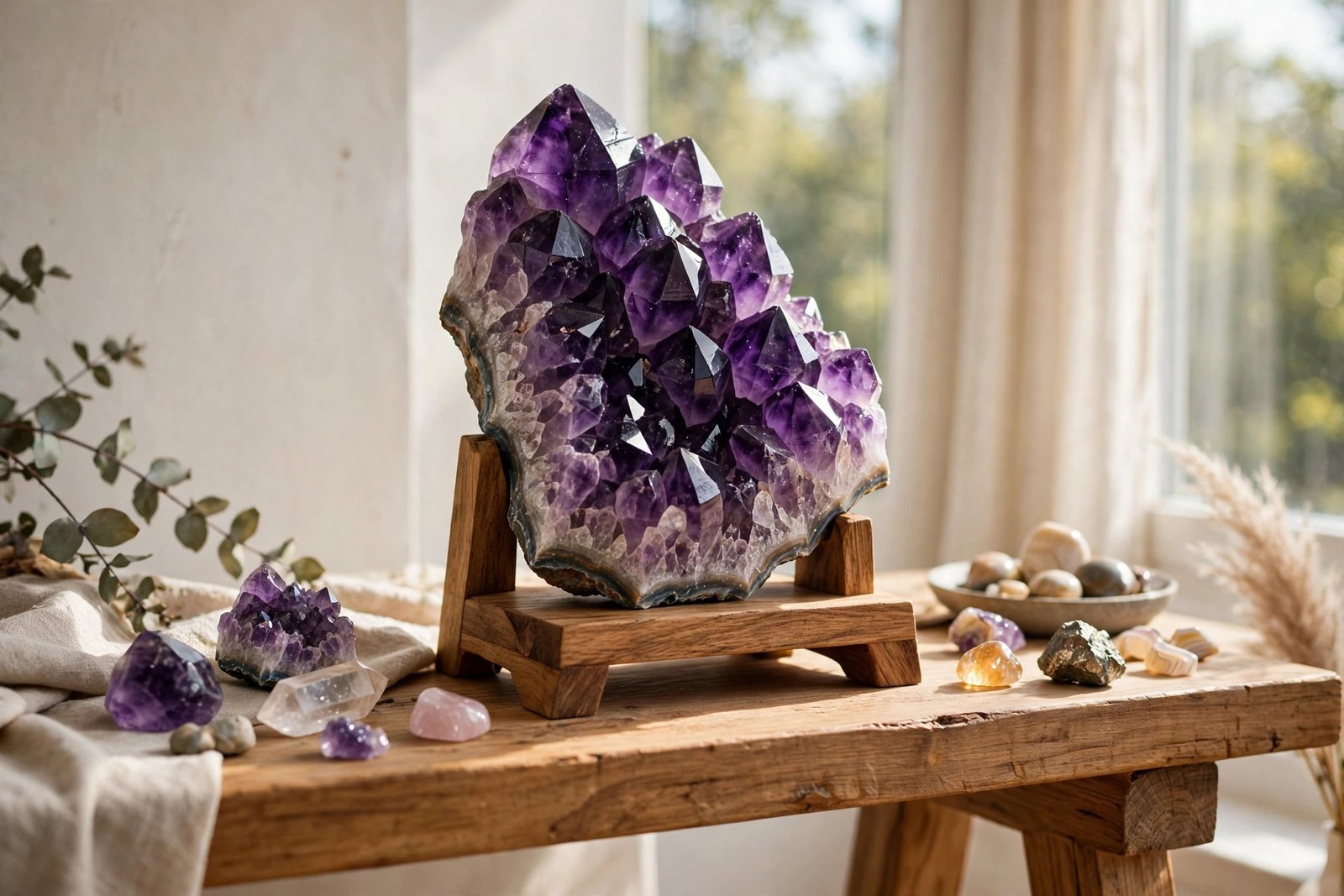
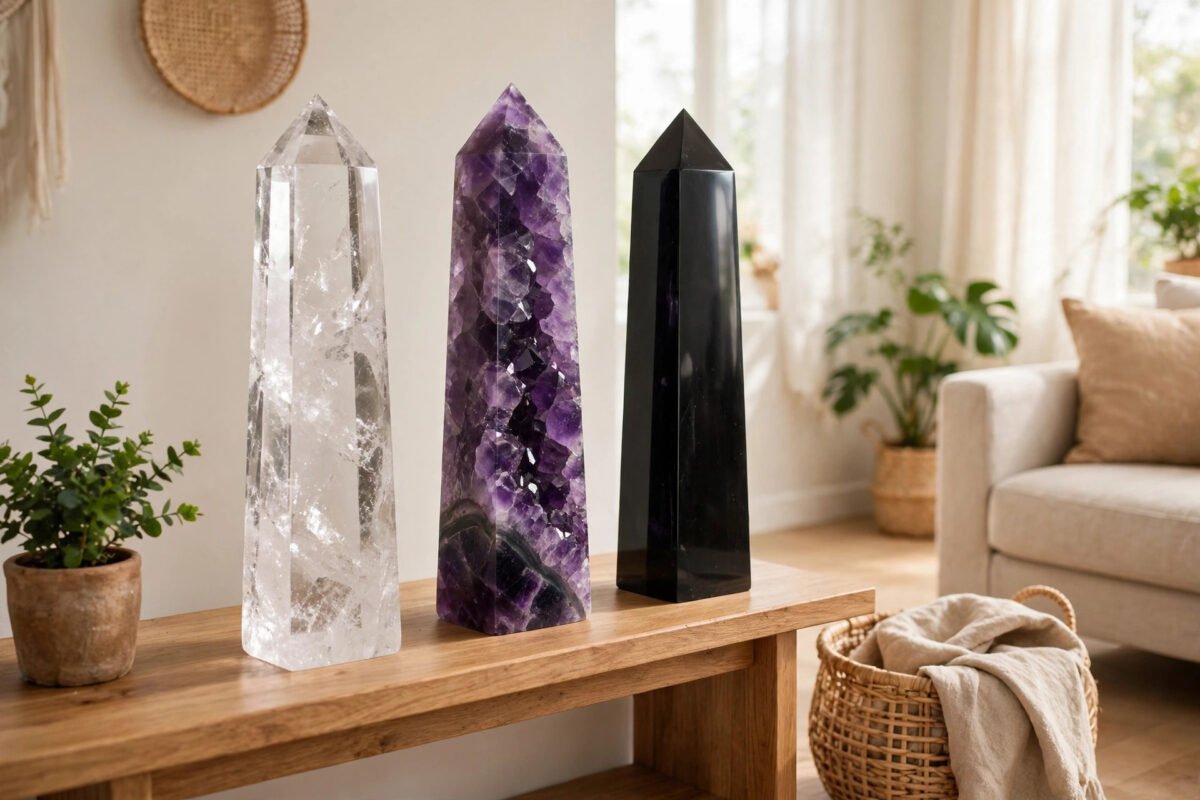
A large statement crystal — a cathedral amethyst, a metre of rose quartz, a hefty fluorite tower — can transform a room. It can also crack a shelf, fade in a sunny window, or topple onto a foot if it is placed carelessly. Displaying large crystals safely is mostly common sense plus a few specifics that collectors learn the hard way. This guide walks through weight, stands, stability tricks, light and humidity, and child- and pet-proofing, so your biggest pieces stay beautiful and upright for decades.
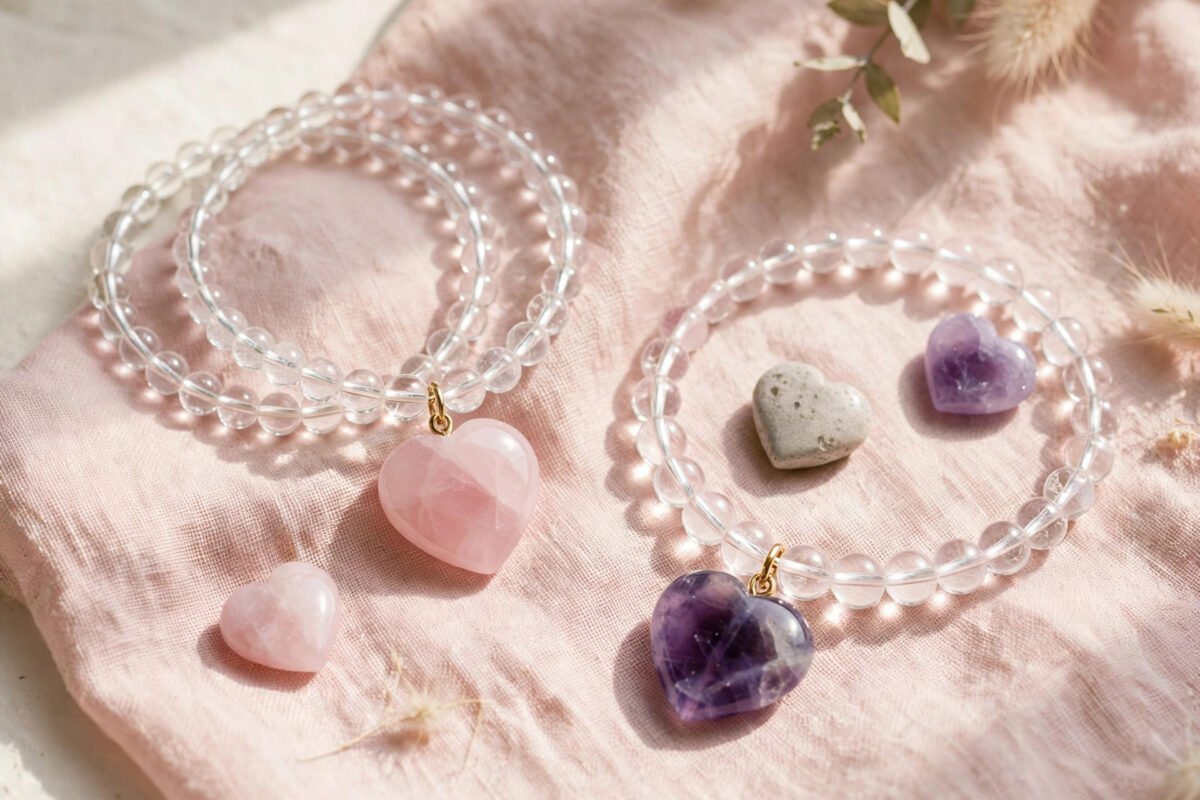
Smaller companions deserve equal care: keep bracelets from the Cửa hàng AVENSU in their own pouches nearby rather than balanced on top of statement pieces, where they can slide and scratch.
Start with Weight and the Surface Beneath
Stone is dense. Quartz weighs about 2.65 grams per cubic centimetre, so a “not that big” cluster can easily exceed 10 kg — check mineral density data at Mindat.org for unusual materials. Before placing anything:
- Weigh the piece on a bathroom scale and compare it with your shelf’s rated load, remembering that glass shelves hold far less than solid wood.
- Spread the load. A slate, hardwood, or acrylic base plate under an uneven cluster distributes pressure and protects furniture from scratches.
- Check the floor option. Very heavy pieces are often safest on a low plinth or directly on the floor in a corner, where a fall is impossible.
Wall-mounted display of heavy crystals is specialist work — use proper masonry fixings and rated brackets, or skip it entirely. The Smithsonian’s object-handling guidance for museums makes the same point professionals follow: support the object fully, and never let it cantilever.
Stability: Stands, Putty, and Placement
Most statement pieces sold today come with a custom metal or wooden stand, especially cathedral geodes that cannot stand alone. Keep the stand — it was fitted to that exact base. For self-standing towers, flames, and spheres, stability helpers include:
- Museum putty or gel dots under the base to resist knocks and minor tremors. Removable, residue-free, and invisible.
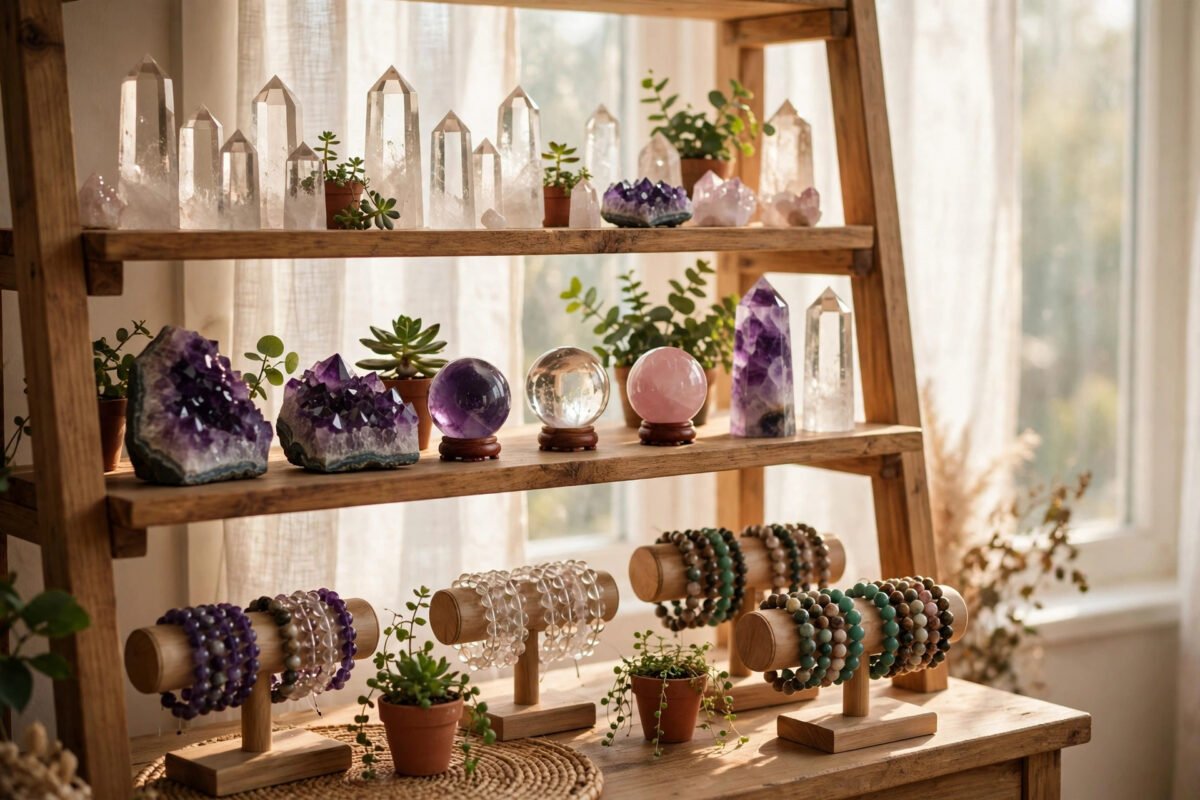
- Ring stands and cradles for spheres, which otherwise roll at the slightest nudge — compare centrepiece options in our spheres vs towers guide.
- Sensible placement: away from door swings, hallway traffic, vibrating appliances, and the edges of surfaces. Tall pieces like those in our obelisk vs point guide deserve the most protected spots.
If a piece rocks when you tap the shelf, move it. A crystal that wobbles in October will be on the floor by December.
Light, Heat, and Humidity
Sunlight is the silent threat to colour. Amethyst, fluorite, rose quartz, and kunzite are all traditionally known to fade with prolonged direct sun — our amethyst meaning guide notes this for jewellery, and the effect is faster on a south-facing windowsill. Display coloured statement pieces in bright indirect light instead, and rotate them occasionally so any change is even.
Keep large pieces away from radiators and fireplaces; rapid temperature swings can stress natural fractures. Humidity matters for a few minerals — pyrite can corrode in damp rooms, and selenite hates water entirely — so a dry living room beats a steamy bathroom for almost everything. The stone-by-stone cautions in our complete crystal bracelet care routine scale up directly to display pieces.
Homes with Children and Pets
Curiosity plus height equals risk. Anchor tall pieces at the back of deep shelves, use putty without exception, and keep irresistibly sparkly clusters out of toddler reach. Cats famously test gravity with anything on an edge; a closed glass cabinet is the collector’s best friend in a multi-pet household. Our guide to worry stones and pocket crystals can redirect little hands toward pieces that are meant to be handled.
Cleaning day is when accidents happen. Move statement pieces with two hands, from the base, onto a towel — never drag them across a shelf. Dust in place with a soft brush or a slightly damp cloth for water-safe stones, and cleanse display pieces following the same safe methods in how to cleanse crystals with salt water, checking each stone first. Store any pieces you rotate out using how to store crystal bracelets principles — padded, separated, labelled — and keep a Vòng tay pha lê giúp cân bằng năng lượng on your wrist during a big rearrange if that little ritual helps you slow down and handle things mindfully. New statement-friendly companions appear in the Cửa hàng AVENSU each season.
Các câu hỏi thường gặp
How do I move a very heavy crystal safely?
Clear the route first, then lift from the base with both hands, keeping the piece close to your body. For anything over about 15 kg, use two people and set it down on a padded surface. Never lift a geode or tower by its top or points.
Is museum putty safe for all crystals?
Museum putty is generally safe on polished bases and stands, but avoid pressing it into porous, matte, or delicate surfaces like raw clusters or selenite, where removal could pull material away. Test a tiny hidden spot first on valuable pieces.
Can I display crystals in a sunny window?
Brief morning sun is fine for colour-stable stones like clear quartz and smoky quartz. For amethyst, fluorite, and rose quartz, choose indirect light to protect colour. No stone benefits from sitting in a hot windowsill all day, so treat the window as a photo spot, not a home.
What is the safest display for a large sphere?
A sturdy ring stand or a carved wooden cradle on a low, stable surface, with putty under the stand. Spheres concentrate a lot of weight and roll freely, so never rest one unsecured on a shelf, however flat it seems to sit.




 English
 Vietnamese