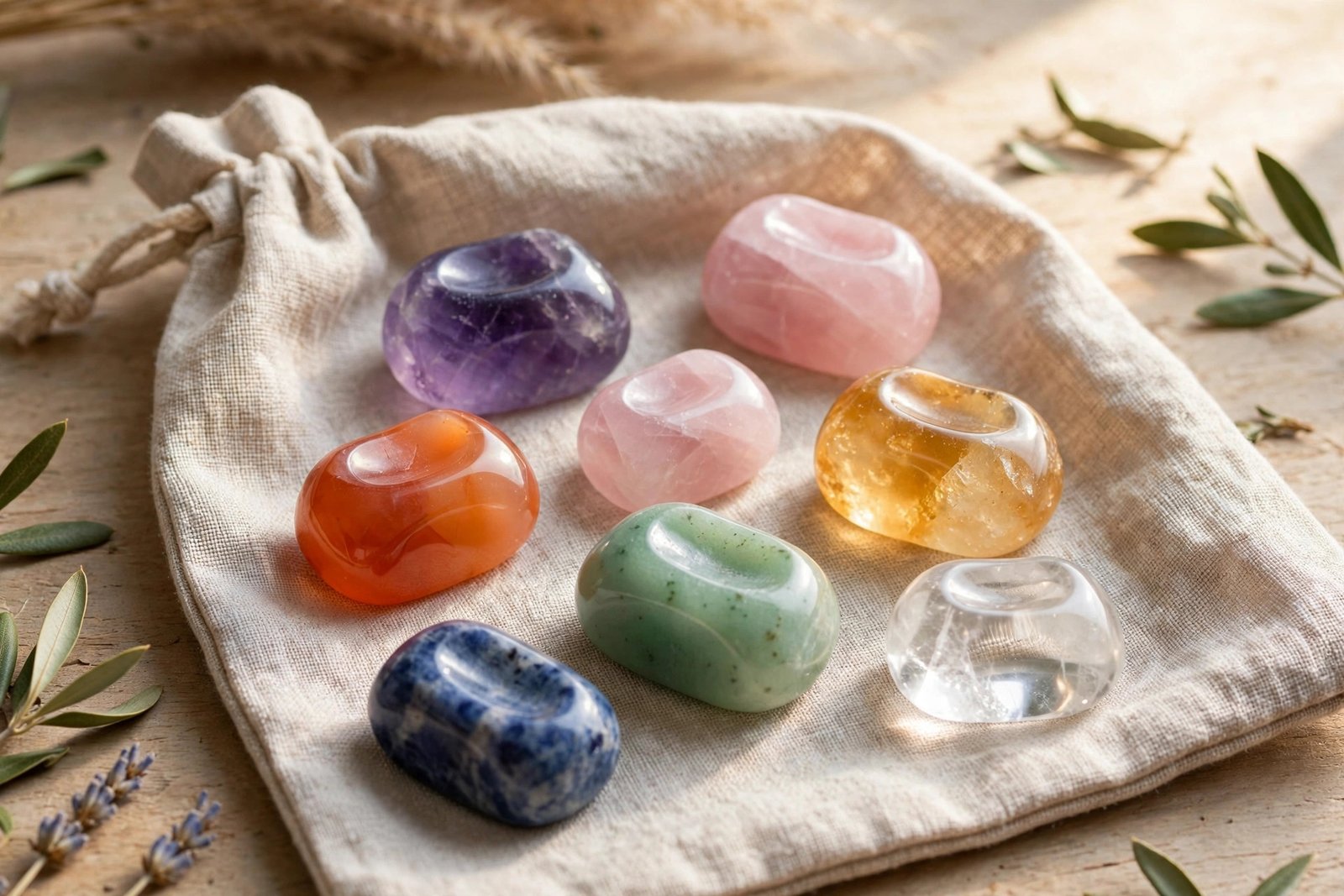
Not every crystal belongs on a shelf. Pocket stones and worry stones are made to be carried, held, and rubbed between your fingers through the ordinary moments of a day — the commute, the queue, the difficult meeting. A worry stone is traditionally a smooth, flat oval with a thumb-sized groove worn into one side, a design traced through many cultures as a self-soothing fidget long before fidget tools had a name. This guide to worry stones pocket crystals covers the shapes, the most-carried stones, how to build an everyday-carry rotation, and how to keep small stones from getting lost, scratched, or forgotten in a wash cycle.
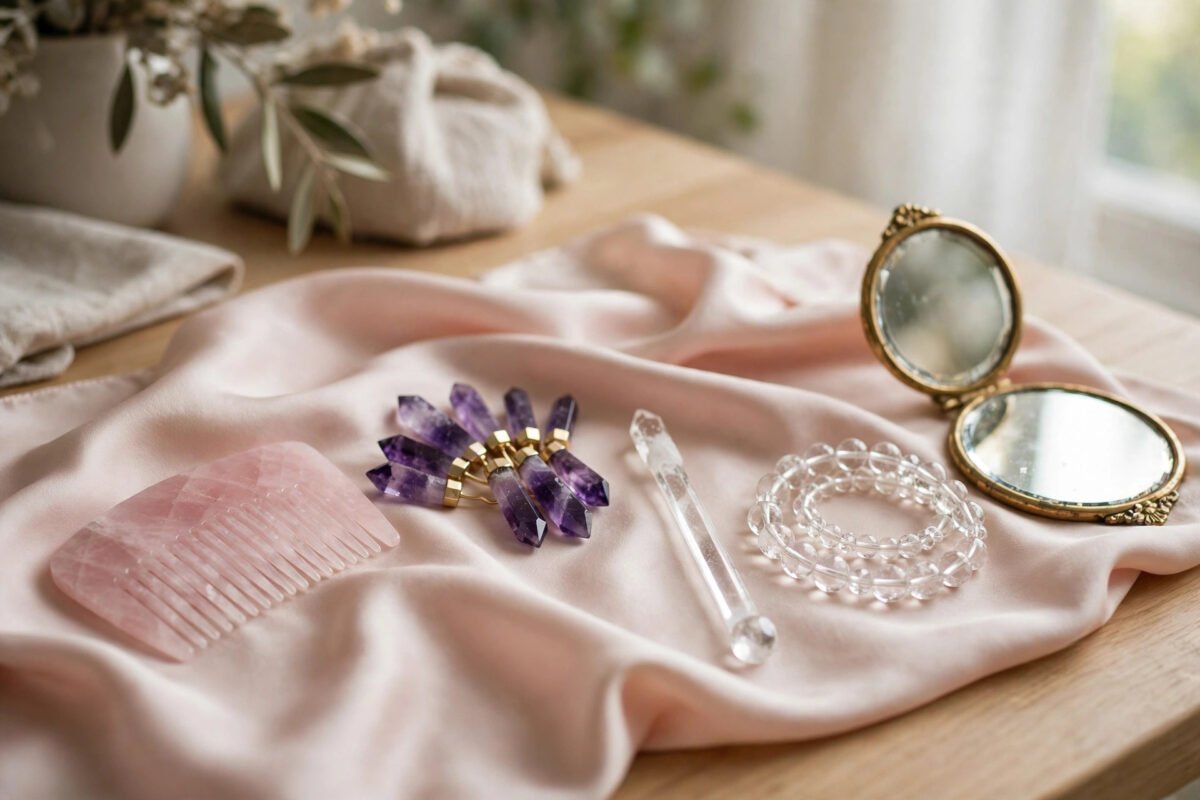
Pocket stones pair perfectly with bracelets from the Cửa hàng AVENSU: the bracelet stays visible on your wrist while the stone stays private in your pocket, ready when you need something to hold.
Worry Stone vs Pocket Stone vs Palm Stone
The terms overlap, but regular carriers use them distinctly:
- Worry stone: flat, oval, typically 3–5 cm, with a polished thumb groove. Designed for rubbing.
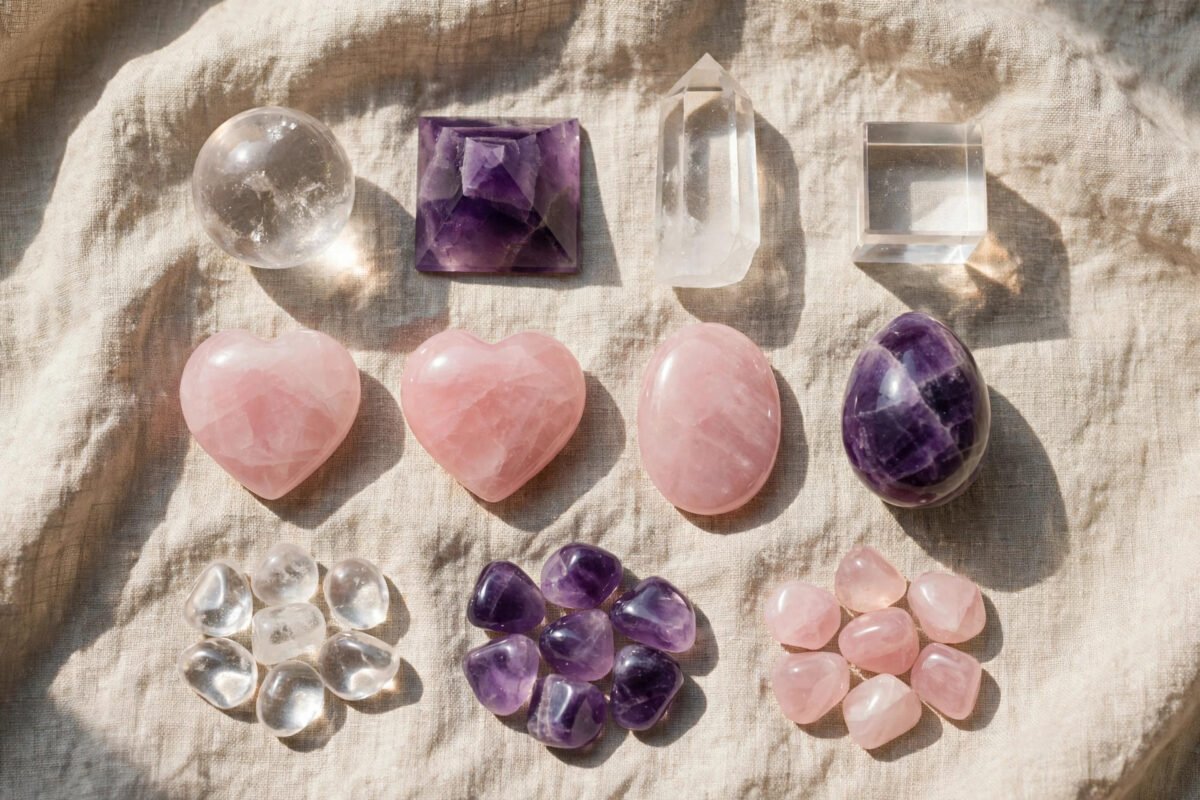
- Pocket stone (tumble): a small tumbled piece, rounded on all sides, chosen by feel rather than shape rules.
- Palm stone: larger and flatter, filling the palm for meditation or desk use rather than true pocket carry.
The donut shape bridges all three — its central hole gives the thumb the same anchor as a groove. Our crystal donut pi disc guide explores that form in depth. Whatever you choose, smoothness is the whole game: test by closing your eyes and running your thumb across the stone. Any grit, sharp inclusion, or rough patch disqualifies it as a worry stone, however pretty it looks.
Why People Carry Them
The honest benefit is tactile. Repetitive thumb movement over a cool, smooth surface gives restless hands something to do, and many people find the ritual calming during stressful moments. In crystal tradition, specific stones are believed to add their own qualities — amethyst is traditionally associated with calm, black tourmaline with grounding, and rose quartz with comfort — but the groove-and-thumb mechanics help regardless of which stone you pick. If grounding is your goal, our Hướng dẫn về ý nghĩa của những viên đá định tâm và Hướng dẫn về các loại tinh thể cho luân xa gốc go deeper, and a Vòng tay pha lê giúp cân bằng năng lượng doubles the effect for many carriers.
For a light historical note, the Wikipedia entry on worry stones traces their use across Greek, Irish, and Native American traditions — a reminder that this is one of humanity’s oldest comfort objects.
Best Stones for Everyday Carry
Carry stones take knocks against keys, coins, and phone screens, so hardness matters. Favourites include:
- Amethyst — hard, smooth, and traditionally calming; see the amethyst meaning guide.
- Smoky quartz and clear quartz — tough all-rounders that suit any intention.
- Tiger’s eye and agate — very durable, with satisfying weight and banding to trace with a thumb.
- Rose quartz — the comfort classic, covered in our Hướng dẫn về ý nghĩa của thạch anh hồng.
- Moonstone — prettier than it is tough; carry it in a pouch. Its traditional intuition link is explained in the moonstone meaning guide.
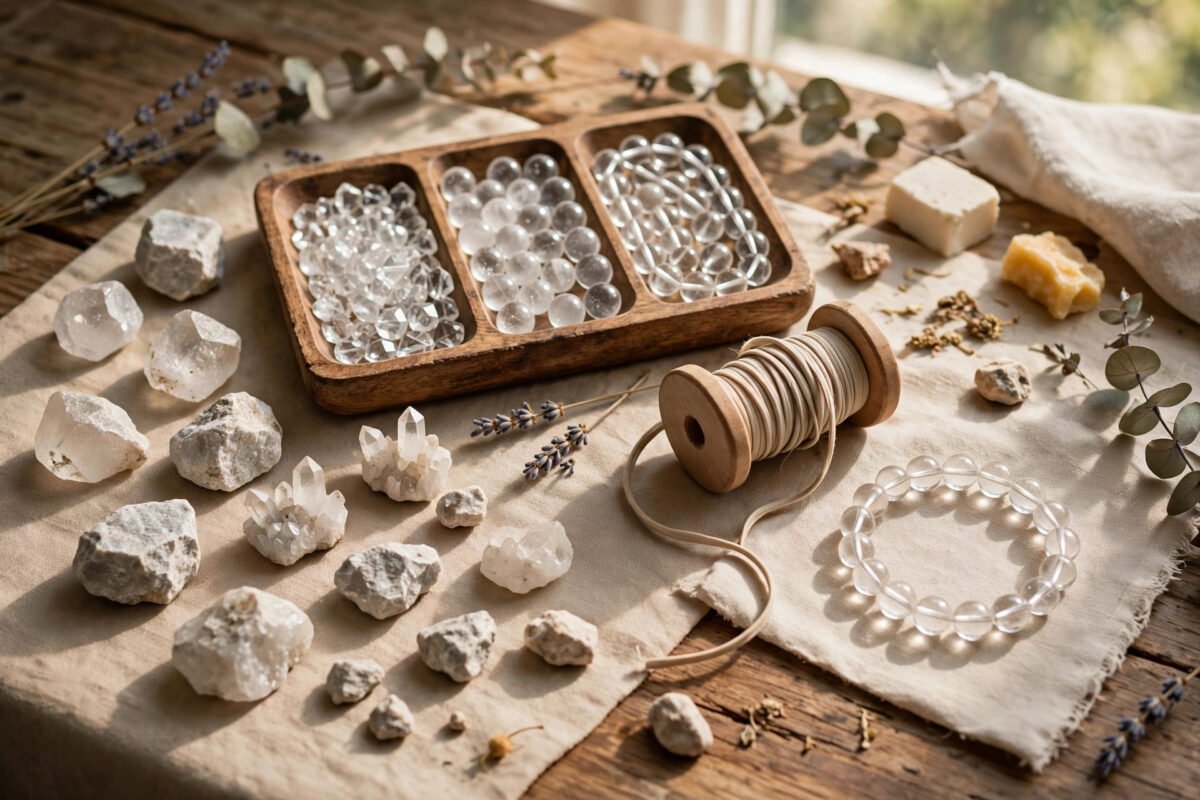
Verify any new stone with how to tell if a crystal is real — small tumbles are a common place for dyed or glass imitations — and check unfamiliar minerals at Mindat.org.
Carry, Rotation, and Care Tips
Carry one stone at a time in a dedicated pocket or a small pouch, never loose with keys. Build a simple rotation — a grounding stone for workdays, a comforting one for travel — and keep the rest in a dish by the door so swapping becomes a morning ritual. If you set intentions with your stones, the steps in how to activate a lucky bracelet work identically for a new pocket stone.
Cleaning is easy: these are handled constantly, so wash weekly with lukewarm water and mild soap if the stone allows — check the complete crystal bracelet care routine for water safety. Cleansing traditions like the salt method in how to cleanse crystals with salt water suit hard quartz stones but not softer ones. Empty your pockets before laundry day; a tumbled stone through a wash is usually fine, but the drum noise will announce your mistake to the whole house. Store the rotation together following how to store crystal bracelets, and top up your carry set anytime from the Cửa hàng AVENSU.
Các câu hỏi thường gặp
How do you use a worry stone correctly?
Hold it between thumb and forefinger, rest your thumb in the groove, and rub back and forth at whatever pace feels soothing. There is no wrong technique — the point is the repetitive, comforting motion whenever you feel tense or need to focus.
What size pocket stone is best?
For a true worry stone, 3–5 cm long fits most thumbs comfortably. Smaller tumbles (2–3 cm) disappear into a pocket but give the thumb less to work with; larger palm stones are better left on a desk or used in seated meditation.
Can I carry more than one stone at once?
You can, but stones knocking together in one pocket will scratch each other, especially if hardness differs. If you want a pair, use a divided pouch or carry one in each pocket. Most people find a single daily stone simpler and more intentional.
Is it okay to let someone else hold my pocket stone?
That is personal preference. Some carriers happily share; others keep their stone private and cleanse it after lending. A quick wash and a night resting on a cloth is the common reset ritual if you do share.



 English
 Vietnamese