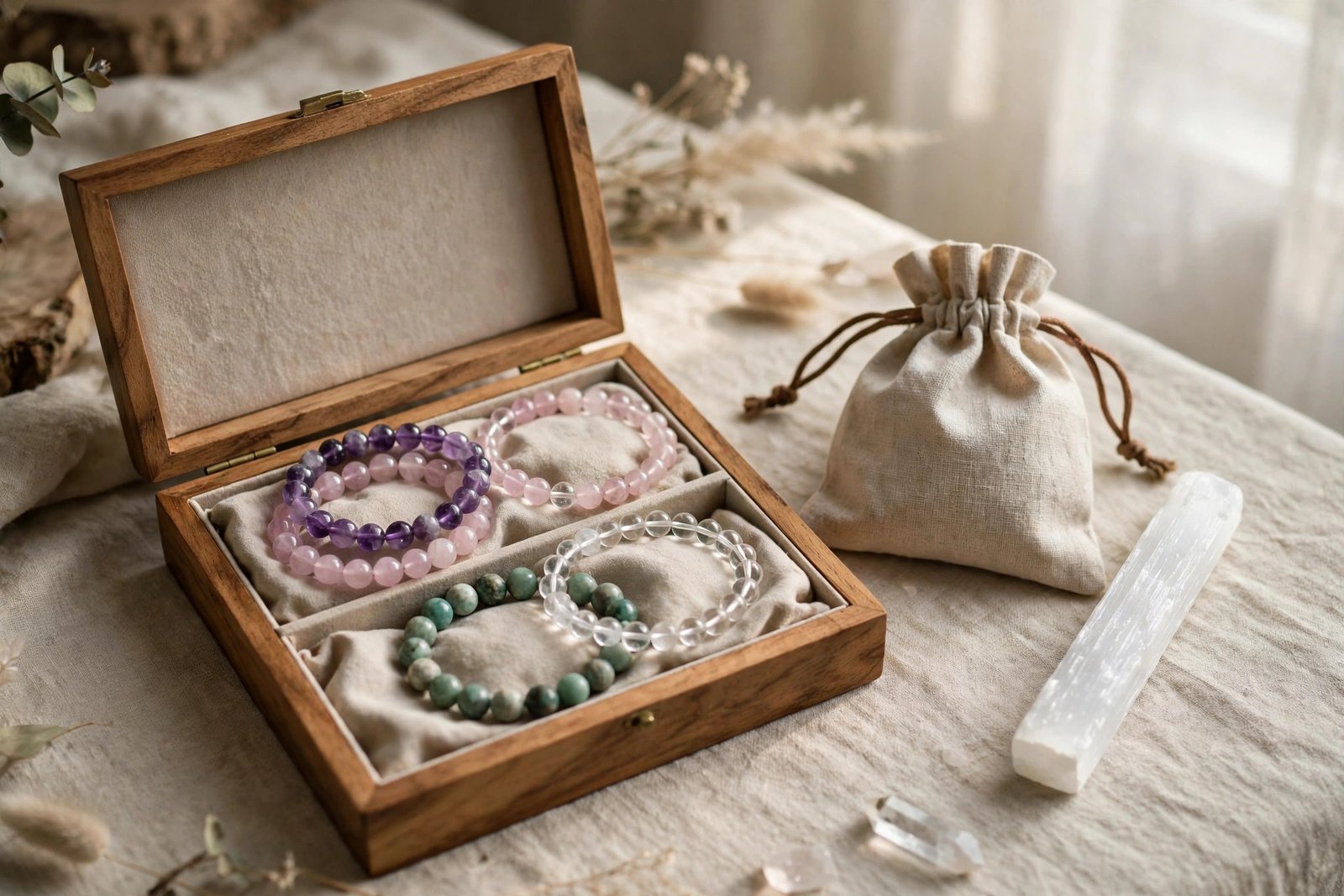
A charging box gives your bracelets one calm, dedicated place to rest, and a charging bag does the same job when you travel or have limited space. In crystal tradition, resting a bracelet in a prepared container — often lined, and sometimes paired with selenite or clear quartz — is believed to cleanse and recharge it between wears. Even if you care only about the practical side, a box prevents tangles, dust, sunlight, and the bead-on-bead scratches that happen in a crowded drawer.
The container itself matters less than how you use it. This guide covers setting up a box or bag properly, placing bracelets so they help rather than harm each other, and building a routine you will actually keep.
Setting Up Your Charging Box
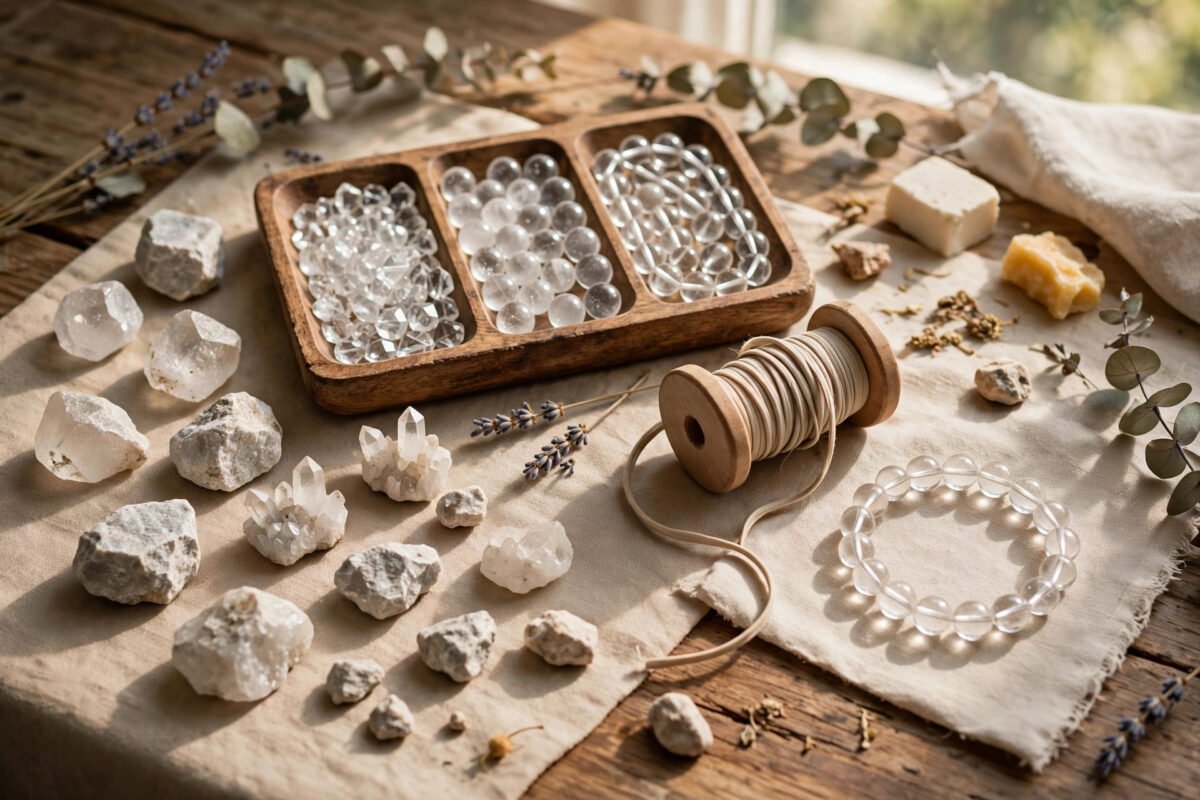
Almost any clean box works: wood, fabric-lined cardboard, or a shallow ceramic tray with a lid. Line the base with a soft natural cloth — cotton, linen, or silk — so beads rest on fabric rather than a hard surface. If you follow traditional practice, add a charging element: a selenite plate or small selenite pieces in one corner, or a clear quartz cluster, since clear quartz is traditionally associated with amplifying and clarifying other stones, as explained in our guide to clear quartz, the traditional “master healer”.
Place the box somewhere calm and out of direct sun, away from bathroom humidity and kitchen steam. A bedside table or a shelf in a wardrobe is ideal. If your box is meant specifically for overnight selenite work, our guide to charging crystals on a selenite plate goes deeper on that single method.
Keep the box for crystals only. Mixing in metal jewellery, coins, or keys invites scratches and defeats the purpose of a protected rest space, a point also covered in how to store crystal bracelets.
Placing Bracelets Without Damage
Lay each bracelet flat in its own loose circle; never pile several bracelets directly on top of each other. If your box must hold many pieces, separate layers with cloth, or give each bracelet its own small pouch inside the box. The hardness rule still applies inside a charging box: a quartz bracelet at Mohs 7 can scratch a moonstone or fluorite neighbour while they sit together overnight. Our guide to storing crystals by hardness explains how to group stones safely.
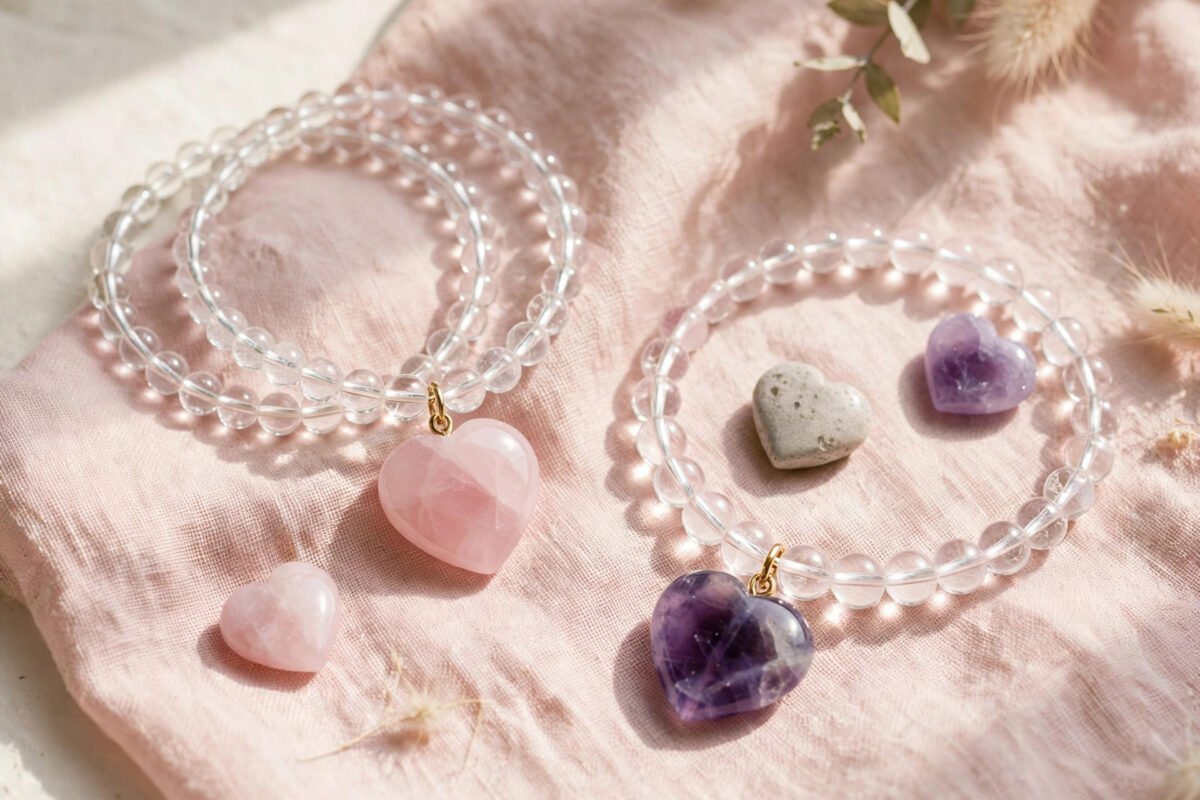
Spread bracelets so elastic is relaxed, not stretched around a post or divider. An AVENSU clear quartz bracelet can sit near most stones without traditional conflict, and clear quartz is often placed in the centre of a box for that reason. Avoid crowding: if beads are forced against the lid, choose a bigger box or store part of the collection elsewhere, perhaps following the ideas in organizing a crystal bracelet collection.
Once a week, lift the lining, shake out dust, and wipe the box dry. Dust plus humidity is the combination that dulls polish and weakens elastic over time.
Using a Charging Bag at Home and Away
A charging bag is simply a soft pouch — ideally natural fabric, large enough that the bracelet sits loosely — sometimes with a small selenite or quartz piece kept in a separate inner pocket. Use one bracelet per bag. Draw the bag closed loosely rather than cinching it tight against the beads.
Bags shine when travelling: they stop bracelets tangling in a wash bag and give each piece its own protected place in a suitcase. Our traveling with crystals guide adds packing tips, including keeping bags in hand luggage for pieces you value. At home, a set of labelled bags inside a drawer can replace a box entirely for a small collection.
Do not store a bracelet in a sealed plastic bag as a “charging bag.” Plastic traps moisture against elastic and metal accents. If a bag gets damp — in a steamy bathroom or a wet suitcase — empty it, dry both bag and bracelet fully, and only then put them back together. General mineral care references such as Mindat note that many minerals dislike prolonged humidity, and the Gemological Institute of America gives similar cautions for porous gems.
Building a Simple Charging Routine
Tradition is flexible here; consistency beats complexity. A workable pattern: when you take a bracelet off at night, wipe it with a dry cloth and place it in the box or its bag. In the morning, take out the bracelet you will wear and, if intention work is part of your practice, hold it briefly — see how to program a crystal bracelet with an intention.
Once a month, give the box a fuller reset: empty it, clean the lining, rest all bracelets on a windowsill for a moonlight session as described in our moonlight charging guide, and check each elastic for stretch. A full moon cleansing ritual pairs naturally with this monthly box reset.
An AVENSU moonstone bracelet kept in its own pouch inside a shared box is a good model: protected from harder quartz neighbours, easy to find, and rested every night. When you add a new piece from the Cửa hàng AVENSU, assign it a spot — or a bag — on its first day, after its first-wear cleanse.
Các câu hỏi thường gặp
Does a charging box need selenite or quartz inside?
No. The box works as a clean, protected resting place on its own. Selenite and clear quartz are traditional additions believed to cleanse and recharge other stones, but a lined box in a calm spot already covers the practical benefits.
How long should a bracelet stay in a charging box?
Overnight is the common rhythm — off your wrist at night, back on in the morning. For a deeper traditional reset, 24 hours is typical. There is no harm in longer rests, provided the box stays dry and the elastic is relaxed.
Can several bracelets share one charging bag?
It is better not to. Beads rub in a shared bag, and harder stones can scratch softer ones. Use one bracelet per bag; if bags must share a drawer or suitcase, that outer layer is where they can sit together.
What is the best material for a charging bag?
Natural, breathable fabric such as cotton, linen, or silk. It protects against scratches without trapping moisture. Avoid sealed plastic, which can hold humidity against elastic and metal accents.










 English
 Vietnamese