Carrying a small lucky object in a wallet is an old habit across many cultures — a coin from a grandparent, a folded note, a tiny charm. Crystals have joined that tradition, and certain stones are now widely associated with money luck. People who carry them usually describe them the same way: not as magic, but as a reminder every time the wallet opens.
That reminder matters, because wallets are opened at exactly the moments money decisions happen. A stone traditionally linked to abundance can prompt a useful pause: Do I want this? Does it fit my plan? Seen that way, a wallet crystal supports attention, and attention is where better financial habits begin.
This guide covers which stones people choose, how to place them comfortably, and how to pair the tradition with practical money care.
The Three Wallet Stones People Choose Most
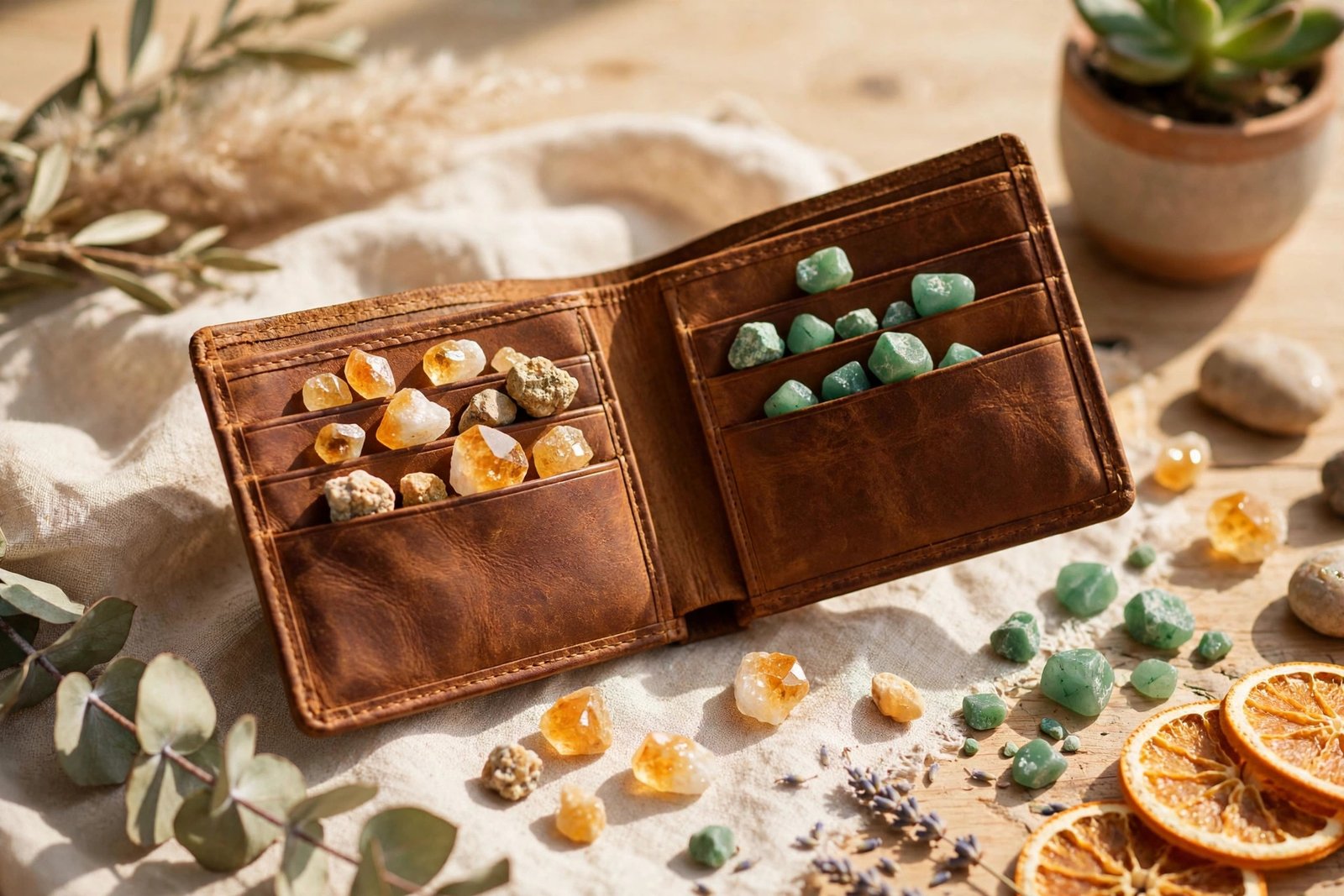
Citrine is the classic choice. Traditionally associated with abundance, confidence, and clear thinking about business, it is sometimes called the merchant’s stone in crystal folklore, kept near tills and cash boxes. A small, smooth citrine chip sits flat in a coin pocket and adds almost no bulk.
Green aventurine is traditionally associated with opportunity and good fortune, especially the kind that arrives through timing and openness to change. Read more in our guide to green aventurine meaning and luck. Many people pair aventurine with citrine — one for opportunity, one for confidence in acting on it.
Pyrite, with its metallic gold colour, is believed in tradition to symbolise wealth and determination. It is heavier and can be brittle, so a tiny tumbled piece in a pouch works better than a raw chunk. For the wider tradition behind these choices, see our article on lucky crystals for money and wealth và feng shui wealth bracelet guide.
How to Place a Crystal in Your Wallet
Choose one small, smooth stone — a large or sharp piece will damage cards, strain stitching, and annoy you daily, which defeats the purpose. Tumbled stones about the size of a coin work best. Place it in a coin compartment, a rarely used card slot, or a tiny fabric pouch so it does not scratch screens or chip against keys if your wallet moves around in a bag.
Before placing it, many people like to set an intention: hold the stone, name one financial goal in plain words — clearing a card, building an emergency fund, saving for a course — and then put it away. This mirrors the practice in Cách kích hoạt vòng tay may mắn của bạn, applied to a carried stone instead of a worn one.
If you prefer wearing your reminder, an AVENSU citrine bracelet or an AVENSU green aventurine bracelet keeps the same symbolism on your wrist, where you will see it more often than a stone hidden in a wallet. Some people do both: bracelet daily, wallet stone as a quiet backup. You can explore both at the Cửa hàng AVENSU.
Pairing the Tradition with Real Money Habits
Honesty matters here: no crystal changes interest rates, wages, or luck at a checkout. What tradition offers is a prompt, and prompts are most useful when attached to real systems. Consider linking your wallet stone to one concrete habit, such as a weekly ten-minute money check, automatic savings on payday, or a rule to wait overnight before non-essential purchases over a set amount.
Wallet condition itself features in feng shui tradition, which holds that a tidy wallet symbolises respect for money. Whether or not you follow feng shui, clearing old receipts, expired cards, and clutter makes spending easier to track. Wikipedia’s overview of feng shui explains the tradition’s history, and its page on Chinese numismatics covers the long history of lucky coins carried for prosperity — the direct ancestor of today’s wallet charms, also explored in our article on Chinese lucky coins in feng shui.
Replace or rest your stone when a goal is reached. Marking a finished goal — a debt cleared, a fund built — by gifting the stone or placing it on a desk turns it into a record of something you actually did.
Care, Comfort, and Common Sense
Check your stone monthly for chips, especially pyrite, and remove any piece that is crumbling. Wipe it with a soft, dry cloth; avoid soaking a wallet or using chemicals near leather. If you travel, remember that a stone in a wallet goes through airport scanners without issue, but keep your wallet with you as normal.
Finally, keep the tradition in proportion. If carrying a stone makes you more mindful and a little more hopeful about money, it is doing its traditional job. Keep the serious work — budgeting, earning, saving, seeking advice for debt — in the real-world systems where it belongs, and let the crystal be the small, pleasant reminder that you are paying attention.
Các câu hỏi thường gặp
Which crystal is traditionally best to carry in a wallet?
Citrine is the most traditional choice, long associated in folklore with merchants, abundance, and business confidence. Green aventurine is a close second for opportunity, and a tiny tumbled pyrite is often chosen as a symbol of determination and prosperity.
Where exactly should I put the crystal in my wallet?
In a coin compartment, an unused card slot, or a small pouch inside the wallet. Choose a small, smooth, tumbled stone so it does not bulk out the wallet, scratch cards, or damage stitching.
How often should I replace or cleanse my wallet crystal?
There is no fixed rule. Many people wipe the stone clean and restate their intention monthly, and replace or retire the stone when a financial goal is reached or if the stone chips. Treat cleansing as a symbolic reset, not a requirement.
Can a wallet crystal guarantee more money?
No. Crystals are carried as traditional symbols and personal reminders; they do not guarantee income or outcomes. Their practical value is prompting mindful decisions at the moment you open your wallet, alongside real habits like saving and budgeting.





 English
 Vietnamese