Salt is one of humanity’s oldest symbols of purification. It preserved food, sealed covenants, marked thresholds, and appeared in cleansing rituals from Japan to Europe to the Middle East long before modern crystal traditions adopted it. Combined with a crystal bracelet, salt forms the basis of a simple reset ritual many people use when a run of bad luck feels stuck to them and they want a clean, deliberate fresh start.
Like all practices in this series, this is a symbolic ritual from tradition, not a guaranteed method of changing fortune. Its strength is psychological and practical: it gives you a sequence to perform, a space that ends up visibly cleaner, and a moment where you formally decide the old run is over. Done calmly and completely, that is no small thing.
You will need coarse sea salt or table salt, a small bowl, water, your crystal bracelet, and about twenty minutes.
Why Salt and Crystals Are Paired in Tradition
In folklore, salt is believed to absorb and neutralise unwanted energy, which is why it appears in threshold customs — a line of salt at a doorway, a pinch thrown for luck, salt offered at Japanese entrances and sumo rings to purify space. Wikipedia’s article on salt in culture and ritual traces many of these uses across history. Crystals enter the pairing as the object that stays with you afterwards: salt does the clearing and is thrown away, while the stone carries the fresh intention forward.
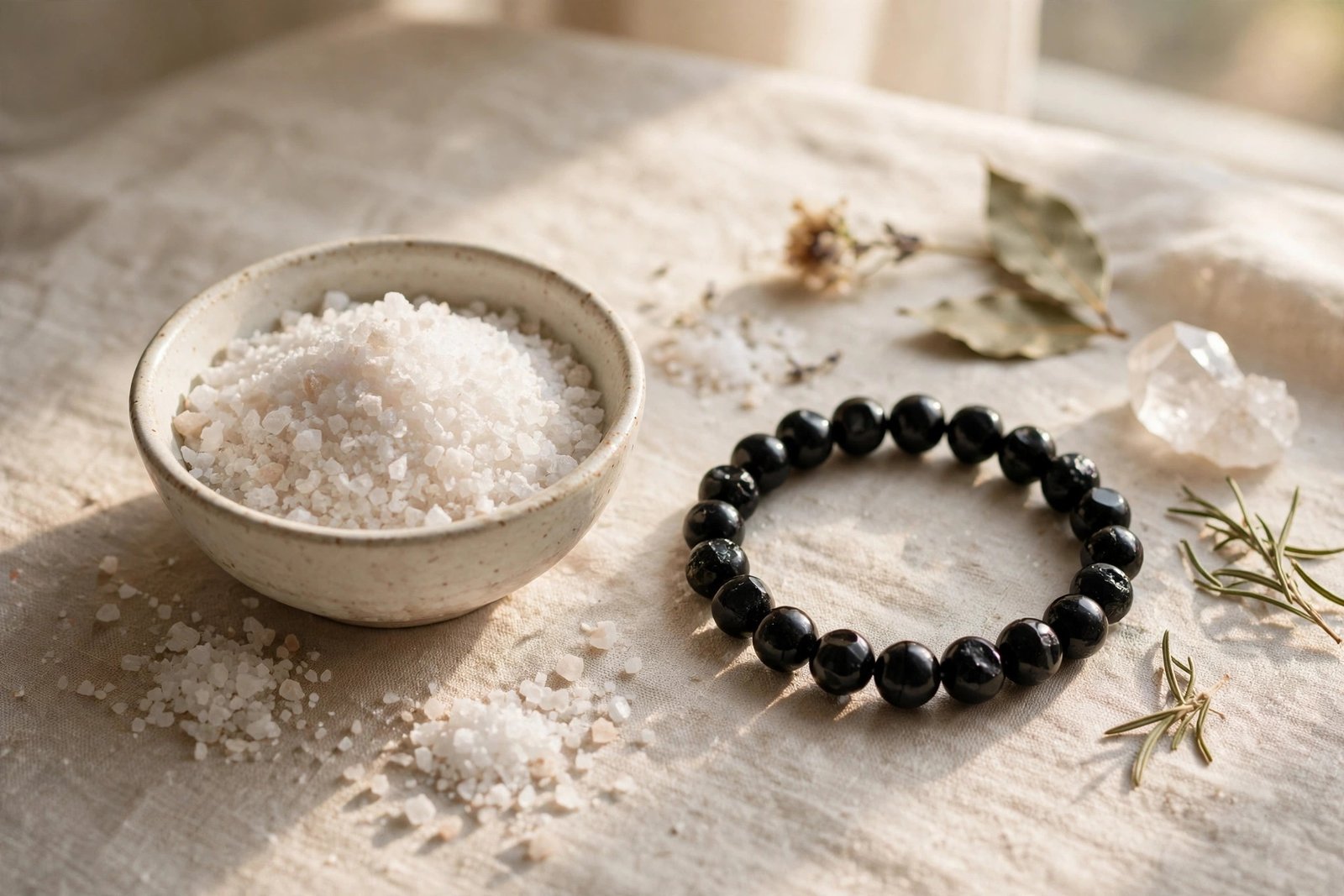
Black obsidian is the crystal most traditionally paired with salt for this purpose, associated with protection and clearing negativity — see obsidian meaning and protection properties and black obsidian feng shui protection. Clear quartz is the gentler alternative, linked to clarity. An AVENSU black obsidian bracelet is a common choice because it is worn daily afterwards, so the ritual’s reminder does not sit forgotten in a drawer.
The Ritual, Step by Step
First, prepare the space. Choose where the ritual happens — a kitchen table or entryway works well. Sprinkle a small amount of salt into a bowl of clean water, and use a cloth dampened in that salt water to wipe the surface, your door handle, and the outside of your wallet or bag. This is cleaning with intention: slow, thorough, and finished properly by drying everything.
Second, rest the bracelet. Place your bracelet on a dry cloth beside a small dish of dry salt — not buried in it, since salt can scratch soft stones, dull coatings, and stress elastic over time. Leave it there while you complete the next step. Our guide to charging crystals in sunlight versus moonlight covers other gentle cleansing options if salt does not suit your bracelet’s materials.
Third, wash your hands in the remaining salt water, slowly, while naming — aloud if you can — the run of bad luck you are closing. Be specific: the missed chances, the mishaps, the heavy weeks. Then rinse with clean water and dry your hands completely. Specificity is what separates a ritual from a vague wish; you are filing real events as finished.
Disposing of the Salt and Setting the Fresh Intention
Tradition is clear on this point: what was used for clearing should leave the house. Pour the salt water away down the sink with running water, or tip it outside away from the door, and put the dry dish salt in the household bin. Do not reuse ritual salt in cooking, and avoid pouring large amounts onto garden soil, where it can harm plants — the sink is the sensible, modern disposal route.
Now pick up the bracelet and set the replacement intention. Turning a page requires writing the next line, not only closing the book. Choose one forward intention in plain words — steadier work, openness to help, quicker follow-ups — using the method in how to activate your lucky bracelet. Put the bracelet on your wrist as you finish the sentence.
Many people pair this ritual with our fuller ritual for turning bad luck around, which adds a written review and a same-day practical step, or follow it with a morning luck ritual with crystals for the next seven mornings. An AVENSU clear quartz bracelet, chosen for the fresh start rather than the clearing, is another popular way to mark the change — browse both options at the AVENSU shop.
Safety, Materials, and Sensible Limits
Keep salt away from pearls, opals, soft or porous stones, and metal charms you want to keep bright; for those bracelets, rest the piece near the salt dish instead of on it, and skip the salt-water wipe for the jewellery itself. Never ingest salt water as part of a ritual, keep it away from eyes and broken skin, and supervise children and pets around any ritual materials.
Repeat the ritual monthly, seasonally, or after a genuinely difficult stretch — not daily. Its power in tradition comes from being a marked occasion. And keep perspective: if the “bad luck” involves health, safety, debt, or legal trouble, the ritual can steady your mood for tackling it, but the tackling itself belongs to doctors, advisers, and trusted people, not to salt.
Used that way — honest, occasional, and paired with action — this small ceremony has earned its long history. It cleans a space, closes a chapter in words, and sends you back into the week wearing a reminder that you chose the turning point yourself.
Frequently Asked Questions
Does a salt ritual really remove bad luck?
It is a traditional symbolic practice, not a proven or guaranteed method. People value it for marking a clear turning point, cleansing their space in a deliberate way, and resetting their intentions — changes in focus and follow-through that can genuinely alter how a following week unfolds.
Can salt damage my crystal bracelet?
Yes, if it sits in direct contact for long. Salt can scratch softer stones, dull coatings, and affect elastic and metal parts. Rest your bracelet on a cloth beside a dish of salt instead of burying it, and wipe stones with a soft, dry cloth afterwards.
How should I dispose of the salt after the ritual?
Pour salt water down the sink with running water and put dry ritual salt in the household bin. Do not reuse it in food, and avoid tipping concentrated salt onto soil or plants, where it can cause damage.
Which crystal works best with a salt cleansing ritual?
Black obsidian is the traditional favourite for clearing and protection themes, with clear quartz as a gentler, clarity-focused alternative. Choose a bracelet you will actually wear afterwards, since the daily reminder is the lasting part of the ritual.







 English
 Vietnamese