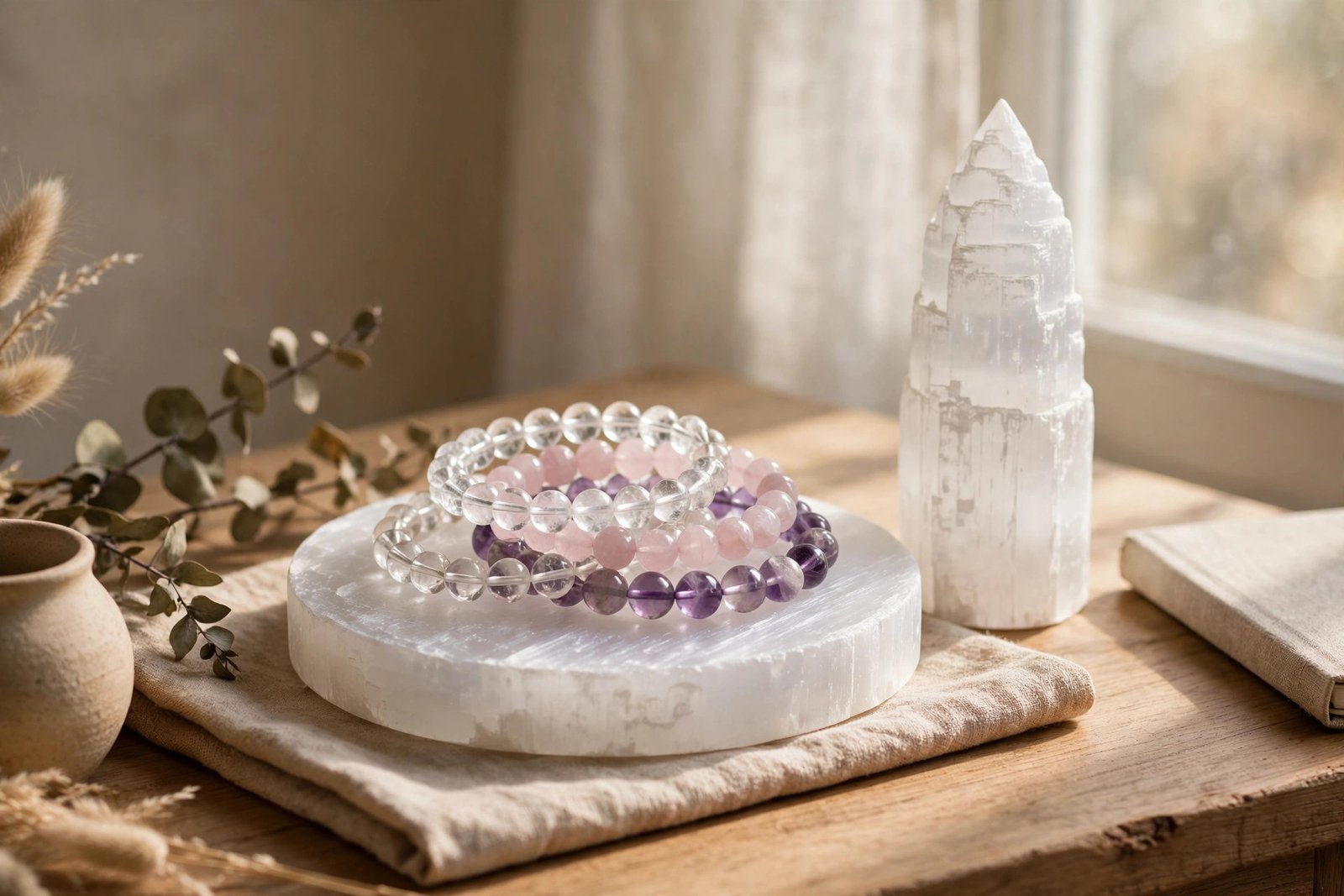
A selenite plate is the quiet workhorse of crystal care. You set your bracelets down on it at night, pick them up in the morning, and the job is done: no water, no sun timing, no smoke, and no weather to watch. In crystal tradition, selenite is believed to cleanse and recharge other stones on contact, which is why flat plates and bowls have become standard kit for bracelet collectors.
This guide explains how to choose a genuine plate, how long to leave bracelets on it, how to arrange mixed pieces safely, and how to look after the plate itself, because selenite is one of the softest stones in your collection.
What a Selenite Plate Is (and What It Usually Is)
True selenite is a transparent, sheet-like variety of gypsum. Most plates, bowls, and towers sold as selenite are actually satin spar, a fibrous, milky-white form of the same mineral. Satin spar is what nearly every crystal owner uses for charging, and in tradition it carries the same cleansing associations. Mineral references such as Mindat’s gypsum entry explain the relationship between the two forms.
Gypsum sits at just 2 on the Mohs hardness scale, softer than almost every bracelet stone you own. That softness is the one practical catch: a plate will scratch, pick up marks, and can crack if dropped. Treat it as a delicate tray, not a stone slab, and it will serve for years.
Size matters more than thickness. Choose a plate large enough that your regular bracelets sit flat in a single layer without hanging over the edge. A round or rectangular plate of about 10 to 15 centimetres suits most collections, and a shallow bowl shape helps keep round beads from rolling away.
Step-by-Step: Charging Bracelets on the Plate
First, wipe the plate with a dry or barely damp soft cloth to remove dust. Never soak a selenite plate, never use salt water on it, and never leave it in a humid bathroom. Gypsum and water do not mix; prolonged moisture clouds and weakens the surface.
Second, give each bracelet a quick dry wipe, then lay it flat on the plate in a single layer. An AVENSU clear quartz bracelet and a couple of everyday pieces can share a large plate, but avoid piling bracelets on top of each other, because contact points are where scratches and cord pressure build up. Keep metal charms from digging into the plate’s soft surface.
Third, leave the bracelets for at least four hours, or ideally overnight. In tradition, contact time is what allows the plate to cleanse and recharge the stones resting on it. Morning pickup is the simplest routine: plate by the bed or dressing table, bracelets on at night, bracelets off and on your wrist in the morning. For a fuller evening routine, combine the plate with the steps in our full moon cleansing ritual once a month.
Browse plates and everyday bracelets together in the AVENSU shop, and see the clear quartz bracelet for a piece that pairs with any charging method.
Which Bracelets Benefit Most from a Plate
Colour-sensitive bracelets benefit first. Rose quartz, amethyst, and fluorite that would fade in sun can rest on selenite indefinitely with no light risk at all. Soft or water-sensitive stones benefit too, because the method is completely dry. Mixed bracelets with metal spacers, plated charms, or Pixiu accents avoid both tarnish and cord soaking.
A plate also suits bracelets you wear in rotation. Instead of a storage box where pieces sit untouched, the plate becomes both home and charger, so whichever bracelet you pick up in the morning has, in tradition, been resting in a cleansing field all night. Our guide to how to store crystal bracelets shows how a plate fits into a larger storage system for bigger collections.
If you also use moonlight, the two methods combine well: set the plate itself on the windowsill. Our moonlight charging guide explains placement, while how to cleanse crystals with salt water covers the water method that selenite itself must never receive. A dedicated crystal charging box is another option for travel or shared spaces.
Caring for the Plate Itself
Keep the plate dry, dusted, and out of direct long-term sunlight. Wipe it with a dry cloth weekly, lift it with two hands, and store harder stones off it when they are not charging, to reduce scratching. Small surface marks are cosmetic and do not, in tradition, reduce its use, but deep cracks mean it is time to retire the plate to display only.
Does the plate itself need cleansing? Traditions differ. Many owners leave their plate in moonlight monthly, or pass it through incense smoke, following our smoke cleansing guide. Others consider selenite self-cleansing. Either way, keep the ritual dry and brief, and never wash the plate under a tap.
With that simple care, one plate covers daily charging for an entire small collection, which is why it is usually the first upgrade we recommend after a first bracelet.
Frequently Asked Questions
How long should bracelets stay on a selenite plate?
Leave them for at least four hours, and overnight is ideal. The contact method is gentle, so there is no harm in leaving bracelets on the plate as their regular storage spot between wears.
Can I charge several bracelets on one plate?
Yes, if they fit in a single flat layer without stacking or hanging over the edge. For larger collections, use two plates or rotate pieces nightly, and keep very hard beads from resting heavily on softer stones.
Does a selenite plate need to be cleansed itself?
Opinions in tradition vary. Many owners refresh the plate monthly with moonlight or a brief smoke pass, while others treat selenite as self-cleansing. The one firm rule is to keep it dry: never soak or rinse the plate.
What is the difference between selenite and satin spar plates?
Both are forms of gypsum. True selenite is transparent and sheet-like, while most charging plates are milky satin spar. For everyday bracelet charging they are used interchangeably, and both need the same gentle, dry care.









 English
 Vietnamese