Moonlight charging is the safest all-round method for crystal bracelets. It never fades colour, never overheats cord, and suits soft, porous, and mixed-stone pieces that cannot go in water or sun. In crystal tradition, moonlight is believed to restore a calm, receptive energy, and a full overnight session asks nothing of you except a windowsill and a few minutes of preparation.
You do not need to wait for a full moon, either. Any clear night works for a routine charge, with the full moon reserved for a deeper monthly reset. This guide walks through the preparation, placement, timing, and morning-after steps that turn moonlight into a reliable habit.
Why Moonlight Suits Almost Every Bracelet
Sunlight fades amethyst and rose quartz, salt water threatens selenite and metal, and smoke bothers sensitive households. Moonlight has none of those drawbacks. Its light is reflected sunlight at a fraction of the intensity, so colour-sensitive stones keep their depth while still receiving a traditional charge. The comparison of sunlight vs moonlight charging explains this difference in detail.
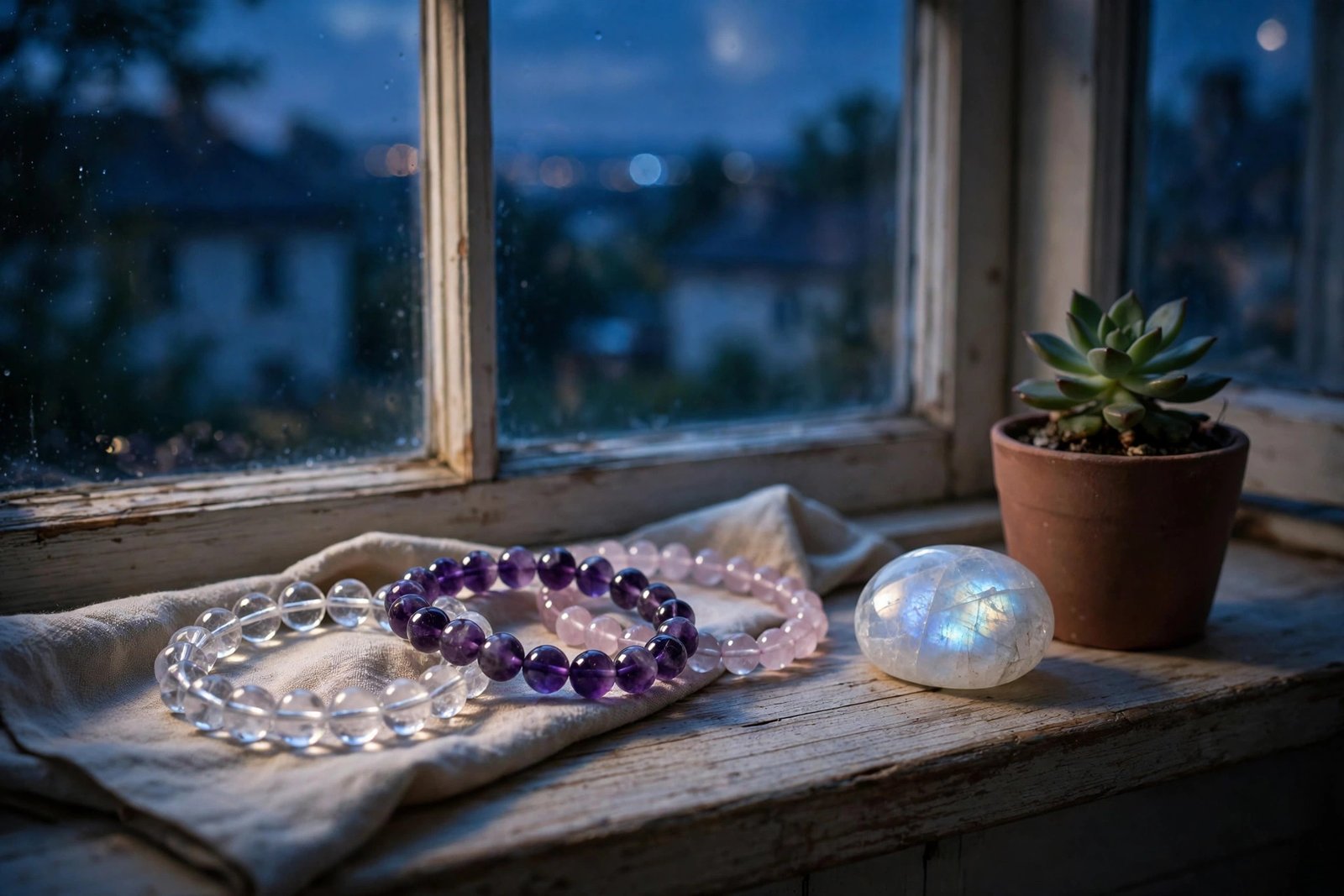
Temperature is the second advantage. Night air stays cool, so there is no thermal stress on included stones and no ultraviolet damage to elastic cord. An AVENSU rose quartz bracelet and an AVENSU moonstone bracelet can share the same windowsill tray with obsidian, amethyst, or clear quartz, because moonlight treats them all gently. That universality makes moonlight the default method in most simple routines, including the one in our first crystal bracelet guide.
Moon phases add tradition, not obligation. Many collectors follow the lunar cycle described in general references such as Wikipedia’s lunar phase overview, charging monthly at the full moon and cleansing more lightly in between.
Step-by-Step: Charging Bracelets in Moonlight
First, cleanse before you charge. Wipe each bracelet with a soft, dry cloth to remove skin oils and dust, or use a quick smoke or sound cleanse. Our guides to cleansing with smoke and cleansing with sound both take under five minutes.
Second, arrange the bracelets on a clean cloth, tray, or selenite plate in a single layer. Do not stack pieces, because hard beads scratch softer ones overnight if the tray is nudged. Keep metal charms from resting directly on soft stones where possible.
Third, place the tray where moonlight actually falls: a windowsill that catches the moon, a balcony, or a table near an unobstructed window. Direct moonlight is traditional, but bright ambient night light through glass still counts for a routine charge, and glass keeps dew and dust off the beads.
Fourth, set your intention as you place each piece. In tradition, a charged bracelet is one that has been given a job, whether that is calm focus at work or, in feng shui tradition, attracting opportunity. Leave the tray from dusk until morning, ideally six to eight hours, then collect the bracelets before strong sun reaches the sill. The full moon bracelet cleansing ritual adds candles, journalling, and intention-setting for readers who enjoy a fuller ceremony.
Full Moon vs Any Night: What Actually Changes
A full moon gives the brightest, longest moonlight and carries the strongest traditional associations. Collectors often save it for a monthly deep charge, for new bracelets, and for pieces that have had a heavy few weeks. Our full moon luck-drawing ritual shows how some wearers combine charging with goal-setting at this point in the cycle.
Ordinary nights are for maintenance. A bracelet worn daily benefits more from a regular overnight charge every week or two than from one perfect full moon session every few months. Thin cloud still lets through diffuse light, so a slightly cloudy night is not wasted. Only heavy rain, which keeps pieces outdoors wet, is a reason to postpone or move the tray inside behind glass.
New and crescent moons have their own traditional associations with beginnings and planning. If those meanings appeal to you, use them, but do not skip a needed charge simply because the phase is not full. Consistency serves a bracelet better than waiting for an ideal sky.
Morning After: Wearing, Storing, and Repeating
Collect bracelets early, before direct sunlight warms the sill, especially for amethyst, rose quartz, and fluorite. Give each piece a quick look: check cord elasticity, roll beads to spot new chips, and confirm knots are covered and secure. This thirty-second inspection, repeated monthly, catches most problems while they are still cheap to fix. Our elastic bracelet care guide shows what healthy and tired cord look like.
Wear the bracelet you need that day and store the rest separately in pouches or compartments, following how to store crystal bracelets. Pieces from the AVENSU shop, such as the moonstone bracelet, are made for this wear, charge, and store rhythm.
Keep a tiny note of your last full charge date on your phone. A simple monthly rhythm, cleanse, moonlight charge, inspect, store, is the whole system. Everything else is decoration on a routine that already works.
Frequently Asked Questions
Do I have to wait for a full moon to charge bracelets?
No. Any night provides moonlight suitable for a routine charge. The full moon is traditionally considered strongest and is a nice anchor for a monthly deep charge, but regular overnight charging on ordinary nights maintains a bracelet perfectly well.
Can moonlight reach bracelets through a window?
Yes. Moonlight through window glass is widely used for charging, and the glass protects beads from dew, dust, and rain. Place the tray on the sill where the moon’s light actually falls for the strongest traditional effect.
How long should bracelets stay in moonlight?
Leave them overnight, roughly from dusk to dawn or at least six hours, for a full charge. A shorter window of a few hours still works as a top-up between full sessions, especially after a demanding day.
Should I cleanse before or after moonlight charging?
Before. Cleansing clears, then moonlight recharges. A dry cloth wipe, smoke, or sound cleanse takes only a few minutes and prepares the bracelet to receive the charge with, in tradition, a clearer intention.








 English
 Vietnamese