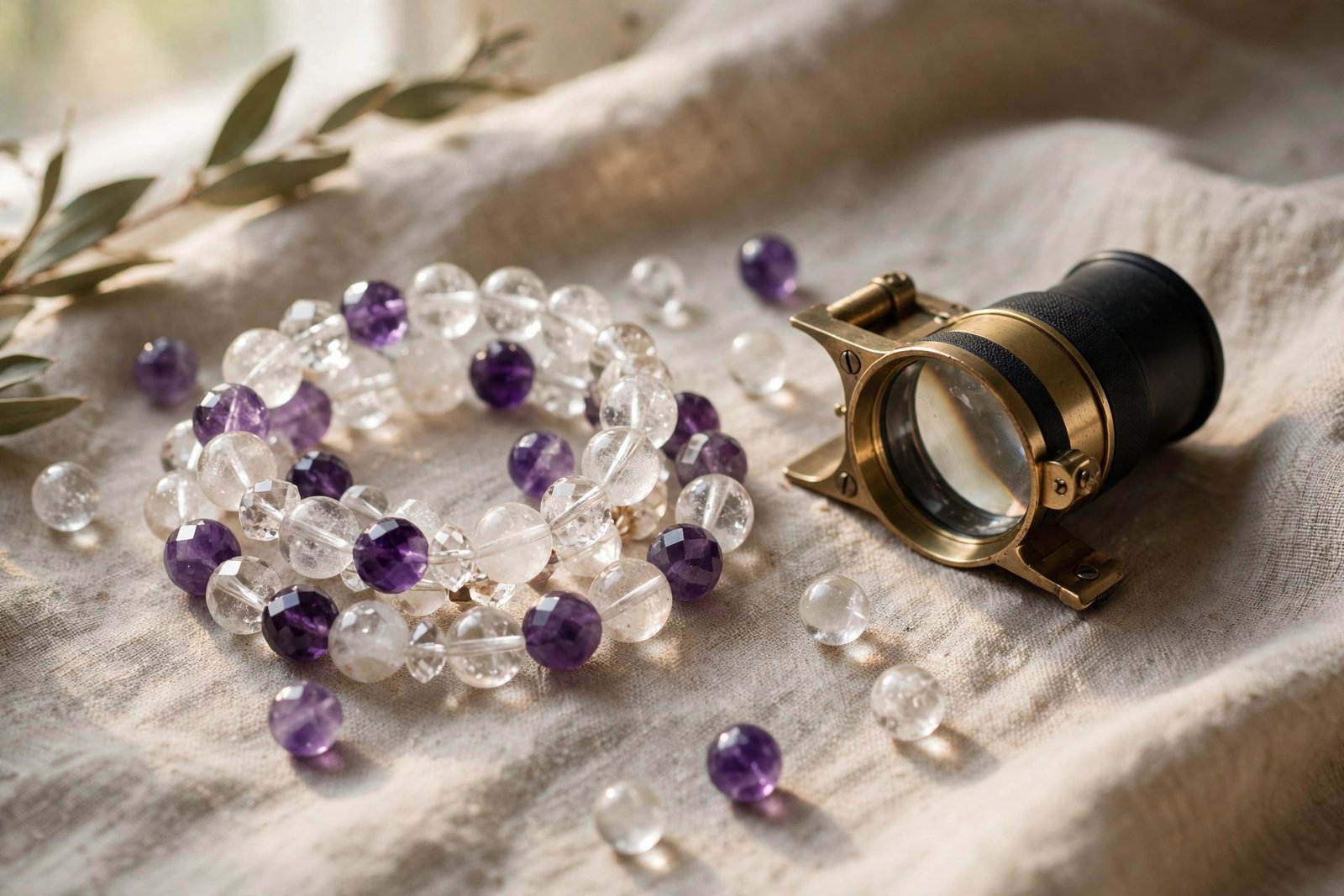
A small jeweller’s loupe is one of the most useful tools a bracelet owner can own. For a few dollars, this pocket magnifier reveals details the naked eye misses — tiny inclusions, surface texture, and the tell-tale bubbles that often give away glass imitations.
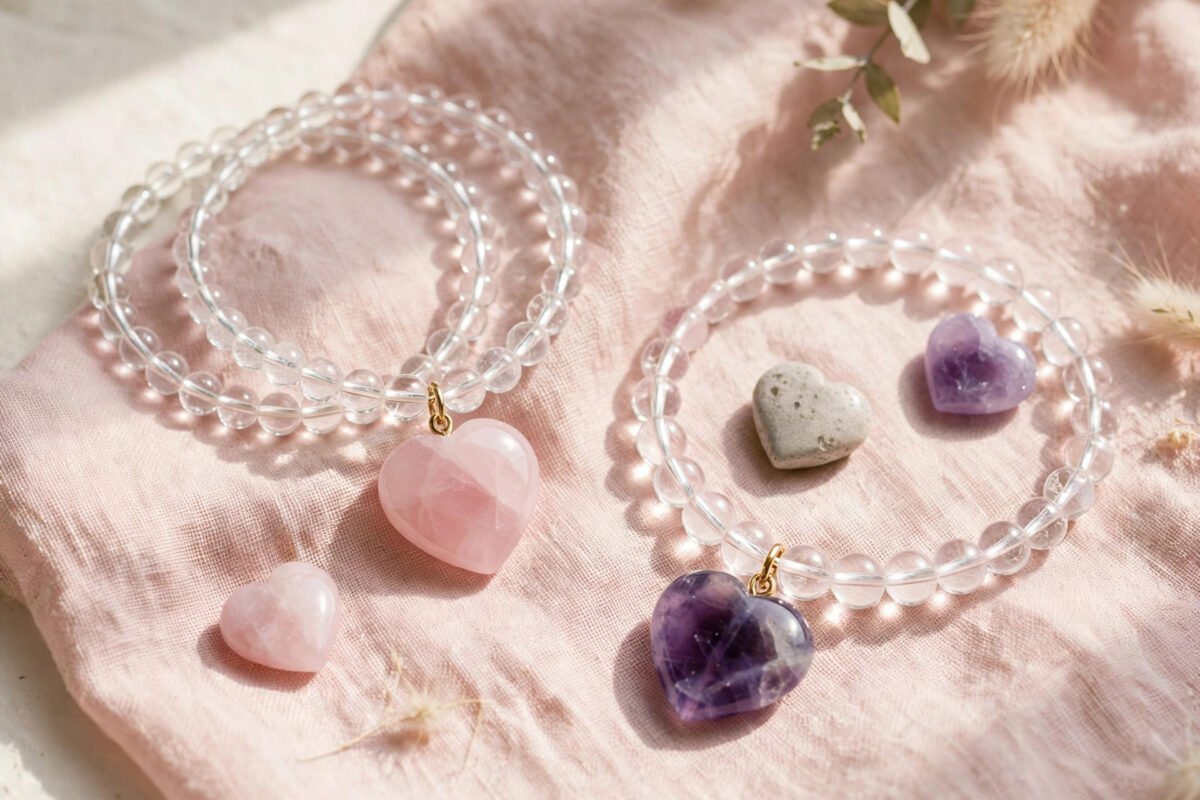
You do not need gemmology training to use one well. With good light, a clean bead, and a few minutes of practice, you can examine an AVENSU clear quartz bracelet or any other piece with far more confidence, and decide what deserves a professional opinion.
What a Loupe Shows You
A standard 10x loupe is the jewellery trade standard because it magnifies enough to show internal features without distorting them too much. Hold it close to your eye, then bring the bead toward it until the image sharpens — usually about an inch from the lens.
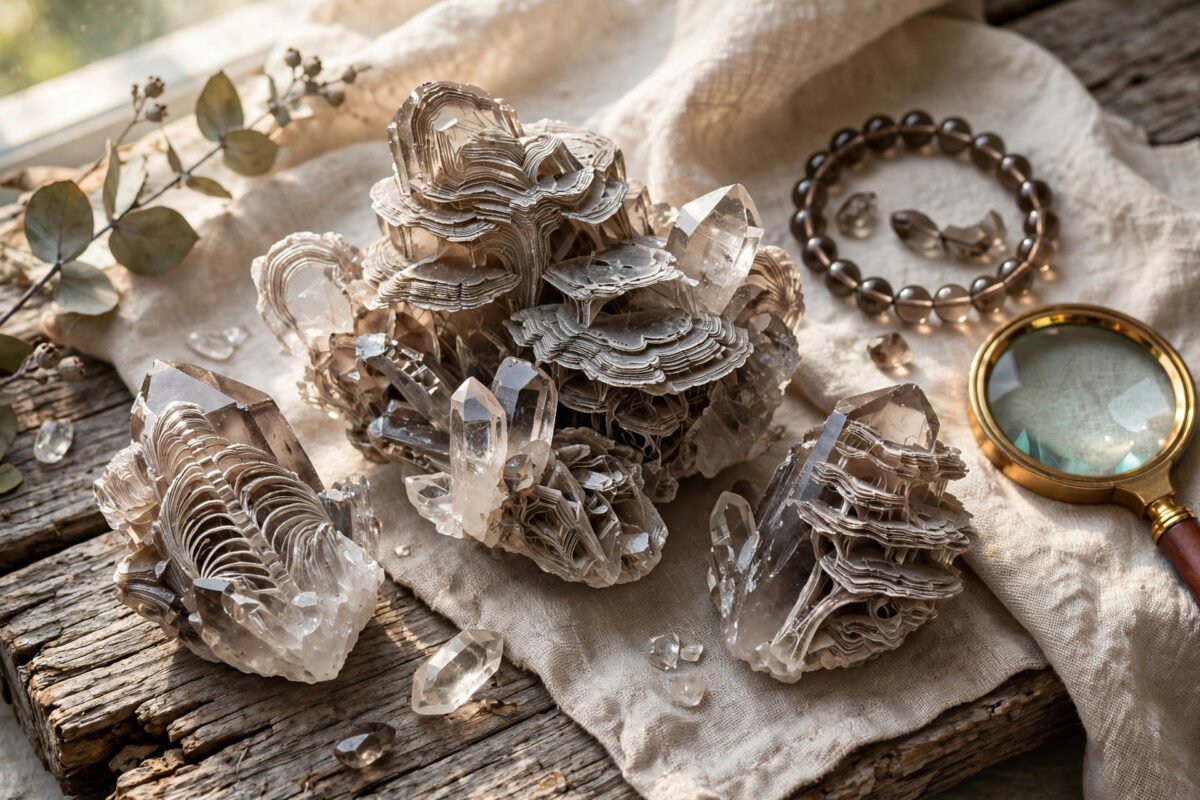
Inside natural crystals you may see fine needle-like rutile, cloudy veils, tiny mineral crystals, or irregular fractures that catch the light at different angles. These features formed over long geological timescales. The Gemological Institute of America explains how inclusions help gemmologists separate natural stones from synthetics on its inclusion guide at gia.edu.
Glass, by contrast, often looks too perfect or shows round air bubbles, swirl marks, and mould seams. Plastic is lighter, warmer to the touch, and may show scratches quickly. None of these clues alone proves authenticity, but together they build a useful picture. For a fuller checklist, compare this method with our guide on how to tell if a crystal is real.
Step by Step: Examining a Bead
Start by cleaning the bead with a soft, dry microfiber cloth so dust does not masquerade as a flaw. Work near a window or under a bright white lamp, and turn the bead slowly rather than moving the loupe around.
First, scan the surface. Look for crisp, natural pitting versus the orange-peel texture common in moulded glass. Check the drill hole: natural stone holes often show slight chipping or matte edges, while mass-produced imitations can look melted or perfectly smooth.
Next, look through the bead toward the light. Search for bubbles — perfectly round, evenly scattered bubbles are a classic glass sign. Then note any colour zoning. In natural amethyst, colour is often uneven, deeper at the tips. Learn more in our amethyst meaning and properties guide. Dyed stones may concentrate colour in cracks, visible under magnification as dark veins. If you are choosing a first piece, our first crystal bracelet guide explains what quality to expect at different prices.
Stone-Specific Clues to Look For
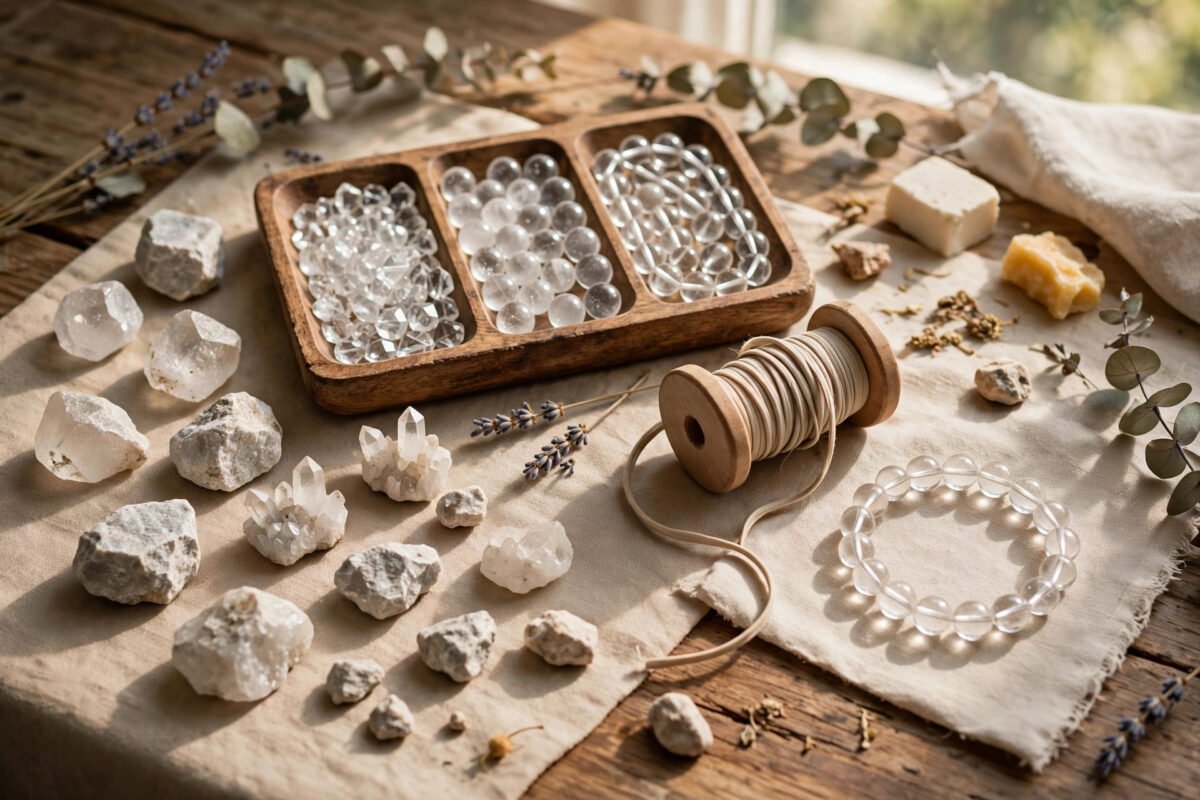
Quartz family stones — clear quartz, rose quartz, amethyst, and citrine — should feel cool and show subtle internal veils, not uniform clarity in every bead at a low price. A flawless-looking strand of large beads sold very cheaply deserves a second look.
Jade presents differently. Natural jade has a fibrous, interlocking structure that looks almost sugary or mottled under a loupe, rather than glassy and transparent. An AVENSU white jade bracelet, for example, should show that soft, granular texture — see our background on white jade in Chinese culture and the white jade bracelet product page.
Green aventurine should sparkle from tiny mica platelets, an effect called aventurescence, not from surface glitter. You can compare notes with our green aventurine meaning and luck guide. Stones are also identified by hardness and structure in databases such as Mindat.org, which is helpful when you want to check what a mineral should look like.
What a Loupe Cannot Tell You
A loupe is a screening tool, not a certificate. It cannot reliably separate some lab-created crystals from natural ones, because synthetic quartz can share the same chemistry and even grow similar features. It also cannot confirm treatments such as heating, coating, or dyeing in every case, or give you a valuation.
Price and provenance still matter. Buy from sellers who describe treatments honestly, show close photos, and accept returns. Browse a transparent retailer such as the AVENSU shop where materials are named clearly, and keep receipts for higher-value pieces. Traditionally, clear quartz is associated with clarity and focus, and rose quartz is believed to symbolise love — but those cultural associations, however meaningful, are separate from the physical question of what a stone actually is.
If a piece was expensive, is an heirloom, or you plan to resell it, pay for a professional gemmological report. A loupe check that raises doubts is a success: it told you when to ask an expert.
Building a Simple At-Home Checking Kit
Alongside a 10x loupe, keep a microfiber cloth, a small LED torch, and a notebook. Photograph beads through the loupe with your phone for a record, and note weight and feel — natural stone generally feels cooler and heavier than plastic of the same size.
Check new purchases within the return window, and re-check older pieces when you restring them. That habit pairs well with a regular care routine; see our elastic crystal bracelet care guide for handling tips that avoid adding scratches while you inspect. With practice, a two-minute loupe check becomes as automatic as fastening the bracelet itself.
Frequently Asked Questions
What magnification loupe is best for crystals?
A 10x triplet loupe is the best starting point. It is the standard used for grading, corrects distortion at the edges, and is strong enough to show bubbles and inclusions without making focus too difficult for beginners.
Are bubbles always a sign of a fake crystal?
Round, evenly distributed bubbles inside a bead strongly suggest glass, because natural quartz rarely forms bubbles that way. Tiny irregular inclusions, by contrast, are common in natural stones. Treat bubbles as a warning sign, then check other features too.
Can a loupe tell if a crystal has been dyed?
Often, yes. Under magnification, dye tends to pool in surface cracks and around drill holes, creating unnaturally dark lines. Colour that looks even on the surface but concentrated in fractures is a common sign of dyeing.
Should I still buy a bracelet if I cannot verify it?
If the price reflects decorative fashion jewellery and you love how it looks, that can be a fair purchase — as long as the seller did not claim it was natural at a natural-stone price. When in doubt, choose a clearly described piece from a reputable shop.



 English
 Vietnamese