Every long-loved bracelet reaches the same point: the beads have dulled, the elastic sags, a metal spacer has tarnished, and the piece lives at the back of a drawer instead of on your wrist. It does not need replacing — it needs a refresh.
Refreshing is part repair, part deep clean, and part fresh start. In an afternoon you can restring an AVENSU green aventurine bracelet, polish its accents, and return it to daily wear feeling like the day it arrived. Here is the full sequence, in the order that avoids doing any step twice.
Step One: Inspect and Deep-Clean the Beads
Lay the bracelet on a light-coloured towel and examine it bead by bead. Note chips, cracks, and any bead that has gone cloudy. Our guide on how to clean cloudy crystals explains which cloudiness is surface grime — removable — and which is internal and permanent.
Photograph the bracelet before you cut anything; that photo is your map for bead order, pattern, and spacer placement. Then clean the beads while they are still strung, using lukewarm water and mild soap only if the stone is water-safe — check our water-safe crystals list first. Rinse and dry completely. Cleaning before restringing means dirt does not transfer onto your fresh cord, and dry beads are far easier to handle. Background on gemstone durability and cleaning limits is available from the Gemological Institute of America.
Step Two: Re-Knot or Restring with Fresh Cord
If your bracelet is knotted on cord, frayed knots and stretched gaps are the signal to re-knot. If it is on elastic — most beaded bracelets are — cut the old cord over a tray, keep beads in order, and restring on fresh elastic of the same thickness. Our step-by-step restringing guide and our crystal bracelet knot guide cover cord choice, the surgeon’s knot, and hiding the knot inside a bead.
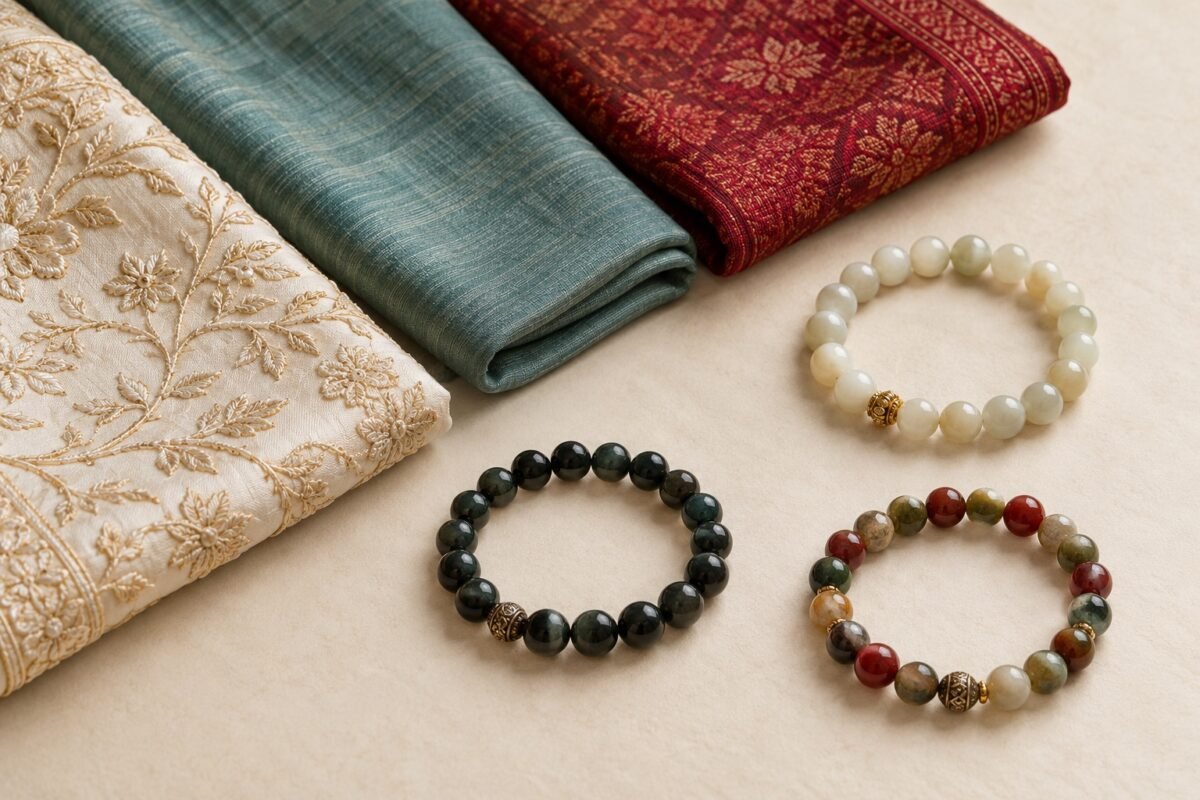
Take the opportunity to fix fit at the same time. Add or remove a bead if your wrist or preference has changed, using our sizing guide to judge how many beads equal a centimetre. If the elastic was merely stretched rather than frayed, our article on fixing a stretched crystal bracelet explains when a refresh is enough and when a full restring is wiser. An AVENSU white jade bracelet refreshed this way should sit snug, roll smoothly, and show no gaping between beads — compare its original look on the white jade bracelet page.
Step Three: Polish Beads and Metal Accents
With the bracelet restrung, restore surface shine. Most dullness on quartz-family beads is a film of oils, and a buff with a dry microfiber cloth after washing is enough; our guide to polishing crystal beads covers stubborn cases and which stones should never see abrasive polish.
Metal spacers and charms need their own treatment. Sterling silver responds to a polishing cloth; plated accents need only soapy water and a soft cloth, because abrasion strips plating. Work metal-only and keep compounds off the stones, following our dedicated guide to cleaning metal accents on crystal bracelets. Check each bead’s finish as you go — matte, glossy, and frosted finishes are maintained differently, as our crystal finish care guide explains. Mineral hardness data on Mindat.org helps you judge which beads can be buffed firmly and which need a gentler hand.
Step Four: Re-Charge and Set a Fresh Intention
Once the bracelet is physically renewed, many owners mark the moment traditionally. In crystal practice, a cleansed and restrung bracelet is believed to be ready to “re-charge” — by resting overnight in moonlight, on a selenite plate, or briefly in gentle morning light, depending on the stone. Our comparison of charging crystals in sunlight vs moonlight and our full moon cleansing ritual explain the traditional options and which stones fade in sun.
This is also a natural time to revisit why you wear the piece. Traditionally, green aventurine is associated with luck and opportunity, and rose quartz is believed to symbolise love and self-kindness. Our guide on how to activate a lucky bracelet and the one on programming a crystal intention describe these customs for owners who enjoy them. Whether or not you follow them, pause and choose the refreshed bracelet deliberately for its next chapter — that choice is the real refresh.
Keeping the Refreshed Bracelet That Way
Protect the work you just did with small habits: wipe after wear, store in a separate pouch, and schedule the next light refresh rather than waiting for drawer-banishment again. Our crystal care calendar turns that into a five-minute monthly routine.
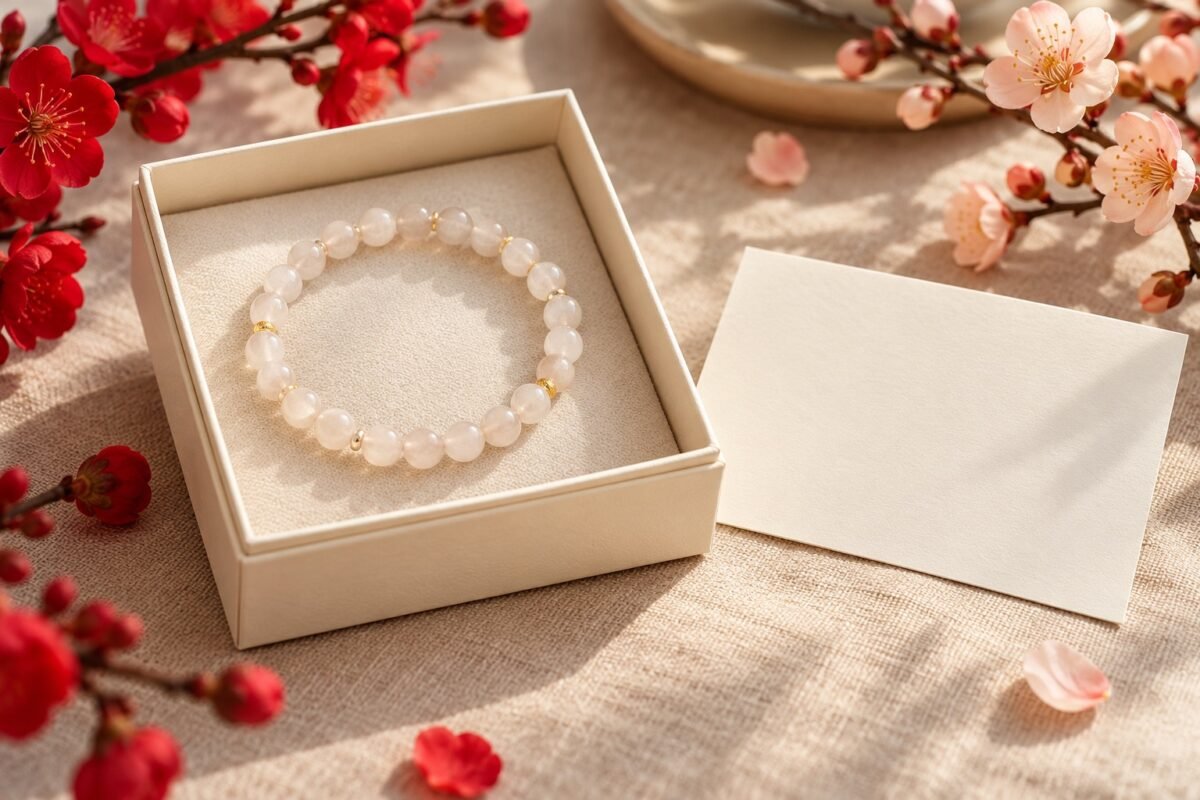
If a bead was too damaged to return to the strand, replace it rather than leaving a gap that strains the new cord — the AVENSU shop lists bead sizes for pieces such as the green aventurine bracelet to help you match. An AVENSU rose quartz bracelet refreshed once a year this way can stay in rotation for many years, its colour and cord renewed long after a neglected bracelet would have been retired.
Frequently Asked Questions
How often should I refresh a crystal bracelet?
Do a light refresh — deep clean and inspection — every few months for daily-wear pieces, and a full restring every 12 to 18 months. If elastic looks frayed or beads have dulled sooner, refresh sooner; condition matters more than the calendar.
Can I refresh a bracelet without cutting the cord?
You can clean and polish it in place, yes. But if the elastic is stretched or frayed, only restringing fixes it. Cutting and replacing tired cord over a tray takes minutes and is the single most valuable part of a full refresh.
What if a bead is chipped during its refresh inspection?
Small chips can be smoothed and the bead returned to the strand, ideally near the knot where it is less visible. Cracked or split beads should be replaced. See our guide on chipped crystals for the full assessment.
Does re-charging actually change the bracelet?
Re-charging is a traditional practice, not a measurable physical change; the measurable changes come from cleaning, polishing, and new elastic. Many owners still value the ritual as a way to mark a fresh start with a renewed piece.










 English
 Vietnamese