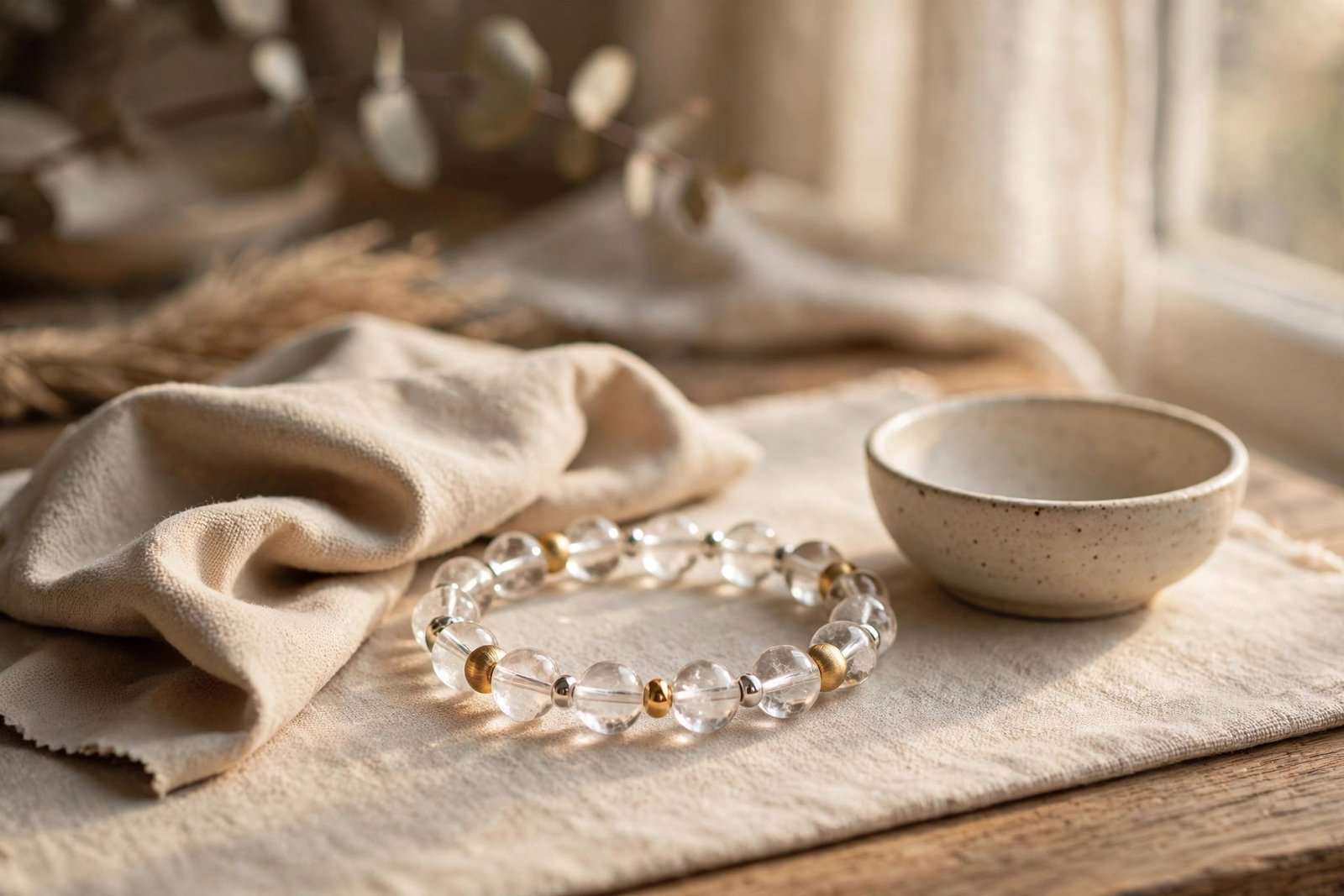
The beads on a mixed bracelet often stay bright long after its metal accents have dulled. Sterling silver tarnishes, gold plating can wear thin, and tiny spacer beads trap lotion and skin oils in places a quick rinse never reaches.
Cleaning those accents safely means treating metal and crystal as two different materials on the same strand. The method that restores silver can cloud a soft stone or weaken elastic, so this guide separates what each part can — and cannot — tolerate.
Know Your Metal Before You Clean
First, identify what you actually have. Solid sterling silver, marked 925, tarnishes dark grey or black and tolerates gentle polishing well. Silver-plated and gold-plated accents are a thin layer over a base metal; aggressive rubbing or abrasive pastes can strip that layer and expose dull metal underneath.
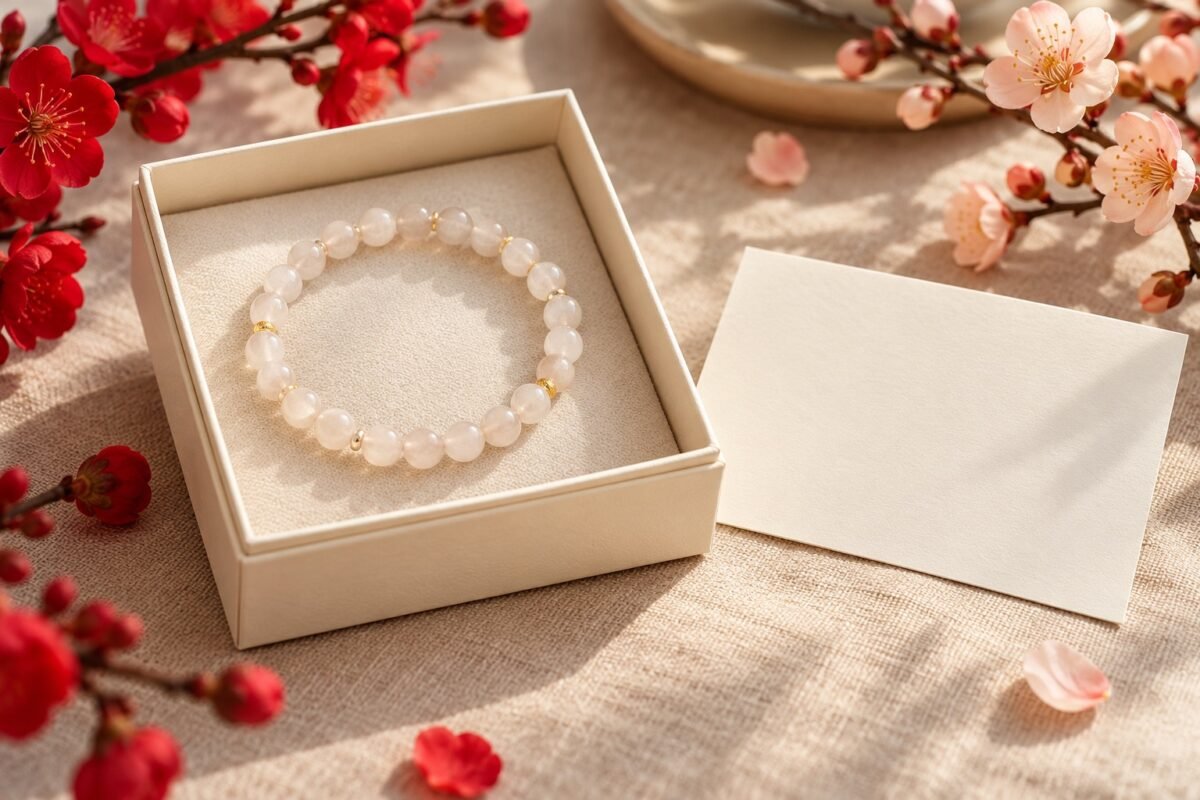
Solid gold is softer but does not tarnish the same way; it mainly needs degreasing. Gold vermeil sits between plating and solid gold and also needs a light touch. If your bracelet came from the AVENSU shop, check its product description for the exact metal — for example, the accents listed with a piece such as the rose quartz love bracelet. Our beaded bracelet materials guide explains common metals and bead materials side by side. General guidance on jewellery metals is also available from the Gemological Institute of America.
When in doubt, assume plated and choose the gentlest method. You can always repeat a mild clean; you cannot undo over-polishing.
The Safest Everyday Method
For most bracelets, lukewarm water, a drop of mild dish soap, and a very soft baby toothbrush are enough. Work over a bowl, not an open sink, so a slipped bracelet cannot go down the drain. Dip the brush, gently scrub around spacers, charms, and the clasp area, and keep soaking time short — a few minutes at most.
Protect the stones while you work. Some crystals should not sit in water at all, so check our water-safe crystals list and our explainer on whether crystal bracelets can get wet before any soak. For water-sensitive pieces, clean only the metal with a barely damp cotton bud, keeping moisture away from the beads and the drill holes where elastic sits.
Rinse with clean lukewarm water, then dry immediately and thoroughly with a soft lint-free cloth. Lay the bracelet flat on a towel until completely dry before storing, because trapped moisture accelerates tarnish and weakens elastic — a point covered in our elastic crystal bracelet care guide.
Tarnish Removal for Sterling Silver
Light tarnish on solid sterling silver usually lifts with a silver polishing cloth alone. Rub the metal only, using the cloth’s edge to avoid buffing neighbouring beads, and stop as soon as the shine returns.
For heavier tarnish, a paste of baking soda and a few drops of water can work on solid silver, applied with a fingertip or cotton bud and rinsed off promptly. Keep it off porous or soft stones such as turquoise, lapis, and pearl-like beads, and never use it on plated pieces. Commercial silver dips are a poor choice for whole bracelets: they can strip finishes, discolour stones, and leave residue on elastic. Wikipedia’s overview of tarnish explains why silver darkens — a surface reaction with sulfur compounds — which is also why airtight storage slows it down.
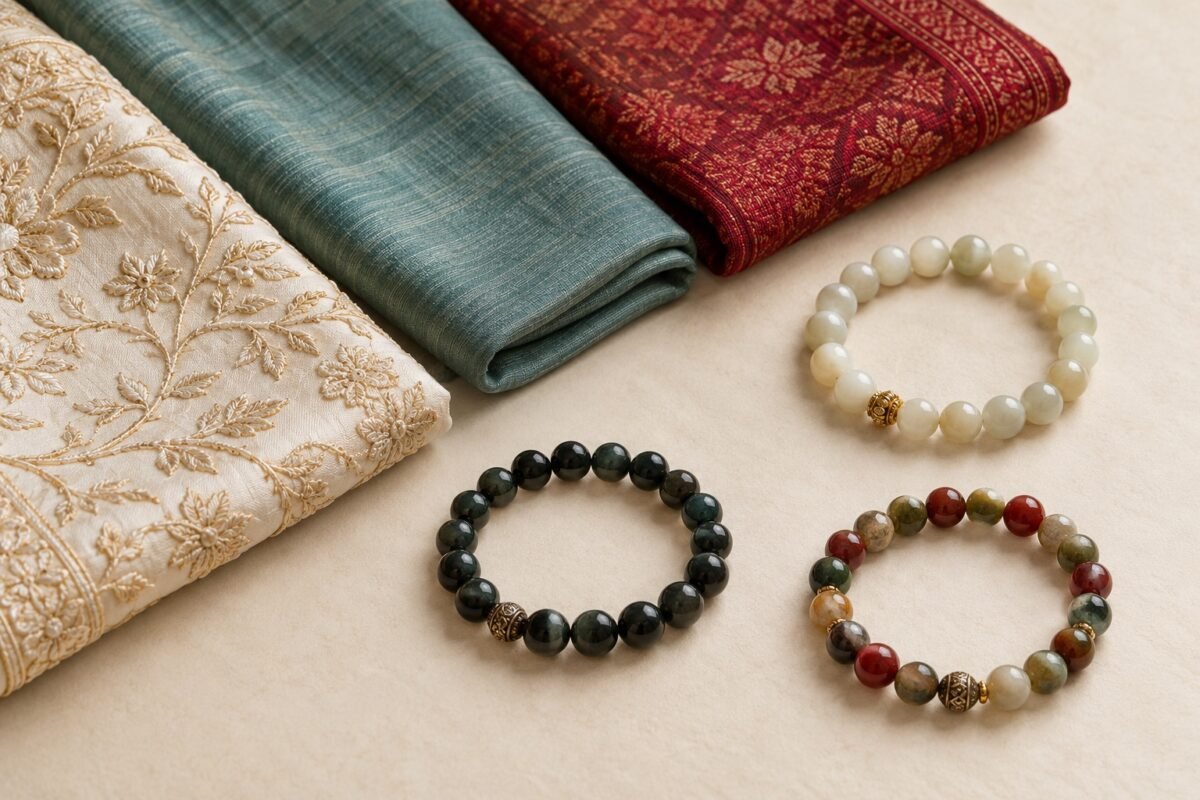
An AVENSU white jade bracelet with silver-toned spacers, for instance, is better served by cloth polishing than by any dip, because jade beads should not be soaked in chemicals. See the white jade bracelet page for its materials before you start.
What to Avoid
Never use toothpaste, scouring pads, ultrasonic cleaners, or steam cleaners on a mixed crystal bracelet unless every material on it is confirmed safe — the vibration and heat can loosen beads, cloud coatings, and snap aged elastic. Avoid bleach, ammonia, vinegar soaks, and lemon juice, all of which can pit plating and damage soft stones.
Do not wear the bracelet in pools, hot tubs, or the sea if you want the metal to last; chlorine and salt accelerate corrosion and tarnish. Our guide to what damages crystal jewellery lists the other everyday culprits, from perfume to gym sessions. Finally, do not store a freshly cleaned bracelet in a humid bathroom — dry, separate storage in a soft pouch or anti-tarnish strip box keeps the work you just did from undoing itself within weeks.
Keeping Accents Bright for Longer
Prevention is gentler than any cure. Put your bracelet on after cosmetics, wipe metal parts with a dry cloth after wear, and store pieces separately so harder beads do not scratch softer plating. Traditionally, white jade is associated with calm and clarity, and many owners like their accent metal bright to match that clean look — but shine is a matter of care, not a property any stone can maintain on its own.
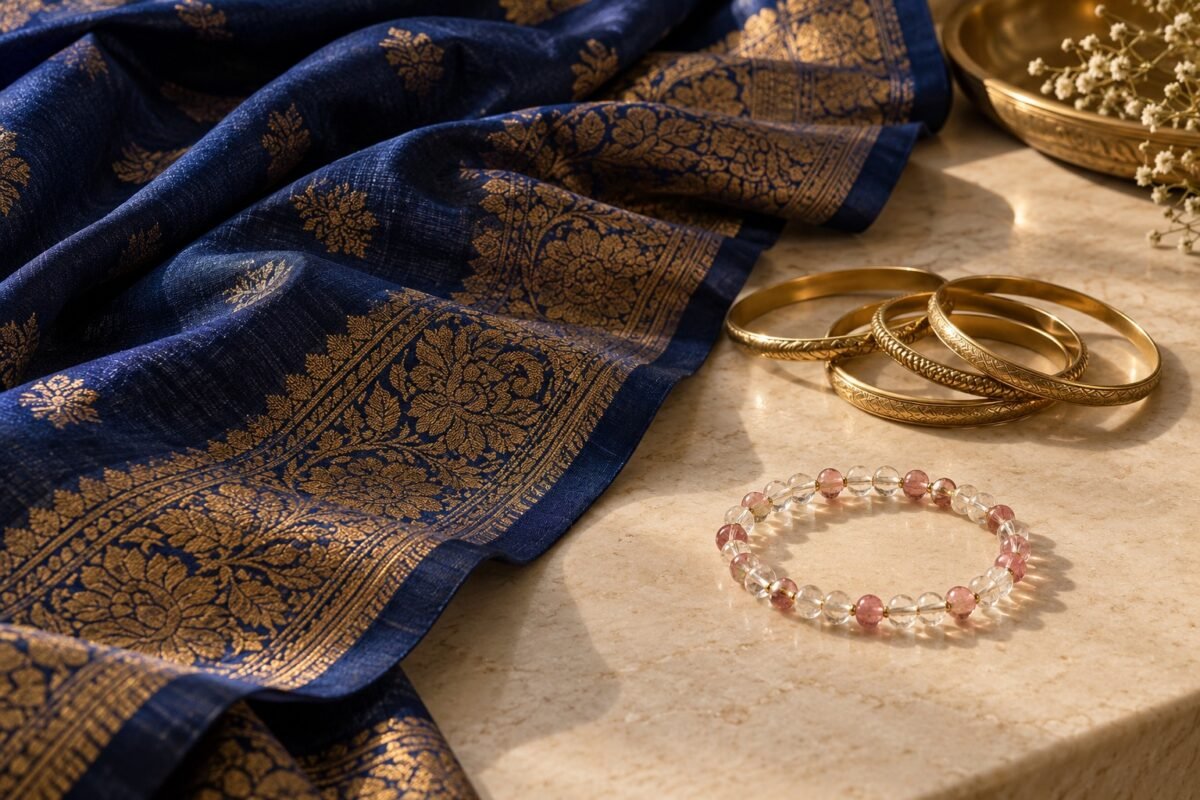
If tarnish returns within days, check your storage: rubber bands, certain foams, and polluted or humid air speed it up. A small anti-tarnish tab in the pouch, replaced every few months, makes a noticeable difference for an AVENSU clear quartz bracelet worn daily. With these habits, a full metal clean becomes a monthly two-minute task rather than a rescue job, and the whole routine fits neatly into a broader schedule like our complete crystal bracelet care routine.
Frequently Asked Questions
Can I use a silver dip on a crystal bracelet?
No — not on the whole bracelet. Dips can damage porous stones, coatings, and elastic, and strip plated accents. Reserve dips for solid silver items with no stones, and use a polishing cloth for mixed bracelets instead.
How do I clean gold-plated accents without wearing them off?
Use only lukewarm soapy water, a soft cloth, and minimal rubbing, then dry straight away. Skip pastes, dips, and polishing compounds, because plating is thin and every abrasive clean removes a little of it.
Why did my silver accents turn black so quickly?
Tarnish speeds up with humidity, sweat, perfume, rubber, and air pollution. Storing the bracelet dry, in a sealed pouch with an anti-tarnish tab, and wiping it after wear will slow the reaction noticeably.
Is an ultrasonic cleaner safe for crystal bracelets?
Generally no. Vibration can loosen beads, worsen tiny fractures, and stress elastic, while some stones and coatings are damaged by it. Hand cleaning with a soft brush is safer for mixed-material bracelets.









 English
 Vietnamese