A water-safe crystals list can help you look up a gemstone, but it cannot tell you whether a finished bracelet should go under a tap. Beads may be dyed or coated; spacers may be plated; and cords, adhesives, charms and clasps may need different care from the gem itself. Our earlier version of this page put whole groups of stones into rigid “water-safe,” “splash-only” and “keep-dry” categories. That was too broad, and some examples conflicted with published gem-care guidance. This revised guide separates the material from the assembled bracelet.
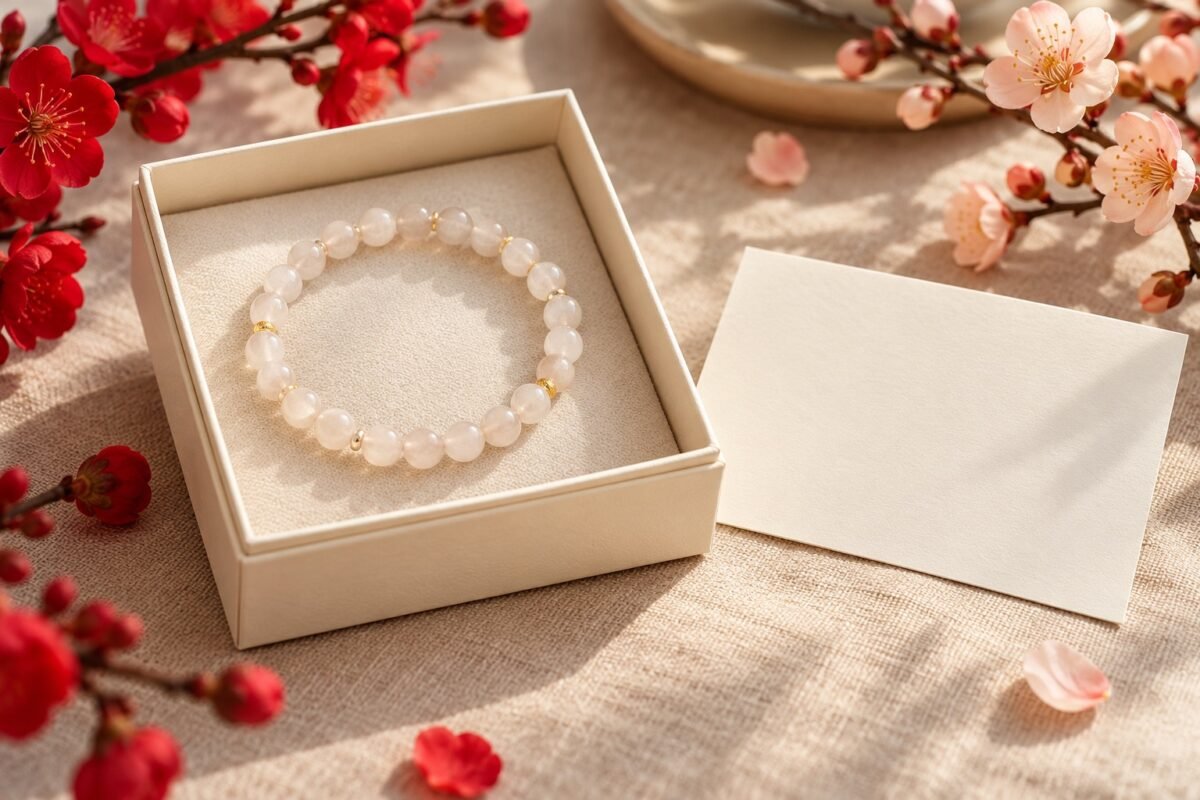
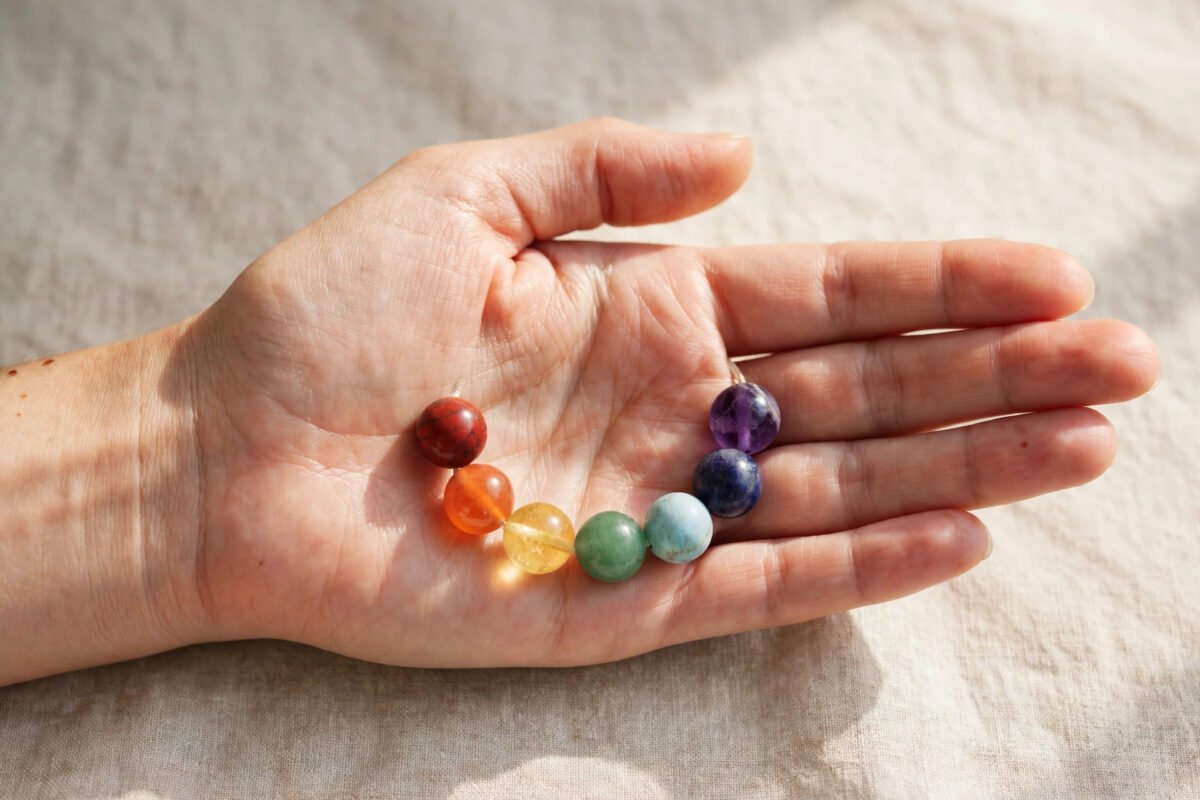
Image note: the featured photograph is a styling illustration, not a test of the identity, treatment or water tolerance of any AVENSU product.
Why a water-safe crystals list is not a bracelet-safe list
A mineral name is only one input. Before using water, confirm what the beads actually are and whether they have been dyed, coated, filled, waxed or glued. Then check the cord and every metal or decorative component. A gem that tolerates a brief gentle wash as a loose stone does not automatically make a strung bracelet suitable for soaking, showering or swimming. GIA’s general jewelry-care guidance explains why treatments and settings matter and why ultrasonic or steam cleaning is unsuitable for many pieces.
Hardness alone does not answer the question. It describes resistance to scratching, not how a coating, treatment, elastic or adhesive responds to water. Do not try to diagnose porosity by putting a drop of water on an unknown bead; that test can itself leave a mark.
What gem-specific care sources actually say
GIA says amethyst can be cleaned with warm soapy water, with cautions for treated stones and temperature change. Its moonstone guide also recommends warm soapy water, while warning against ultrasonic and steam cleaners and noting poor toughness. This corrects our previous statement that moonstone must always be kept dry.
GIA likewise describes warm soapy water as safe for turquoise jewelry but warns about chemicals, cosmetics, heat and treatments. Its lapis lazuli guidance calls warm soapy water the safest cleaning method for the gem, while advising a discreet test because some dyes are unstable. Neither point is permission to soak an unknown mixed-material bracelet. The stone’s own care page and the finished piece’s construction both need to agree.
A practical decision order for your bracelet
First, check the current product listing for stated bead materials and treatments. Second, identify the most sensitive component, including metal finish and stringing. Third, ask the seller if those details are unclear. For routine dust or fingerprints, start with a clean, soft, lint-free cloth and gentle handling. If the confirmed materials permit a mild wet clean, follow the maker’s directions, avoid heat and harsh chemicals, and dry the piece completely before storage. If a coating is flaking, a cord is loose, or the surface changes color, stop and seek a jeweler’s advice rather than escalating to stronger cleaners.
For example, the AVENSU clear quartz bracelet listing is where to check its current stated components; this article does not independently certify that any specific bead is quartz or that its cord can be soaked. The bracelet care guide covers everyday handling and storage, and the size guide helps avoid unnecessary tension from an overly tight fit.
What to skip when care details are uncertain
Do not use salt water, household cleaner, perfume, essential oils, steam, an ultrasonic machine or abrasive polish as a universal bracelet-cleaning method. Dry rice and herbs are not reliable physical cleaners either; our corrected rice-and-herbs article explains how a personal ritual differs from jewelry care. Remove bracelets for pools, the sea, showering and cleaning tasks when you do not have confirmed care instructions for the whole piece.
Frequently asked questions
Are moonstone and turquoise always ruined by water?
No. GIA recommends warm soapy water for cleaning those gems under its stated conditions. The greater concern is treating an unknown, treated or mixed-material bracelet as if it were a loose, identified gemstone.
Can I use a hardness chart to decide whether to soak a bracelet?
No. Hardness does not establish treatment status or the tolerance of elastic, plating, glue and other components.
What is the first step if I do not know what the bracelet contains?
Use a soft cloth for a gentle surface wipe, then ask the seller for material and care details before trying water or a cleaning solution.








 English
 Vietnamese