If the root chakra is about standing steady, the sacral chakra is about moving with life. Known as Svadhisthana in Sanskrit tradition, this second centre sits just below the navel and is traditionally associated with creativity, pleasure, play and emotional flow. Its colour is a warm, saturated orange — the colour of marigolds, embers and ripe fruit — and its element is water, which tells you a lot about its character: feeling, movement and change.
Sacral chakra crystals are the orange and warm-toned stones people choose when creative work feels flat, when everything has become duty and routine, or simply when they want a brighter daily reminder to make room for enjoyment. This guide covers the key stones, how tradition distinguishes them, and practical ways to wear and use them.
What the Sacral Chakra Represents in Tradition
Svadhisthana translates roughly as “one’s own dwelling place.” In classical teaching it governs the realm of sensation and desire: taste, touch, attraction, artistic impulse and the ability to enjoy experience without guilt. You can trace the development of these ideas in the Wikipedia overview of the chakra system.
A balanced sacral centre, in traditional language, feels like easy access to enthusiasm. Ideas come, feelings move through without getting stuck, and there is room in the week for things done purely for pleasure. When practitioners describe this centre as sluggish, they usually mean the opposite pattern: grey routine, creative blocks and a sense of going through the motions. Our companion piece on signs your sacral chakra is out of balance explores those patterns in detail.
Because the sacral chakra sits directly above the root, tradition usually recommends some grounding first. A steady base plus a flowing second centre is the classic combination, which is why our sacral and solar plexus crystal pair and stone pairings for neighbouring chakras are so popular. If you have not yet explored the base, start with our root chakra crystals guide.
The Key Sacral Chakra Crystals
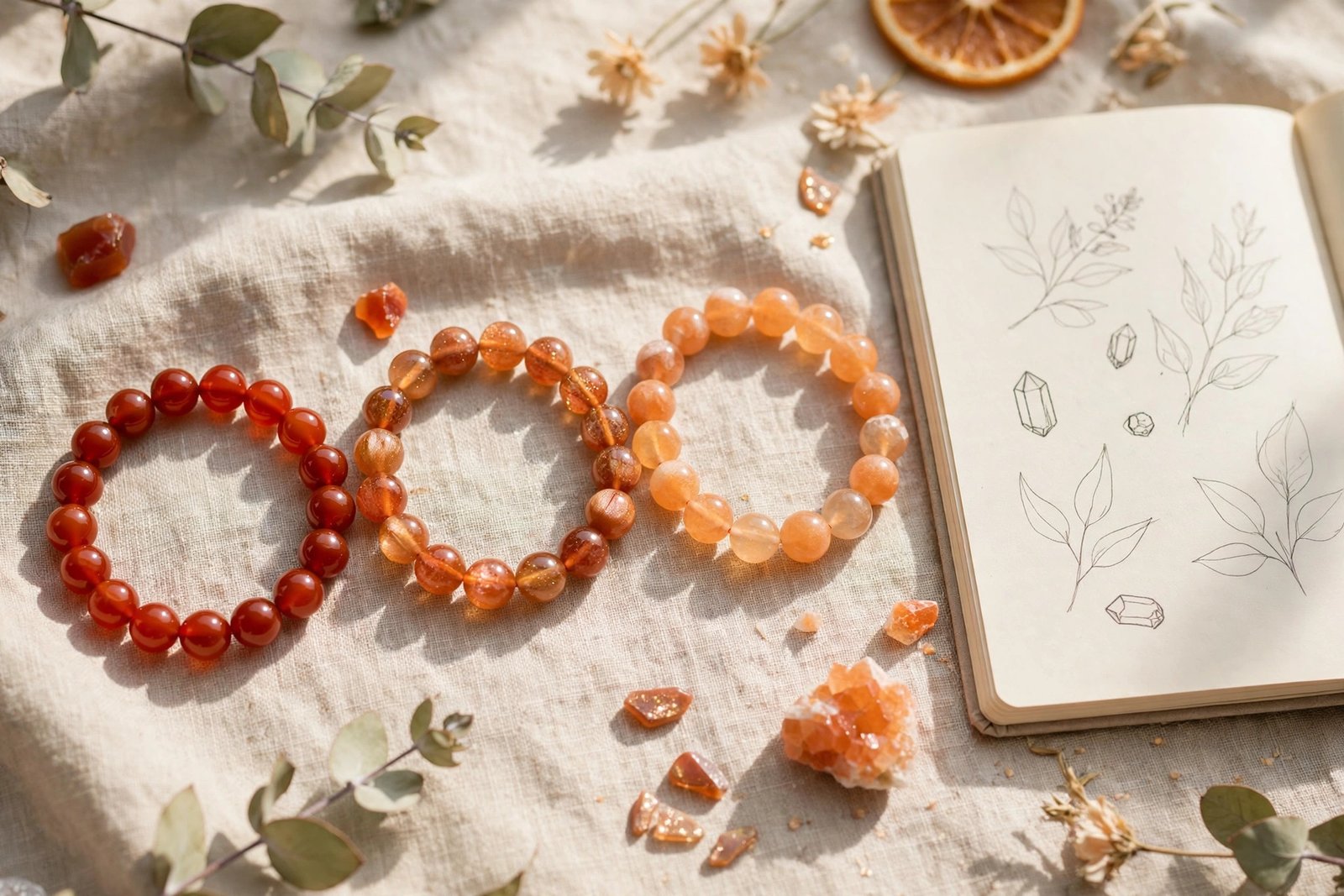
Carnelian is the signature stone of this chakra. A translucent orange-red chalcedony used in jewellery since ancient Egypt, it is traditionally associated with motivation, courage to begin and warm, outgoing energy. It is the stone artists and writers most often name as their desk companion. Mineral details are listed on Mindat.
Sunstone brings a lighter mood. This feldspar with its glittering, sunlit schiller is believed to encourage optimism, generosity and a willingness to be seen. Practitioners often choose sunstone when the issue is less “I have no ideas” and more “I hide the ideas I have.”
Orange calcite is the gentle option: soft, juicy and affordable, traditionally used when someone wants to ease back into creative play after a draining period. Amber, though technically fossilised resin rather than a crystal, is included in many sacral lists for its honeyed warmth. Peach moonstone adds an emotional, intuitive note and is popular in bracelets, while goldstone and fire agate appear in bolder designs.
An AVENSU carnelian bracelet is the piece most readers start with: the colour pairs surprisingly well with neutrals, denim and white summer clothing, and the stone is hardy enough for daily wear. If you prefer sparkle over depth of colour, an AVENSU sunstone bracelet gives a lighter, golden effect. Both are available in the AVENSU shop alongside mixed sacral sets.
Choosing and Wearing Sacral Stones
Colour is your first filter. True sacral stones sit in the orange band: pale peach through tangerine to deep burnt orange. If a stone reads as red, tradition usually files it under the root; if it reads as yellow, under the solar plexus. That colour logic is the backbone of our chakra colours and crystals chart.
Placement is flexible. Bracelets are the practical favourite because the wrist is in your field of vision while you type, paint, cook or play an instrument — exactly the moments this chakra is about. Some practitioners wear a longer pendant or belt-level piece closer to the chakra’s physical location, and our comparison of a chakra bracelet vs necklace weighs up the pros and cons of each.
Wear your sacral stone on days built around making and enjoying: studio days, cooking for friends, dance classes, date nights, brainstorming sessions. There is no rule against daily wear, and carnelian in particular is durable, but many collectors enjoy reserving their brightest orange pieces for creative time so the association stays strong. Pairing with a grounding root stone on the other wrist is a classic balanced stack — see our chakra bracelet stacking guide for layout ideas that avoid a cluttered look.
Care is straightforward: warm water and a soft cloth for carnelian and sunstone, kept away from prolonged harsh sun if you want to preserve the richest colour. For refreshing your pieces, the methods in our guide to cleansing crystals with sound suit all sacral stones, including softer calcite.
Simple Practices for Creative Flow
Tradition links this chakra with water, so practices involving water carry symbolic weight: a swim, a bath with your stones resting safely on the side (not in salt water unless the stone tolerates it), or even mindfully washing your hands before a creative session while holding your intention.
A favourite beginner practice is the fifteen-minute making session. Put on your carnelian bracelet, set a timer, and sketch, write, strum or cook without judging the result. The stone acts as the starting ritual — the signal that the next quarter hour belongs to play. Our sacral chakra meditation guide offers a seated version with breath and visualisation for days when making is not possible.
Movement practices suit this centre too: gentle hip circles, flowing yoga and free dancing in the kitchen are all traditional sacral work. Our guide to chakra crystals for yoga shows how to place stones at the mat’s corners safely. End the day by placing your bracelet in its dish and noting one enjoyable moment — a tiny habit that keeps the sacral theme alive.
Frequently Asked Questions
What is the main sacral chakra crystal?
Carnelian is the most widely recommended sacral chakra stone, traditionally associated with motivation, creativity and warm confidence. Sunstone is the leading alternative for those who prefer a lighter, golden energy and a sparkling finish.
What colour should sacral chakra crystals be?
Orange in all its shades, from pale peach to deep tangerine. Colour is the primary sorting system in chakra tradition, so stones that read clearly as orange — carnelian, orange calcite, sunstone — are the standard choices.
Can I wear sacral chakra crystals with root chakra stones?
Yes, and the pairing is traditional. The root provides steadiness while the sacral centre adds flow and creativity, so a red jasper bracelet on one wrist and carnelian on the other is a common, balanced combination.
How do I use sacral crystals for creativity?
Wear them during creative work as a ritual cue, hold a palm stone during a short meditation before starting, or keep a tumbled carnelian beside your tools. The consistent association between the stone and creative time is what tradition values.







 English
 Vietnamese