Sacral chakra meditation feels different from root practice. Where root work is about stillness and weight, sacral work — for Svadhisthana, the centre below the navel traditionally associated with creativity, feeling and flow — is about gentle movement, warmth and allowing. The breath undulates rather than anchors, the imagery is water and orange light, and many practitioners finish by actually moving: swaying, stretching or dancing for a minute before they open their eyes.
This guided practice uses carnelian and sunstone, the two stones most closely linked with this centre, and takes about fifteen minutes. No experience is needed. If seated meditation is entirely new to you, our crystal meditation guide for beginners covers posture, timing and what to do when your mind wanders.
Setting Up: Stones, Space and Intention
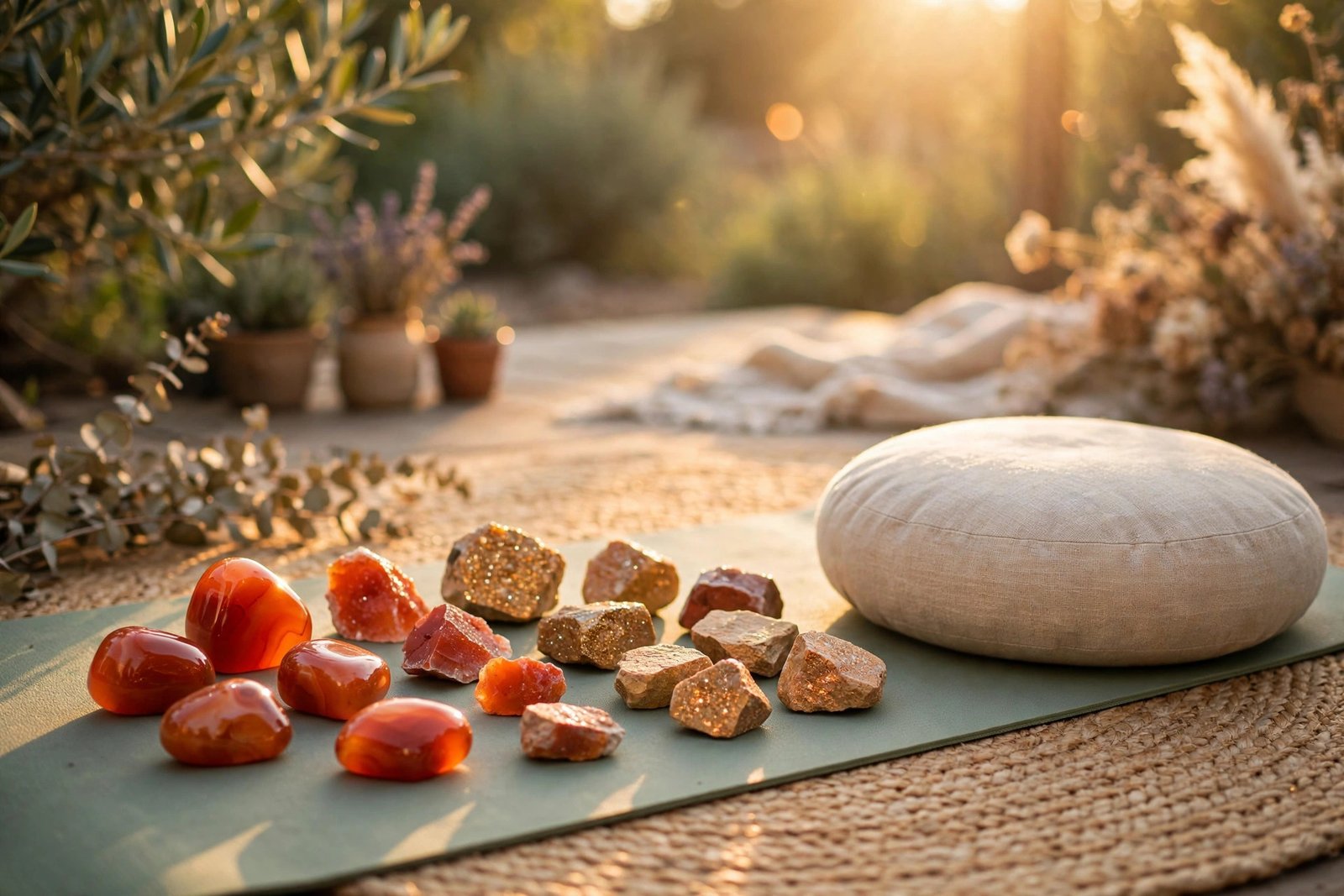
Choose carnelian if your aim is creative momentum; its deep orange chalcedony has been prized since antiquity and is traditionally associated with the courage to begin. Choose sunstone if your aim is lightness and visibility — sharing work, enjoying attention, letting yourself play. Mineral notes for carnelian are on Mindat. Using both is fine: carnelian in the left hand, sunstone in the right is a popular arrangement.
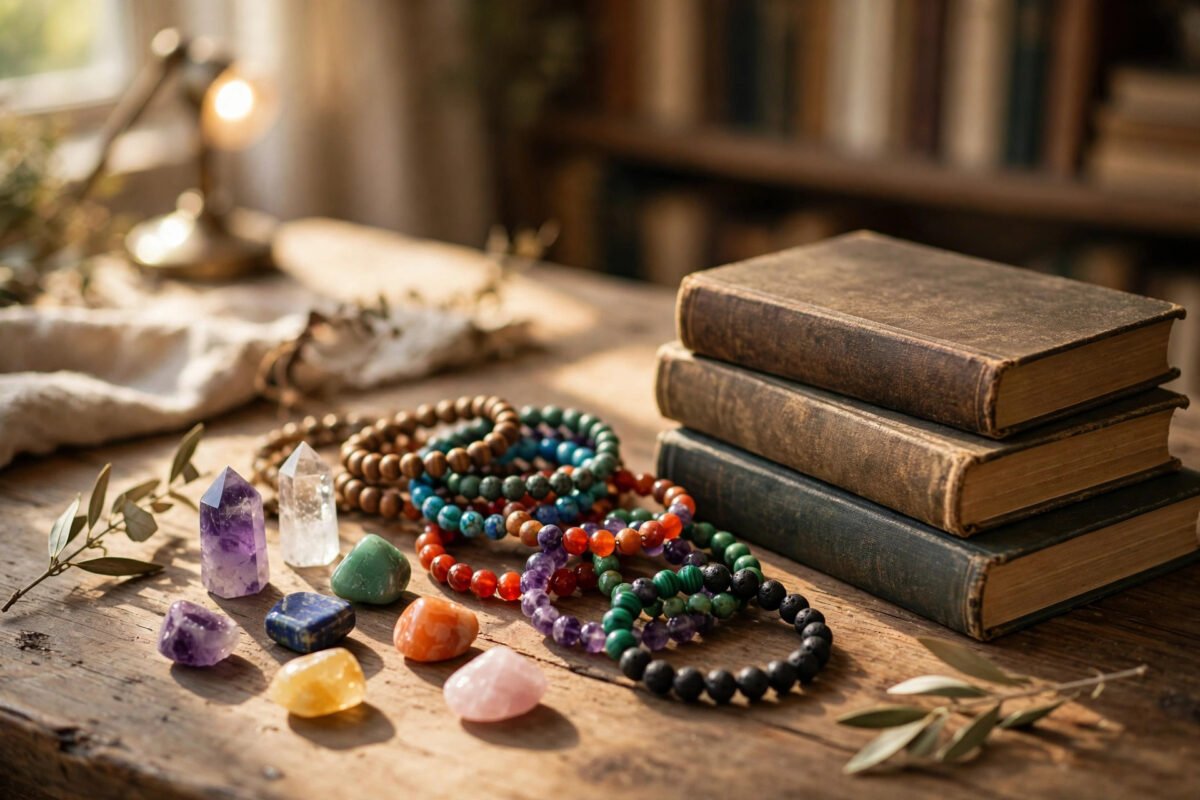
Sit on a cushion with hips slightly raised, or on a chair with feet flat. Sacral practice welcomes small comforts — a blanket over the knees, warm socks, a scented candle nearby — because comfort is part of the theme. Place the stones in your upturned palms, resting on your thighs, or hold a single stone against the lower abdomen with both hands. A bracelet works too: an AVENSU carnelian bracelet on the wrist gives a continuous point of contact without anything to balance.
Refresh your stones beforehand if they have been out of use. The sound method in our guide to cleansing crystals with sound suits both carnelian and sunstone, and carnelian also tolerates a brief rinse. Background on the chakra itself is summarised in the Wikipedia chakra overview if you like to understand a practice before trying it.
Set one soft intention. Traditional options are a single word — flow, play, create, enjoy — or a short phrase such as “I allow myself to enjoy this.” Keep it permissive rather than demanding; this centre responds, in traditional teaching, to invitation rather than instruction.
The Guided Practice: Breath, Water and Orange Light
Minutes 1–3: Arrive and soften. Close your eyes or rest them on a low point in front of you. Let your breathing find its own rhythm, then begin to shape it into a wave: a smooth inhale that fills the belly, a smooth exhale that empties it, with no pause held at either end. Let the lower back and belly stay soft. Rock very slightly forward and back with the breath if that feels natural — sacral practice permits sway.
Minutes 4–9: Visualise water and light. Imagine a warm pool of orange light resting in the bowl of the pelvis, brightening a little with each inhale. Picture it as water: with each exhale, a gentle ripple moves outward through the hips, lower back and thighs. If an emotion surfaces — restlessness, sadness, silliness — the traditional instruction is to let it ripple through rather than analysing it. Feelings in motion are the point of this centre. Hold your stones and notice their temperature changing as your hands warm them.
Minutes 10–13: Invite one image. Ask silently: “What would a little more flow look like this week?” Do not force an answer. Sometimes an image arrives — a swim, an unfinished sketch, an old friend to call, a song. Sometimes nothing arrives, and the quiet itself is the practice. If working with affirmations appeals to you, our guide to chakra affirmations and crystals offers traditional sacral phrases to repeat with the exhale during this section.
Minutes 14–15: Move and close. Let the visual fade, deepen the breath, and begin to move: circle the torso slowly in both directions, roll the shoulders, stretch the sides. Open your eyes. Before standing, choose one tiny, enjoyable action for the next hour — making tea properly, stepping outside, putting on a favourite track — and do it. Sacral meditation traditionally ends in the real world, not on the cushion.
Variations for Different Needs
For a creative block: meditate immediately before a making session, then keep the stone beside you while you work for fifteen timed minutes. The sequence teaches your system that the stone means starting. Our sacral chakra crystals guide has more on building this association.
For emotional heaviness: extend the water section and shorten the imagery section. Breathe and ripple for ten minutes, letting whatever arises pass through. Pair the practice with heart-centre work using our sacral and heart chakra bridge guide, and consider a gentle stone from our heart chakra stones guide alongside your carnelian.
For the evening: try the practice lying down with a stone resting on the lower abdomen, lights low, and no intention-setting at the end — just movement and rest. This version pairs naturally with the wind-down in our morning crystal ritual reversed for night-time, and with a few pages of journalling about one pleasure from the day.
In a yoga flow: place stones at the top corners of your mat during hip-opening sequences, as shown in our chakra crystals for yoga guide, and treat the final resting pose as your meditation.
However you practise, keep the rhythm sustainable: two or three full sessions a week is the traditional recommendation, with your AVENSU sunstone bracelet as a daily visual reminder in between. Grounding first helps some people — a two-minute version of our root chakra meditation makes an excellent warm-up before sacral work.
Frequently Asked Questions
How long should a sacral chakra meditation be?
Around fifteen minutes suits most people: long enough for the breath and imagery to settle, short enough to repeat several times a week. Beginners can start with eight minutes and extend the middle water-visualisation section as the practice becomes familiar.
Which crystal should I hold during sacral meditation?
Carnelian is the classic choice and is traditionally associated with creative momentum. Sunstone is preferred when the focus is joy and being seen. Holding one in each hand, or wearing a carnelian bracelet, covers both themes comfortably.
Should sacral meditation be still or moving?
Both. The seated practice uses breath and visualisation, but tradition also treats gentle hip movement, flowing yoga and free dance as sacral meditation in motion. Many people combine two seated sessions a week with movement on other days.
When is the best time to practise?
Any consistent time works. Many practitioners choose the late afternoon or early evening, when the work day ends and the creative, social part of the day begins — the transition itself becomes part of the ritual.







 English
 Vietnamese