A chakra crystal layout is a quiet, lying-down practice: you place one stone for each of the seven chakras along the center line of the body, then rest while breathing slowly. In chakra tradition, each stone is believed to support reflection on its center’s themes — safety at the root, feeling at the sacral, confidence at the solar plexus, love at the heart, expression at the throat, insight at the third eye, and connection at the crown. It is a rest practice, not a treatment, and its real ingredients are stillness, breath, and twenty unhurried minutes.
This guide covers the stones, the placements, the timing, and the small comfort details that decide whether a layout feels restorative or fidgety. If you are new to the seven centers, start with our chakra balancing beginners routine first.
What You Need and Which Stones to Choose
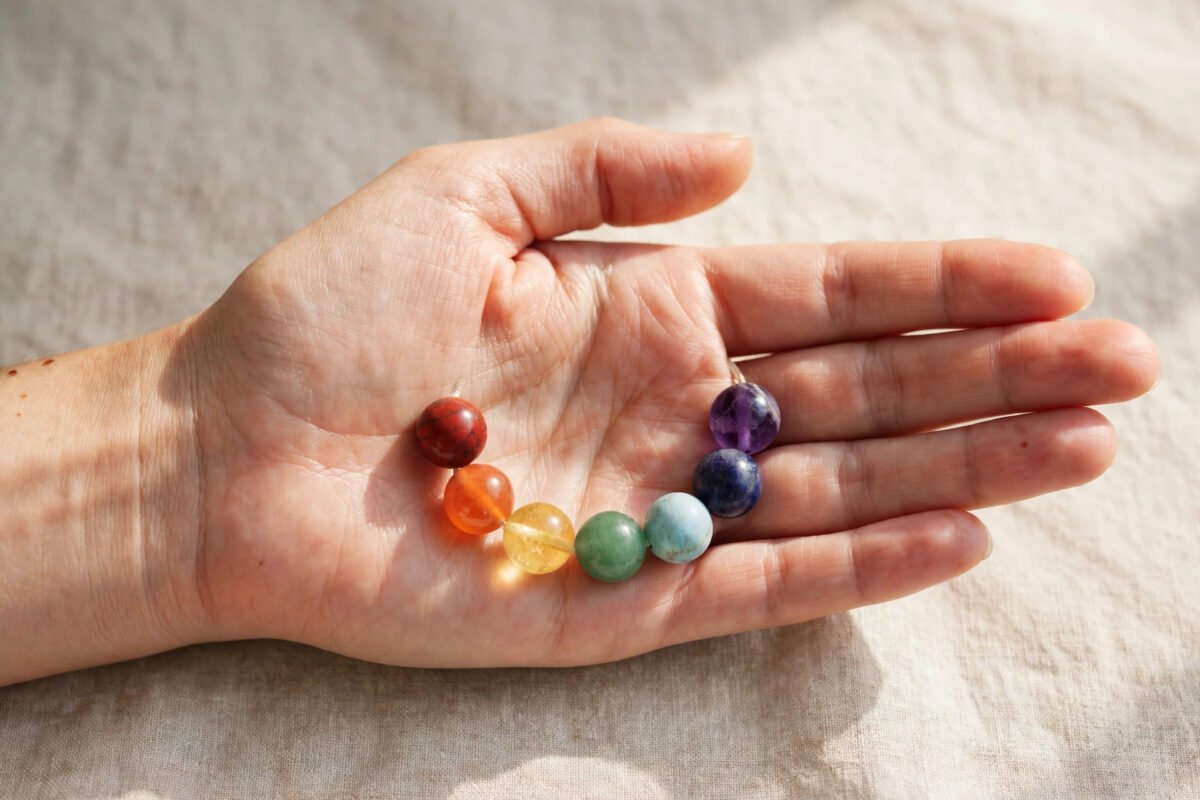
You need seven stones, a mat or bed, a blanket, and a timer. Tumbled stones work best because they sit still and have no sharp edges. Traditional pairings run: red jasper or hematite for the root, carnelian for the sacral, citrine or tiger’s eye for the solar plexus, rose quartz or green aventurine for the heart, sodalite or aquamarine for the throat, amethyst for the third eye, and clear quartz or selenite for the crown. Our guides to heart chakra stones and crown chakra stones with amethyst give more detail on those centers.
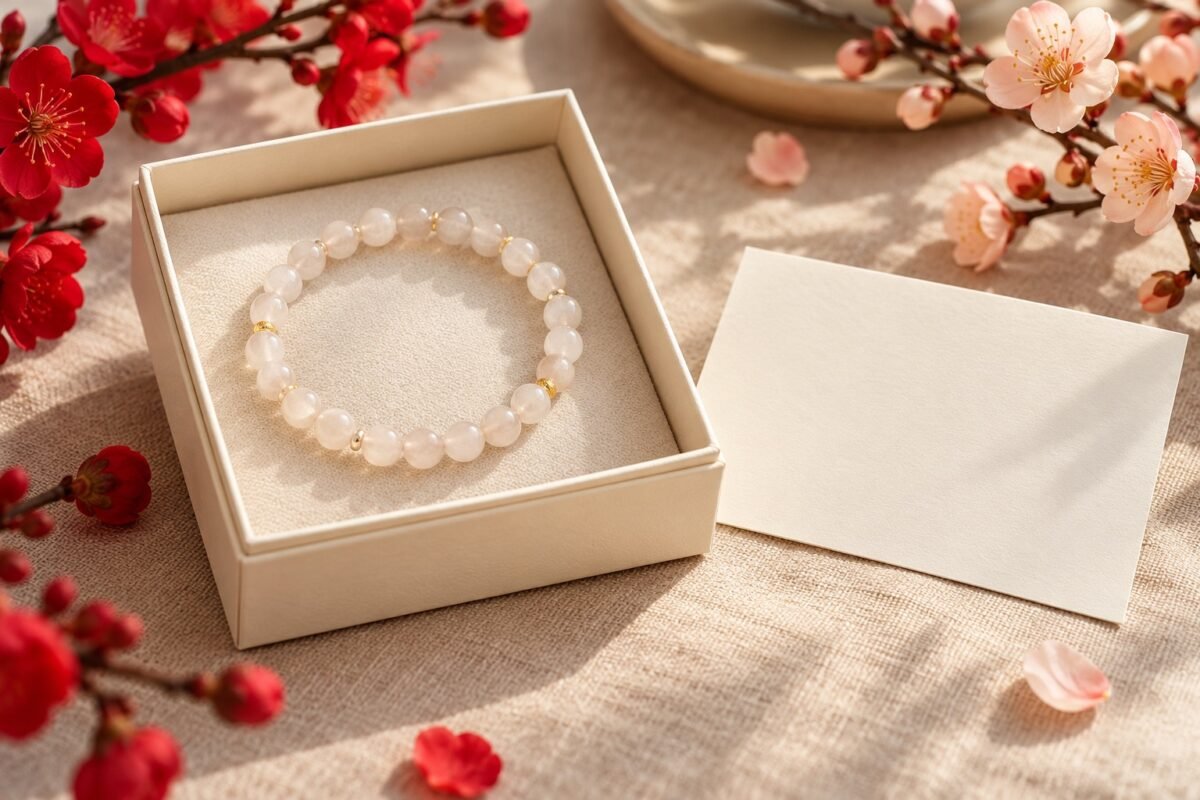
Do not buy a full set in a panic. A seven-chakra bracelet taken apart visually — worn on the wrist beside you — plus a few tumbled stones covers most layouts, and many people build their set slowly. The AVENSU shop carries the core stones as bracelets, including the rose quartz love bracelet, whose smooth beads also sit comfortably on the chest.
Cleanse your stones before the first layout and whenever they feel dusty or dull. Any gentle method works; our comparison inside the grounding stones guide covers daily care, and salt water cleansing suits hard quartz-family stones only.
Placement, Root to Crown
Lie down first, settle your body, then place the stones — or ask a partner to place them. Root: at the base of the spine, resting on the mat between your legs or on the lower pelvis over clothing. Sacral: two finger-widths below the navel. Solar plexus: at the soft spot just below the breastbone. Heart: center of the chest. Throat: at the hollow of the throat, or beside the neck if direct placement feels vulnerable — many people prefer beside. Third eye: between the eyebrows, using only a small, light stone, or placed on the mat just above the head. Crown: on the mat above the head, never balanced on top of it, so it cannot fall into your face.
Clothing is fine and recommended. Stones sit more stably on a thin layer of fabric than on skin, and you stay warmer. If a stone keeps sliding off, that spot gets a smaller stone or a bracelet coiled there instead. There is no prize for keeping a stone balanced; adjust freely.
An AVENSU bracelet coiled at the wrist can hold the intention for the session even when it is not placed on the body, and wearing it afterwards is a gentle way to carry the practice into your evening. Set your timer for fifteen to twenty minutes, cover yourself with the blanket before placing the last stones, and breathe slowly enough that the chest stone rises and falls visibly.
During and After the Session
Once the stones are placed, do nothing. That is the practice. Let your attention drift slowly from the lowest stone to the highest, spending a few breaths at each. Some people pair each center with its traditional affirmation; our guide to chakra affirmations and crystals lists all seven mantras. If your mind wanders to shopping lists, that is normal. Return to the breath and the weight of the stones.
End the layout in reverse: remove the stones crown to root, sit up slowly, and drink some water. Many practitioners journal for two minutes afterwards, noting which placement felt most noticeable. Over weeks, those notes show patterns worth reflecting on. Store the stones together in a pouch so the set stays complete.
For mineral background on the stones themselves — hardness, composition, and where they form — Mindat is the standard reference used by collectors worldwide.
Frequently Asked Questions
How long should a chakra crystal layout last?
Fifteen to twenty minutes suits most people. Beginners often start with ten. Longer is not better; restlessness is a sign to close the session, note how you feel, and try again another day rather than pushing through discomfort.
Can I do a layout on myself, or do I need a partner?
You can absolutely do it alone. Place the lower stones first, then the chest and throat, and keep third eye and crown stones on the mat by your head so you can reach them without sitting up. A partner makes placement easier but is not required.
What if a stone keeps falling off?
Use a smaller or flatter tumbled stone, place it over clothing, or rest it on the mat beside that part of the body instead. The layout is a framework for rest, not a balancing test. Comfort always wins over exact placement.
How often should I do a body layout?
Once a week is a sustainable rhythm for most people, often on the same evening. Daily full layouts tend to lose their sense of occasion. On other days, a five-minute seated meditation with one stone keeps the thread going.









 English
 Vietnamese