An affirmation is a short, present-tense sentence you repeat to focus your attention. In chakra tradition, each of the seven energy centers is paired with a simple “I” statement, and many people hold or wear a crystal while they say it, because the weight and coolness of the stone gives the mind something steady to return to. The crystal does not do the work for you. It is a reminder, a small physical anchor for the words you are choosing.
This guide gives you one mantra for each chakra, the crystal traditionally associated with it, and a simple way to practice. You can work through all seven in about five minutes, or choose a single mantra for the week. If you are new to the system, our guide to chakra colors and crystals is a helpful companion.
The Seven Mantras, Root to Crown
Root chakra — “I am safe and grounded.” Traditionally paired with red jasper, hematite, or black obsidian, stones linked with stability and the earth. Our grounding stones meaning guide explains why dark, heavy stones are chosen for this center. Say the words slowly while standing barefoot if you can, feeling the floor under your feet.
Sacral chakra — “I allow myself to feel and create.” Carnelian and orange calcite are the traditional companions here, associated with warmth, pleasure, and creative flow. Hold the stone loosely rather than gripping it. This center is about ease, not effort.
Solar plexus chakra — “I act with calm confidence.” Citrine and tiger’s eye are traditionally associated with this center and with personal will. Many people place a hand lightly over the upper belly as they repeat the words. See our guide to solar plexus chakra crystals for more stone choices.
Heart chakra — “I give and receive love freely.” Rose quartz and green aventurine are the classic pairings. Our rose quartz meaning guide and heart chakra stones guide cover both in depth. Keep the phrasing honest: if “freely” feels like a stretch today, “I am learning to receive” is a fine variation.
Throat chakra — “I speak clearly and truthfully.” Aquamarine, sodalite, and lapis lazuli are traditionally linked with this center. Say this mantra out loud rather than silently. Hearing your own voice is part of the practice.
Third eye chakra — “I trust what I notice.” Amethyst is the traditional stone here. Our amethyst meaning and properties guide explains its long association with clarity and intuition in folklore.
Crown chakra — “I am connected to something larger.” Clear quartz and selenite are the usual pairings, traditionally associated with openness and quiet. This mantra works best whispered once or twice, followed by silence, rather than repeated many times.
How to Practice with a Bracelet
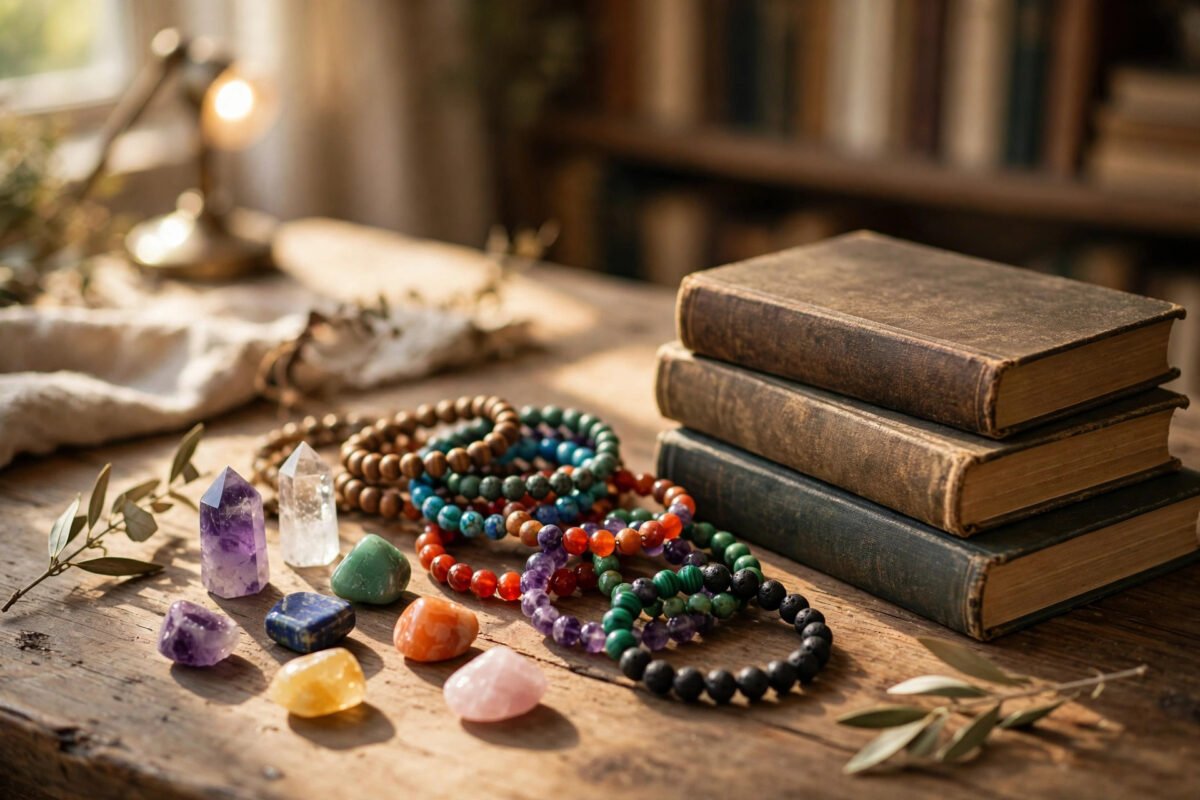
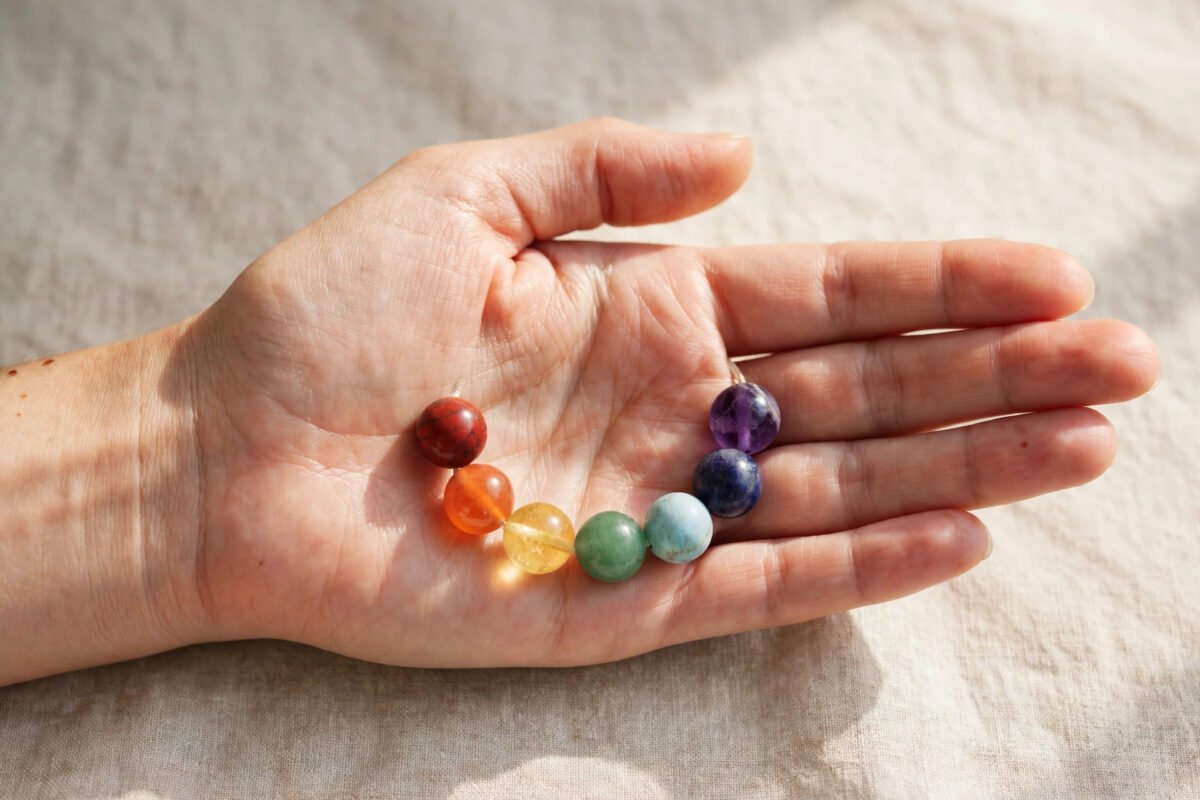
A seven-chakra bracelet makes this practice portable, because every stone is already on your wrist in order. Our guide on how to wear a 7 chakra bracelet covers wrist choice and ordering. To practice, sit comfortably, slide one bead at a time between thumb and finger, and say the matching mantra once per bead. Seven beads, seven breaths, seven sentences. That is the whole routine.
An AVENSU seven-chakra bracelet is designed for exactly this kind of bead-by-bead practice, with smooth, evenly sized beads that roll comfortably under the thumb. If you prefer a single-stone focus, an AVENSU amethyst bracelet works well for a third-eye week, and the rose quartz love bracelet suits a heart-focused month.
Timing matters less than regularity. Morning is popular because the words set a tone for the day, and our morning crystal ritual guide shows how to fold affirmations into a five-minute routine. Evening works too, especially for the upper three chakras, which pair naturally with winding down.
Writing Your Own Affirmations
The traditional mantras are a starting point, not a script you must follow. A good personal affirmation is short, present-tense, believable, and specific to your life. “I am grounded” becomes stronger as “I handle one thing at a time.” “I speak clearly” becomes “I say what I need at work, calmly.” If a sentence makes you roll your eyes, soften it until it feels like a stretch rather than a lie.
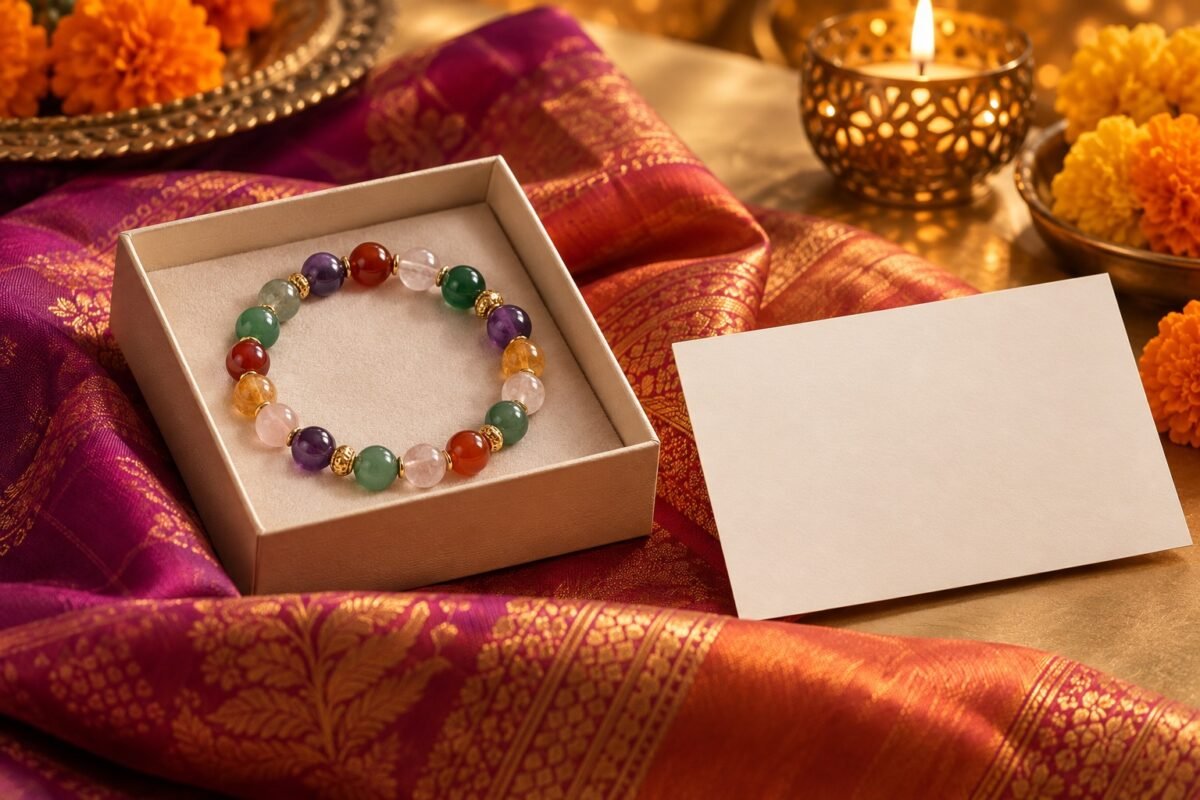
Keep the crystal pairing consistent while you learn a new wording. In chakra tradition, the stone is believed to hold the association steady while the words evolve. Write your final version on a card and keep it with your bracelet overnight. After a week, most people find they no longer need the card.
Scholars note that affirmation-like practices appear in many contemplative traditions, and the chakra system itself developed within Indian religious thought over centuries; the Britannica overview of chakra gives useful historical background for curious readers.
Frequently Asked Questions
How many times should I repeat each affirmation?
Three to seven slow repetitions per chakra is plenty for a daily practice. Quality matters more than count: say the words at speaking pace, breathe between repetitions, and notice how each sentence lands. If you only have two minutes, do the full set once rather than one chakra many times.
Do I need all seven crystals to start?
No. One bracelet with mixed stones, or even a single stone you feel drawn to, is enough. Many beginners start with the heart or root mantra and one matching stone, then add the full set over time as the habit settles.
Should I say affirmations out loud or silently?
Both work. Speaking aloud is traditionally recommended for the throat chakra mantra and helps if your mind wanders. Silent repetition suits shared spaces and evening practice. Choose the version you will actually repeat tomorrow.
How long before affirmations feel natural?
Most people report the words feel less awkward after one to two weeks of daily practice. Keep the same seven sentences for at least a week before editing them, so your attention goes to the meaning rather than to remembering new wording.








 English
 Vietnamese