A big decision — changing jobs, moving city, starting a business, ending or beginning a relationship — rarely suffers from too little information. More often, it suffers from noise: everyone else’s opinions, fear of regret, and the exhausting loop of pros and cons at 2 a.m. In chakra tradition, the solar plexus is the centre associated with personal will, self-trust and the ability to act. That is why stones linked to this centre are so often reached for during decision season.
This guide is honest about what crystals can and cannot do. They will not make the decision for you, and no stone guarantees a good outcome. What they can do, as part of a ritual, is give your reflection a focal point — a small, steady reminder to return to your own values before you choose.
The Solar Plexus and the Act of Choosing
The solar plexus chakra, Manipura, sits above the navel and is traditionally associated with the colour yellow, the element of fire, and themes of confidence, boundaries and follow-through. Our guides to solar plexus chakra crystals and signs of a blocked solar plexus explore these associations in depth. In traditional language, a balanced solar plexus is described not as dominance over others, but as quiet self-possession: knowing what you think and being willing to stand by it.
Decision fatigue works against that quality. Research on choice overload is summarised in the decision-making overview on Wikipedia, and the lesson is practical: fewer, clearer criteria lead to calmer choices. A crystal ritual fits here as a structuring tool. Holding a stone while you write your criteria does not change the facts, but it can slow the process down enough for your real priorities to surface.
Citrine, Tiger’s Eye and Other Traditional Choices
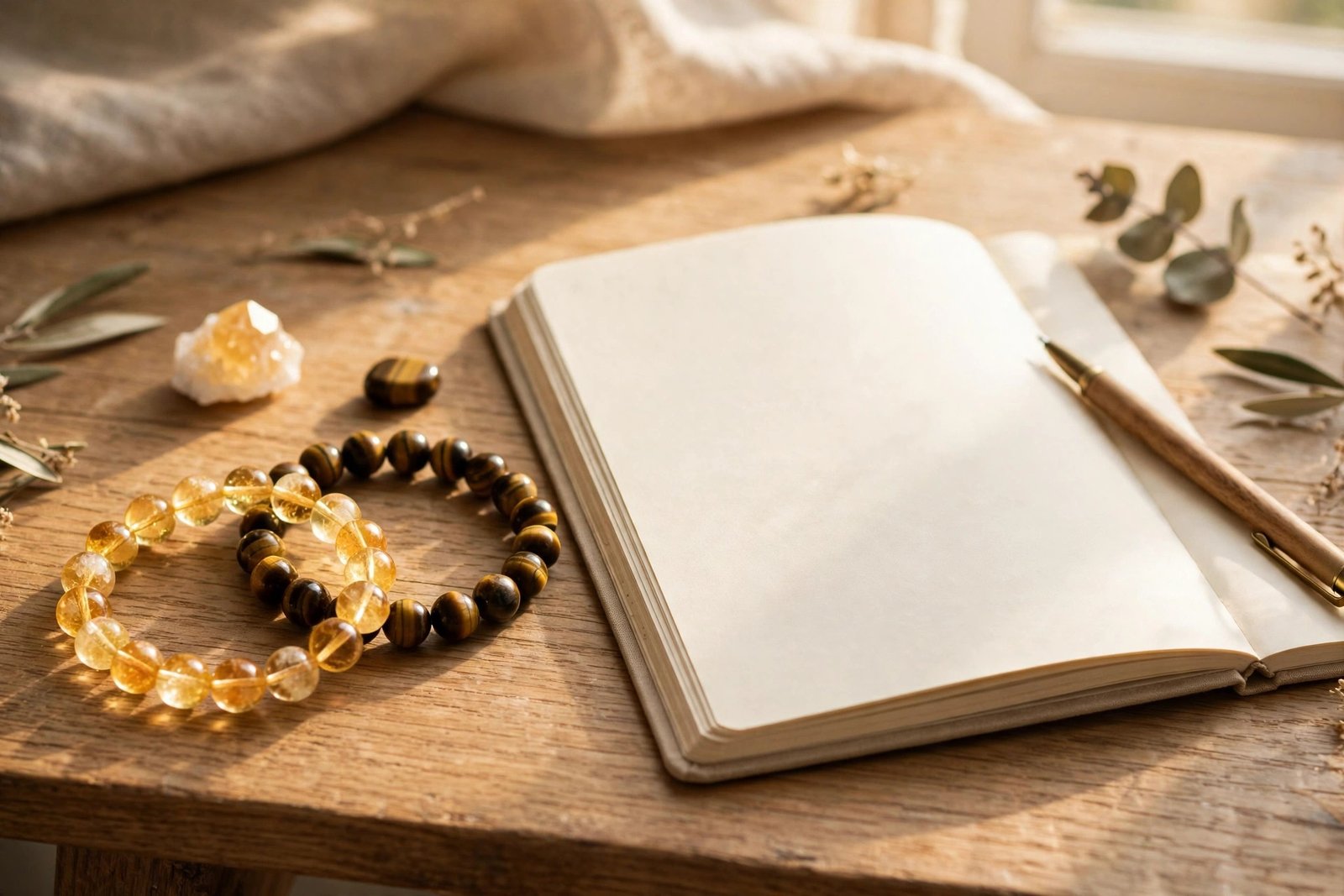
Citrine is the stone most often linked to the solar plexus. Its sunny colour matches the chakra’s traditional palette, and it is believed to support optimism and clear thinking in crystal tradition. Tiger’s eye is a second favourite: traditionally associated with grounded confidence and perspective, it is often chosen by people who feel torn between two options and want to see both sides steadily. Pyrite and yellow calcite are also used, while amber — technically fossilised resin rather than a crystal — appears in many solar plexus sets for its warm, golden tone.
Mineral information for citrine and tiger’s eye, including hardness and formation, is available from the Gemological Institute of America and on Mindat. Knowing the real geology of a stone does not weaken the ritual; for many AVENSU customers, it deepens appreciation for the piece they wear every day.
If you are building a small decision kit, pair one solar plexus stone with a grounding stone. Our guide to grounding stones and their meanings explains why that combination keeps big thinking anchored in practical next steps.
A Decision Ritual That Respects the Facts
Start with paper, not the crystal. Write the decision in one sentence, list your three non-negotiable criteria, and note the facts you know versus the fears you imagine. Only then pick up your stone or put on your bracelet. In tradition, the solar plexus is linked with the gut, so sit quietly and notice your physical response as you read each option aloud. Tightness does not automatically mean no, and excitement does not automatically mean yes — but both are data worth recording.
Next, set a decision deadline. Open-ended deliberation is where confidence leaks away. Many readers combine this practice with the reflective exercises in solar plexus meditation crystals or the broader routine in chakra balancing for beginners. Finally, tell one trusted person what you have decided and why. Speaking a choice aloud is a classic solar plexus act in tradition: will becomes real when it is voiced.
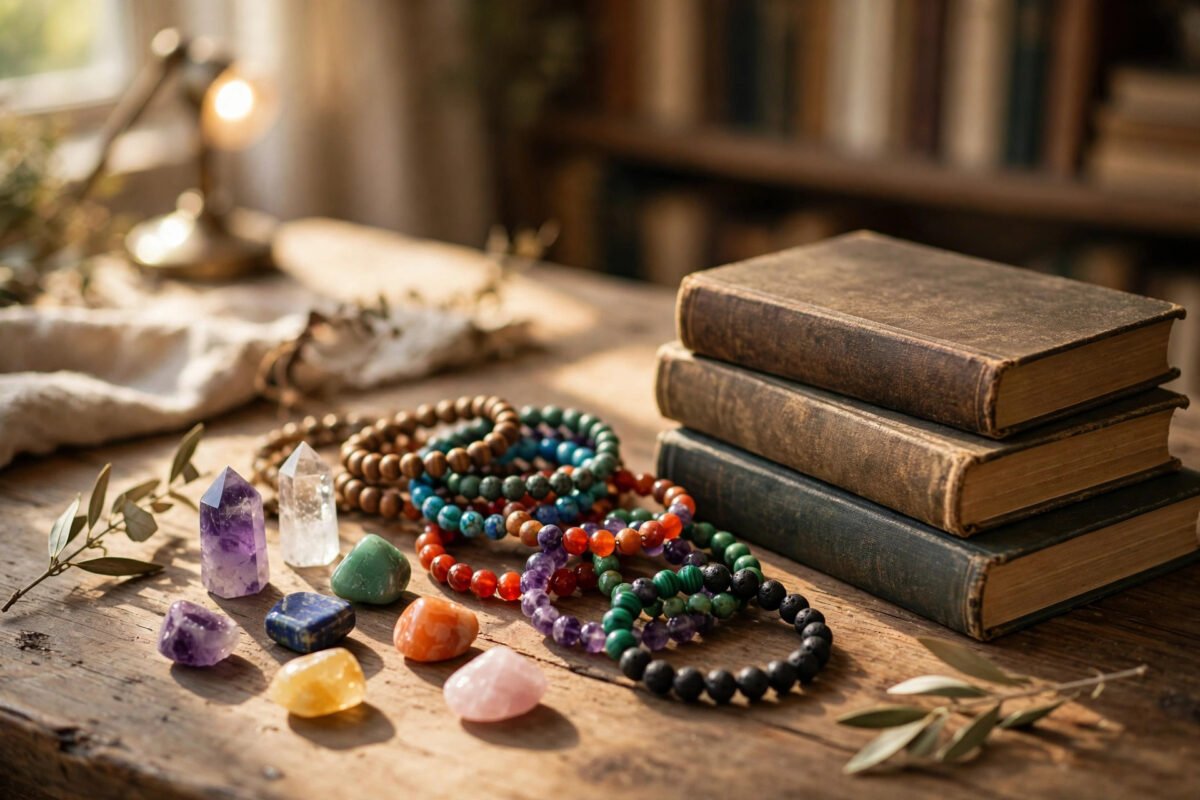
AVENSU designs many of its citrine and tiger’s eye bracelets to be worn daily for exactly this reason — not as a lucky charm that decides for you, but as a tactile prompt you touch before a meeting, an interview or a difficult conversation.
What to Avoid When Choosing Under Pressure
Avoid buying stones in a panic or collecting five different bracelets hoping one will reveal the answer. That pattern increases noise. Also avoid outsourcing the decision entirely — to a stone, a reading, or another person’s certainty. If a choice involves money, health or legal consequences, get qualified professional advice alongside any personal ritual.
Care for your pieces simply so they last through many decision seasons. A gentle salt water cleanse suits hard quartz-family stones like citrine, while tiger’s eye is better wiped clean and charged in soft light. You can browse current solar plexus pieces in the AVENSU shop when you are ready, without rushing.
Frequently Asked Questions
Which solar plexus crystal is best for decision-making?
Citrine is the most commonly recommended for clarity and optimism in tradition, while tiger’s eye is preferred by people who want grounded perspective between two options. The best choice is the one whose traditional meaning matches the quality you feel you lack — confidence, calm, or follow-through.
How do I use a crystal while making a decision?
Hold the stone or wear the bracelet while you write your criteria, read your options aloud, and set a deadline. The crystal acts as a focus for reflection, not an oracle. Always combine the ritual with real information and, for major matters, professional advice.
Can a solar plexus bracelet guarantee I choose correctly?
No. No crystal can guarantee an outcome, and we do not present bracelets that way. Their value in tradition is as a reminder of intention and self-trust. Good decisions still come from clear criteria, honest facts and willingness to act.
Which chakra should I work with after deciding?
Once a choice is made, many people shift focus to the root chakra for stability or the throat chakra for communicating the decision. Our guide to the throat and third eye crystal pair is a helpful next read if speaking your decision feels like the hard part.







 English
 Vietnamese