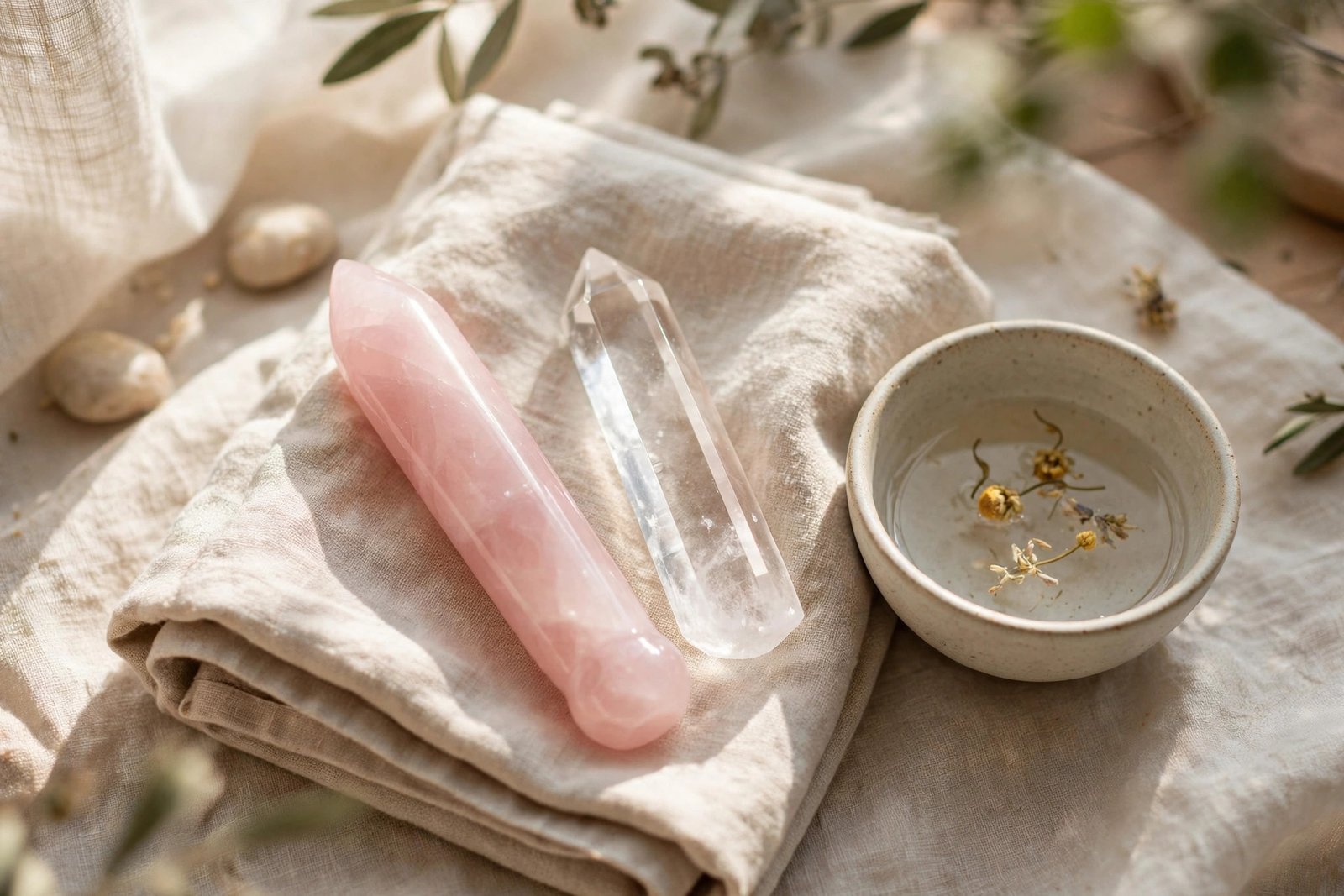
A crystal massage wand is a smooth, elongated stone, usually rounded at one end and tapered or pointed at the other. People use wands in relaxation rituals, gentle facial routines, meditation, and traditional crystal layouts. Unlike a display piece, a wand is a tool: it is picked up, warmed in the hands, and moved slowly and deliberately.
In tradition, the pointed end of a wand is believed to focus intention, while the rounded end is believed to soothe and soften. Modern use is simpler and more practical: the cool, smooth stone feels pleasant on tired shoulders, hands, and feet, and the ritual of slowing down is the real benefit. This guide explains how to choose a wand, use it safely, and care for it.
Types of Wands and Points
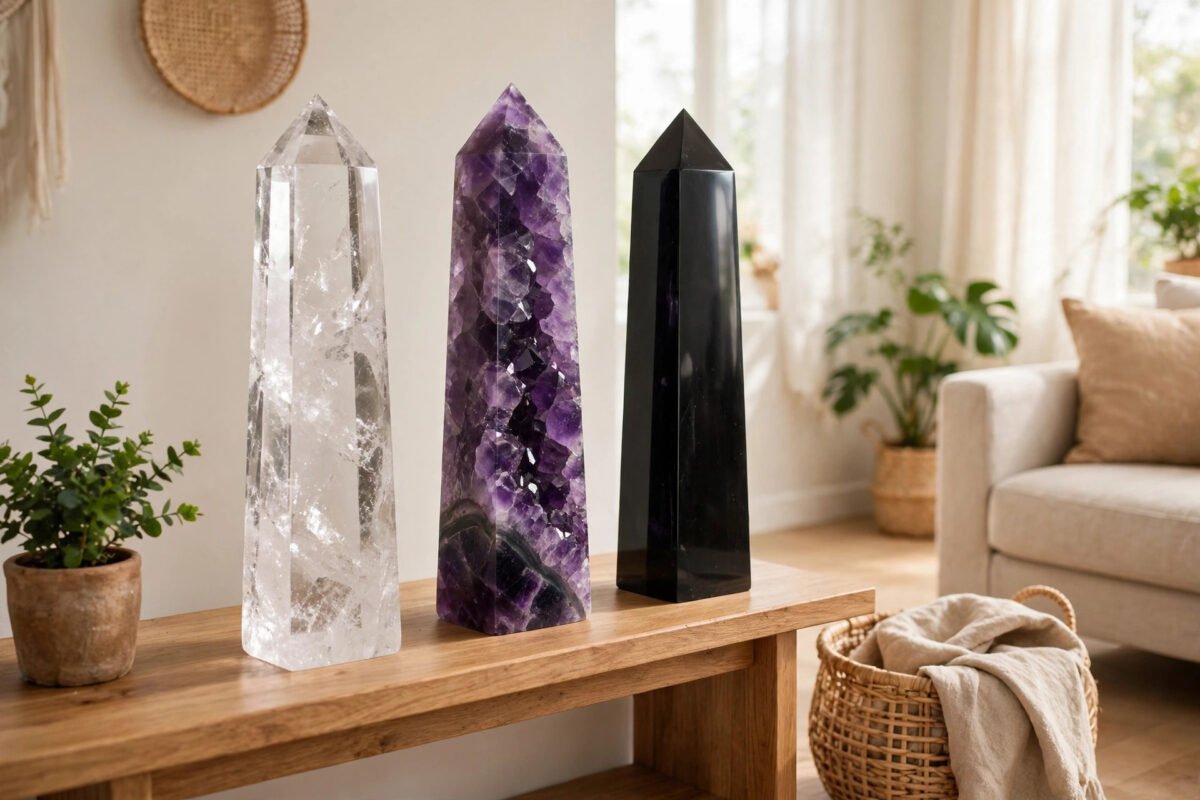
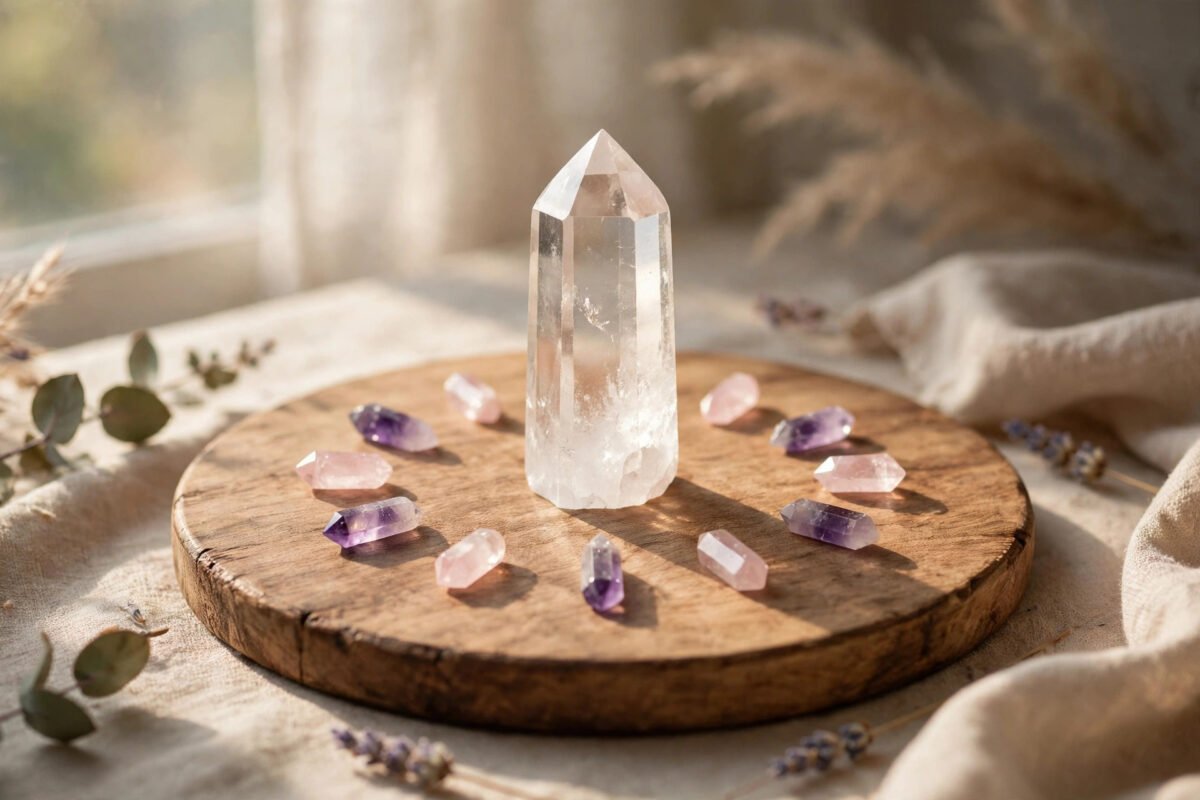
Smooth massage wands are fully rounded, like a thick pencil with soft ends. They suit beginners because there is no sharp tip to manage. Faceted wands, often cut with six or more sides in the style of Vogel-inspired designs, end in a clear point and are mostly used in meditation and ritual layouts rather than on skin. Double-terminated wands have points at both ends and are collector pieces for display and grid work.
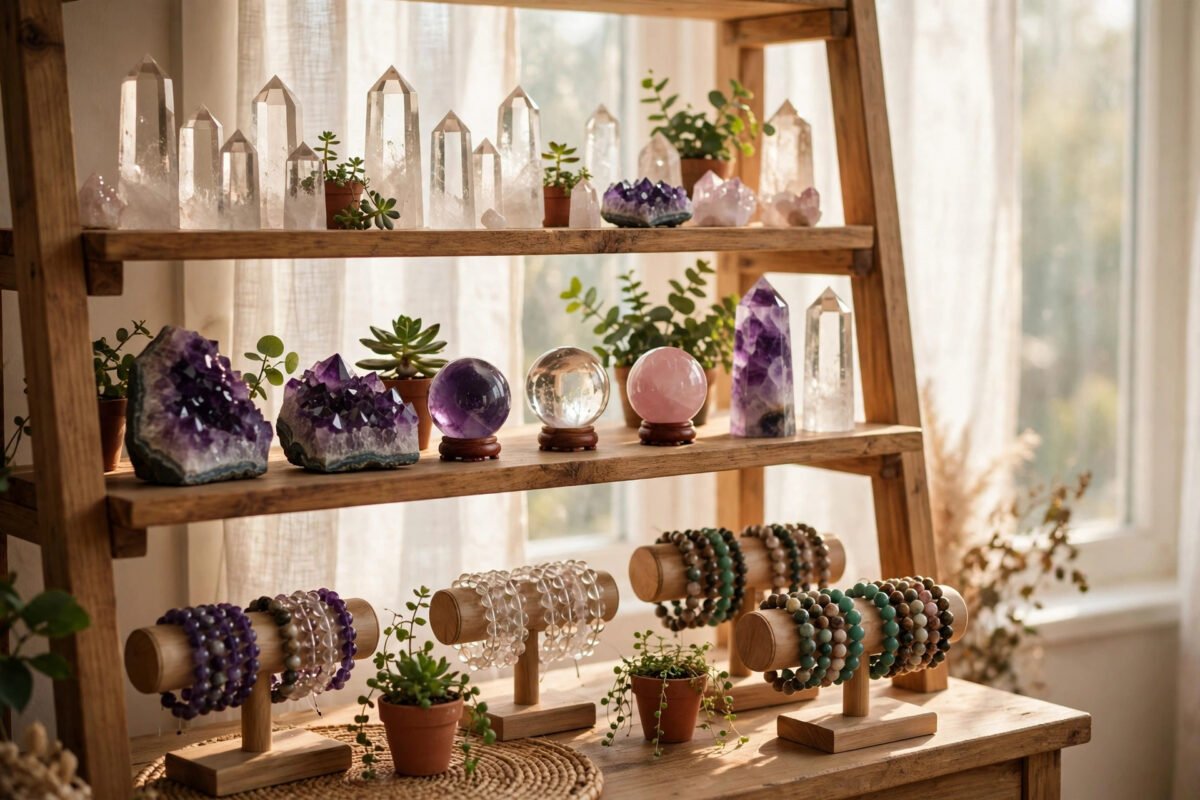
Natural crystal points can also be used as ritual wands when they are smooth enough to hold comfortably. Our guide to crystal towers and points explains natural point formation. For body use, always choose polished, unchipped pieces and keep raw points for display only.
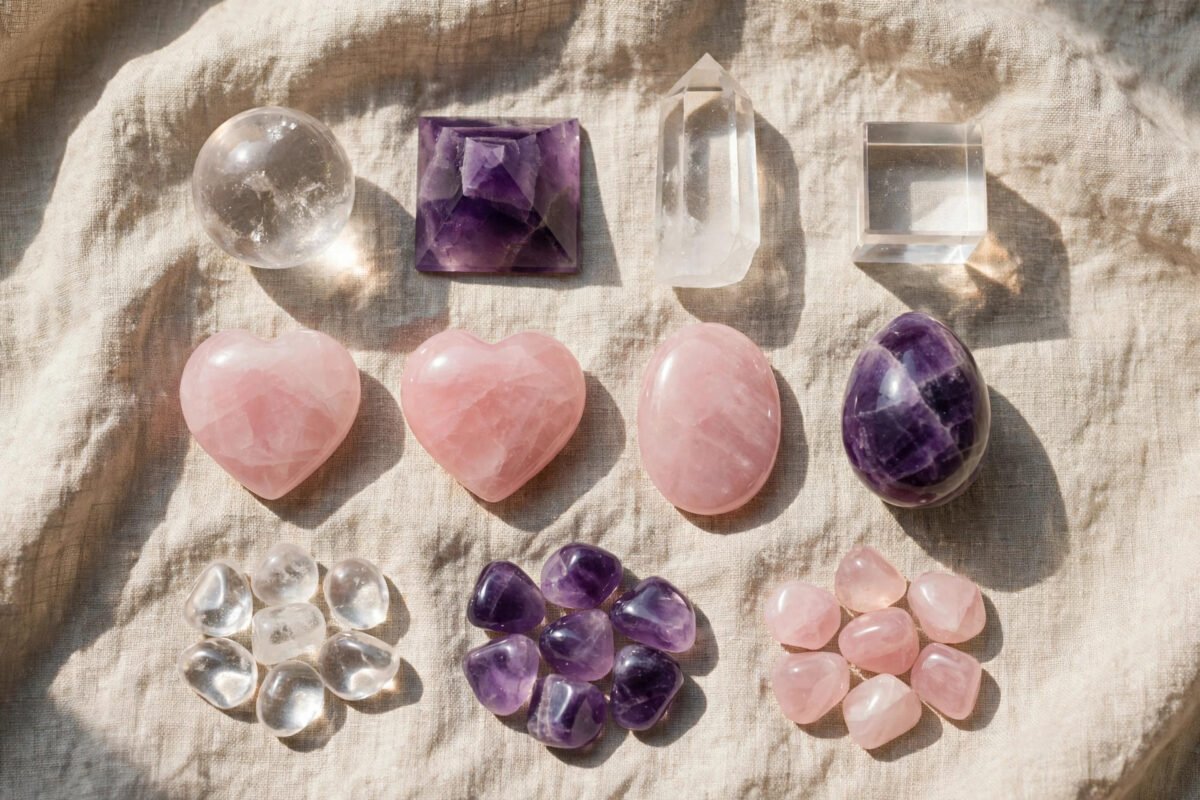
Materials for wands are usually hard, smooth stones such as quartz family crystals, documented on Mindat, and in Wikipedia’s quartz overview. Rose quartz, clear quartz, and amethyst wands dominate the market because they polish well, feel cool, and are widely available in consistent quality.
Choosing the Right Wand
Length is the first decision. A short wand of 8–10 cm suits facial routines and hand work. A medium wand of 11–14 cm is the all-purpose choice for shoulders, back, and ritual use. Longer wands look dramatic but are heavier and easier to drop.
Check the finish carefully. Run your fingers along the whole surface: it should be uniformly smooth, with no cracks, pits, or chipped tips that could scratch skin. Hold it in good light and use our guide on how to tell if a crystal is real to avoid glass or resin wands sold as natural stone.
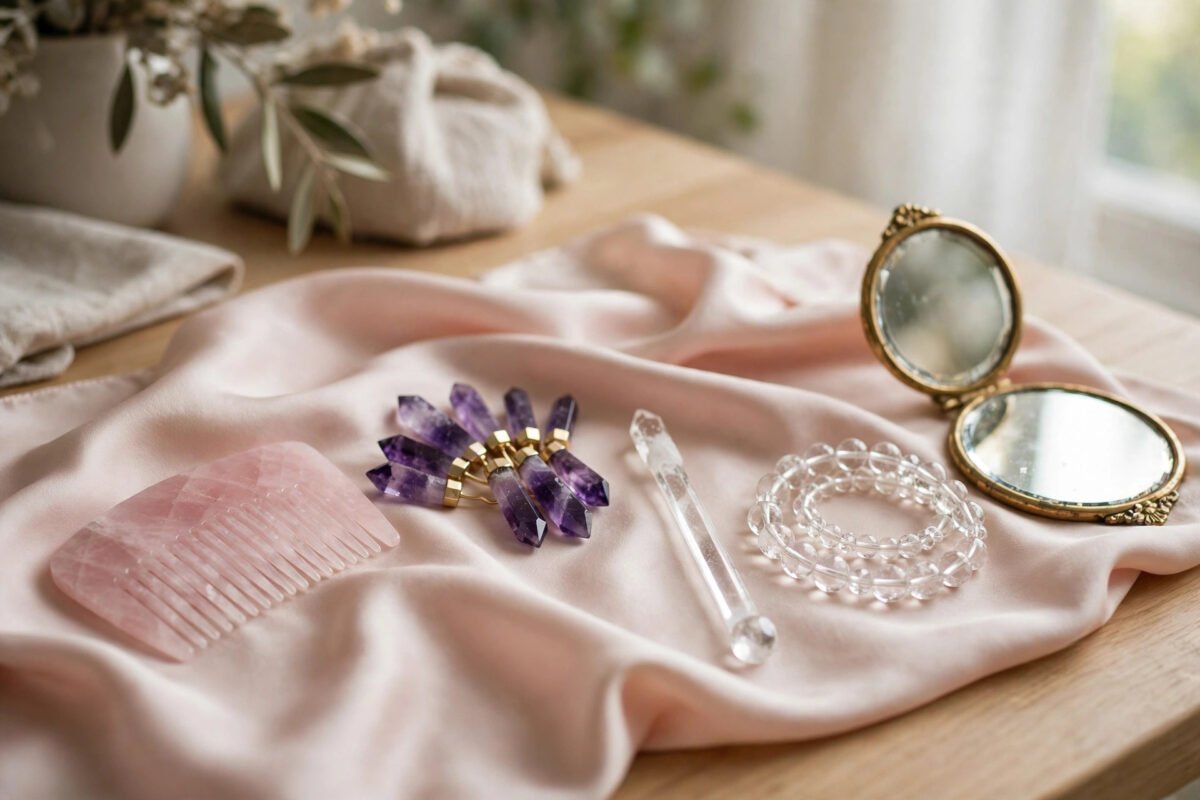
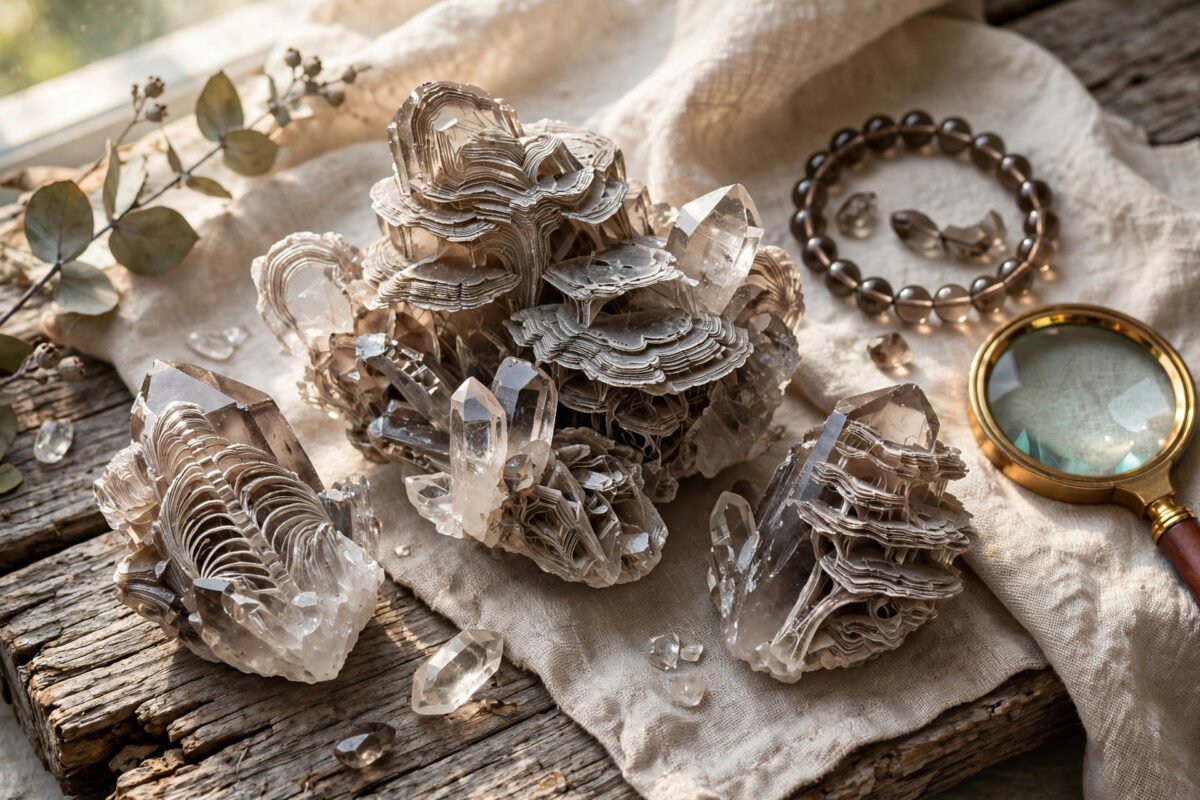
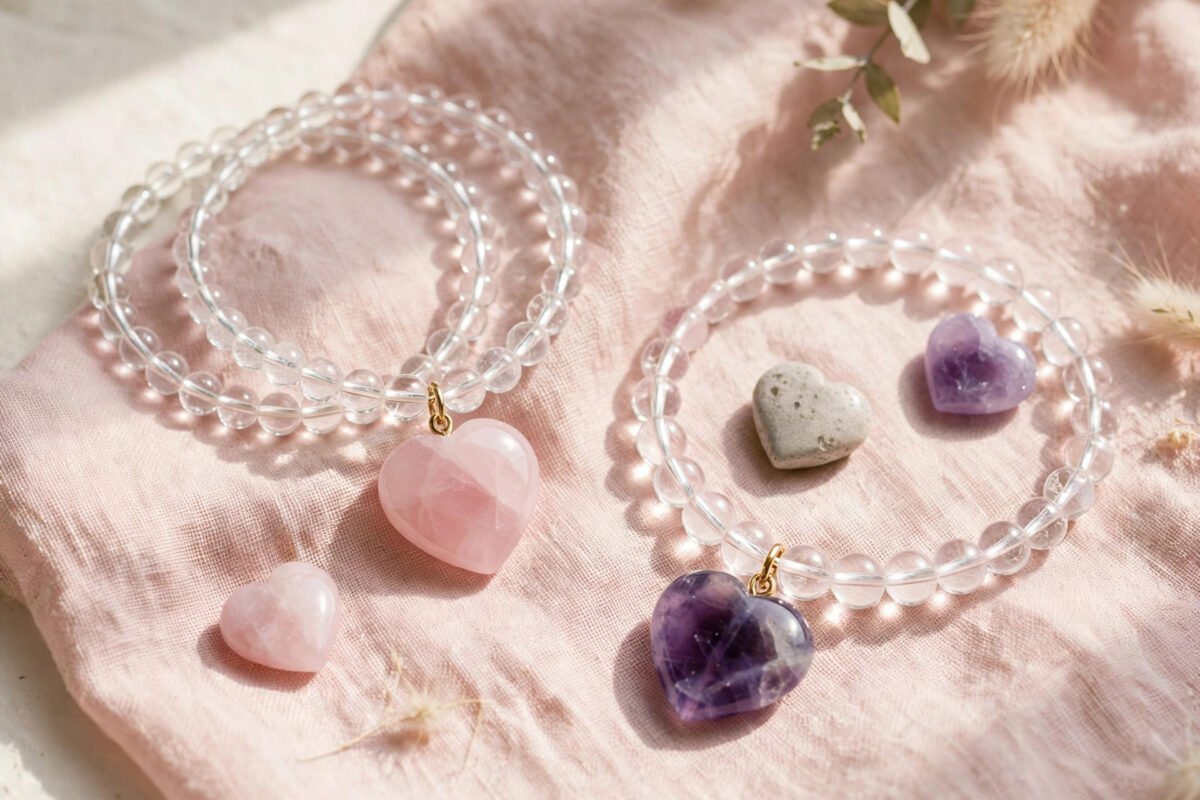
Choose the stone by theme and by feel. Rose quartz is traditionally associated with love and self-care, as our rose quartz meaning guide explains, and is the classic facial wand. Amethyst is traditionally linked with evening calm. Black obsidian and smoky quartz suit grounding rituals, covered in our grounding stones guide.
Pair a wand ritual with wearable crystal for continuity. Many AVENSU customers use a wand in an evening wind-down, then wear an AVENSU bracelet the next day as the daytime reminder of the same intention. Browse the AVENSU shop and the AVENSU grounding crystal bracelet for grounding pairings.
How to Use a Wand in Simple Rituals
For a relaxation ritual, warm the wand in your hands for a minute. Using gentle pressure only, glide the rounded end in slow circles over the shoulders, the backs of the hands, or the soles of the feet. Work for five to ten minutes, breathe slowly, and stop if anything feels uncomfortable. A wand is for comfort, never for deep tissue pressure or for treating pain or injury.
For a facial routine, use a clean, short wand or the rounded end of a medium wand with your usual facial oil, gliding outward and upward with very light pressure. Keep the stone away from the eyes themselves and clean it before and after every facial use.
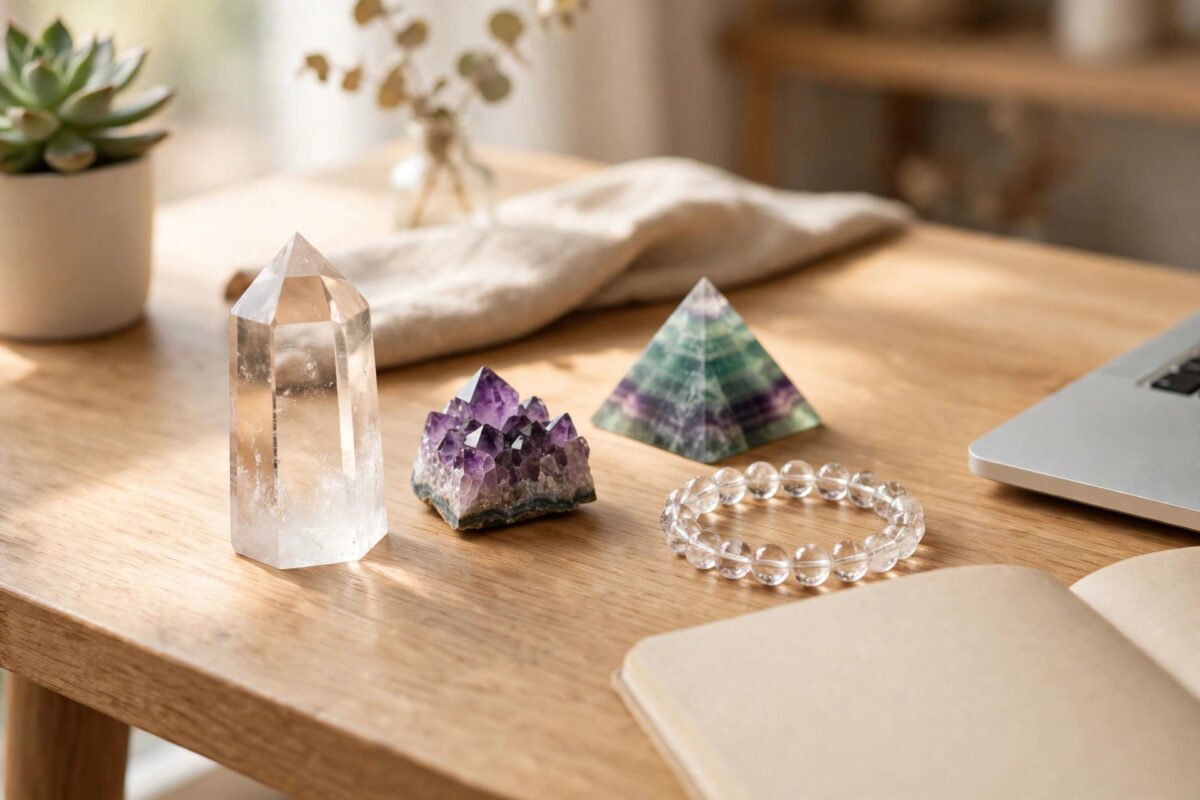
For meditation and ritual layouts, hold the wand in one hand, or place it alongside palm stones and a crystal cluster in a small arrangement while you sit quietly. In tradition, the point is directed outward when the intention is framed as releasing, and inward when framed as receiving. Treat this as symbolic ritual language within belief, not as a physical effect.
Never use a wand on broken skin, recent injuries, varicose veins, or areas a medical professional has told you to leave alone. Crystal wands are wellness and ritual objects, not medical devices.
Cleaning, Safety, and Storage
Hygiene matters more for wands than for any other crystal shape, because they touch skin. Wash quartz wands in warm water with mild soap before and after body or facial use, rinse well, and dry completely with a clean cloth. Wipe softer stones with a damp cloth instead of soaking them, following the principles in our complete crystal bracelet care routine.
Store your wand in its own soft pouch or lined box so the tip cannot chip against other stones. Our guide on how to store crystal bracelets includes pouch and box ideas that suit wands equally well, and our crystal care kit essentials covers cleaning cloths and storage basics.
Inspect the tip before each ritual use. If a wand chips or cracks, retire it from skin use and keep it for display only. Replace it rather than trying to polish out deep damage at home.
Frequently Asked Questions
Are crystal massage wands safe to use on skin?
Polished, unchipped quartz wands used with gentle pressure on healthy skin are a common part of relaxation routines. Wash the wand before and after use, avoid broken or irritated skin, and never use a wand as a substitute for medical care.
What is the difference between a massage wand and a crystal point?
A massage wand is deliberately polished smooth all over for comfortable handling and skin contact. A crystal point may be natural or polished for display and ritual focus, and can have edges or tips that are not suitable for massage.
Which crystal wand is best for beginners?
A medium-length rose quartz or clear quartz wand is the easiest start. Both are hard, smooth, affordable, and versatile for facial routines, hand and shoulder relaxation, and meditation.
How often should I clean my crystal wand?
Clean it before and after every use on skin, just as you would any facial tool. For display-only or meditation wands, a weekly dust and a wash when they feel dull is enough to keep the polish bright.



 English
 Vietnamese