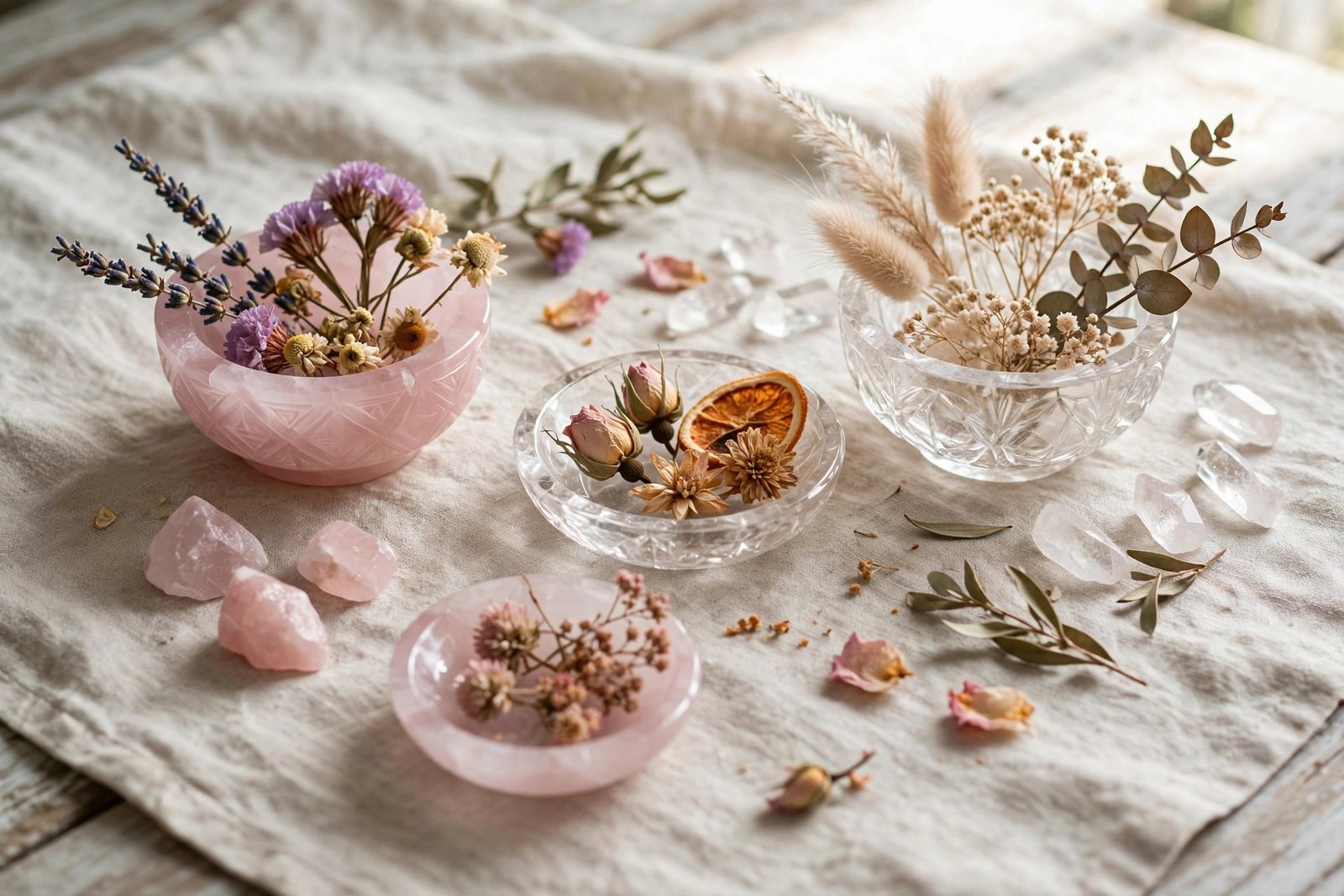
A small crystal bowl can transform a corner of a dresser into a place of intention. Carved from rose quartz, clear quartz, fluorite, and other stones, crystal bowls and offering dishes hold rings, herbs, salt, or small tributes on home altars — and on ordinary days, they simply keep tiny things beautifully organized.
This guide covers what these dishes are traditionally used for, which stones suit them best, how to choose the right size and shape, and how to style and care for them. If you are gathering pieces for a small altar, pair this guide with our crystal angel carvings guide and browse wearable companions in the AVENSU shop.
What Are Crystal Bowls and Offering Dishes?
An offering dish is a shallow carved bowl, usually five to twelve centimeters across, used on altars and meditation spaces to hold offerings or ritual items. Bowls and dishes appear in devotional practice worldwide — from Tibetan singing-bowl traditions to the small water and flower offerings of Balinese daily worship, context you can explore through the Metropolitan Museum’s Heilbrunn Timeline essays on ritual art.
In modern crystal practice, these dishes hold whatever the practitioner values: a pinch of salt or herbs, dried petals, written intentions, incense cones, or the jewelry taken off at night. In tradition, the bowl is believed to bless and contain the energy of what it holds, and the stone’s own associations are thought to color the offering — rose quartz for love and gratitude, clear quartz for clarity. These are beliefs and personal symbolism, not verified effects, but the ritual of a beautiful container encourages a mindful pause either way.
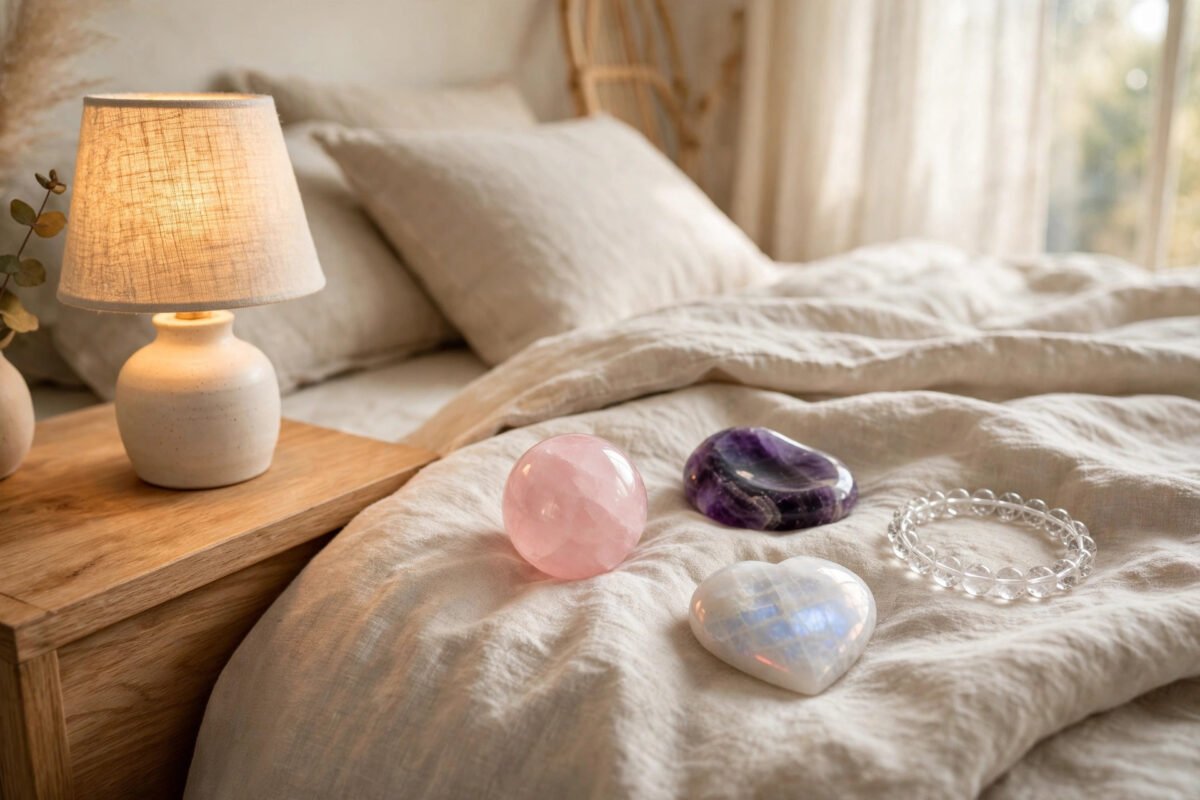
Many AVENSU customers use a crystal dish as the nightly home for their bracelet. Resting your bracelet in a dedicated bowl protects it and completes the ritual of taking it off — a habit our complete crystal bracelet care routine recommends.
Popular Stones and What They Are Chosen For
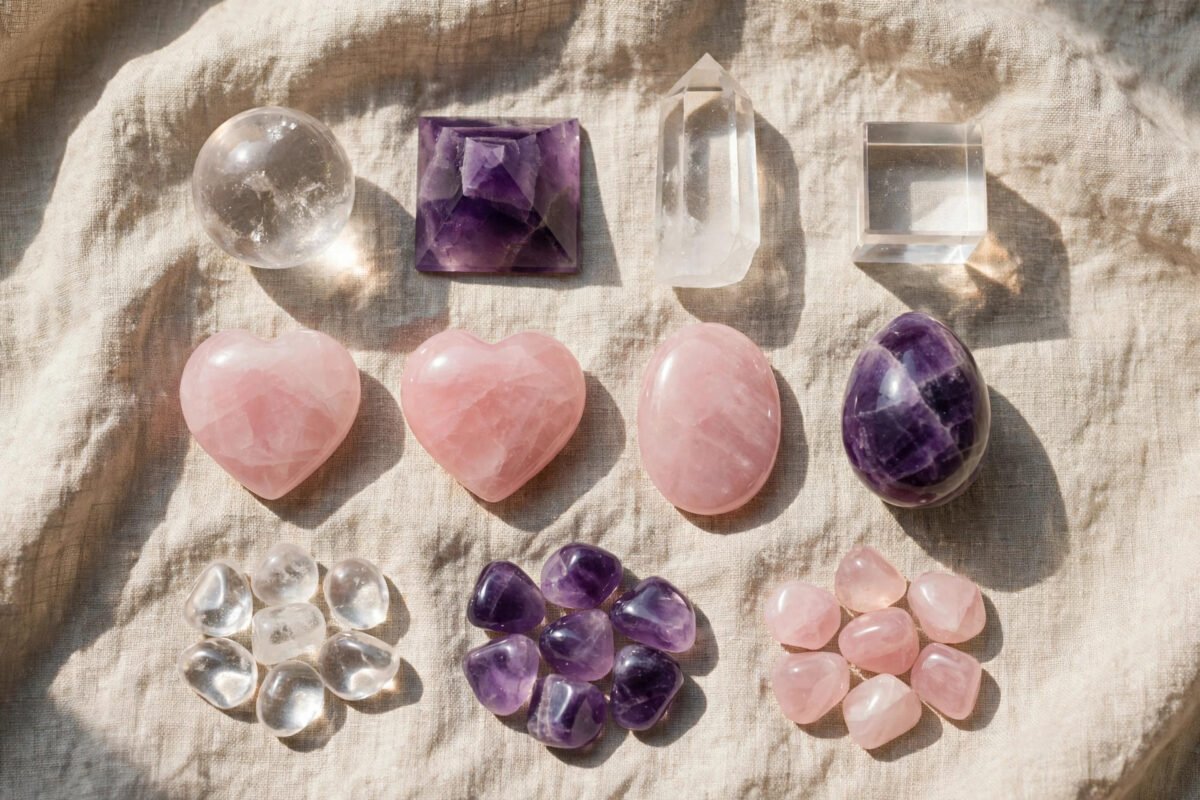
Rose quartz bowls are the bestsellers, chosen for gratitude and self-care rituals and for holding rings at night; the stone’s tradition is covered in our rose quartz meaning guide. Clear quartz dishes are versatile and bright, traditionally associated with clarity and focus. Amethyst bowls suit meditation corners, fluorite dishes bring rainbow banding to study desks, and selenite dishes are popular for resting other crystals — though selenite is soft and must stay dry.
Harder stones such as quartz and agate tolerate daily handling and washing, making them practical for dishes that hold salt or herbs. Softer carved stones — fluorite at Mohs 4 and selenite at Mohs 2 — are better reserved for dry offerings and display. Before buying, confirm the stone is genuine carved crystal rather than glass or resin; our guide on how to tell if a crystal is real lists simple checks, including temperature and weight, that work well on bowls.
A matching set deepens the theme: a rose quartz dish holding an AVENSU rose quartz bracelet, for example, turns two purchases into one small, coherent ritual station.
Choosing Size, Shape, and Quality
Choose size by job. A dish of five to seven centimeters holds rings, earrings, or a single bracelet — see our crystal bracelet sizing guide for how bracelets coil when rested. Bowls of eight to twelve centimeters handle herbs, petals, and multiple small stones. Deep bowls suit salt and sand; shallow dishes display their contents better.
Inspect the carving as you would any stone vessel. Walls should be an even thickness, the rim smooth with no chips, and the base flat so the dish does not rock. Hold translucent stones to the light: natural banding and inclusions are good signs, while bubbles suggest glass. A well-carved bowl feels cool and satisfyingly heavy for its size.
Shape carries symbolism too. Round bowls suggest wholeness and are the classic offering form; heart-shaped dishes suit gratitude and love-themed altars; leaf and flower shapes bring a nature theme. Let the ritual you imagine choose the silhouette.
Styling Your Altar and Caring for Your Bowl
Build a small altar in layers: a cloth as the base, your crystal bowl as the heart, a candle or small plant beside it, and one figure or photograph that matters to you. Our full moon luck drawing ritual shows how a bowl of water or petals takes its place in a monthly tradition, and the grounding stones meaning guide can help you choose stones to display around it for a steadier theme.
Rotate the bowl’s contents with the seasons — spring petals, summer herbs, autumn seeds, winter salt — so the altar stays alive rather than dusty. Empty and wash the bowl whenever you refresh it.
Care follows the stone. Quartz and agate bowls wash in lukewarm water with mild soap; a crystal care kit brush cleans carved details. Keep selenite and fluorite dry, and never pour boiling water into a crystal bowl, since thermal shock can crack natural stone. If you use your dish for salt offerings, rinse it promptly so salt does not sit in micro-fractures — the same caution we explain in our guide on how to cleanse crystals with salt water.
Frequently Asked Questions
What can I put in a crystal offering dish?
Traditional contents include salt, herbs, dried flowers, water, written intentions, and incense cones. Everyday uses are just as valid: rings, earrings, keys, and the bracelet you take off at night.
Which stone is best for a first crystal bowl?
Rose quartz and clear quartz are hard, versatile, and easy to wash, making them the most practical first choices. Save soft selenite and fluorite for dry offerings and display.
Can I eat or drink from a crystal bowl?
No. Decorative carved bowls are not food-safe: natural stone can contain mineral inclusions and surface treatments. Use them for dry offerings and display only.
How do I cleanse a crystal bowl in tradition?
Many practitioners rinse the bowl, dry it well, and refill it with fresh contents while setting an intention. Moonlight resting is another popular tradition that suits every stone, including water-sensitive ones.



 English
 Vietnamese