Opening your heart is easier when your feet are on the ground. That simple idea sits at the center of this pairing: the root chakra, traditionally associated with stability and safety, combined with the heart chakra, associated with love, grief, and connection. Worked alone, heart practice can feel exposed; grounding alone can become guarded. Together, root and heart are believed in tradition to let you stay steady while you soften — present in your body while you let people in.
This guide covers the stones for the pair, how to wear them, and a short daily practice. For the individual centers, see our root chakra crystals guide and the heart chakra crystals deep dive.
Why Grounding Comes First in This Pair
In chakra tradition, the heart is the bridge between the lower, physical centers and the upper, reflective ones — a structure outlined in standard references like Wikipedia’s chakra overview. Bridges need foundations on both banks. Practitioners often find that heart-focused work — forgiveness, receiving care, grieving well — goes better when root practices come first in the day: food, movement, order, rest. Our grounding stones meaning guide collects the traditional reasoning behind that sequence.
The traditional signs that this pair suits you include feeling emotionally open but easily overwhelmed, or calm and capable yet strangely distant from people. Our articles on root chakra blocked signs and heart chakra blocked signs help you recognize each pattern. The related sacral and heart chakra bridge piece explores the neighboring combination if your focus leans more creative.
AVENSU customers often discover this pair after a life change — a move, a new relationship, a loss — when steadiness and openness are needed in the same season.
The Stones: Jasper, Tourmaline, Rose Quartz, Aventurine
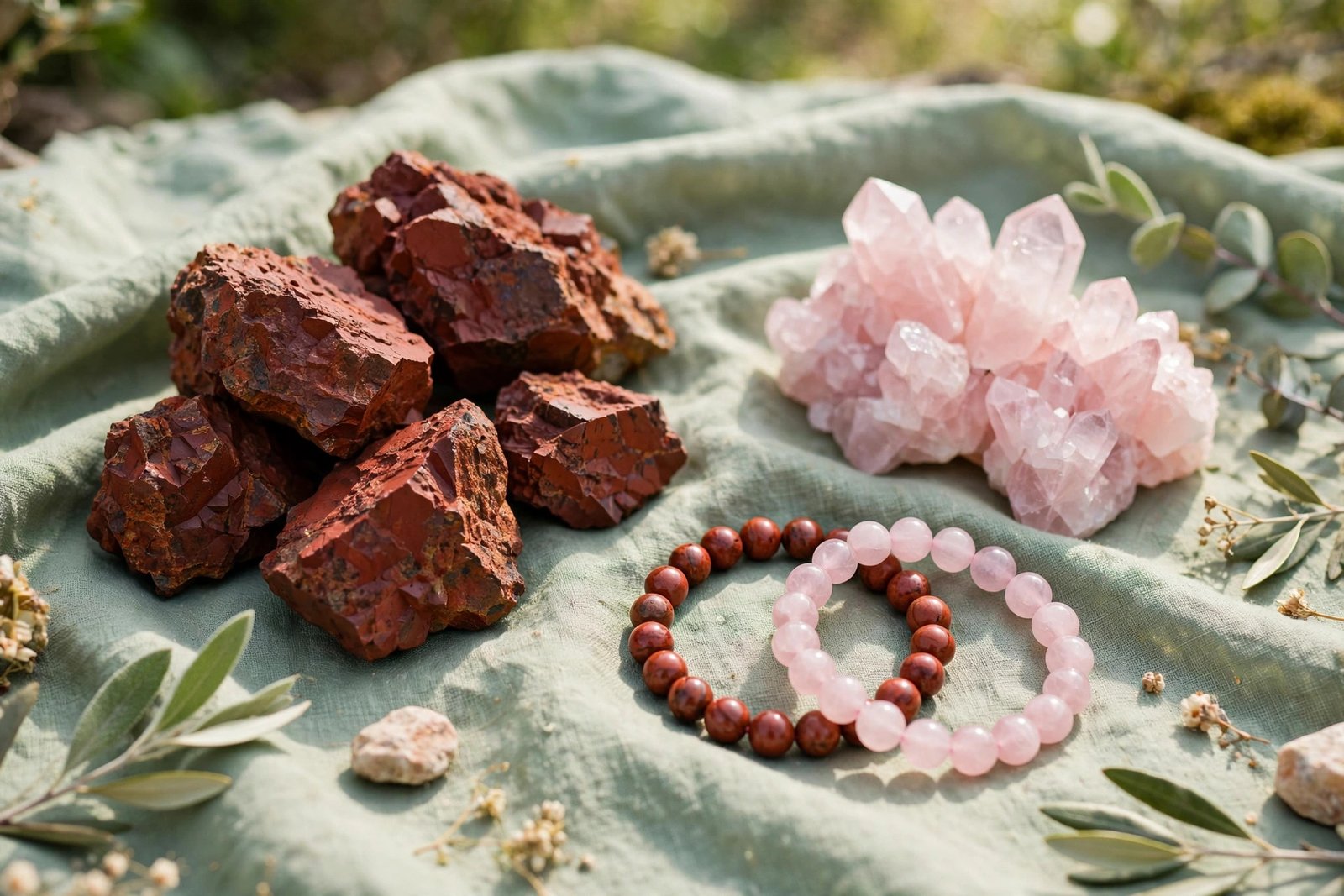
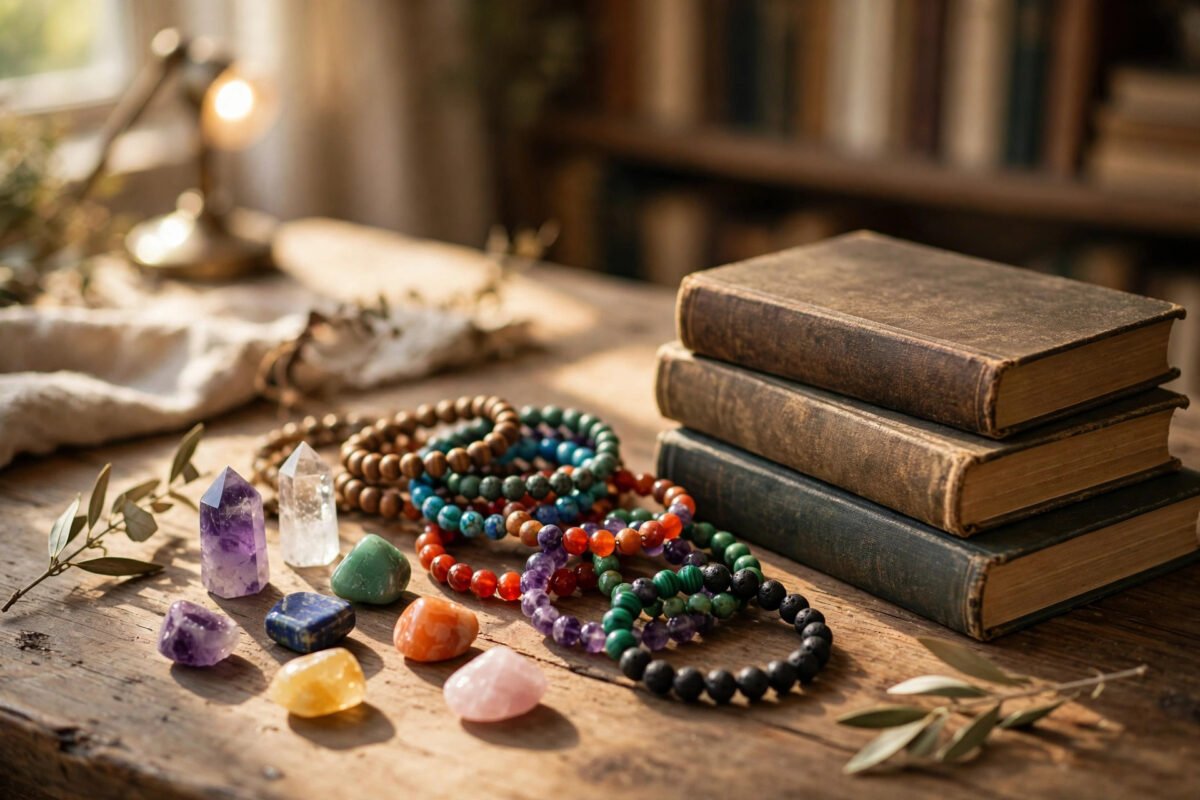
For the root, choose red jasper for its earthy warmth, hematite for its weight and cool metallic feel, or black tourmaline if you prefer a protective, matte black classic. These are durable, everyday stones that suit a bracelet worn constantly. For the heart, rose quartz is the beloved first choice — our rose quartz meaning guide explains its traditional associations, and the rose quartz love bracelet is the simplest way to wear it. Green aventurine is the green alternative, covered in our green aventurine meaning guide, traditionally linked with luck and emotional calm.
Visually the pair is striking: deep red or black against soft pink or green. Wear them stacked on one wrist following our chakra bracelet stacking guide, with the root bracelet lower, nearer the hand, as a quiet reminder of the order — ground first, then open. Both stone families are available in the AVENSU shop in matching bead sizes so the pair sits comfortably together.
A Short Daily Practice
In the morning, stand with bare feet on the floor, hold your root stone, and take five breaths while noticing the literal ground under you. Name one practical thing that will make today feel stable — a meal planned, a bill paid, a walk scheduled. This takes two minutes and sets the root tone for the day.
In the evening, switch stones. Sit down, hold the rose quartz or aventurine, and recall one moment of connection from the day — a message, a kindness, a face. If the day held grief or conflict instead, simply hold the stone and breathe; our heart chakra stones for grief article offers a gentler extended practice for harder seasons. Cleanse the pair weekly using sound cleansing or a night on a windowsill, and store them together so the pairing stays a set in your mind as well as on your wrist.
Frequently Asked Questions
Can I work on the heart chakra without grounding first?
You can, and many people do. This pairing simply follows the traditional view that heart work feels safer and steadier with root support, especially during grief, new relationships, or other emotionally intense seasons. If openness ever feels overwhelming, return to root practices for a few days.
Which root stone pairs best with rose quartz?
Red jasper is the classic partner — its warm red echoes rose quartz’s pink while keeping the grounding symbolism clear. Black tourmaline creates a stronger visual contrast and is preferred by people who want the root side to feel more protective than warm.
Should the two bracelets be worn on the same wrist?
Stacking them together is the most common choice and makes the pairing a single visual reminder. Splitting them across wrists also works, especially if you wear a watch. What matters is that you associate the two stones as a set with a shared intention.
How long should I practice with this pair?
Give the pairing at least a few weeks of the morning-evening rhythm before judging it. Tradition emphasizes slow, steady attention, and most people report that the habit of checking in with both body and heart outlasts any single stone.







 English
 Vietnamese