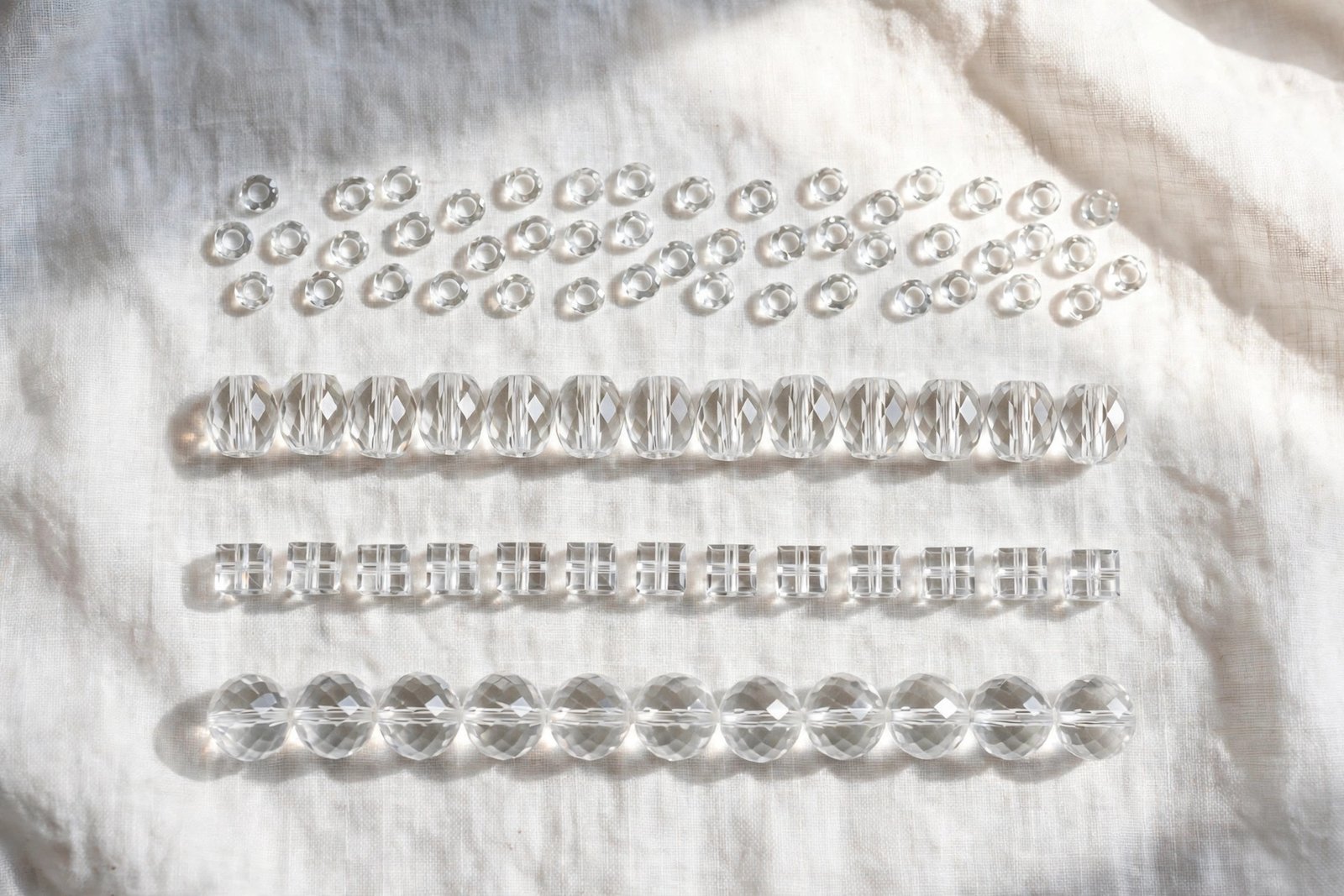
Round beads get all the attention, but the shape of a bead quietly decides how a bracelet looks, drapes, and feels. A rondelle adds a flash of structure, a barrel elongates the wrist, and a cube turns a soft crystal bracelet into modern jewellery. This crystal bead shapes guide walks through the shapes you will actually meet — round, rondelle, barrel, cube, faceted, chip, and donut focals — explaining what each does for sparkle, comfort, and price, so your next bracelet from the Cửa hàng AVENSU is chosen by design, not by default.
Shape works together with size: once you have read this guide, pair it with our bracelet bead size guide to nail the full specification of your ideal piece.
Round Beads: The Timeless Baseline
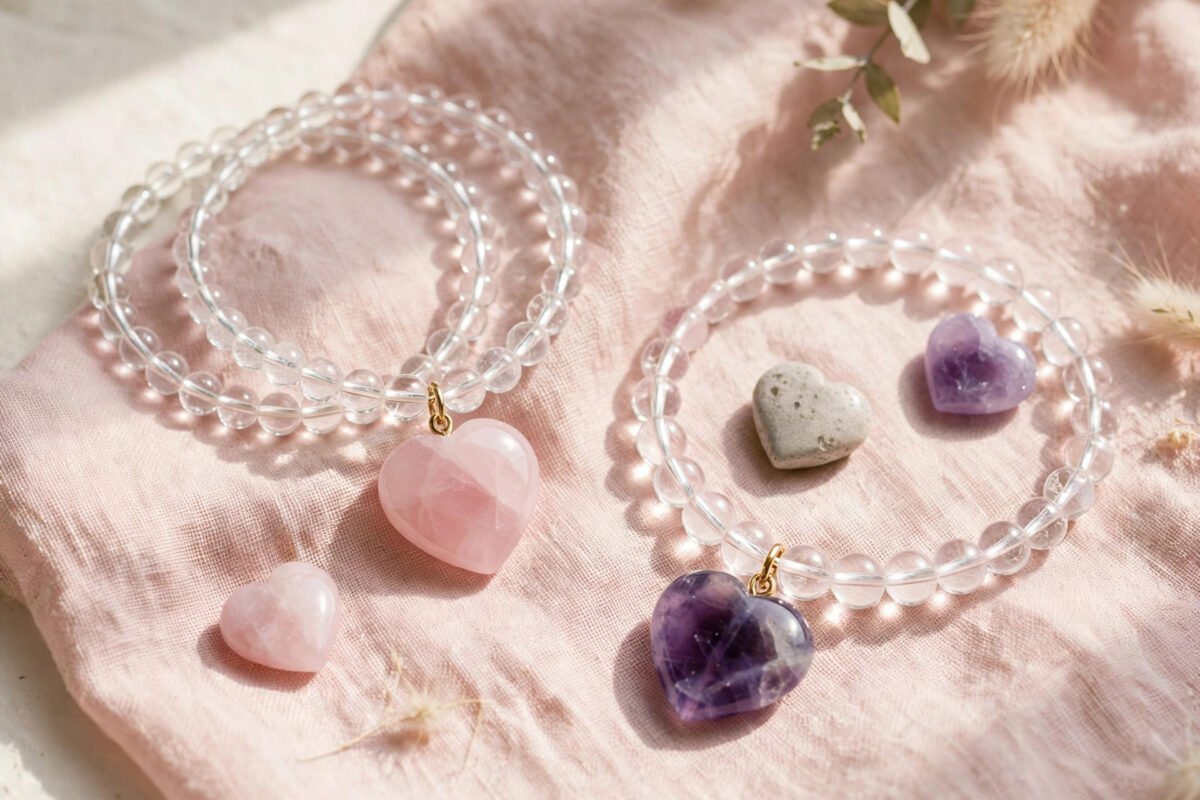
The smooth round bead is the default for a reason. It rolls comfortably against the skin, shows a stone’s colour evenly, and stacks neatly with other bracelets. Rounds come in matte, polished, and faceted finishes, from dainty 4 mm to bold 14 mm. They are also the easiest shape to restring and resize, which is why most crystal bracelets — including the Vòng tay pha lê giúp cân bằng năng lượng — use them. If you are buying your first bracelet, a round-bead design in a stone you love is never a mistake. Fit it properly with the crystal bracelet sizing guide.
Rondelle Beads: The Elegant Spacer-Turned-Star
A rondelle is a flattened round — wider than it is tall, like a tiny wheel or doughnut without a visible hole. Rondelles began as spacer beads between rounds, but faceted rondelles in clear quartz or hematite now headline whole designs. Their broad flat sides catch light in wide flashes, and their slim profile adds pattern without adding much length to the bracelet.
Wear notes: rondelles sit very comfortably because their edges are rounded, but a bracelet of pure rondelles can feel slightly “segmented” as it bends. Many AVENSU designs alternate rondelles with rounds for the best of both. Gemstone cutting terms like these are standardised by the trade — the Gemological Institute of America (GIA) education pages are a reliable reference for cut and finish vocabulary.
Barrel, Cube, and Other Structured Shapes
Barrel beads are short cylinders with bulging middles and flat ends. They lengthen the line of a bracelet and suit banded stones like tiger’s eye and agate, where the barrel shows off stripes along its length. Barrels roll less than rounds, so the bracelet stays put on the wrist.
Cube beads are the modernists: crisp edges, flat faces, and a satisfying geometric rhythm. Cubes show colour in bold blocks and pair beautifully with minimalist metal accents. Their corners are the comfort caveat — quality cubes have micro-bevelled edges; sharp, un-bevelled cubes can dig in and are best worn slightly loose.
Faceted rounds and bicones multiply sparkle by cutting flat faces into the bead. They glitter like gemstones and suit clear quartz, amethyst, and citrine; learn more about amethyst in our amethyst meaning guide. Facets also hide tiny inclusions, which can make mid-grade material look premium.
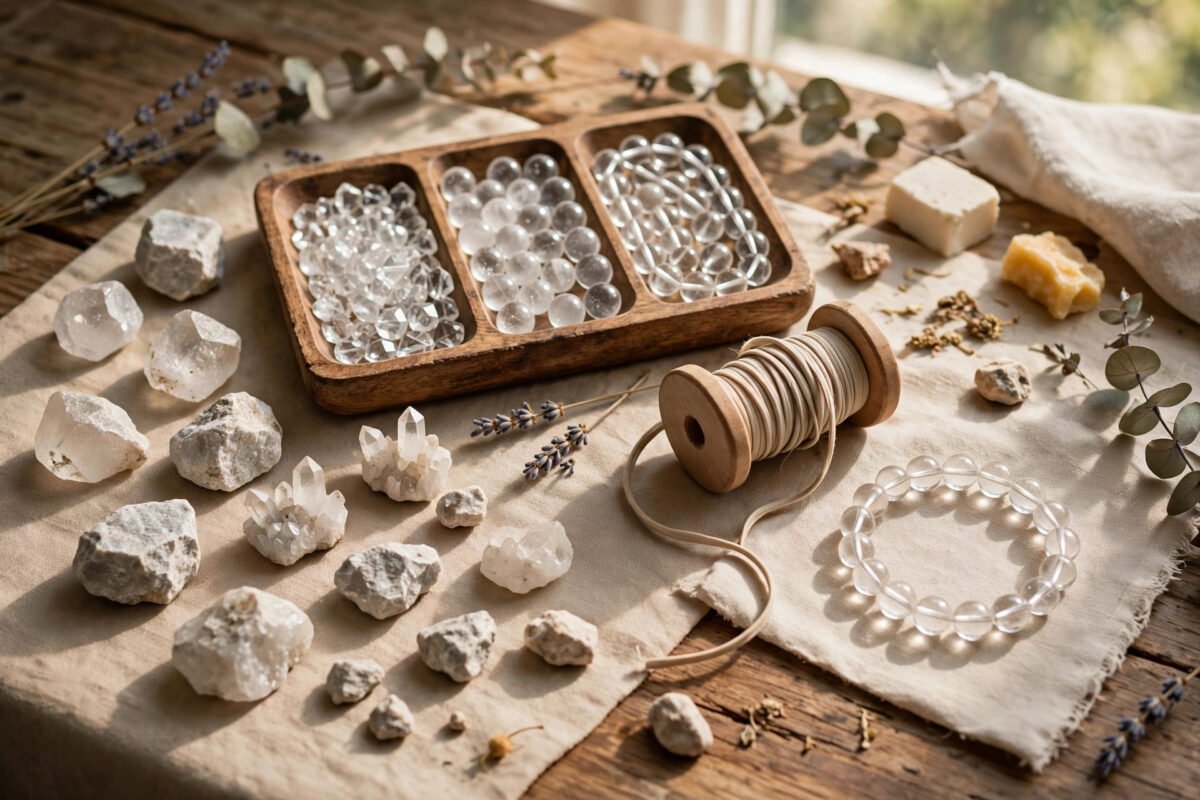
Chips and nuggets are the raw end of the spectrum — small tumbled fragments with organic outlines, covered in our raw crystal bracelets guide. They are affordable, textured, and traditionally associated with a natural, untamed feel.
Donut and focal shapes — a single pi disc or carved bead at the centre — give a bracelet a deliberate focal point; see the crystal donut pi disc guide for that shape’s history.
Choosing a Shape for Comfort and Care
Comfort rules are simple: rounded edges for sensitive skin and all-day wear; structured shapes (cube, barrel) for shorter wear or looser fits; faceted beads when you want maximum sparkle in photos and evening light. Mixed-shape bracelets should keep bead heights similar so the bracelet bends evenly and the elastic is not strained at one stiff section.
Care does not change much by shape, but edges and facets collect grime faster than smooth rounds. The brush-and-rinse method in our complete crystal bracelet care routine keeps cubes and rondelles bright, and storage that prevents shape-on-shape scratching is covered in how to store crystal bracelets. Keep a tiny kit from the crystal care kit essentials list at hand, verify new purchases with how to tell if a crystal is real, and browse shape variations across the Cửa hàng AVENSU to compare photos side by side. For symbolism-led picks, the Khám phá sâu về các loại tinh thể liên quan đến luân xa tim shows how shape and stone are often chosen together.
Các câu hỏi thường gặp
Which bead shape is most comfortable for all-day wear?
Smooth round beads, followed closely by rondelles. Both have fully rounded contact surfaces and roll naturally as your wrist moves. Cubes and barrels are comfortable for most people too, provided edges are bevelled and the fit is not tight.
Do faceted beads sparkle more than smooth beads?
Yes — each cut face reflects light in a different direction, so faceted beads flash as you move. The trade-off is maintenance: facets and their edges show dust sooner and need slightly gentler cleaning to protect the crisp cuts.
Can I mix bead shapes in one bracelet?
Designers do it constantly. The classic formula is one hero shape (say, cubes) softened by rounds, or rounds accented by rondelle spacers. Keep total bead height consistent so the bracelet drapes evenly and the elastic wears uniformly.
Which shape shows a stone’s colour best?
Large smooth rounds and barrels show body colour most honestly because they present an unbroken surface. Faceting lightens apparent colour by adding white reflections, which is flattering for pale stones but can wash out very light material like rose quartz.




 English
 Vietnamese