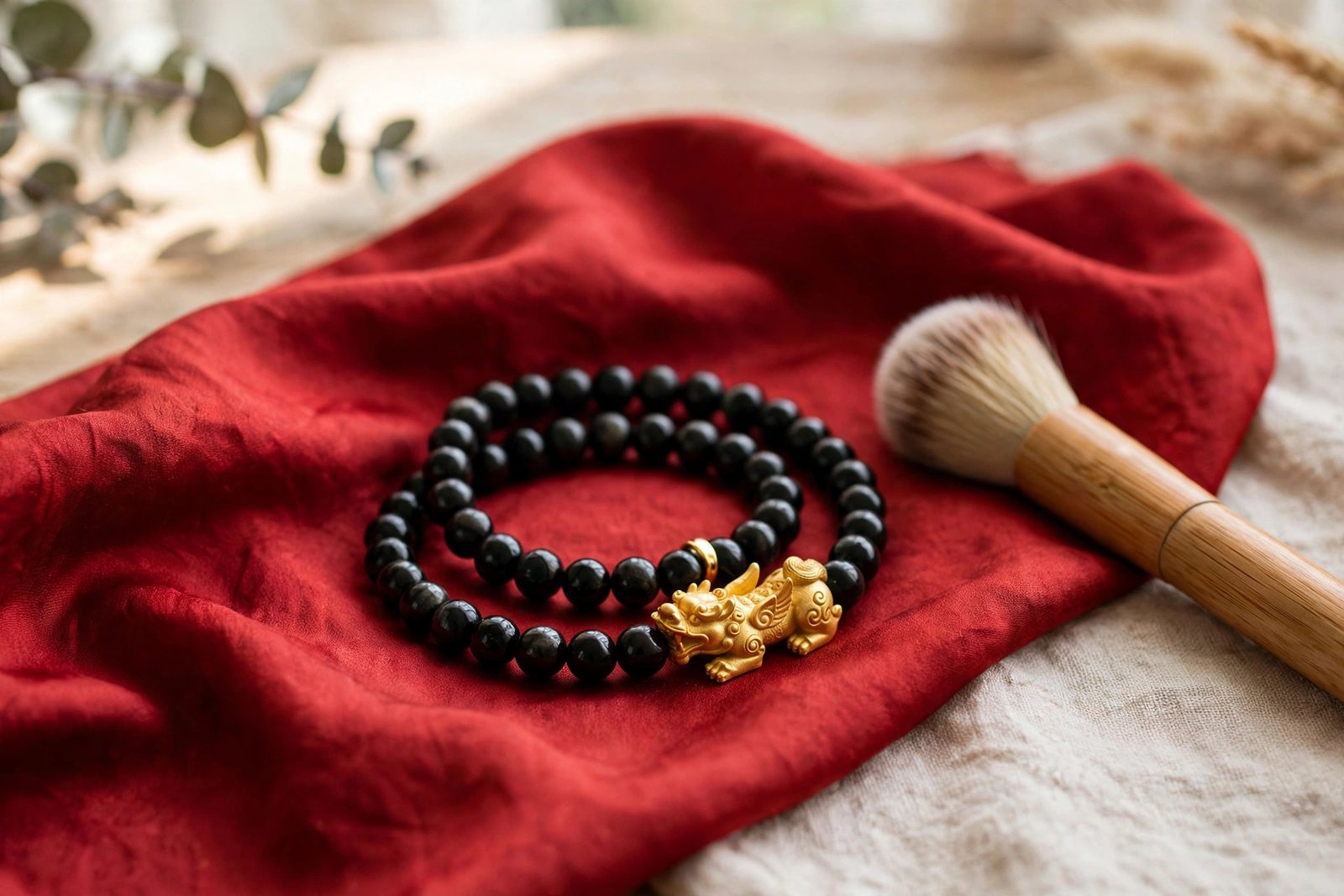
A Pixiu bracelet is part jewellery, part tradition. The small carved beast — a winged, lion-like creature from Chinese mythology — is traditionally associated with attracting and guarding wealth, and owners often follow long-standing handling customs alongside ordinary bracelet care.
This guide brings both together: the physical care a carved charm and beaded bracelet need, the traditional rules about touching, wearing and resting a Pixiu, and gentle cleansing methods that respect the materials.
Meet the Pixiu: Why Handling Rules Exist
In Chinese tradition, the Pixiu (also written Pi Yao) is believed to have an appetite for gold and treasure and, in the popular telling, no way to expel what it gathers — which is why it became a symbol of wealth retained rather than wealth passing through. Background on the creature’s mythology is summarised in the Wikipedia article on the Pixiu.
That story explains the customs. Owners traditionally avoid letting others handle their Pixiu, avoid touching its mouth and eyes casually, and keep the charm clean and bright — a dusty, neglected Pixiu is considered poor form for a guardian of prosperity. You do not need to share the belief to benefit from the habits: they amount to careful, respectful handling of a detailed carving. Our fuller explainer, Pixiu meaning in feng shui, covers the symbolism and placement traditions in depth.
Wearing and Handling Rules
Tradition offers several widely followed guidelines:
- Wear the Pixiu head pointing outward, away from your body toward the pinky side of the wrist, so it is traditionally said to gather wealth inward as you move through the world. Guidance on wrist choice is in which hand to wear a crystal bracelet.
- Let it be the first thing on, last thing off among your bracelets, and avoid stacking hard charms directly against the carving, which chips ears, horns and teeth.
- Touch it often — but mind where. Stroking the back and body of your own Pixiu is traditionally encouraged as bonding with it; the mouth and eyes are traditionally left alone, since they are said to do the seeking and gathering.
- Others should not handle it. If someone does pick it up, tradition says a cleanse resets it; practically, a wash and polish does the same job.
- Rest it thoughtfully. At night, tradition places the Pixiu facing the door or window of the room; practically, a soft dish on your dresser keeps the carving safe either way.
An AVENSU Pixiu bracelet follows the classic layout — beast charm centred among obsidian or other beads — as shown on the Vòng tay phong thủy Pixiu page, where you can see how the head should orient on the wrist.
Cleaning a Carved Charm Safely
Pixiu are carved in stone, metal or resin, and the cleaning method follows the material. Stone charms (obsidian, tiger’s eye, jade-style stones) wash like their beads: lukewarm water, a drop of mild soap, and a soft brush worked gently into the carving’s crevices, where dust and skin oil gather fastest. Rinse, pat dry, and air the whole bracelet flat until the cord is dry.
Metal Pixiu — gold-plated or alloy — should skip soaking; wipe with a damp cloth, dry immediately, and polish only the charm with a plain jewellery cloth, keeping compounds off the beads. The GIA care guide advises exactly this material-by-material approach for mixed jewellery.
Check the carving monthly for chips at the horns, wings and tail, and check where the drill hole passes through the body — that is the stress point. If the elastic frays there, restring promptly using how to restring a crystal bracelet so the charm is never lost to a snap. An AVENSU Pixiu piece worn daily deserves that monthly once-over; it takes two minutes.
Cleansing in the Traditional Sense
Beyond washing, many owners periodically cleanse their Pixiu as a ritual refresh. In feng shui tradition, this is believed to clear stagnant impressions and renew the charm’s association with incoming opportunity. Gentle, material-safe methods suit best:
- Moonlight rest overnight on a clean cloth — safe for every material.
- Incense smoke passed around the bracelet briefly — keep flame and ash away from elastic.
- Running water for a few seconds, only for hard-stone Pixiu with no metal or glued parts.
Avoid salt soaks for metal or plated Pixiu, and avoid leaving any Pixiu in strong sun, which fades beads and can crack carved stone through heat. Pair the ritual with the activation practices in how to activate a lucky bracelet if you enjoy marking a fresh start — after a new job, a move, or the new year. More wealth-tradition context sits in our feng shui wealth bracelet guide, and further designs are in the Cửa hàng AVENSU.
Các câu hỏi thường gặp
Which wrist should a Pixiu bracelet be worn on?
Tradition most often suggests the left wrist — the receiving side in feng shui custom — with the Pixiu’s head pointing outward. Comfort matters too; a secure, correctly oriented fit beats an uncomfortable rule.
What if someone else touches my Pixiu?
Tradition says to cleanse it afterwards. Practically, wash it gently, dry it, and give it a moonlight rest if you like; the ritual is about restoring your own sense of the piece.
Can a Pixiu bracelet get wet?
Hard-stone Pixiu tolerate brief washing well. Metal, plated or resin charms should be wiped rather than soaked, and no Pixiu bracelet should be worn swimming or in the shower — the cord suffers even when the charm does not.
What should I do if my Pixiu chips or breaks?
Small chips can be smoothed by a jeweller, and many owners keep a retired Pixiu wrapped in cloth in a drawer rather than discarding it, in keeping with its traditional role. A broken cord is simply restrung.





 English
 Vietnamese