Wood, Fire, Earth, Metal, Water — the five phases of Chinese philosophy map the entire world into cycles of transformation, and each phase has its own colors, seasons, directions, and stones. Water, the phase of winter, depth, and quiet power, is associated with black and deep blue stones: moonstone, obsidian, aquamarine, and their kin. This guide explains what the Water element represents in five-element theory and which stones traditionally belong to it.
Five-Element Theory in Brief
Wuxing — usually translated as the Five Elements or Five Phases — is a conceptual framework formalized during China’s Han dynasty and used across medicine, feng shui, astrology, and the arts. The five phases generate and restrain each other in continuous cycles: Water nourishes Wood, Wood feeds Fire, Fire creates Earth, Earth bears Metal, Metal collects Water. The overview of wuxing lays out these relationships in full.
Each phase carries a network of associations — season, direction, color, emotion, organ system. Water’s associations include winter, the north, the colors black and blue, and the qualities of stillness, depth, wisdom, and flow. Our five-element bracelet guide shows how all five phases can be worn together; this article goes deep on Water alone. For the broader crystal library, see our crystal meaning guides.
What the Water Element Represents
Water is the phase of winter: a time of retreat, consolidation, and quiet restoration. Where Wood pushes upward and Fire blazes outward, Water moves downward and inward — toward depth, reflection, and rest. In traditional associations, Water governs wisdom earned through stillness, the courage to feel deeply, and the adaptability to flow around obstacles rather than breaking against them.
People drawn to Water energy often describe the same longings: more calm, better rest, deeper intuition, relief from constant doing. In crystal practice, wearing Water stones is a way of keeping those qualities literally close — a dark, cool bead on the wrist as a reminder to slow down and go deeper.
The Core Water Element Stones
Moonstone: Intuition and Flow
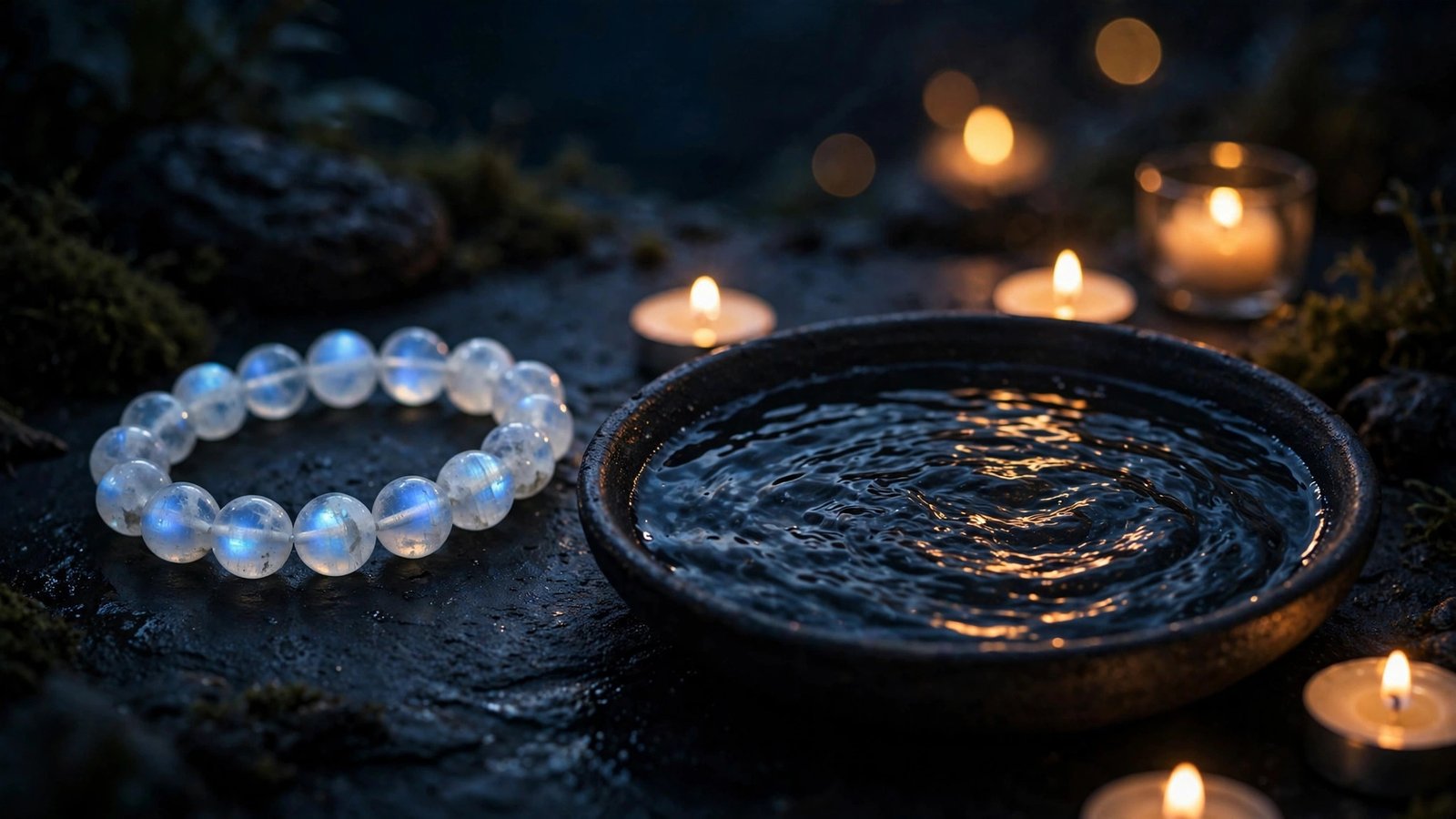
Moonstone is Water’s most poetic stone. Its adularescence — the soft, billowing light that moves across its surface — looks like moonlight on water, and its name in many traditions ties it to lunar cycles. It is traditionally associated with intuition, emotional balance, and new beginnings. Our moonstone bracelet is the signature Water-element piece, and our birthstone chart notes its place as a June birthstone.
Black Obsidian: Depth and Protection
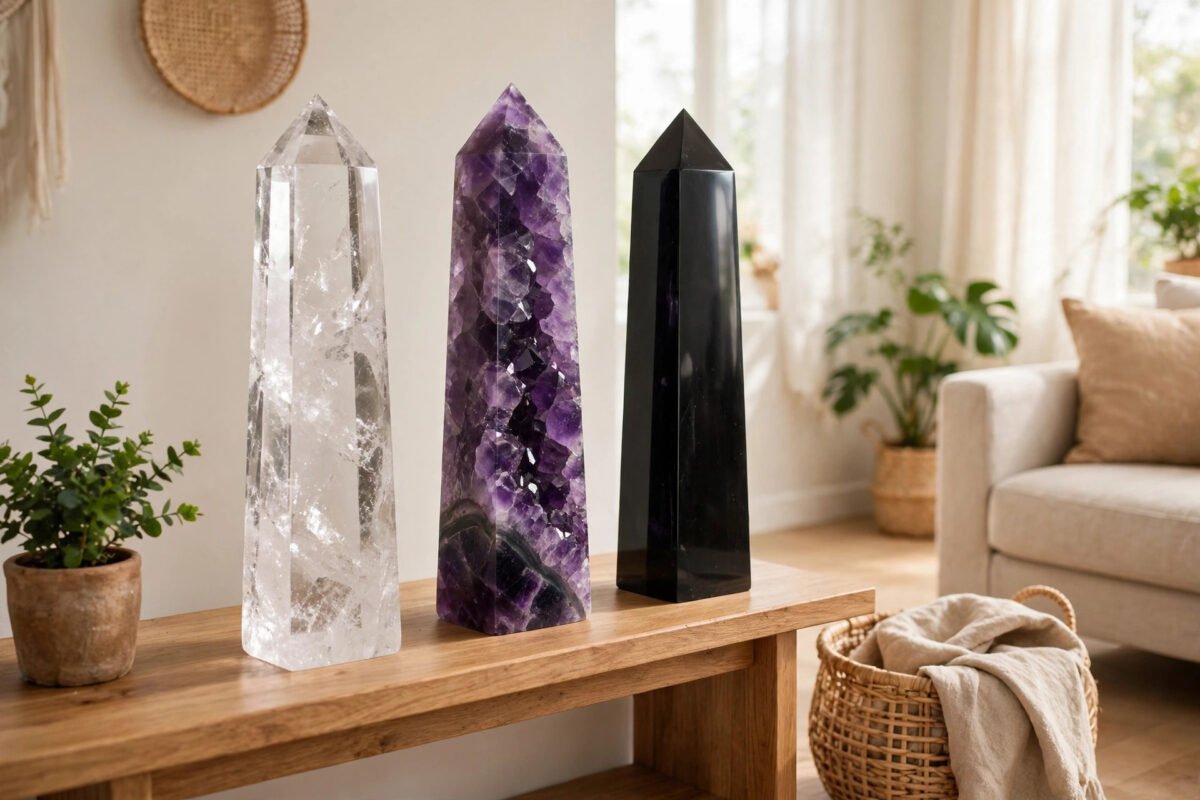
Obsidian’s mirror-black finish is Water’s darkest expression. In five-element terms, black is Water’s primary color, and obsidian — volcanic glass, born of fire but black as deep water — embodies the phase’s depth and mystery. It is traditionally associated with protection and the courage to face what lies beneath the surface.
Aquamarine: Clarity Within Depth
Aquamarine’s sea-blue transparency represents Water’s clarity: the still, see-to-the-bottom quality of a calm mind. Traditionally linked with clear communication and courageous calm, it suits those whose Water work is about expressing deep feelings rather than merely containing them.
Blue Lace Agate and Sodalite: Gentle Depth
These softer blue stones represent Water’s gentlest face — soothing, steadying, traditionally associated with peaceful communication and emotional ease. They are good choices when you want Water’s calm without its intensity.
How to Work With Water Stones
- Wear black and deep blue intentionally. In five-element symbolism, color is meaning. Choosing a moonstone or obsidian bracelet on a hectic day is a deliberate act of inviting Water’s stillness.
- Pair Water with its cycle partners. Water nourishes Wood (growth) and is restrained by Earth (stability). A Water stone with a green Wood stone like green aventurine suggests calm feeding growth; with a yellow Earth stone like tiger’s eye, calm held steady.
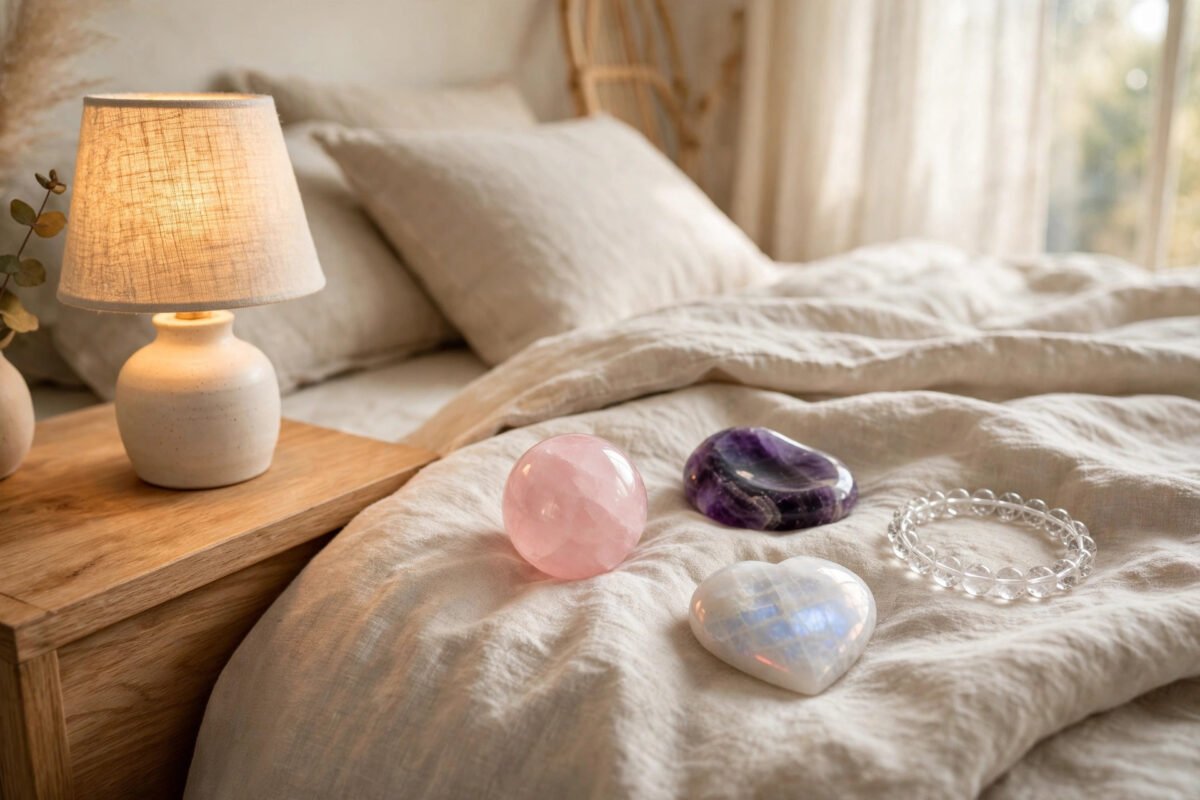
- Use Water stones in evening practice. Winter is Water’s season and night its time. Resting your Water bracelet on the nightstand, or holding it during a few minutes of quiet reflection before sleep, aligns the stone with its natural rhythm.
- Cleanse with moonlight. Water stones and moonlight are a natural pair — our full moon cleansing ritual is an ideal monthly reset for moonstone and obsidian alike.
“Water does not argue with the stone in its path. It simply continues — patient, persistent, and in the end, unstoppable.”
To bring Water’s stillness into daily life, the moonstone bracelet remains the most beloved Water-element piece: luminous, calming, and rich with lunar symbolism.
Frequently Asked Questions
What crystals are associated with the Water element?
The core Water stones are moonstone, black obsidian, aquamarine, blue lace agate, and sodalite — stones in black, deep blue, and moonlit white, matching Water’s traditional colors. Dark, cool-toned stones generally fall under Water’s umbrella.
What does the Water element represent in five-element theory?
Water represents winter, the north, stillness, depth, wisdom, and restoration. It is the phase of going inward — rest, reflection, and quiet power — and it nourishes Wood in the generating cycle while being restrained by Earth.
Can I wear Water stones if I am not a “Water person”?
Yes. Five-element theory describes phases and cycles, not fixed identities — everyone moves through all five. Wearing Water stones is simply a way of inviting stillness and depth, useful for anyone in an overstimulated season.
How do Water stones differ from grounding stones?
There is overlap — obsidian appears in both lists. Grounding stones emphasize steadiness and presence in the body; Water stones emphasize depth, calm, and intuition. Think of grounding as landing and Water as diving: related, but different directions.



 English
 Vietnamese