Ask a Chinese grandmother which stone keeps a family together and she will not hesitate: jade. For over 7,000 years, jade has been China’s stone of virtue — carved into burial suits for emperors, scholar’s ornaments, and wedding gifts meant to last generations. In feng shui tradition, white jade in particular is associated with purity, serenity, and harmony at home. This guide explores why jade holds that role, how to use it in your space, and how to wear it.
Jade: The Stone of Virtue
The English word “jade” covers two minerals — nephrite and jadeite — but culturally it means much more. The jade Wikipedia page traces its use in China to Neolithic cultures, where it was worked into ritual objects long before metal tools. Confucius compared jade’s qualities to a gentleman’s virtues: its polish to wisdom, its flaws to honesty.
White jade — typically white or mutton-fat nephrite — sits at the refined end of this tradition. Where green jadeite became the Qing dynasty’s status symbol, white nephrite remained the scholar’s stone: understated, pure, associated with character rather than display. In feng shui tradition, practitioners believe white jade carries calming, harmonizing energy. Our white jade meaning guide explores the symbolism in depth.
Why White Jade Means Harmony at Home
The home-harmony association comes from overlapping threads. First, jade’s traditional virtues — benevolence, righteousness, wisdom — are the qualities that keep families functional, so the stone symbolizing them becomes a symbol of the household practicing them. Second, white jade’s visual calmness: its soft translucence reads as peacefulness, and practitioners believe a home’s dominant materials subtly shape its emotional climate.
Third, jade is the traditional family stone because it is the traditional gift stone — given at weddings, births, and milestone birthdays, moments when a family defines itself. A white jade piece often carries generations of well-wishing, and practitioners believe that accumulated intention is part of its harmonizing effect. For ideas, see our jade bracelet wedding gift ideas and the feng shui jewelry collection.
Placing Jade in the Home
In feng shui tradition, jade objects are placed to anchor calm in shared spaces:
- Living room: a jade carving, plant pot trim, or decorative piece in the main gathering space is traditionally believed to smooth family interactions — the stone of virtue watching over the room where everyone meets.
- East and southeast: these are the family/health and wealth sectors of the bagua. Jade’s wood-element resonance (green jade) suits the east; white jade’s metal-element clarity suits the west and northwest (helpful people, mentors).
- Entryway: a small jade piece near the door traditionally welcomes guests with the household’s values on display — and practically, it is a beautiful first impression.
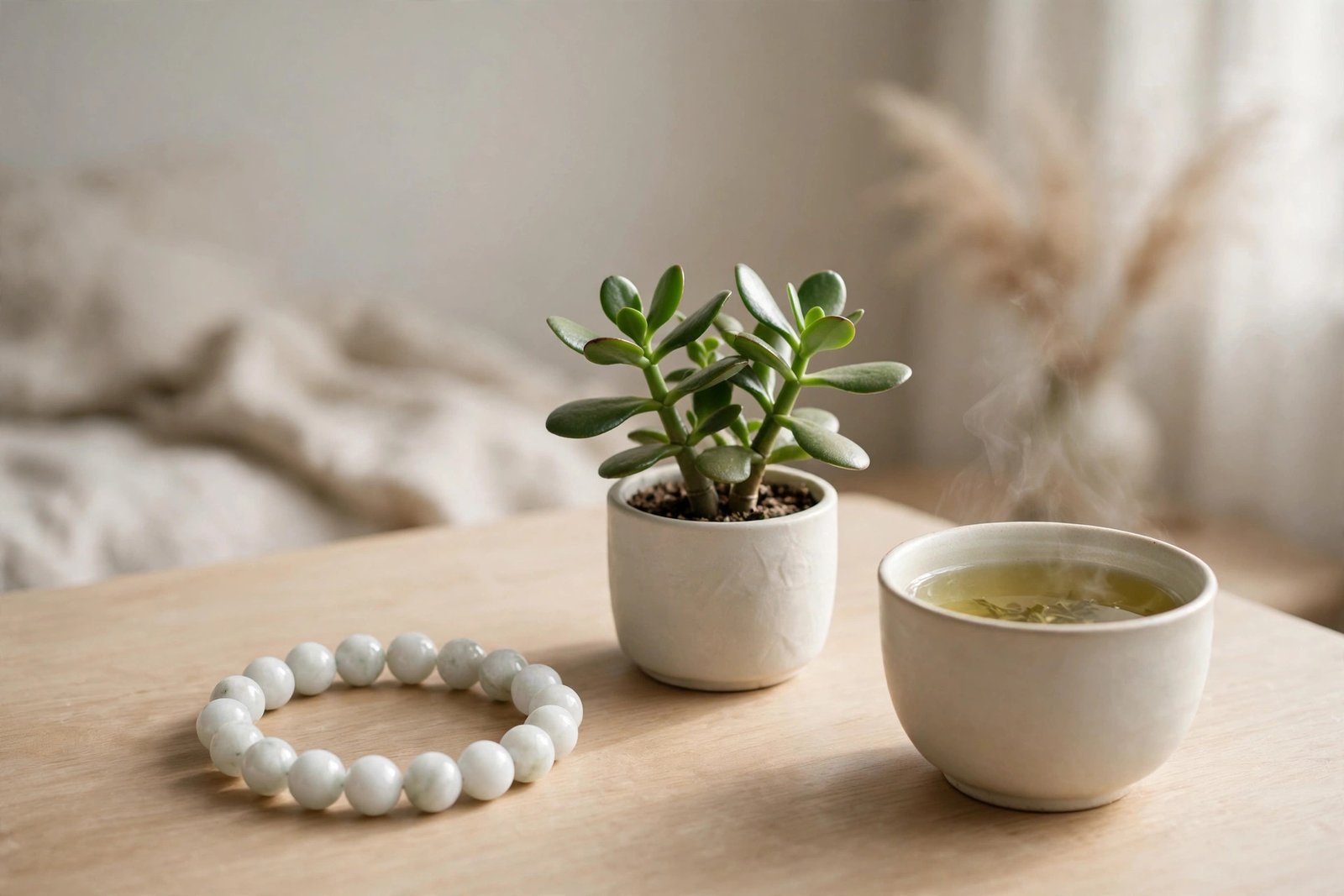
- Bedroom: white jade’s calm suits the bedroom better than stimulating stones. A jade bracelet on the nightstand (removed for sleep, as tradition advises) keeps the harmonizing symbolism close.
One placement to avoid: practitioners traditionally advise against jade in bathrooms or cluttered storage areas — the stone of virtue deserves a dignified spot, and the symbolism of respecting it reinforces the values it represents.
Wearing a White Jade Bracelet
A white jade bracelet brings the home-harmony symbolism onto your wrist — useful for people who want to carry calm into stressful days, or who are working on patience in family relationships. Wearing notes:
- Either wrist. Jade carries no strict wrist rule; choose the wrist that feels natural. Many wearers choose the left as a daily reminder of their intention toward family harmony.
- Pairs beautifully with metal. In the five-element cycle, metal supports water and white jade already carries metal-element clarity — silver or white-gold spacers complement it both symbolically and visually. Our gold vs. silver with white jade guide breaks down the styling.
- Gentle daily wear. Jade is tough (nephrite is famously resistant to breaking) but it scratches. Remove it for housework, sports, and anything involving grit.
- A gift with weight. Giving white jade says something specific: “I wish you peace.” It is an exceptional gift for new homeowners, newlyweds, or anyone rebuilding family bonds — see our white jade Christmas gift guide for presentation ideas.
Caring for White Jade
Jade is low-maintenance. Wipe it with a soft, damp cloth after wear — the oils from regular handling give antique jade its prized patina, but grime is not patina. Avoid ultrasonic cleaners and harsh chemicals; mild soap and water is the strongest cleaner jade needs. Store it separately from harder stones (quartz will scratch it) in a soft pouch.
Energetically, practitioners cleanse jade gently: moonlight, a wipe with a damp cloth, or simply holding it with intention. Jade is not considered an “absorbing” stone like obsidian, so monthly cleansing is plenty — more in our feng shui bracelet cleansing guide.
Real vs. Treated: Buying White Jade Wisely
The jade market has a grading system worth knowing: Type A is natural, untreated jade; Type B is bleached and polymer-impregnated; Type C is dyed. For white jade bracelets, the concern is mainly undisclosed treatments that whiten or brighten the stone. Genuine white nephrite has a soft, slightly translucent, “mutton fat” glow with subtle variation — perfectly uniform, glassy-white beads warrant skepticism. Buy from sellers who disclose treatments, and expect real jade to feel cool, smooth, and slightly heavy. Our white jade bracelet uses genuine natural stone — the kind meant to be worn for decades, not seasons.
“Green jade says prosperity; white jade says peace. A home needs both, but peace is the one you feel every single evening.”
Whether as a carving in the living room or a bracelet on your wrist, white jade’s feng shui message is the same: cultivate the virtues and the harmony follows. Start with the white jade bracelet — understated, meaningful, and built to become the kind of piece you hand down rather than replace.
Frequently Asked Questions
What does white jade symbolize in feng shui?
In feng shui tradition, practitioners associate white jade with purity, serenity, moral virtue, and home harmony. It is considered a calming, harmonizing stone — the scholar’s jade, valued for character rather than display, and traditionally linked to peaceful family life.
Where should I place jade in my home for harmony?
Shared calm spaces work best: the living room, the east (family/health sector), or the entryway. Practitioners traditionally avoid placing jade in bathrooms or cluttered areas, since the stone of virtue is believed to deserve a dignified, clean setting.
Is white jade good for a wedding gift?
Excellent — it is one of the most traditional Chinese wedding gifts. White jade symbolizes purity of intention and lasting harmony, making it a meaningful wish for a new marriage. Pair it with a handwritten note explaining the symbolism.
How can I tell if white jade is real?
Genuine white nephrite feels cool and smooth, has a soft translucent “mutton fat” glow with natural variation, and is slightly heavy. Perfectly uniform glassy-white beads may be dyed or imitation. Ask sellers about treatments — natural, untreated (Type A) jade is the standard to look for.



 English
 Vietnamese