Gentle, intelligent, and impossible to forget, the elephant has been a symbol of good fortune for thousands of years. From temple carvings in India and Thailand to a small brass elephant on a modern bookshelf, the image carries consistent themes: wisdom, loyalty, strength, and steady, patient progress toward a good life.
In this article, we will look at why elephants became such beloved luck symbols, what trunk-up and trunk-down figures are traditionally said to mean, and how feng shui practitioners suggest placing elephants at home and at work. As with all luck traditions, treat these ideas as meaningful customs and personal reminders — not guarantees.
Why Elephants Became Symbols of Luck and Wisdom
Elephants hold a special place in many Asian cultures. In Hindu tradition, Ganesha, the elephant-headed deity, is revered as a remover of obstacles and a patron of new beginnings, learning, and the arts. In Buddhism, the elephant is associated with mental strength and steadiness; a famous story tells of Queen Maya dreaming of a white elephant before the Buddha’s birth, linking the animal with wisdom and auspicious arrival.
Beyond religion, people simply observed elephants themselves. They live in close family groups, care for their young and elders, remember water sources across vast distances, and move through the world with calm power. It is easy to see why an animal like that became a symbol for the qualities people want in their own lives: memory, patience, loyalty, and quiet strength.
You can read more about Ganesha’s role in Hindu tradition on Wikipedia’s Ganesha page. In Western homes, lucky elephants became especially popular in the 20th century as travel and trade brought carved figures from Asia and Africa to a wider audience. The core symbolism traveled with them, which is why an elephant by the front door still reads, almost universally, as a wish for protection and good fortune for the household.
Trunk Up or Trunk Down? What Tradition Says
The question almost everyone asks is about the trunk. In popular tradition, an elephant with its trunk raised is said to shower good luck down on those around it, and to symbolize triumph, joy, and the celebration of success. Trunk-up elephants are the most common choice for gifts and for doorways.
A trunk-down elephant carries a different, quieter set of associations. It is linked with grounding, fertility, knowledge stored and held, and the ability to overcome obstacles by reaching low and pushing through — much as a real elephant uses its trunk to move objects aside. Some feng shui sources suggest trunk-down figures near workspaces, where focus and problem-solving matter.
Neither position is wrong. The raised trunk is the classic luck pose most buyers are looking for, while the lowered trunk suits people who value the symbolism of steadiness and work. If you are buying for someone else, trunk-up is the safest, most widely understood choice. Our guide to feng shui front door tips for good luck explains why thresholds are such popular spots for symbols like this.
Feng Shui Placement for Lucky Elephants
In feng shui tradition, placement is about intention and flow. A pair of elephants placed just inside or outside the front door, facing inward, is traditionally said to welcome protection and good fortune into the home. Facing them inward matters in this custom — the idea is that luck is being invited in, not sent away.
In a home office or study, a single elephant on the desk is associated with wisdom, memory, and calm decision-making, making it a fitting companion to the practices in our feng shui office desk layout guide. In a living room, elephants symbolize family unity and loyalty, while in a child’s room they are sometimes used as gentle emblems of protection and learning.
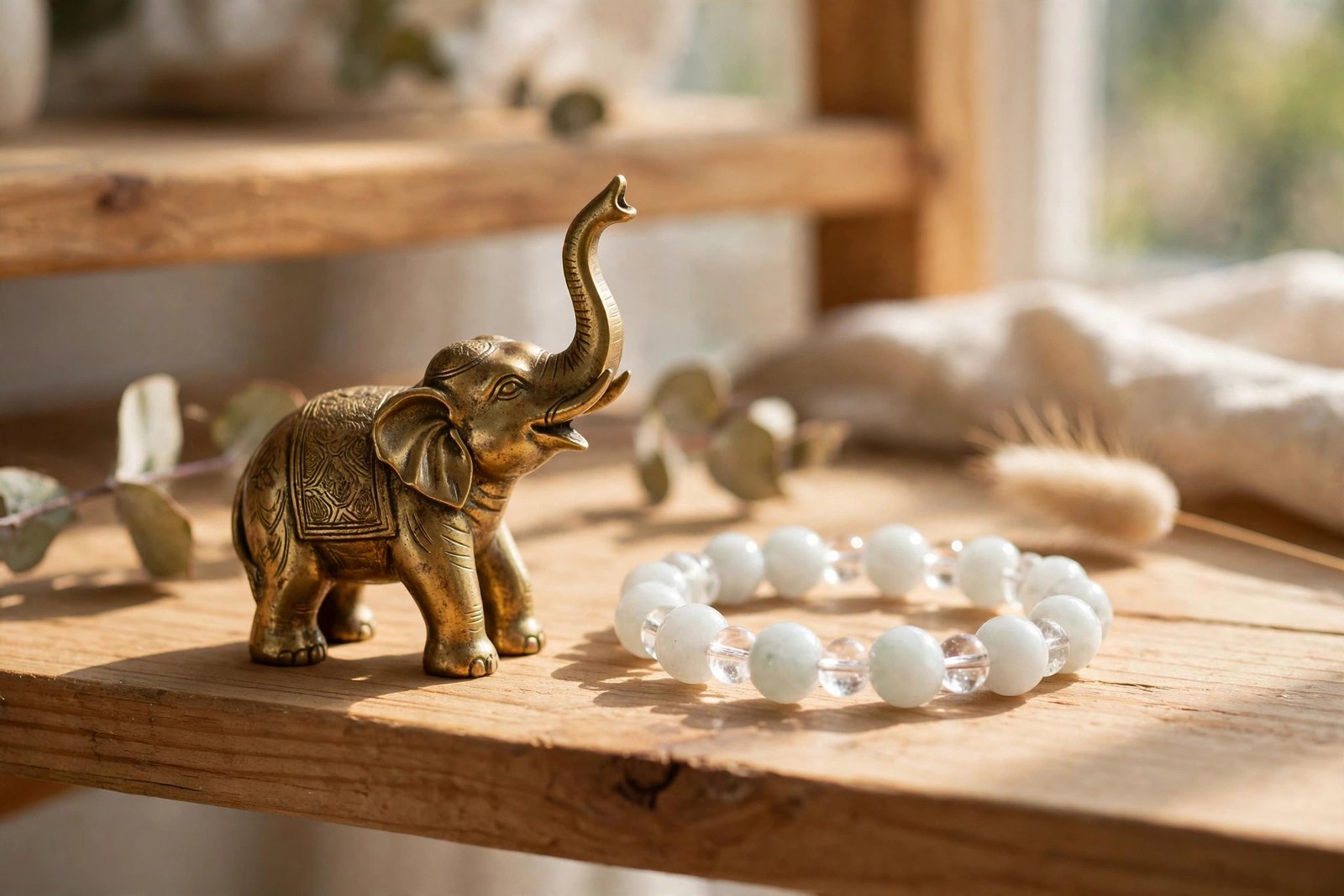
Materials matter to some collectors, too. Jade elephants connect to the long Chinese appreciation for jade as a stone of harmony and prosperity — see our guide to white jade meaning in Chinese culture — while brass and wood feel warm and traditional. Many people display a small elephant alongside an AVENSU white jade bracelet, creating a calm corner that blends sculpture and wearable symbolism. Browse similar mindful pieces in the AVENSU shop.
Lucky Elephants as Gifts
Few gifts communicate so much without words. A lucky elephant suits housewarmings, graduations, retirements, new babies, and new businesses, because its symbolism — wisdom, strength, loyalty, and good fortune — fits almost any milestone. For a graduate, it wishes them memory and good judgment. For a new homeowner, it wishes them protection and a united family.
Choose the size for the life the recipient actually lives. A small desk elephant suits an office worker or student, while a larger carved piece suits someone furnishing a home. Pairing the figure with an AVENSU crystal bracelet traditionally associated with luck, such as green aventurine, turns a decorative gift into something they can both display and wear. You can find more milestone ideas in our guide to good luck gifts for graduation.
Above all, add a note. Explaining why you chose an elephant — what you admire about the person and what you wish for them — is what transforms a familiar symbol into a personal one.
Frequently Asked Questions
Which way should a lucky elephant face?
In feng shui tradition, elephants near the front door are usually placed facing into the home, symbolizing good fortune and protection being welcomed inside. On a desk, face the elephant toward the room or toward you, whichever feels most present in your daily routine.
Is a trunk-up elephant luckier than trunk-down?
Trunk-up is the most popular luck symbol and is traditionally associated with showering good fortune and celebrating success. Trunk-down is associated with grounding, fertility, and overcoming obstacles. Both are positive — choose based on the meaning you want to emphasize.
How many elephants should you display?
Pairs are traditional at doorways, symbolizing protection and partnership. A single elephant works well on a desk or shelf. Some collectors display a family group of three, representing loyalty across generations.
What crystals pair well with a lucky elephant?
White jade is traditionally linked with harmony, green aventurine with luck and opportunity, and clear quartz with clarity. An AVENSU jade or aventurine bracelet worn daily keeps that symbolism with you beyond the home display.



 English
 Vietnamese